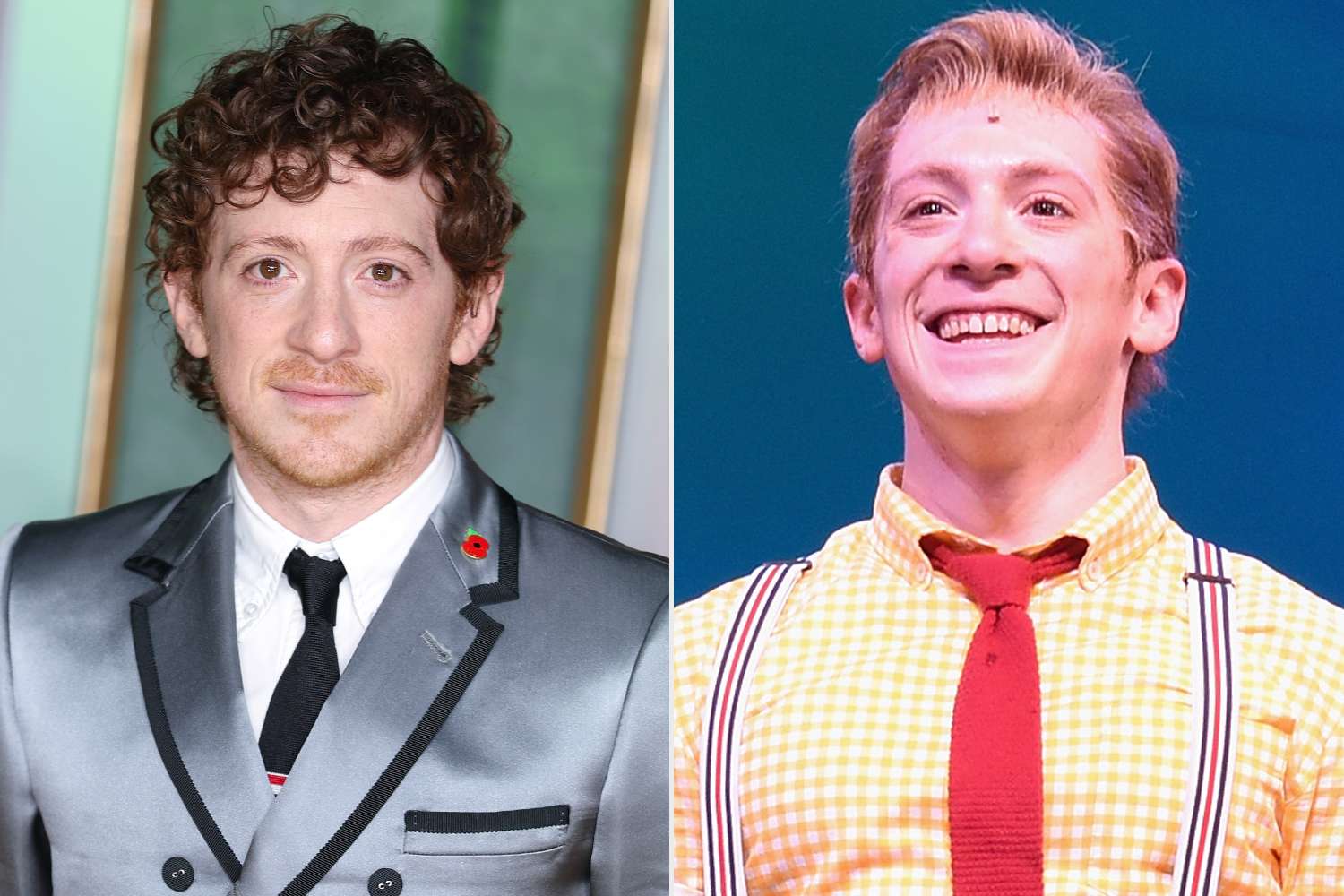

Eight times a week, an actor in a yellow approximation of a kitchen sponge climbed a junkyard mountain of repurposed trash, scaled rope ladders, balanced on a pool noodle, played a flexatone with his foot, and sang for nearly two and a half hours without ever letting the audience see the labor underneath. There was no foam costume, no cartoon head, no prosthetic. The whole optimistic, rubber-limbed creature lived in one performer’s body, and the physical cost of summoning it night after night was the kind of feat that Broadway insiders talk about long after a show closes.
That performer was Ethan Slater, and the show was “SpongeBob SquarePants: The Broadway Musical.” Long before tabloids learned his name, theater people already knew it, because what he did on the stage of the Palace Theatre was, by any honest measure, athletic. He has described preparing for each performance the way a runner preps for a race, stretching and warming up so his body could survive a marathon that asked him to be perpetually elastic, perpetually buoyant, perpetually nine years old at heart and made of sponge. The role is now a small legend among musical-theater performers for how much it demanded and how little the audience was allowed to notice the demand.
That gap between the visible ease and the invisible effort is, in a sense, the whole story of his career. Slater is a deeply trained stage performer whose public profile expanded enormously with the “Wicked” films, and whose name, for a stretch, became attached to gossip cycles that had nothing to do with the work. The work is where this begins, because the work came first and has lasted longest.
The Maryland kid and Vassar
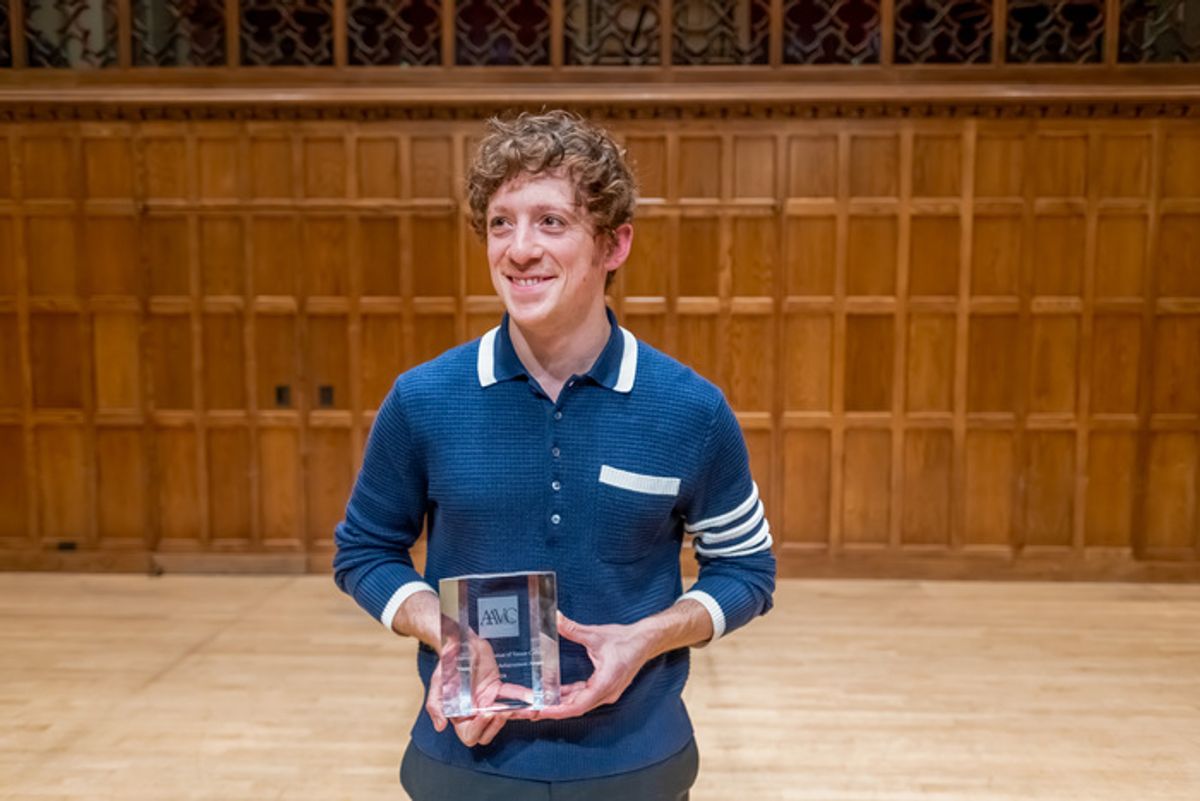
Ethan Samuel Slater was born on June 2, 1992, in Washington, D.C., the third child of a family that, according to The Washington Post and a Times of Israel profile, raised him in Silver Spring, Maryland, in a Conservative Jewish household. His mother died when he was seven, a loss he has called a “really big, formative thing” in his life, describing how she “left this huge imprint on me, even though I had so few memories.” It is one of the few pieces of his early biography he has spoken about directly and without performance.
He graduated from Georgetown Day School in Washington, then studied drama at Vassar College in Poughkeepsie, New York, earning a Bachelor of Arts in 2014. The Vassar years were not incidental. While in college, as he has recounted, he auditioned for a Shakespeare workshop, and that audition eventually put him in front of director Tina Landau, the relationship that would change everything. The detail matters because it locates his big break inside the grind of training rather than the lottery of discovery. He was a theater student who kept showing up to auditions, and one of them happened to be the door.
His earliest professional credits read like a young actor paying dues across the regional and Off-Off-Broadway circuit. He appeared at the New York Musical Theatre Festival in 2015 in “Claudio Quest,” earning a nomination for the festival’s award for outstanding individual performance. He joined the Delaware Theatre Company that December for a stage adaptation of Barry Levinson’s “Diner.” He took small parts in short films. None of it suggested the size of what was coming.
The actor inside the sponge

In 2016, Tina Landau cast Slater as SpongeBob SquarePants in the pre-Broadway production at Chicago’s Oriental Theatre. The premise sounded, on paper, like a marketing stunt: a beloved cartoon character, a children’s-television property, dragged onto a serious stage. What the production did instead was treat the material with genuine craft, and Slater’s performance became the proof of concept. The show transferred to Broadway’s Palace Theatre, running from 2017 into 2018.
The challenge he set himself was not impersonation. He has spoken in interviews about humanizing the character rather than mimicking the famous cartoon voice, finding a real and almost childlike sincerity underneath the gag. What audiences saw was a fully physical creation built without a costume to hide behind. Critics noticed. Writing in The New York Times, Ben Brantley reviewed the production as a “watery wonderland,” and the praise for its lead was widespread.
The awards followed. Slater received a Tony Award nomination for Best Actor in a Musical at the 72nd Tony Awards in 2018. He won the Drama Desk Award for Outstanding Actor in a Musical and the Outer Critics Circle Award in the same category, and he was honored with the Theatre World Award for an outstanding Broadway debut. For a performer barely past his college years, in his first leading Broadway role, it was an extraordinary haul, and it established him as a serious stage actor rather than a novelty hire.
The Tony nomination and stage range
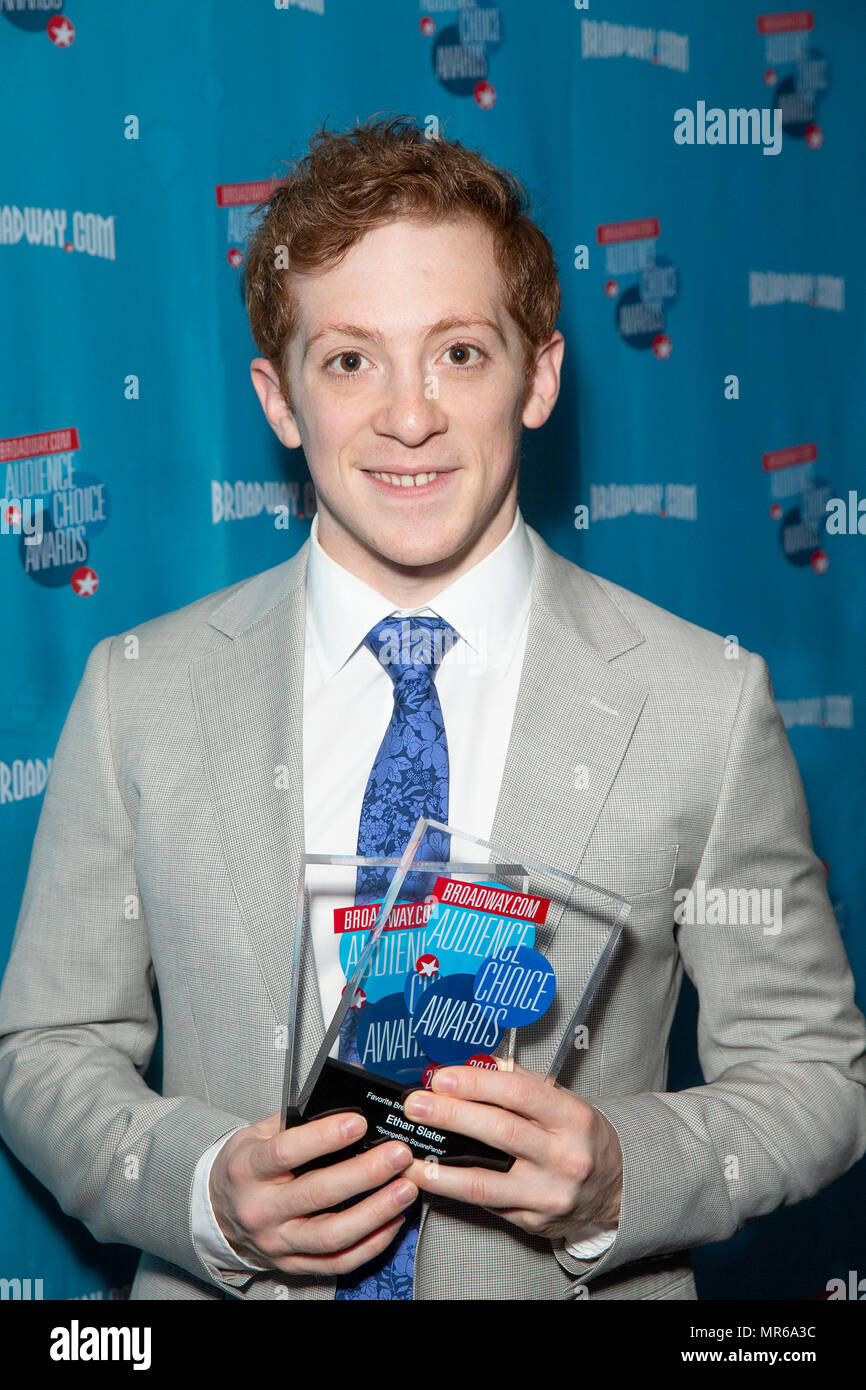
What is easy to miss, if you only know Slater from the headlines, is how varied his stage work has been since. He has not coasted on the sponge. Between 2021 and 2022, he starred in the Classic Stage Company’s Off-Broadway revival of Stephen Sondheim’s “Assassins,” playing the Balladeer and Lee Harvey Oswald, a role about as far from cheerful animation as the American songbook allows. That performance earned him a Lucille Lortel Award nomination. In 2022 he originated a role in the play “Good Night, Oscar” at Chicago’s Goodman Theatre, sharing the stage with Sean Hayes.
From 2023 into 2024, he returned to Broadway in the revival of “Spamalot” at the St. James Theatre, taking on the Historian, Prince Herbert, and other roles in the broad-comedy Monty Python adaptation. He has also worked as a writer and composer, contributing to the musical “Edge of the World,” and he released two EPs, “Wanderer” in 2019 and “Life Is Weird” in 2020. The throughline is a performer who treats the stage as a craft to be deepened, not a credential to be cashed in. Sondheim tragedy, Python farce, a children’s-property musical, original songwriting: the range is the point.
The Wicked break and Boq
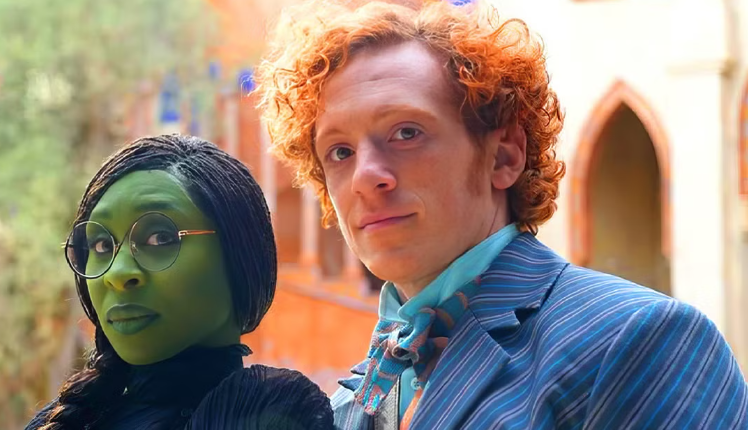
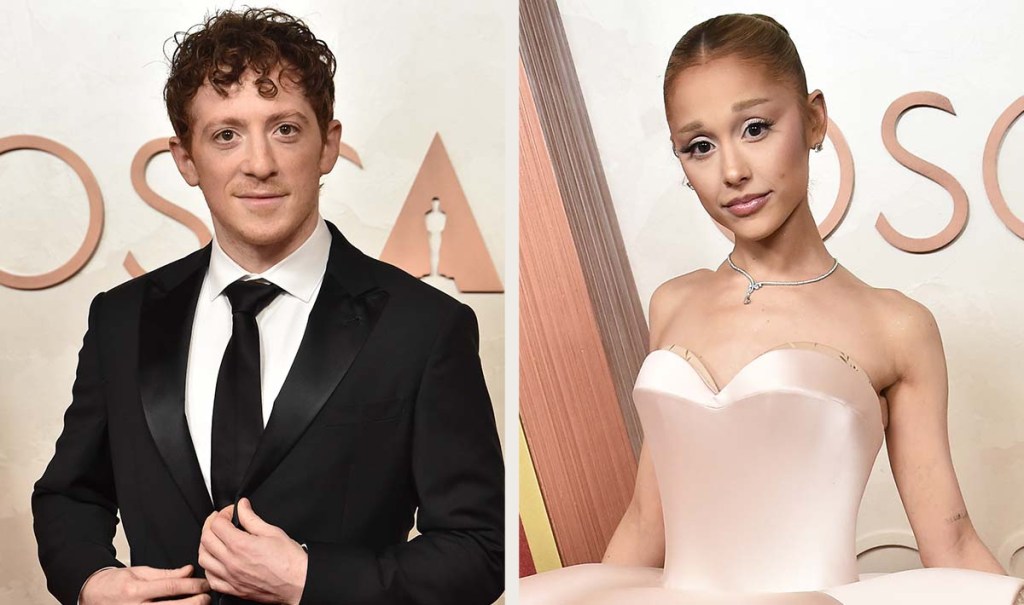
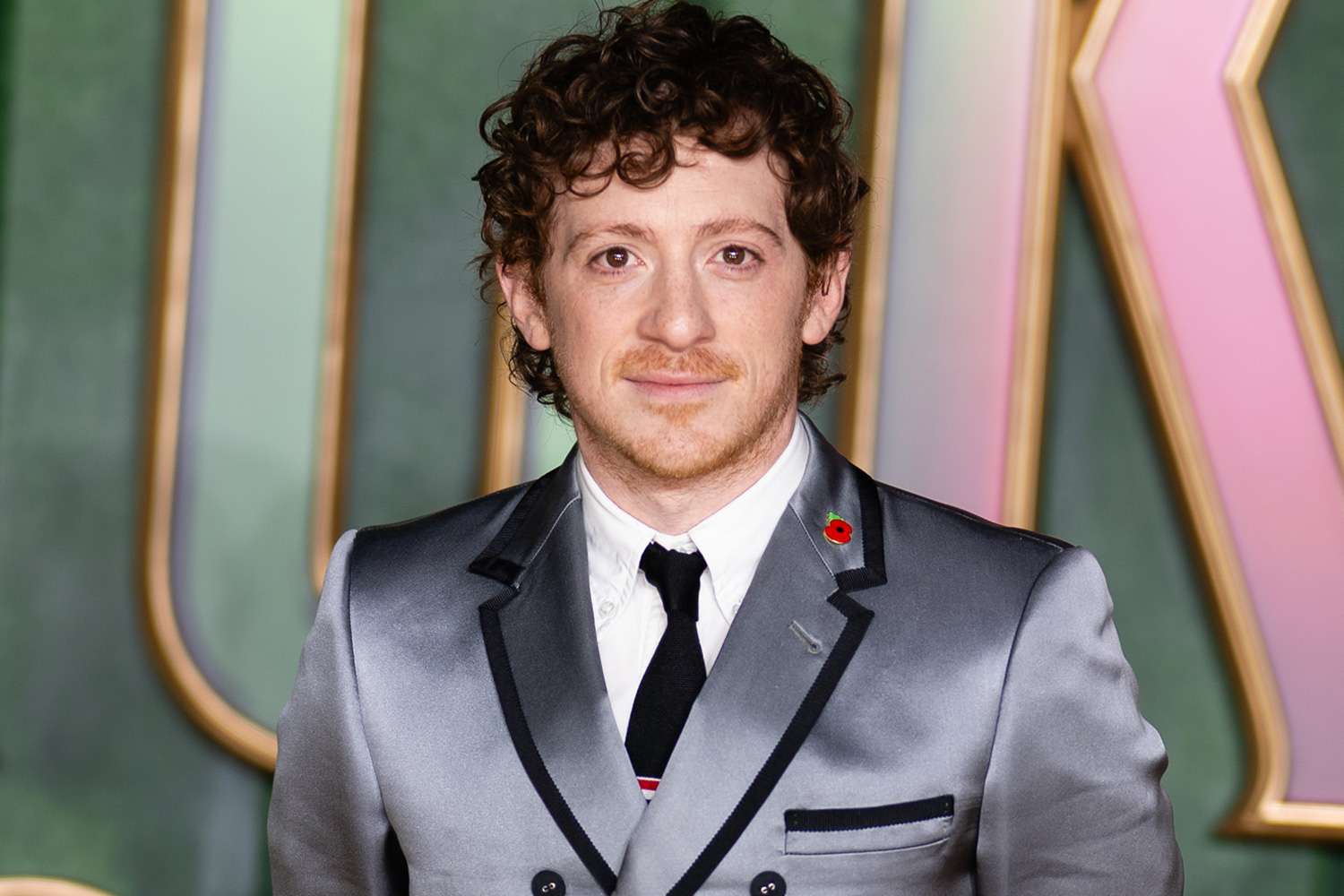
In December 2022, Variety reported that Slater had been cast in Jon M. Chu’s two-part film adaptation of the stage musical “Wicked,” opposite Cynthia Erivo and Ariana Grande. His role was Boq Woodsman, the lovestruck Munchkin whose arc, for anyone who knows the source material, bends toward the tragic and the metallic. The first film, “Wicked,” opened in 2024. The second, “Wicked: For Good,” opened in North American theaters on November 21, 2025, completing the story and Boq’s transformation into the Tin Man.