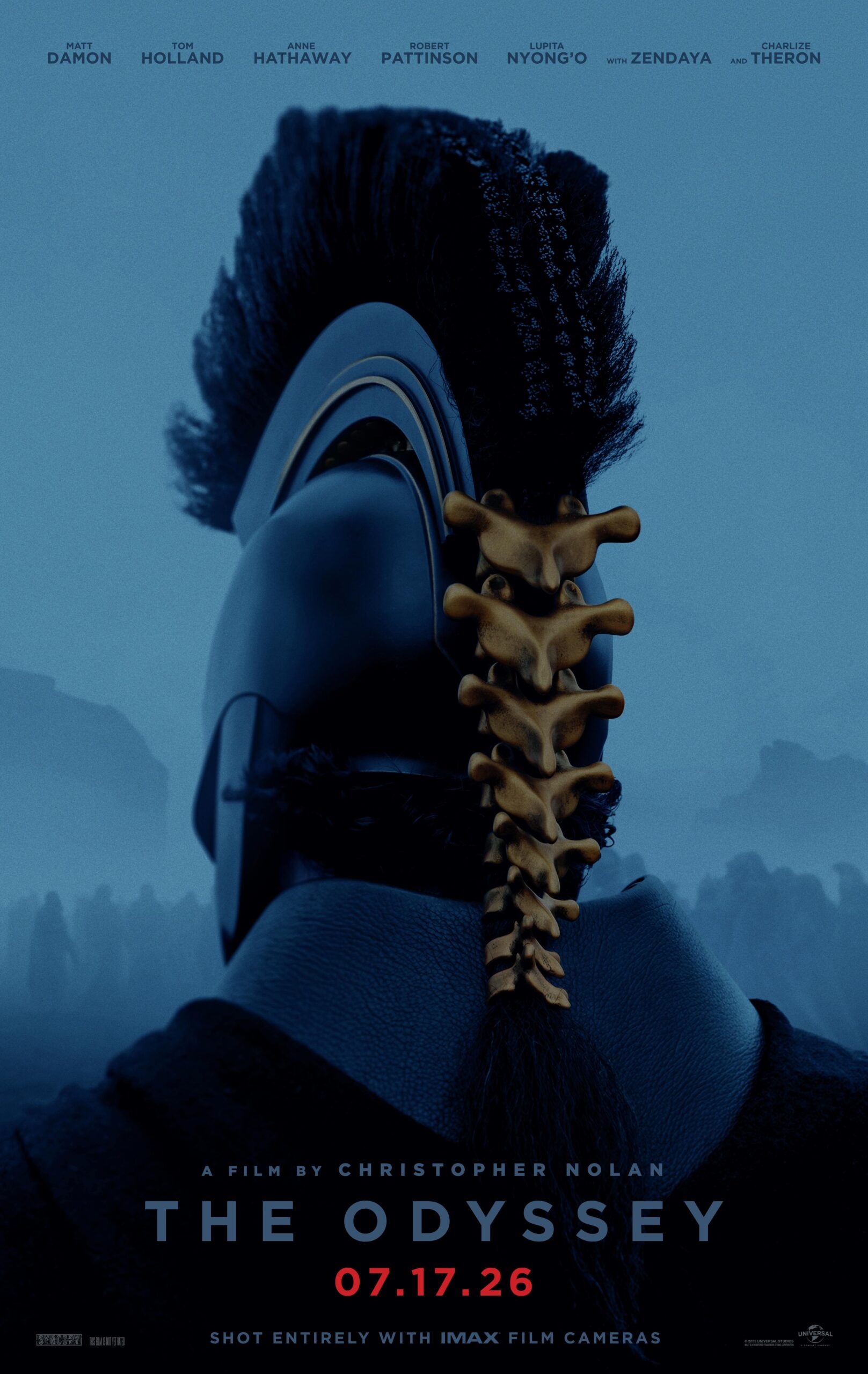

Nearly three thousand years after a blind Greek poet first sang of a king trying to get home, Homer’s Odyssey is suddenly the hottest property in Hollywood. The reason is no mystery. Christopher Nolan’s “The Odyssey” arrives in cinemas on July 17, 2026, and the run-up has turned into a cultural event of its own. When tickets for the remaining IMAX and premium large format screenings went on sale on June 4, 2026, Fandango and AMC Theatres buckled under queues that stretched up to an hour. The IMAX 70mm showings had already sold out months earlier, snapped up a full year before release. For a story written before cinema, before print, before the alphabet as we know it, that is a remarkable second life.
But Nolan is not the first filmmaker to chase Odysseus across the wine-dark sea. The Odyssey has been adapted, reworked, and raided for parts since the earliest days of the medium, from Italian peplum spectacle to American prestige television to a Coen brothers comedy scored in Depression-era bluegrass. Before the biggest version yet lands in July, this is the moment to take stock of what already exists. Below is a ranked guide to every major screen adaptation of Homer’s epic, judged on craft, fidelity to the poem’s spirit, and the performances at their centre.
First, the Nolan Film: What Is Actually Confirmed
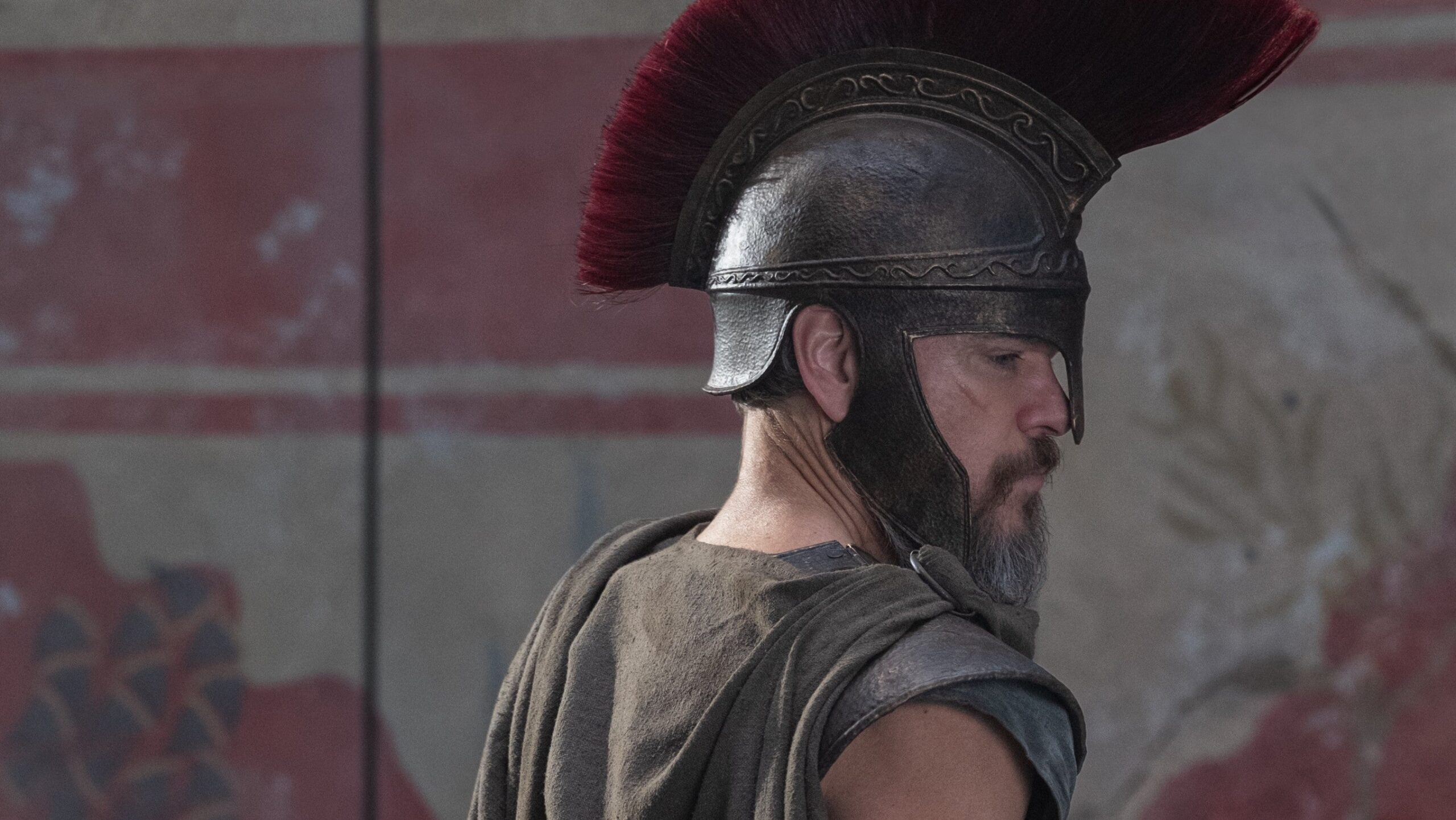
Stick to what is verified, because speculation around this project has been relentless. “The Odyssey” is a Universal Pictures release directed, written, and produced by Christopher Nolan, his first film since “Oppenheimer” swept the 2024 Oscars. It opens July 17, 2026, and it is the first feature shot entirely on IMAX 70mm film cameras, with a reported budget of around 250 million dollars, believed to be the largest of Nolan’s career.
The confirmed cast is extraordinary. Matt Damon plays Odysseus, the king of Ithaca fighting his way home from the Trojan War. Anne Hathaway is Penelope, his wife holding the kingdom together against a swarm of suitors. Tom Holland plays their son Telemachus. Zendaya is the goddess Athena. Robert Pattinson plays Antinous, the most aggressive of Penelope’s suitors. Charlize Theron is the nymph Calypso. Lupita Nyong’o, Nolan has confirmed, takes on two roles: Helen of Troy and her sister Clytemnestra. Jon Bernthal plays Menelaus, king of Sparta, and Benny Safdie plays Agamemnon. Mia Goth appears as the servant Melantho, and the ensemble even includes rapper Travis Scott.
The marketing has been a slow drumbeat building to the current frenzy. A teaser late in 2025 racked up over 121 million global views within 24 hours, one of the most-viewed trailers of that year. A TV spot aired during the AFC Championship Game in January 2026 featuring Holland, Bernthal, and Scott. Nolan presented footage at CinemaCon in April, then debuted a full trailer on The Late Show with Stephen Colbert in May 2026, revealing the breadth of the cast and glimpses of set pieces including the Trojan horse and the cyclops Polyphemus. That trailer, plus the June 4 ticket rush, is exactly why search interest in all things Odyssey has exploded.
What the film will actually be like, nobody outside the production knows. Nolan has a history of restructuring time and perspective, and the Odyssey itself is famously told out of order, so the material suits him. Everything beyond the confirmed casting and release details remains guesswork. Until July, the existing adaptations are the canon. Here is how they rank.
1. O Brother, Where Art Thou? (2000)
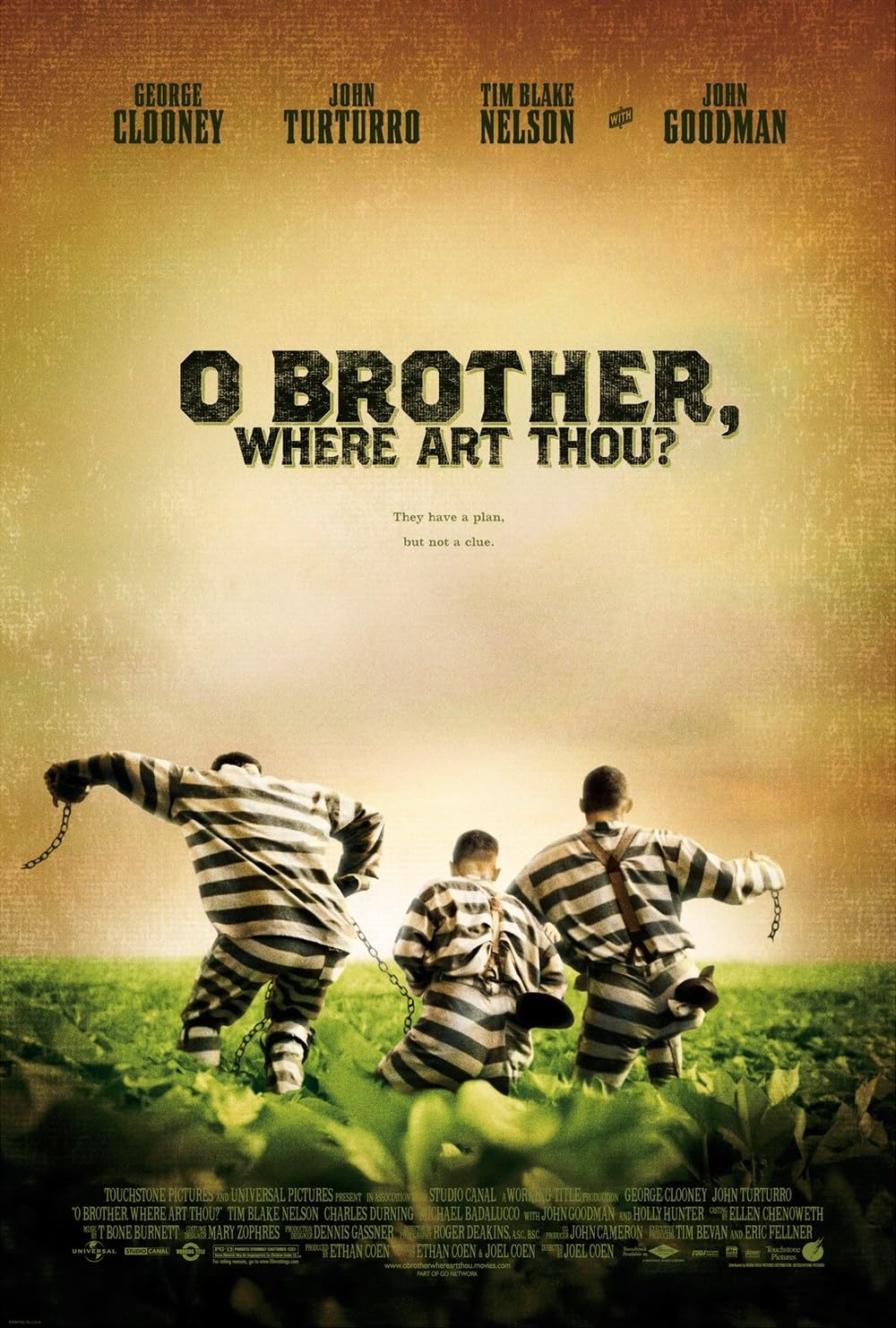
The best Odyssey film ever made barely contains a single toga. Joel and Ethan Coen transplanted Homer to Depression-era Mississippi, turned Odysseus into the fast-talking escaped convict Ulysses Everett McGill, and handed the role to George Clooney in what remains one of his most purely enjoyable performances. The opening credits even declare the film is “based upon The Odyssey by Homer,” a cheeky claim given the Coens admitted they had never actually read the poem, knowing it only through pop culture osmosis.
And yet the spirit survives intact, which is the whole point of adaptation. Everett’s journey home to stop his wife Penny (Holly Hunter) from marrying a suitor hits the poem’s beats with sly precision: the sirens become honey-voiced washerwomen by a river, the cyclops becomes John Goodman’s one-eyed Bible salesman Big Dan Teague, the blind prophet becomes a railroad handcar seer, and the god from the machine arrives as a literal flood. John Turturro and Tim Blake Nelson round out a chain gang trio with perfect comic chemistry.
Then there is the music. T Bone Burnett’s soundtrack of bluegrass, gospel, and old-time Americana became a phenomenon in its own right, winning five Grammys including Album of the Year and topping the Billboard chart more than a year after the film’s release. “Man of Constant Sorrow” did for roots music what the poem did for homecoming stories. Gorgeous, hilarious, and endlessly rewatchable, this is the rare adaptation that honours its source by completely reinventing it.
2. The Return (2024)
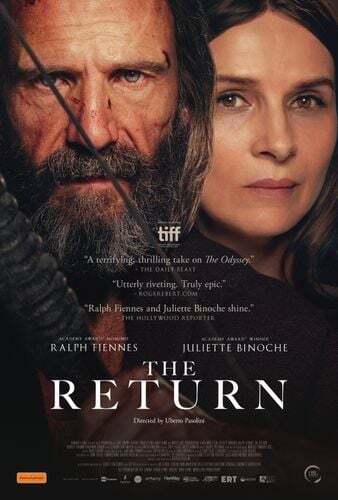
Uberto Pasolini’s stripped-down drama is the most recent Odyssey film before Nolan’s, and it takes the opposite approach to everything else on this list: no gods, no monsters, no sirens, no cyclops. Pasolini adapts only the second half of the poem, the part most adaptations rush through, beginning when Odysseus washes ashore on Ithaca, broken, scarred, and twenty years late.
What elevates it is the casting. Ralph Fiennes, gaunt and weathered into something almost geological, plays Odysseus as a man hollowed out by war, ashamed to reclaim a home he abandoned. Juliette Binoche, reuniting with Fiennes nearly three decades after “The English Patient,” plays Penelope not as a passive symbol of patience but as a woman quietly furious at what waiting has cost her. Their scenes together carry the weight of two great actors who understand exactly what the years do to people.
The film premiered at the Toronto International Film Festival in September 2024 before a December release, and reviews were generally favourable, with Metacritic scoring it 66 out of 100. The Rotten Tomatoes consensus captured the trade-off fairly: removing the mythology removes some of the fun, but the two lead performances keep the drama absorbing. As a meditation on post-war trauma, on what soldiers bring home and what homes become in their absence, it is the most emotionally serious Odyssey ever filmed. It ranks this high because it understands that the poem was always about the cost of return, not the monsters along the way.
3. Odissea (1968)
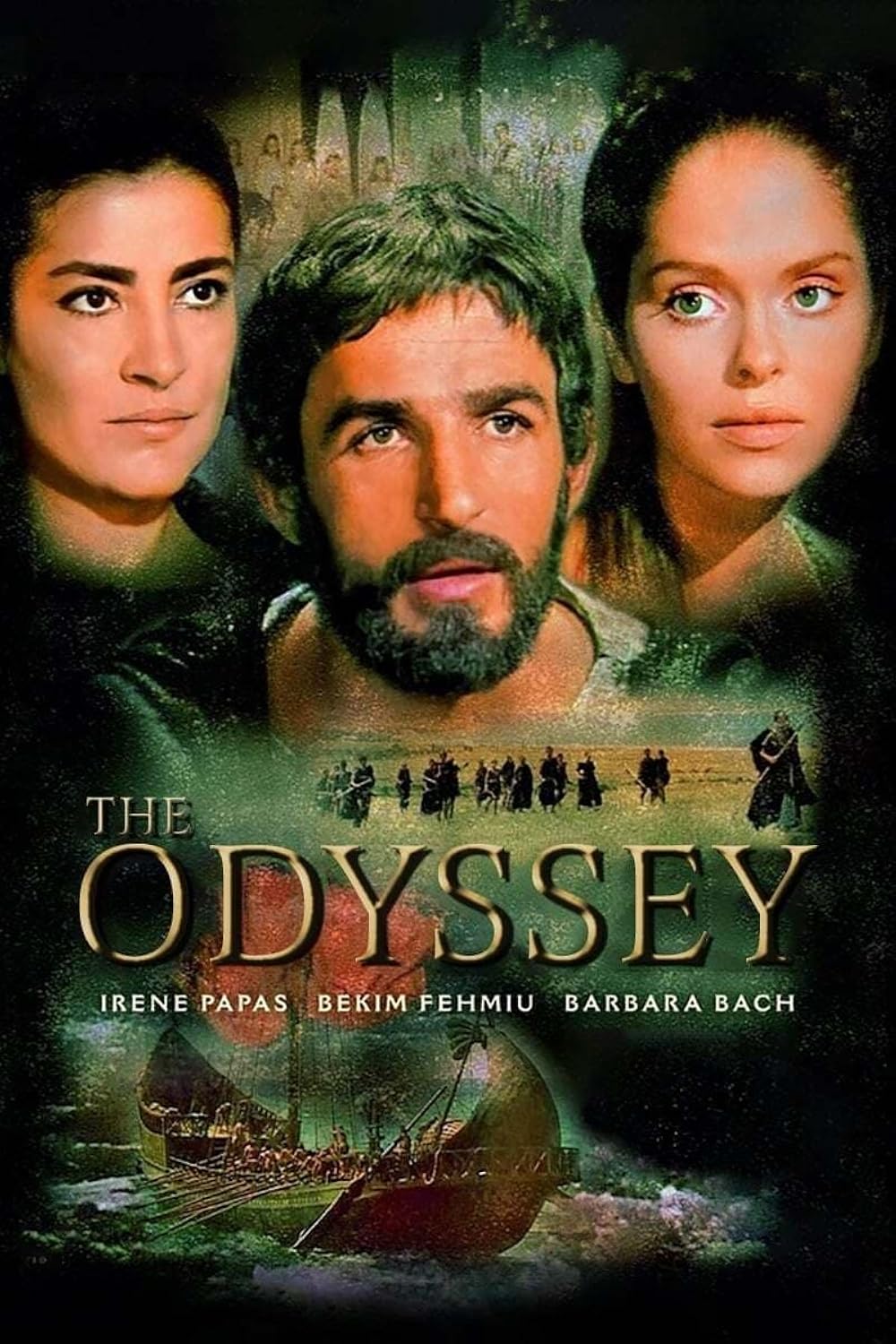
The least known entry on this list to most modern viewers may be the most faithful Odyssey ever put on screen. This eight-episode Italian television miniseries, broadcast on RAI from 1968 and co-produced with European partners including French television, was directed by Franco Rossi with assistance from Piero Schivazappa and the great horror stylist Mario Bava, who handled the celebrated Polyphemus sequence. Yugoslav-Albanian actor Bekim Fehmiu plays Odysseus with a lean, haunted gravity, and Irene Papas, perhaps the definitive Greek screen presence of her generation, plays Penelope.
Running nearly seven hours, the series has room for the whole poem: the Telemachy, the wanderings, the long game of the homecoming. Rossi treats the material with a poetic seriousness rare in television of any era, framing the Mediterranean locations like ancient frescoes, and the Bava-directed cyclops episode remains genuinely frightening more than half a century later. In Italy alone it drew over 16 million viewers, and it was later dubbed into English and broadcast in North America.