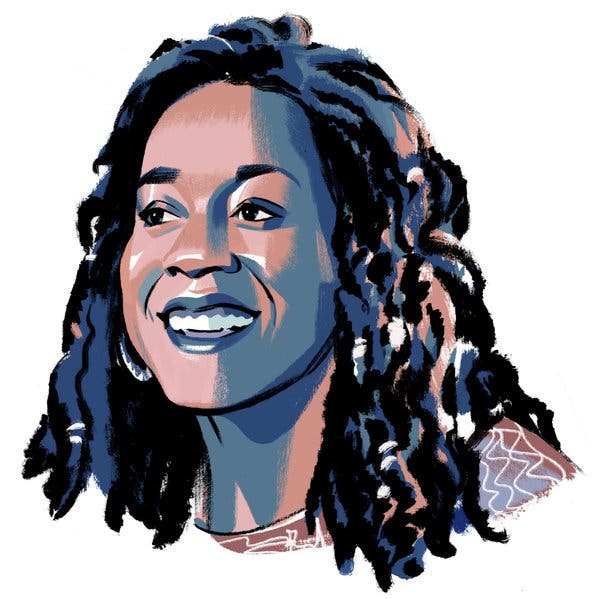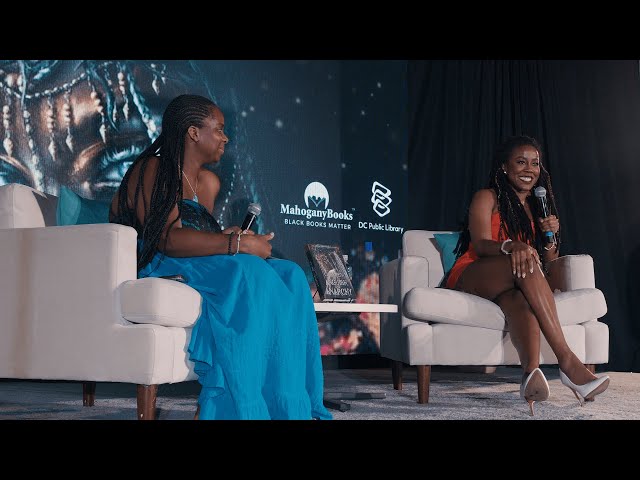

The number that follows Tomi Adeyemi everywhere is eight figures. In 2017, before her first novel had been published, the rights to Children of Blood and Bone went for what the trade press cautiously described as “a seven-figure deal with a high-six-figure floor on film.” A year later, with film options factored in, the public-facing figure had crossed ten million dollars. She was twenty-three. She had a Harvard English degree, a year of fellowship study in Salvador da Bahia, a half-finished manuscript that had been rejected by three agents before it found the right one, and a Pinterest board of West African gods. Whatever Children of Blood and Bone turned out to be on the page, the publishing industry had already decided what it would be on the balance sheet.
This is not the worst position from which to read a writer, but it is among the most distorting. Adeyemi arrived under the kind of pressure that breaks careers: a debut treated as a franchise before the franchise existed, a film deal pre-attached, a star-making press tour scheduled while the second book was still in outline. The interesting thing, with the trilogy now finally complete, is that she did the work anyway. Children of Blood and Bone (2018), Children of Virtue and Vengeance (2019), and Children of Anarchy (2024) form a body of work that is uneven, ambitious, frequently overstuffed, and unembarrassed by its own scale. They are also the most commercially successful African-rooted YA fantasy in the genre’s short history. What follows is a guide for readers approaching her work for the first time, or readers who fell off somewhere in the long delay between books two and three and want to know whether to come back.
Background

Adeyemi was born in 1993 in Chicago to Nigerian parents who had emigrated for medical training. She has spoken in interviews about being raised in a household where Nigerian identity was present but not foregrounded, and about coming to Yoruba mythology not as inheritance but as research project. At Harvard, where she studied English literature, she wrote a thesis on the parallels between Greek and West African gods. After graduating, she spent a fellowship year in Salvador da Bahia studying Yoruba religion and culture as it survived through the Brazilian Candomble tradition, a sideways route to her own ancestral material, mediated through the African diaspora’s Atlantic crossing.
The biographical detail matters because it explains the texture of the books. Adeyemi is not writing from inside the tradition she draws on. She is writing toward it, with the kind of intensity that comes from reaching. The orisha pantheon in The Legacy of Orïsha is researched, restructured, fictionalised, and bent to serve a YA narrative architecture. Readers who arrive expecting cultural transmission are sometimes thrown by this. Readers who understand the books as Yoruba-inflected American fantasy, written by a daughter of the diaspora for an audience that includes both Nigerian and non-Nigerian Black girls, tend to get more out of them.
She has been open about the books’ political genesis. The original draft was written in the summer of 2016, against a backdrop of Philando Castile, Alton Sterling, and a presidential campaign that pulled American racism into open daylight. The maji of Orïsha, persecuted for the magic that marks their bodies, were never meant as allegory in any disguised sense. They were the point. In a now-famous author’s note appended to the first book, Adeyemi addressed Black girls directly, asked them not to look away, and named the dead. That note continues to do something the novel itself cannot quite do alone.
The Legacy of Orïsha, Book by Book

Children of Blood and Bone opens with Zélie Adebola, a young maji whose mother was killed by King Saran’s purge of magic eleven years earlier. The plot is propulsive in a way that disguises some early-novel rough edges: Adeyemi alternates first-person voices, sometimes too quickly to settle, and the world-building arrives in great gulps. What the book gets right, and gets right almost immediately, is the emotional stakes. Zélie’s grief is not decorative. The persecution of the maji is not a thought experiment. The chase across Orïsha that drives the plot is built on whether magic should return at all, given what its return will cost, and the trilogy refuses to answer that easily. The novel’s set-pieces, an arena combat sequence, a sea crossing, a temple ritual, have the rhythm of cinema and the texture of West African ceremony rendered through manga sensibility.
Children of Virtue and Vengeance is the book that gave readers their first real pause. Picking up immediately after the first novel’s climax, it abandons the road-trip structure for a more static political thriller, with magic now restored and a civil war metastasising. The pacing slowed. The relationship triangles thickened. A subset of readers found Amari, the princess turned revolutionary, more compelling than Zélie in this volume, which destabilised the trilogy’s centre of gravity. Adeyemi’s gifts for action set-pieces remained intact, but the middle book asked the reader to live in confusion and political compromise for four hundred pages, and not every reader signed up for that. In retrospect, the second book is performing a darker structural function. It is the volume in which the cost of victory becomes the actual subject.
Then came the gap. Children of Anarchy was announced for 2020. It arrived in 2024. Four years, in YA, is a generation. Adeyemi has been candid about the reasons: the pandemic, depression, the weight of the contract, the difficulty of ending something that had already been bigger than any reasonable debut had a right to be. The final book, when it landed, did the work of an ending. It is denser than the first two, more willing to sit with cost, less interested in resolving every relationship cleanly. Readers who came of age with the trilogy met a writer who had also aged. Whatever the book’s flaws, and there are some, it earns its ending in a way that few trilogy closers manage.
Preoccupations Across the Body of Work

Three threads run through all three books, and through Adeyemi’s public commentary in roughly equal measure. The first is inherited persecution: what a community owes its dead, what it owes its living, whether vengeance and justice can be made to coexist. Adeyemi’s maji are not noble victims. They are angry, sometimes brutally so, and the trilogy is alert to what anger does to the people who carry it.
The second is power and its corruption, in a structure that does not exempt the protagonists. Zélie, Amari, and Inan are each given chances to become the thing they are fighting, and the trilogy makes them choose. The choices are not always heroic. Amari’s arc, in particular, refuses easy redemption and is the trilogy’s most quietly subversive thread - a princess who tries to become a queen of liberation and discovers, slowly, that the apparatus of monarchy will corrupt her too.
The third is mothers, specifically the absence of mothers, and the daughters who organise their lives around that absence. Mama Agba is the trilogy’s most quietly important figure for a reason. The mother-daughter line, broken and reconstituted across three books, is where Adeyemi does her best emotional work.