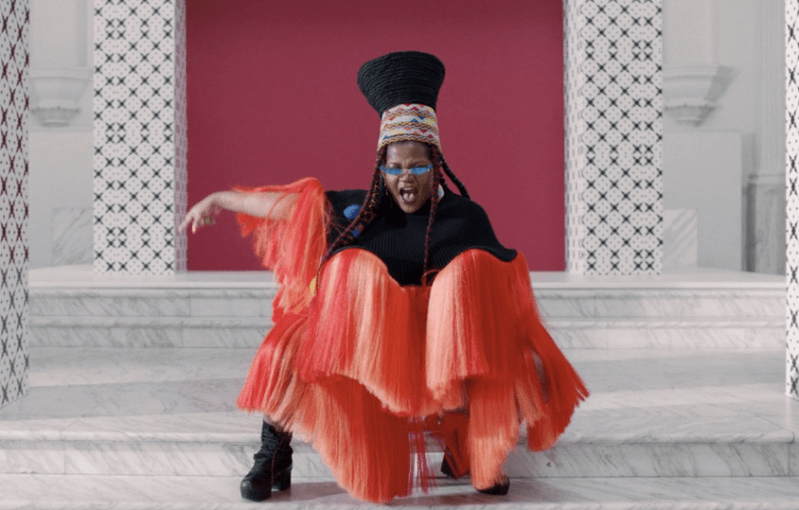
Every African Artist Who Has Ever Won a Grammy: The Complete List and Their Stories
Jalen Ross··10 min read
Ad SpaceArticle Top - 728x90
Advertisement
Grammy gold and the African continent have a longer history than most casual music fans realize. The first African name engraved on the gramophone trophy was called more than half a century ago, and the list has grown - quietly at first, then in a rush - through gospel choirs, jazz legends, house DJs, classical flautists, and the Afrobeats and Amapiano generation now redrawing the map of global pop. What follows is the full roll call of African-born artists who have walked away from Music’s Biggest Night with a competitive Grammy in hand, plus the stories that explain why each win mattered.
Diaspora artists with African heritage but non-African birth (Akon, Cynthia Erivo, Wyclef Jean and others) are noted only where context demands. The focus here is artists born on the continent.
Miriam Makeba (South Africa) - 1966, Best Folk Recording
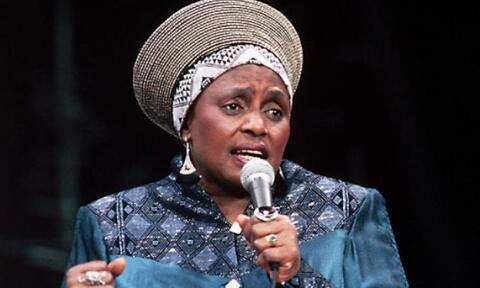
Mama Africa got there first. Miriam Makeba shared the 1966 Grammy for Best Folk Recording with Harry Belafonte for “An Evening with Belafonte/Makeba,” a live album that turned protest songs into living-room listening across the United States. The record carried “Ndodemnyama Verwoerd,” a direct shot at South African Prime Minister Hendrik Verwoerd, into homes that had never heard a word of Xhosa or Zulu before.
Makeba was already exiled from apartheid South Africa by the time the trophy was announced. The Grammy made her the first African-born artist to win the award, a fact that doubled as a quiet political statement. Her passport had been revoked. Her music had not. For the rest of the 1960s and 1970s she would carry that win as proof that an African voice could fill an American auditorium and bring an Academy with it.
Ladysmith Black Mambazo (South Africa) - Five Wins from 1988 to 2018
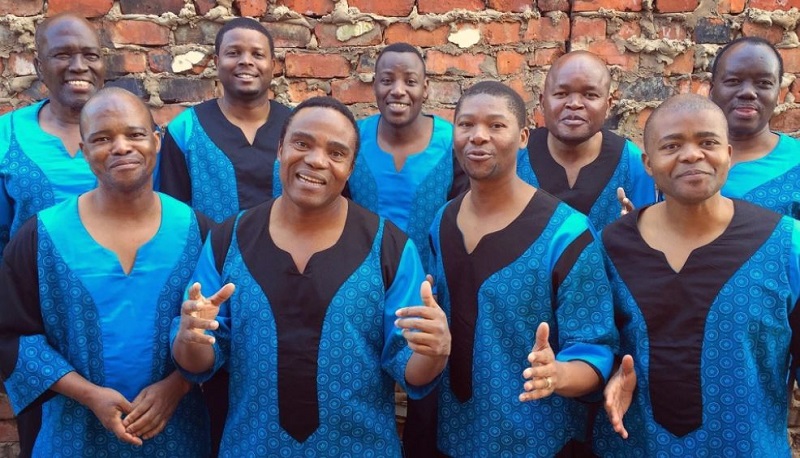
No African act has lined a mantelpiece with more competitive Grammys than Ladysmith Black Mambazo. The Zulu isicathamiya group founded by Joseph Shabalala in 1960 first reached American ears through Paul Simon’s “Graceland,” but the trophies came on their own albums.
Their 1988 Grammy for Best Traditional Folk Album, awarded for “Shaka Zulu,” was produced by Paul Simon and broke them out of the Graceland sideshow into Grammy headliners in their own right. Sixteen years later they took Best Traditional World Music Album in 2004, then claimed the same category again in 2009. In 2013 they won Best World Music Album, and in 2018 they did it once more, bringing their total to five.
Joseph Shabalala died in 2020, but his sons and the second generation of Mambazo singers continue to tour. The five trophies sit not in a single home but spread across the families of a group that has cycled through dozens of members since 1960, each one carrying the harmony forward.
Soweto Gospel Choir (South Africa) - Back-to-Back in 2008 and 2009
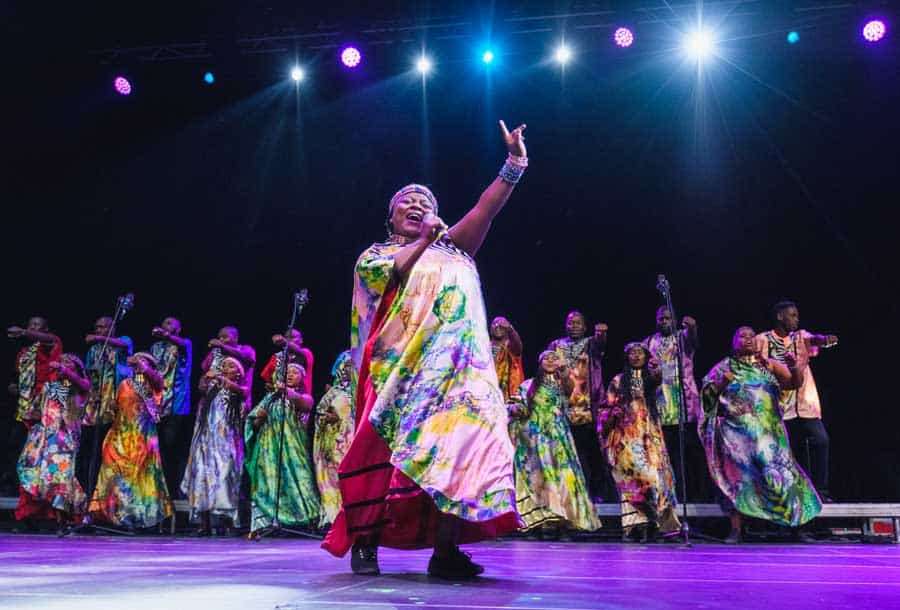
Founded in 2002 by David Mulovhedzi and Beverly Bryer, the Soweto Gospel Choir won Best Traditional World Music Album in 2008 for “Blessed” and repeated the feat in 2009 with “African Spirit.” Two consecutive Grammys, two albums of South African gospel pressed onto American shelves.
The choir’s appeal sits at the intersection of church music and ancestral song. Their version of “Amazing Grace” sung in English, Zulu, and Sotho became a fixture at international memorial services and benefit concerts. The back-to-back wins announced that the gospel choir, not just the solo voice, could compete for Grammy attention.
Angelique Kidjo (Benin) - Five Wins and a Reinvention Every Time
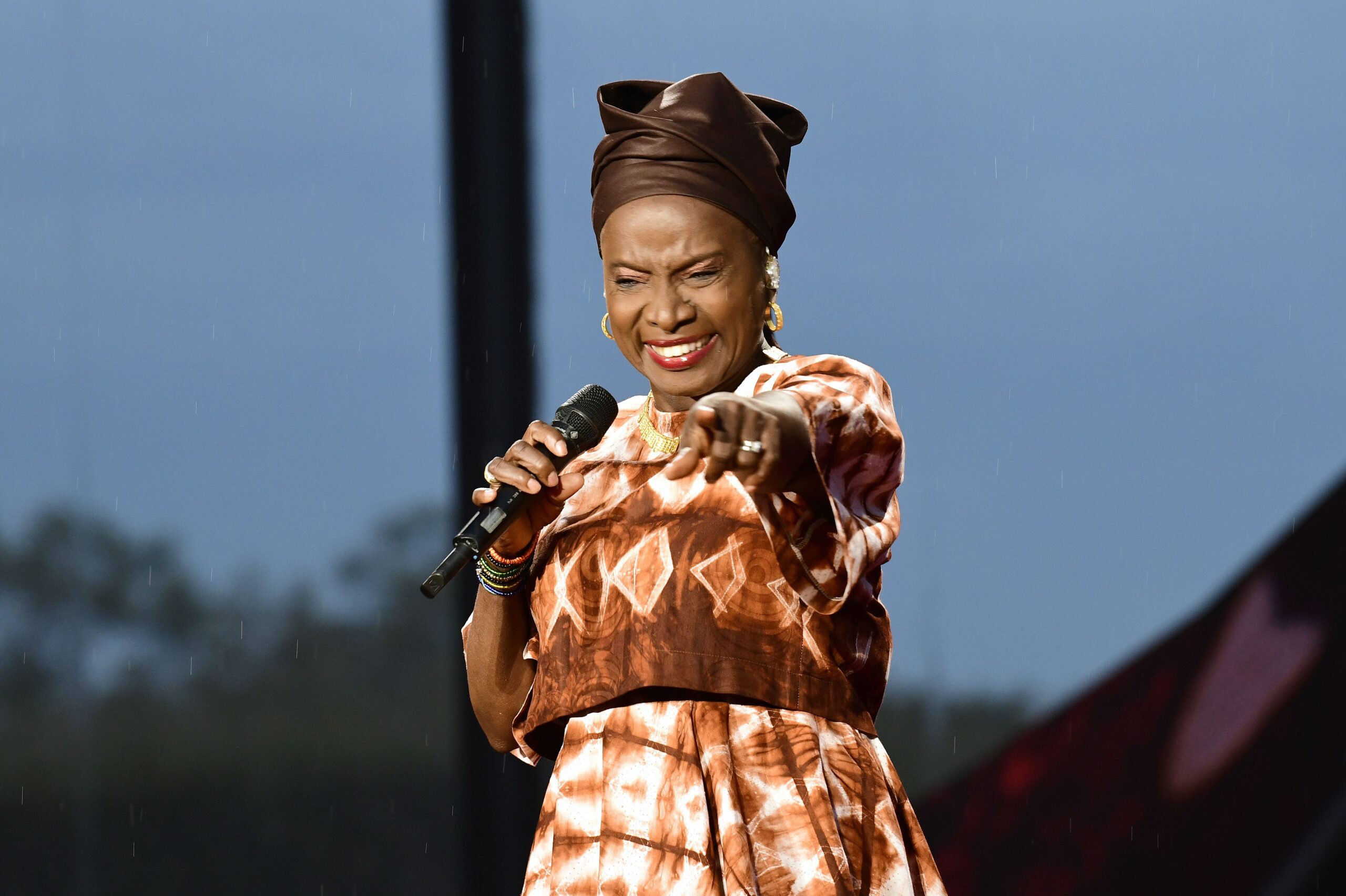
If Ladysmith Black Mambazo built their five trophies on the steady stack of a single tradition, Angelique Kidjo built hers by refusing to repeat herself. The Beninese singer won Best World Music Album in 2008 for “Djin Djin,” again in 2015 for “Eve,” in 2016 for “Sings” (a live recording with the Luxembourg Philharmonic Orchestra), and in 2020 for “Celia,” a tribute to Cuban legend Celia Cruz.
When the Academy renamed the category to Best Global Music Album in 2021, Kidjo collected that one too. Her 2022 win for “Mother Nature” featured collaborations with Burna Boy, Yemi Alade, Salif Keita, and Mr Eazi, effectively passing the torch to a younger generation of African pop while keeping her own grip on the trophy.
Kidjo’s Grammy collection now matches Ladysmith Black Mambazo at five. She remains the most decorated African solo artist in Grammy history, and her ability to glide between fuji, samba, gospel, classical, and Afrobeats is the reason the Recording Academy keeps finding categories that fit her.
Wouter Kellerman (South Africa) - 2015, Best New Age Album
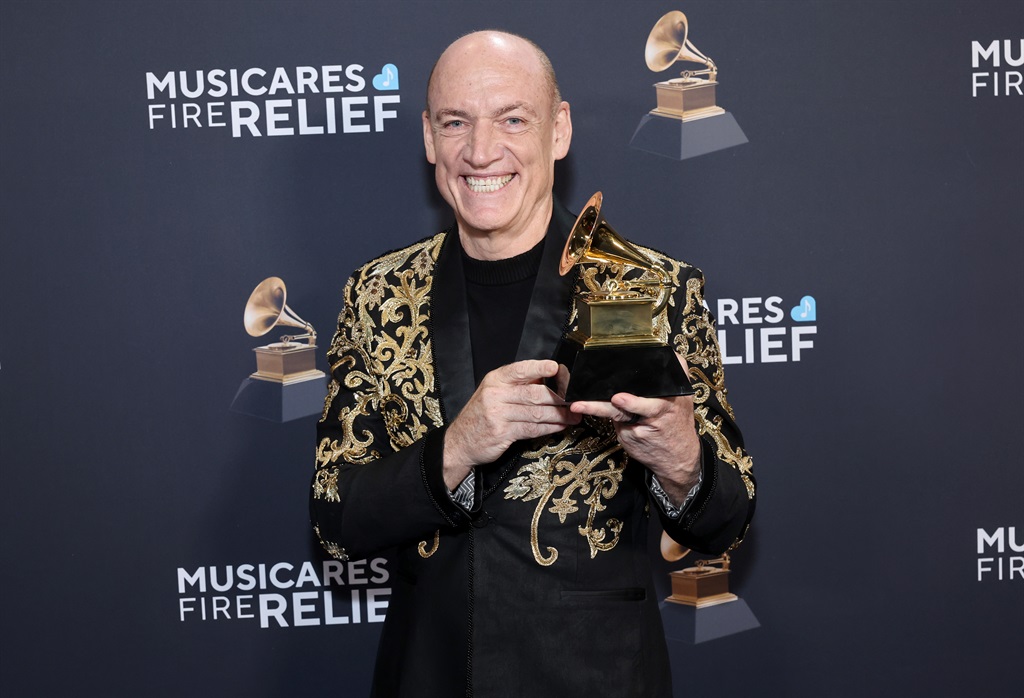
The 2015 Grammy for Best New Age Album went to “Winds of Samsara,” a collaboration between South African flautist Wouter Kellerman and Indian composer Ricky Kej. The album was recorded across three continents and threaded the South African flute through Indian classical and Western orchestral arrangements.
Kellerman, classically trained and a former mathematics student, is rarely named in Afrobeats roundups, but his Grammy is a real one. The album opens with a recording of Mahatma Gandhi’s voice, a fitting frame for a record built on the idea that breath crosses borders.
Soweto Gospel Choir Returns - 2019, Best World Music Album
The choir came back for a third Grammy in 2019, winning Best World Music Album for “Freedom,” a record built around the protest songs of the anti-apartheid movement. The album includes a haunting reading of “Asimbonanga,” Johnny Clegg’s lament for the imprisoned Nelson Mandela.
That trophy brought the choir’s total to three Grammys, all in the world or traditional world music categories. Few choirs in any genre have matched their consistency over a fifteen-year stretch.
Burna Boy (Nigeria) - 2020, Best Global Music Album
The first Nigerian Afrobeats artist to win a Grammy in his own name did it on his second try. Damini “Burna Boy” Ogulu was nominated in 2019 for “African Giant” and lost. He returned in 2020 with “Twice as Tall,” executive produced by Diddy and stacked with features from Stormzy, Youssou N’Dour, Chris Martin, and Naughty by Nature.
The Best Global Music Album trophy (the renamed Best World Music Album) was the validation moment that Lagos had been waiting for. Burna Boy’s acceptance came over video from his home in Nigeria, his mother Bose Ogulu beside him, and the speech she delivered about African artistry crossing borders without apology became one of the most circulated Grammy clips of that year.
The win cracked something open. Within four years the Academy would create a category specifically for African music. Burna Boy’s “Twice as Tall” trophy is the marker on the map where that shift began.
Wizkid (Nigeria) - 2021, Best Music Video (Featured Artist)
Ayodeji “Wizkid” Balogun does not have a Grammy for one of his own albums, but his name is engraved on a trophy. Beyonce’s “Brown Skin Girl,” from the “Lion King: The Gift” soundtrack and visual album “Black Is King,” won Best Music Video at the 2021 ceremony. Wizkid is a credited featured artist on the song alongside SAINt JHN and Beyonce’s daughter Blue Ivy Carter.
Ad SpaceIn-Article - 300x250
Advertisement
Some Nigerian outlets argued at the time that the win belonged to Beyonce alone. The Recording Academy’s own credits include Wizkid as a winner. The plaque, by the official record, has his name on it.
Black Coffee (South Africa) - 2022, Best Dance/Electronic Album
Nkosinathi “Black Coffee” Maphumulo turned a one-armed DJ career (he was injured in a 1990 car accident) into a global house music empire, and in 2022 the Recording Academy made him the first African artist to win Best Dance/Electronic Album. “Subconsciously” featured Pharrell Williams, Usher, Diplo, Sabrina Claudio, and David Guetta, but the production sat firmly in the deep house tradition Black Coffee has worked since the early 2000s.
The trophy mattered because Best Dance/Electronic Album is not a “world music” or “global” category. It is the main electronic music prize at the Grammys, and Black Coffee won it outright over Marshmello, Illenium, Major Lazer, and Ten City. South African house, born in the townships and refined in clubs from Durban to Johannesburg, took the headline category and walked out with it.
Angelique Kidjo Again - 2022, Best Global Music Album
The same 2022 ceremony that crowned Black Coffee also gave Kidjo her fifth Grammy. “Mother Nature” beat Femi Kuti’s “Legacy +” (a joint album with his son Made Kuti) along with records by Wizkid, Yo-Yo Ma, and Daniel Ho. The night made it official: the African field at the Grammys had become competitive enough that an African artist beating other African artists for the trophy was now normal.
Tems (Nigeria) - 2023, Best Melodic Rap Performance
Temilade “Tems” Openiyi won her first Grammy without releasing a song under her own name in the category. “Wait for U,” the Future single featuring Drake and a Tems sample, took Best Melodic Rap Performance at the 2023 ceremony. Tems was credited as a songwriter and featured artist, and her name was called from the stage.
She accepted in a flowing white dress and gave a short speech about her mother. The trophy made her the first Nigerian woman to win a Grammy. The route was unusual (she got there through a Future single sampling her vocals from “Higher”), but the engraving is the same as anybody else’s.
Tyla (South Africa) - 2024, Best African Music Performance
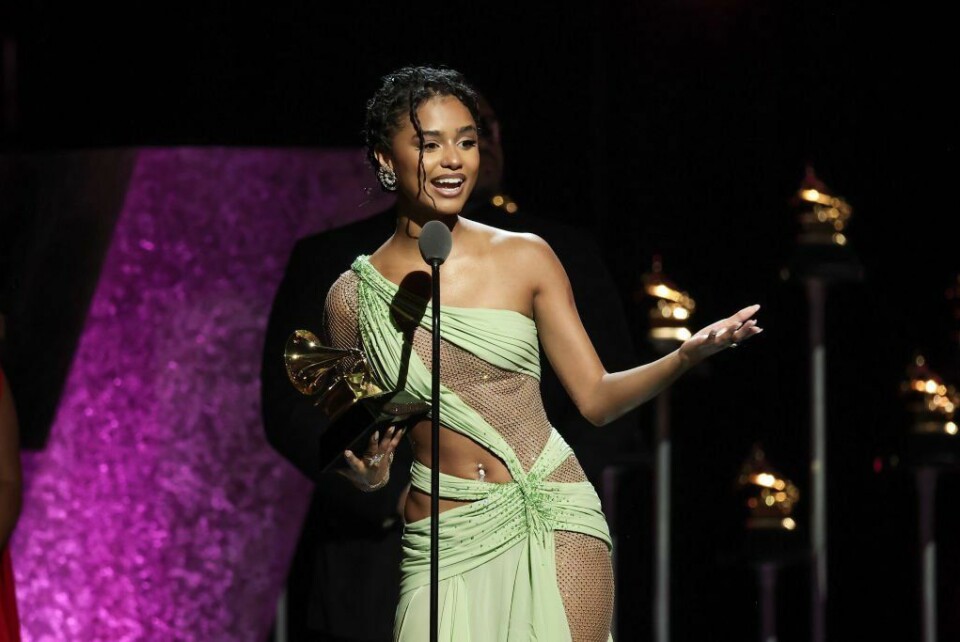
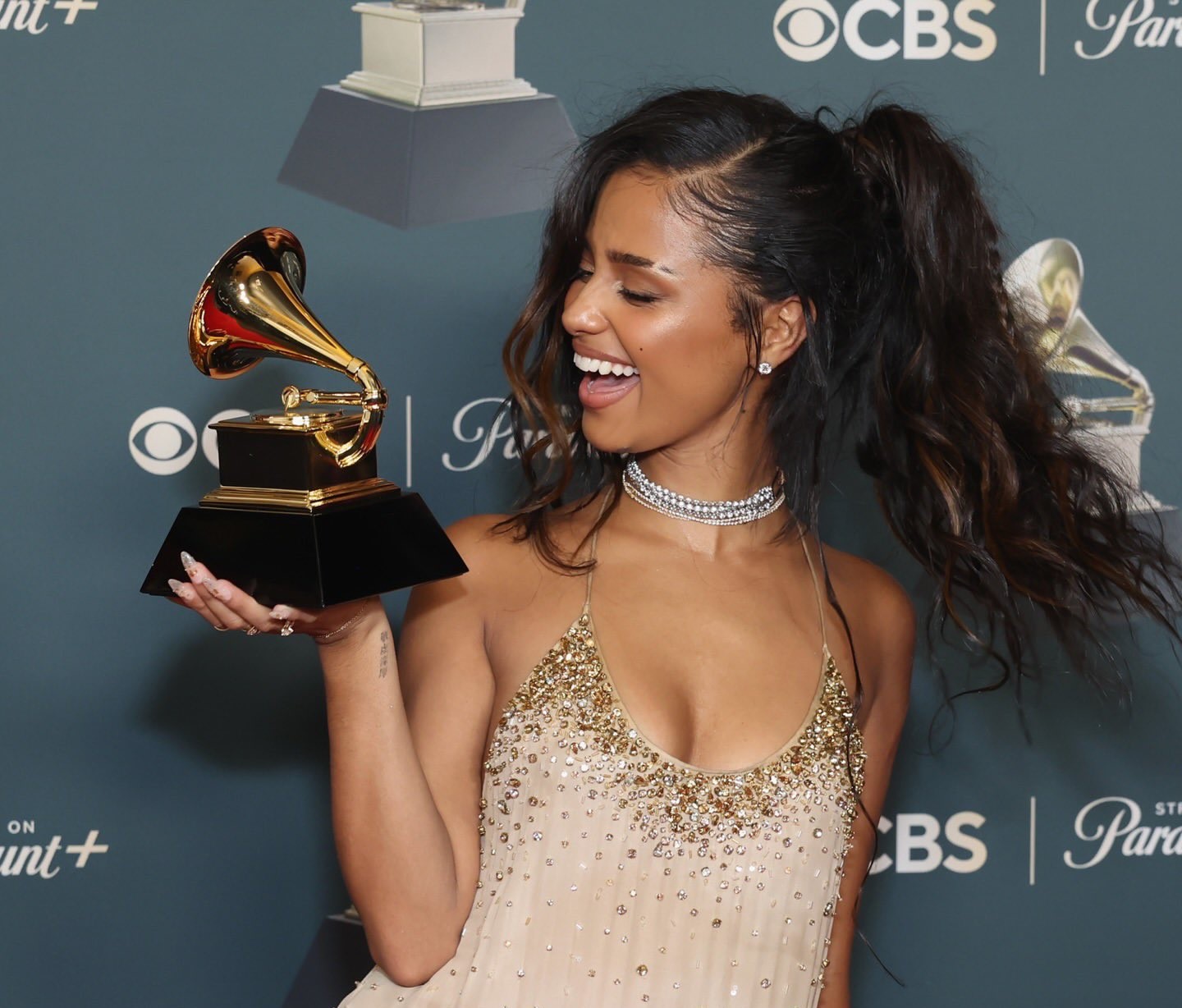
The Recording Academy created the Best African Music Performance category for the 2024 ceremony. The first winner was a 22-year-old from Johannesburg named Tyla Laura Seethal. “Water,” the slinky Amapiano-pop crossover that had spent the previous year on global charts, beat tracks from Burna Boy, Davido, Asake, Olamide, Ayra Starr, and Musa Keys.
Tyla wore a high-slit white gown and accepted the trophy with visible shock. She thanked South Africa, thanked her family, and dedicated the moment to “every young African girl watching.” At 22 she became the youngest African solo winner on this list, and she did it by winning a category created specifically for the music of her continent.
The inaugural win for Best African Music Performance went to a song built on Amapiano percussion, sung in English with Zulu inflections, and released on a major American label. It marked the moment the Grammy infrastructure caught up to what African pop had already become.
Tems Again - 2025, Best African Music Performance
A year after Tyla’s win, Tems took the second-ever Best African Music Performance trophy with “Love Me JeJe,” a reimagining of the 1997 Seyi Sodimu classic. The 2025 win was Tems’s second Grammy overall and her first for a solo song under her own name.
She beat fellow Nigerians Burna Boy, Yemi Alade, and Asake, plus South African and Beninese nominees. The trophy confirmed Tems as the first artist to win the African category for a solo single, and it kept Nigeria’s name on the new prize for its second straight year.
On Hugh Masekela, Femi Kuti, and the Nominations That Never Converted
Some names that get cited as Grammy winners are not, in fact, on the list.
Hugh Masekela, the South African trumpeter who gave the world “Grazing in the Grass” and “Bring Him Back Home,” was a multiple Grammy nominee but never won a competitive trophy. He died in 2018 without one. The South African Music Awards, the Helpmann, the SAMA, and countless honorary citations he collected. The Grammy itself eluded him.
Femi Kuti has been nominated five times across two decades (2003, 2010, 2012, 2013, and 2022 for “Legacy +” with his son Made), and has lost every time, including to Angelique Kidjo. His brother Seun Kuti was nominated in 2019 for “Black Times” with Egypt 80 and also did not win. The Kuti legacy, including father Fela, remains one of the most decorated in African music without a single competitive Grammy attached to the family name.
Davido was nominated three times at the 2024 ceremony (Best Global Music Album for “Timeless,” Best Global Music Performance, and Best African Music Performance for “Unavailable” with Musa Keys). He left empty-handed. The Nigerian superstar’s first Grammy is still pending.
The Diaspora Question
A handful of artists with African heritage but non-African birth have Grammys, and they are sometimes folded into “African Grammy winner” lists. The cleanest line: Akon (born in Missouri to Senegalese parents) has been nominated multiple times and never won. Wyclef Jean, Haitian-born, has Grammys but is not African. Cynthia Erivo, the Nigerian-British actress chasing EGOT status, has not yet won a Grammy in a music category.
The Grammy roll call of artists born on the African continent therefore comes to a manageable list: Makeba, the Mambazo singers, the Soweto choir, Kellerman, Kidjo, Burna Boy, Wizkid (as featured artist), Black Coffee, Tems, and Tyla. Eleven names if you count Wizkid’s featured credit. Ten without him.
What the Trophies Say When You Line Them Up
Lay the wins out chronologically and a pattern emerges. From 1966 to 2007, only Miriam Makeba and Ladysmith Black Mambazo carried the African Grammy flag, and they did it almost entirely in folk and world-music categories that the Academy had partitioned off from its main prizes. From 2008 onward, the African presence multiplied: Kidjo’s run, the Soweto Gospel Choir’s back-to-back wins, Kellerman’s classical-flute crossover, Burna Boy’s breakthrough into the Best Global Music Album conversation, and Black Coffee’s victory in a non-African-specific dance category.
The 2024 creation of Best African Music Performance, with Tyla as its inaugural winner and Tems as its second, completed a fifty-eight-year arc that began with Makeba’s protest folk record. The trophy that sits in Tyla’s Johannesburg home shares an engraver and a manufacturer with the one that sat with Miriam Makeba in exile in Guinea in 1966.
Tyla was born thirty-six years after Makeba’s Grammy was announced. She is now the youngest name on a list that started with the oldest woman of African song. Between them sit a Zulu isicathamiya group, a Beninese genre-shifter, a one-armed house DJ from Durban, a Lagos songwriter who got there through a Future single, a Soweto gospel choir, and a flautist with a recording of Gandhi on his album. The list is short. Every name on it earned the trophy outright.
Ad SpaceIn-Article - 300x250
Advertisement
Share
Get the recap
Loved this story? Get more like it.
Join readers who get our weekly entertainment recap - the stories worth your time, delivered every Friday.
No spam. Unsubscribe anytime. By signing up you agree to our Privacy Policy.