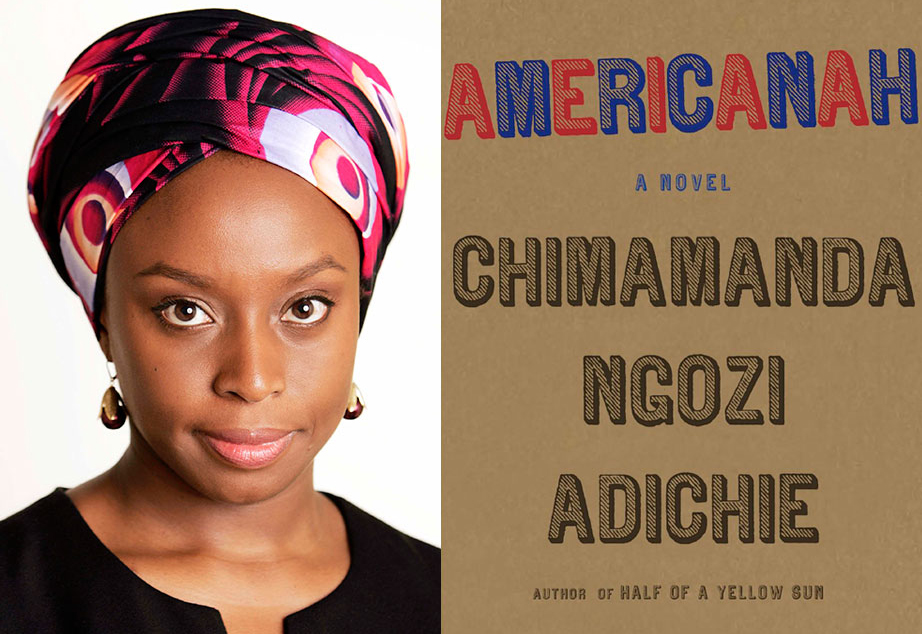


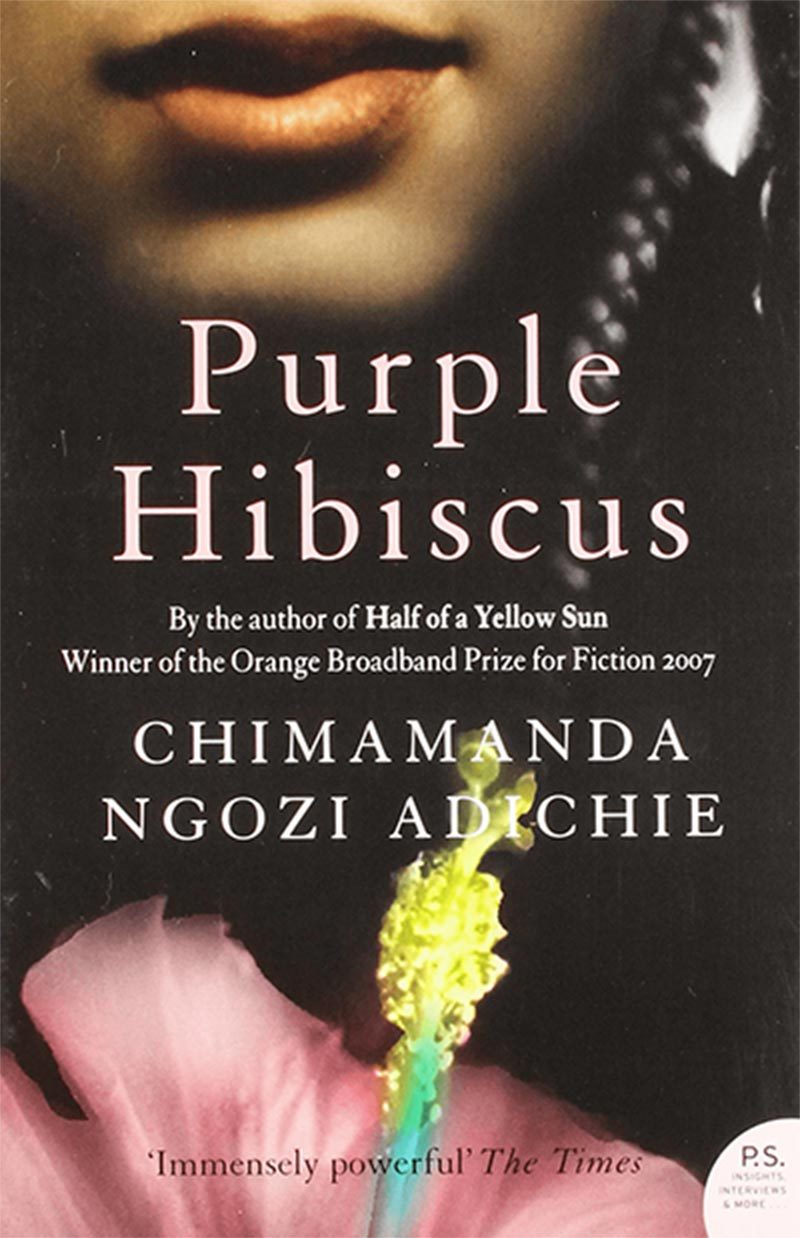
“Things started to fall apart at home when my brother, Jaja, did not go to communion.” So begins Chimamanda Ngozi Adichie’s first novel, and the nod to Achebe in the opening sentence is so direct it functions as a declaration. Purple Hibiscus was published in 2003 by Algonquin Books in the United States and by Fourth Estate in Britain. Adichie was twenty six. The novel won the Hurston/Wright Legacy Award for debut fiction in 2004 and the Commonwealth Writers’ Prize for Best First Book in 2005, was shortlisted for the Orange Prize in 2004 and longlisted for the Booker Prize the same year. It is also a more controlled and stranger novel than the publicity around her later books tends to suggest.
| Title | Purple Hibiscus |
|---|---|
| Author | Chimamanda Ngozi Adichie |
| First published | 2003 |
| Publishers | Algonquin Books (United States), Fourth Estate (United Kingdom) |
| Setting | Enugu and Nsukka, Nigeria, under military rule in the 1990s |
| Prizes | Hurston/Wright Legacy Award for debut fiction, 2004; Commonwealth Writers’ Prize for Best First Book, 2005; shortlisted for the Orange Prize, 2004; longlisted for the Booker Prize, 2004 |
The Mass That Does Not Get Taken
The opening scene is set on Palm Sunday in Enugu. Jaja, seventeen, has refused communion at St Agnes parish, where his father Eugene Achike is the prominent benefactor and the most observed man in the pew. Eugene, who has just taken the wafer himself, walks home and flings his heavy missal across the room. It breaks his wife Beatrice’s figurines on the étagère, the small ballerina collection she polishes after every beating, which is one of the novel’s earliest tells about what kind of household this is. Kambili, the fifteen year old narrator, watches her mother kneel to gather the porcelain pieces, and the structure of the rest of the book is announced in that one gesture. We will return, eventually, to Palm Sunday. Everything in between tells us how Jaja arrived at the refusal of a wafer. The novel is a long flashback to a small heresy.
The House That Eugene Built
Eugene Achike is a difficult character to write well, and Adichie writes him very well indeed. He is rich; his factories turn out wafers and biscuits and bottled juice. He is the publisher of the Standard, the one paper in town still openly criticising the military regime. He is a fiercely observant Catholic, formed by the missionaries who educated him, who calls his elderly father Papa-Nnukwu a heathen and allows his children fifteen minutes in the old man’s company at Christmas. He gives generously to the parish, washes the feet of beggars, and beats his wife and children with a vigour he understands as itself a form of love. He pours boiling water over Kambili’s feet for what he sees as walking into sin. He broke Jaja’s finger years earlier over a catechism answer. He beats Beatrice into two miscarriages.
What Adichie does with Eugene, and this is the craft achievement of the debut, is to make him a coherent psychological object rather than a monster. He is genuinely brave. The Standard under his ownership runs the editorials that get its editor Ade Coker killed by a parcel bomb, and Eugene weeps at the funeral. He weeps for his daughter after he has scalded her. He believes himself a martyr to a discipline his own father failed to give him. The novel does not redeem him, and given what he does to his family it cannot, but it refuses the easy version in which he is simply a hypocrite. He is what a certain mission Catholicism made, and what money and isolation then preserved.
The book is therefore, among other things, a study of how religious authoritarianism reproduces itself inside a single household. Eugene is not abusive because he is privately corrupt. He is abusive because he believes, with full intellectual seriousness, that suffering is the route to salvation and that he is answerable for the salvation of his family. That is considerably more frightening than the alternative reading would be.
Aunty Ifeoma’s Flat in Nsukka
The novel breaks open in its middle third when Kambili and Jaja are sent to Nsukka to stay with Aunty Ifeoma, Eugene’s widowed sister and a lecturer at the university. The flat on Marguerite Cartwright Avenue is small. The fridge sputters. The fuel queues are long. Aunty Ifeoma raises three children, the precocious Amaka, the gentle Obiora and the small Chima, on a salary that goes unpaid for months at a time, and she laughs through it. She cooks orah soup. She lets her children argue with her at the table. She takes in her father Papa-Nnukwu when he is ill and refuses to let Eugene’s Catholicism define him as a heathen.
For Kambili, raised in the silenced perfection of her father’s house, Nsukka is a controlled detonation. She does not know how to laugh. She does not know how to argue. She has never seen a cousin roll her eyes at her own mother and survive it. She watches Papa-Nnukwu make his morning declarations of innocence, drawing his lines of chalk on the floor and asking the ancestors for blessings on the family that scorns him, and discovers that what her father calls heathenism looks, from the inside, like something with its own dignity and its own beauty.
The young priest Father Amadi, an Igbo who plays football with the boys at the stadium and sings Igbo praise songs at Mass, becomes Kambili’s first object of religious and erotic attention. Adichie writes the attachment without sex, without consummation and without sentimentality: he takes her to the stadium, makes her run, makes her laugh, and treats her seriously, and the reader watches a girl learn that she is a person. Father Amadi will leave for missionary work in Germany. Kambili will love him for the rest of the novel and almost certainly well past it. It is the most accurately rendered adolescent crush in recent African fiction.
Politics in the Hallway
The novel sits inside the Nigeria of military rule in the 1990s. Adichie does not name the dictator or the regime. A coup happens in the background. The Standard‘s editor Ade Coker is killed by a parcel bomb that detonates at his breakfast table while his daughter is sitting there. The university at Nsukka loses power for weeks at a stretch. Students riot over fuel and water. Aunty Ifeoma is dismissed from her post for what the administration treats as disloyalty, applies for a visa and leaves for an academic job in the United States, and the family is scattered.