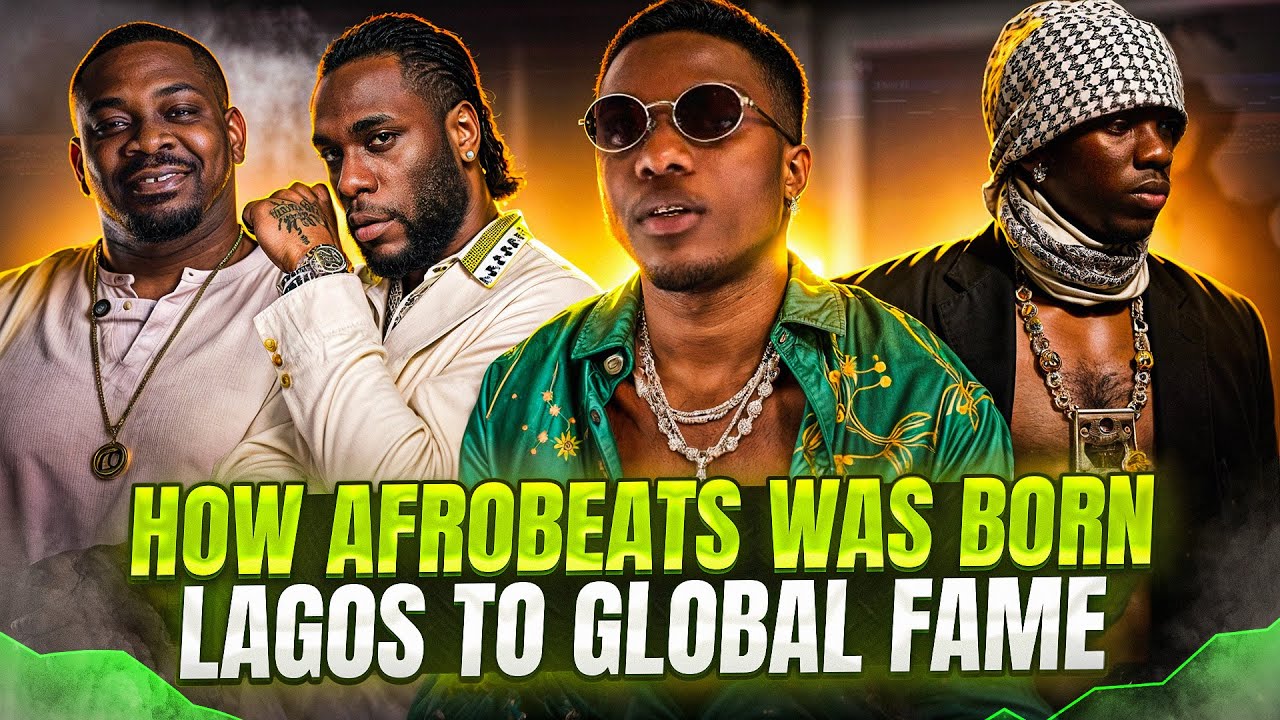
How Afrobeats Changed the Way the World Dances: TikTok, Clubs and Global Trends
Jalen Ross··11 min read
Ad SpaceArticle Top - 728x90
Advertisement
A teenager in Seoul films herself in a mirrored studio. Behind her, a friend counts off in Korean. The song is Rema’s “Calm Down,” and the choreography is a clipped, knee-bouncing routine borrowed from a Lagos dancer she has never met. By the time the school bell rings in Lagos, a handful of Nigerian kids have stitched the clip, added their own variations and pushed the loop somewhere new. None of them had to talk to each other. The song did the talking.
That is the story of Afrobeats and the world’s feet, told in miniature. Over the last seven or eight years, a genre that was once shorthand for a single hot night in Lagos has become one of the default engines of global dance trends. The sound moved first, but the movement followed, and the movement is what made the sound stick. You can trace the journey through specific songs, specific dancers and specific platforms, and what emerges is not a story about luck. It is a story about an ecosystem that learned how to make bodies move on several continents at once.
From Lagos street corners to global feeds
Before TikTok existed in the form everyone knows now, Afrobeats dance was already a real economy. The Galala era of the late 1990s and early 2000s gave Lagos a vocabulary of low squats and shoulder pops. The Alanta years that followed made the legs do most of the work. Shaku Shaku came next, emerging out of Agege street culture in the mid-2010s with no single named inventor, loosely credited to the neighbourhood’s street youth, and breaking nationally in late 2017 and early 2018 on the back of Olamide’s “Science Student” and Mr Real’s “Legbegbe.” Each wave arrived with its own footwork grammar, and each one was taught hand to hand long before an algorithm got involved.
Davido’s “Fall,” released in June 2017, is the clearest proof of concept from that period. It became a long-running entry on Billboard’s R&B/Hip-Hop Airplay chart, where Billboard’s own chart history shows a peak of number 13 and a run of 21 weeks stretching into 2019. That run was widely reported at the time as the longest any Nigerian pop song had managed on a Billboard chart, and it was not powered by radio alone. It was powered by wedding receptions in Atlanta, house parties in London and grainy phone clips of cousins teaching cousins how to do the leg work. What the industry would later call a TikTok run was already happening here, just without the centralised app. The infrastructure was WhatsApp groups, Instagram comment sections and an unbroken chain of Nigerians showing relatives how to step.
The Zanku moment
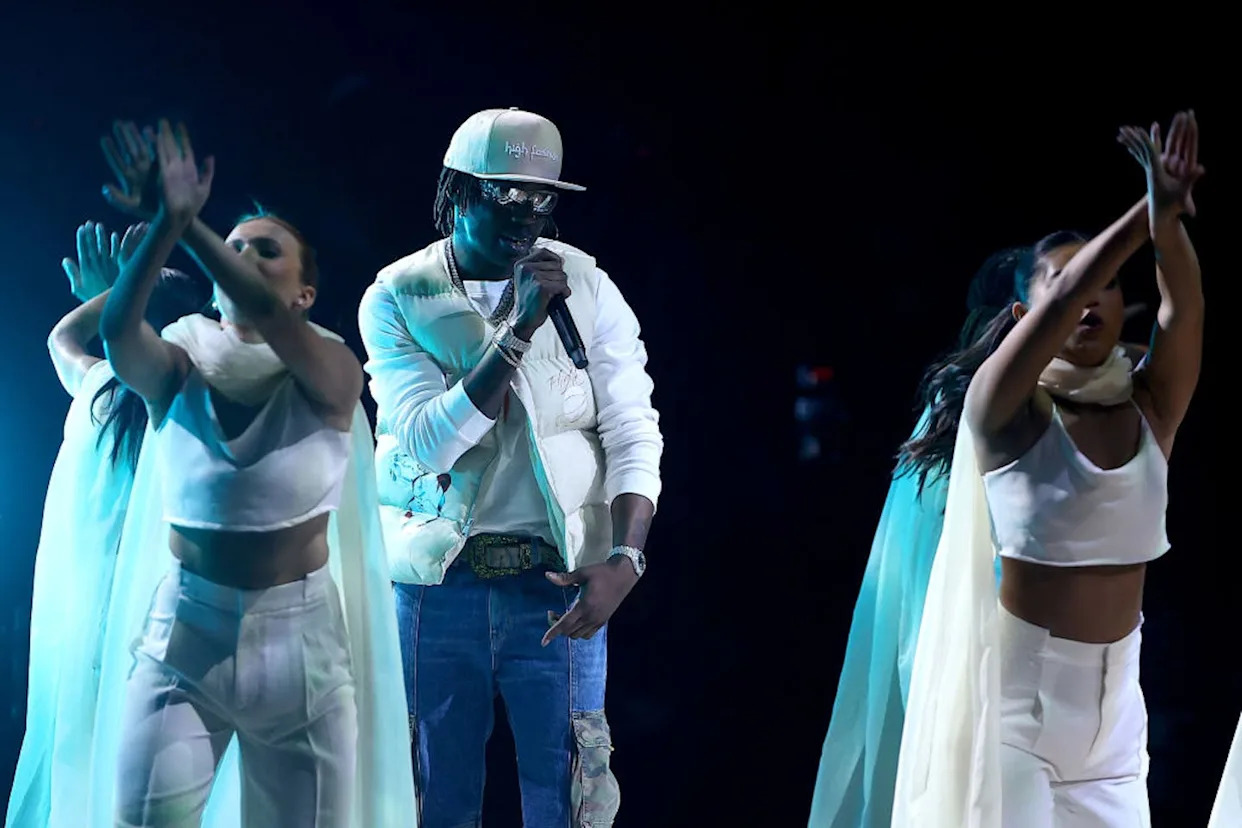
Then came Zlatan. In late 2018 the rapper released “Zanku (Leg Work)” and gave the choreography a single, packageable name. It is worth being precise about what he did, because the credit is contested. The move itself was already circulating in Lagos. Zlatan said in interviews at the time that he had seen it at the Shrine and refashioned it into a trend, and the step had already surfaced in his own “Jogor” video in August 2018 and spread through Chinko Ekun’s “Able God” that October. In later interviews he has claimed authorship outright. What is not in dispute is that he branded it, and the brand travelled. Footballers hit it after goals. Kids filmed it in kitchens in Texas. Burna Boy folded it into stage shows. Poco Lee, the Lagos dancer who became its most visible practitioner, popularised it without having created it.
What Zanku proved, and what every Afrobeats dance after it would inherit, was that the moves had to be both specific and forgiving. You needed a recognisable signature, the kind a stranger could spot in two seconds, but the steps could not be so hard that a teenager in a bedroom in Manila gave up after one try. Zanku met both bars. So did almost everything that came after it.
TikTok as the new dancehall
When TikTok globalised in 2019 and 2020, it found Afrobeats waiting for it. The genre had spent a decade rehearsing for exactly this format. Songs were already built around short, hooky pre-choruses. Producers were already designing drops that landed within the first few seconds. Dancers were already filming themselves vertically on cheap phones. The app simply gave the ecosystem a single timeline and a recommendation engine with an appetite for how Nigerian music made bodies look.
CKay’s “Love Nwantiti” turned that compatibility into a phenomenon nobody could ignore. Originally released in August 2019, the song caught fire on TikTok in September 2021 through an unauthorised slowed-down remix, and Rolling Stone counted more than three million TikTok videos using it within weeks. It charted in roughly 160 countries, and by Apple’s Shazam figures it was the longest-running global number one of 2021. What made the numbers stick was the dance, a slow, swaying two-step that any couple anywhere could attempt without looking foolish. It was the slow-jam side of Afrobeats teaching the world that the genre was not all kinetic energy. Sometimes it was just two people leaning into each other in a kitchen at 11 p.m.
Calm Down, Buga and the choreography arms race
After “Love Nwantiti,” the cadence of breakthroughs accelerated. Kizz Daniel and Tekno’s “Buga (Lo Lo Lo)” arrived on 4 May 2022 with a hand-on-belt celebration step that was tailor-made for the way TikTok crops vertical video at the waist. The dance was visible in frame whether you were six feet tall or four, and the song collected an entire summer of weddings, birthday parties and graduation reels. Rema’s “Calm Down” started its TikTok life as an album cut, found a romantic dance loop, and then mutated again when the Selena Gomez remix gave Latin American creators a reason to reinterpret the same steps with reggaeton hip work.
Burna Boy’s “Last Last,” produced by Chopstix and released in 2022, did something different. The response was not really a dance at all. It was a posture, a heartbreak slouch, and creators leaned into the meme half of TikTok rather than the choreography half. The song carried for months on a swirl of breakup reenactments, comedic skits and dance teachers eventually turning the slouch into actual eight-count routines. A year later, Davido and Musa Keys gave the platform “Unavailable,” from Davido’s “Timeless” album in March 2023 and issued as a single that April, with a thumping log-drum beat and a simple two-step that South African amapiano dancers ran with first and the rest of the world copied within a week.
Asake widened the lane again. “Sungba” and “Lonely at the Top” both leaned on the fuji and amapiano hybrid he was helping to build, and the dances that emerged around them were closer to choreographed group routines than the loose individual challenges of earlier years. Choreographers including Izzy Odigie, who has worked with Asake as well as Rema, Wizkid and Davido, turned his tracks into the kind of full-bodied, eight-count showcases that fill festival stages. Poco Lee had already proven what a single dancer with a phone could do. His push behind Portable’s “ZaZoo Zehh,” released in December 2021 with Poco Lee credited as a primary artist alongside Portable and Olamide, helped launch a new artist’s career close to real time.
Ad SpaceIn-Article - 300x250
Advertisement
The dancers who actually built this
The artists get the streams, but the choreographers built the global vocabulary. Poco Lee is the most visible name in that wave, a dancer whose clips have functioned as informal A&R for an entire generation of Lagos hits. Izzy Odigie, the Brooklyn-born Nigerian-American choreographer who founded the TRYBE collective and has built her longest working relationship with Rema, has spent the better part of a decade running Afrobeats classes that show up in feeds from Houston to Berlin. Her tutorials are part of the reason Western dance studios now treat Afrobeats as a standalone discipline rather than a subsection of world dance.
Kaffy, the veteran Nigerian choreographer born Kafayat Shafau who founded Imagneto Dance Company and led the 55-hour Nokia Silverbird danceathon that set a Guinness record for longest dance party in 2006, has spent the platform years pushing Afrobeats as a teachable system rather than a vibe. Papi Ojo, the Nigerian-American dancer who was born in Nigeria, raised in Lagos and moved to Brooklyn as a teenager, carries a choreography credit on Beyonce’s Black Is King and taught her the Nigerian gbese step for “Already.” He also taught Rihanna gwara gwara ahead of the 2018 Grammys. Each of these names matters because the global takeover did not happen by accident. It happened because there were dancers willing to film themselves hundreds of times a week and post until something stuck.
The Lagos-to-TikTok pipeline
The pipeline now works in both directions, and the speed of it is what is genuinely new. A producer in Surulere can finish a beat at midnight, send it to an artist who records by 3 a.m., have a rough mix by morning, and put a snippet on TikTok by lunch with a Lagos dancer already shooting the challenge by sundown. If the challenge catches, foreign creators are stitching it within days. If it does not, the team moves on. The cycle that used to take a song six months to resolve now resolves itself inside a week. That speed is also what makes the genre’s global moves feel almost ambient. There is no single big launch event. There is just a continuous tide of clips, and every few months one of them washes over the rest of the world and becomes the song you cannot escape in a car, a gym or a wedding tent.
Crossover and the rest of the world catching up
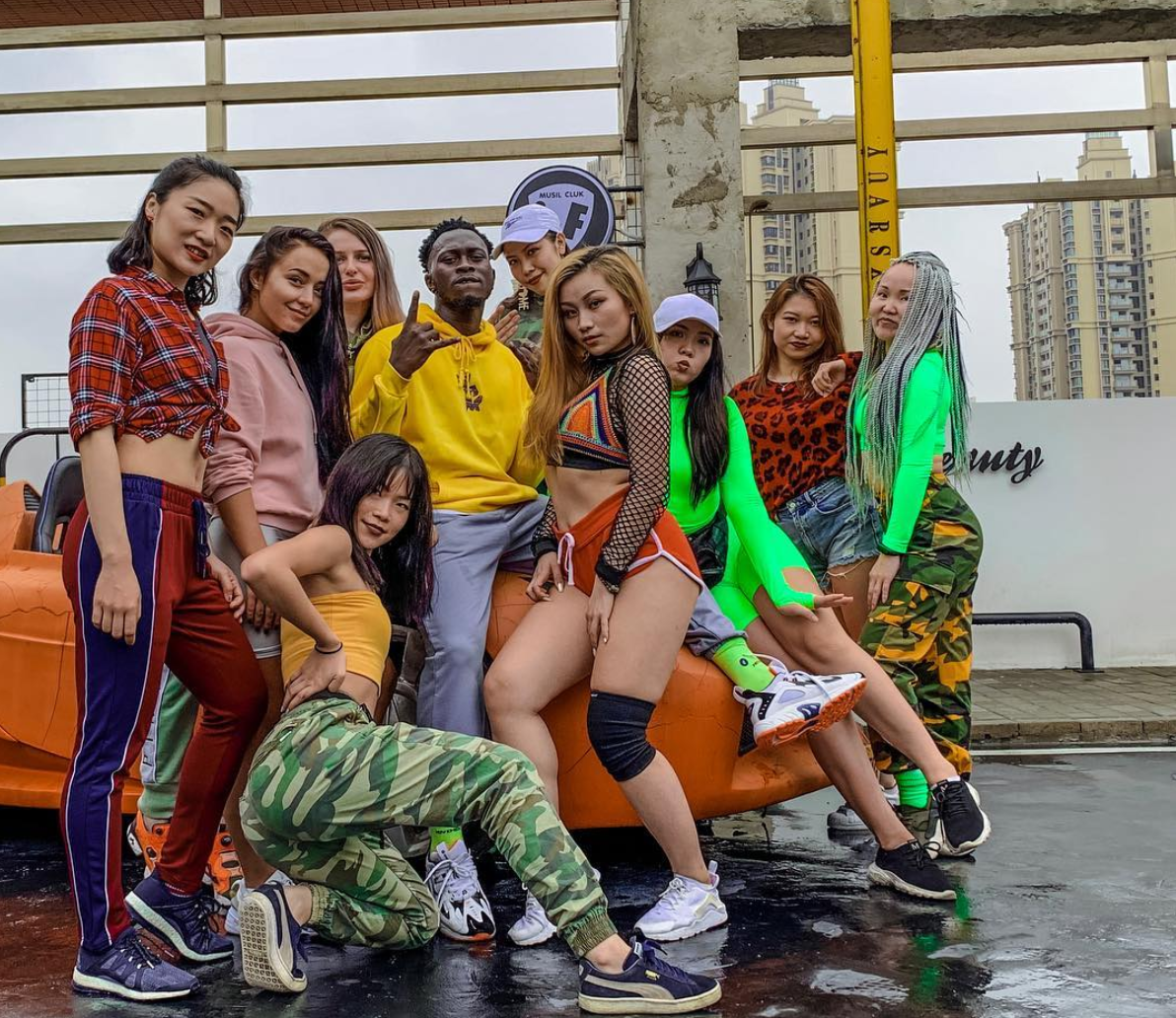
The East Asian pop industries have been borrowing from African dance longer than most listeners assume, though the credits are thinner than the hype suggests. The clearest documented case is South African rather than Nigerian. BTS built “Idol” in 2018 around gqom textures and worked the South African gwara gwara step into the choreography. Beyond that, the evidence is mostly informal, with idols filming themselves dancing to Nigerian records and Seoul studios teaching the music in class. The 1MILLION Dance Studio in Seoul published official class choreography to Rema’s “Calm Down,” which is a Korean choreographer working to an Afrobeats record rather than a K-pop release built on one. The exchange is real. The paper trail is still being written.
Latin America took a different route. Reggaeton already shared DNA with Afrobeats through the broader Afro-Caribbean rhythm family, and once amapiano’s log drums started bleeding into Nigerian pop, the link to dembow and perreo was almost too obvious to miss. Producers working in both scenes began folding Afrobeats and amapiano textures into reggaeton sessions, and Colombian and Puerto Rican dancers started using the same hip work for both genres without bothering to differentiate. The Selena Gomez verse on “Calm Down” was less a crossover moment than an official acknowledgement of a fusion already happening on dance floors from Medellin to San Juan.
Western pop has been slower and clumsier, but it has arrived. Beyonce’s “Brown Skin Girl” and the Black Is King visual project gave Afrobeats choreography a Hollywood-budget showcase, with Nigerian dancers credited on the work. Drake’s repeated borrowings, from “One Dance” through his Wizkid and Tems collaborations, made the rhythm feel native on North American radio. Chris Brown has spent recent years treating Afrobeats as a core part of his dance vocabulary rather than a novelty, on records with Davido, Lojay and Wizkid. The American pop ecosystem still does not always know what to call any of this, but the choreographers know, and the kids in dance studios know, and the kids are the ones who decide what pop ends up sounding and looking like.
The club, still the source of truth
For all the talk of TikTok and algorithms, the clearest test of an Afrobeats record’s reach is still what happens to a dance floor when the DJ drops it. In Lagos that has always been true. The club is where a song gets its first real verdict. What changed is that the same verdict is now delivered in Lisbon, Toronto, Houston, Nairobi and London on the same night, often within the same hour, because the DJ scenes in those cities operate as a single feedback loop.
A strong London Afrobeats club night, or a festival platform like Afro Nation, which has staged editions in Detroit, Miami and Portugal, can move a song from interesting to essential in a single weekend. The DJs in those rooms talk to each other constantly. A track that destroys at a Lagos Friday at Quilox will be tested in London by Saturday, in Paris by Tuesday and in Houston by the following weekend. The dances follow the same path. A new step that appears on a Lagos floor on a Friday is being attempted in a Brooklyn warehouse the next Saturday and showing up in a tutorial the Monday after.
What the world is actually copying
Strip the trend pieces away and the global imitation comes down to a handful of repeating ingredients. The bent-knee bounce that defines so much Afrobeats footwork. The shoulder roll that punctuates almost every chorus drop. The slow waist roll that makes the slower songs work for couples. The hand-on-chest gesture that signals heartbreak across half a dozen recent hits. These are now international gestures. A teenager in Manila or Mexico City can deploy them without knowing which Lagos crew put them into circulation, in the same way a kid in Lagos can hit a moonwalk without thinking about Michael Jackson.
The deeper shift is that Afrobeats has given global pop a way to feel grounded again. Most of the choreography that defined Western pop through the 2010s was either hyper-technical, in the K-pop tradition, or deliberately minimal, in the way a lot of American hip-hop dance reduced itself to a head nod and a lean. Afrobeats reintroduced something in between. The moves require effort. They reward looseness. They look better when more than one person is doing them. Walk into a wedding reception in Houston and watch what happens when the DJ plays “Buga.” The grandmother stands up. The groomsmen abandon their drinks. A six-year-old in a small suit attempts the hand-on-belt move from memory, with no instruction, because he has seen it a thousand times on a phone. The choreography came from Lagos. He has never been there. He hits the move on the downbeat anyway.
Ad SpaceIn-Article - 300x250
Advertisement
Share
Get the recap
Loved this story? Get more like it.
Join readers who get our weekly entertainment recap - the stories worth your time, delivered every Friday.
No spam. Unsubscribe anytime. By signing up you agree to our Privacy Policy.