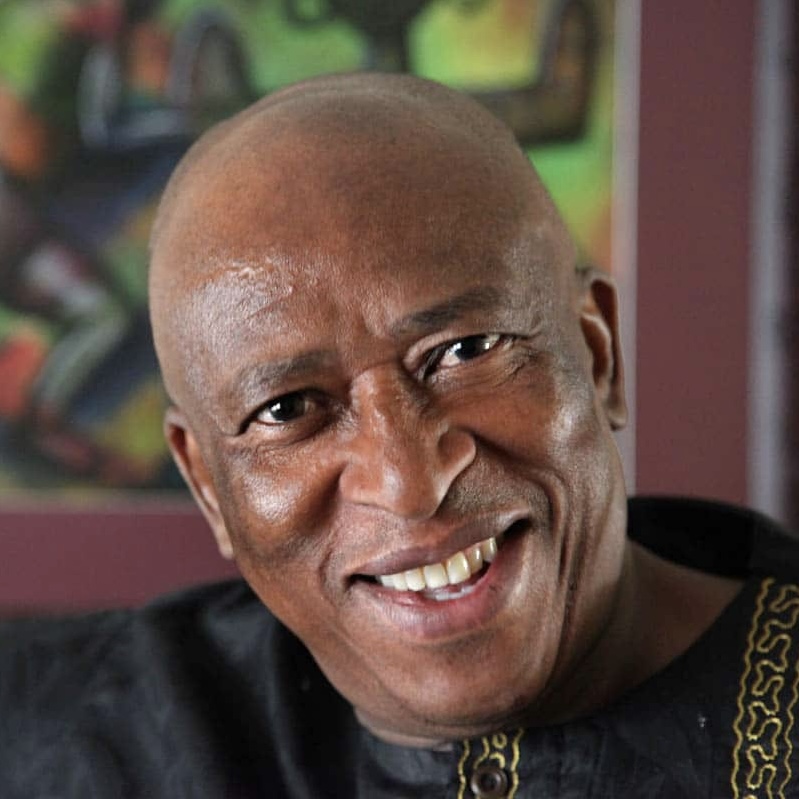

“There are many ways of dying!” the Nurse shouts at us. That is the opening line of Zakes Mda’s first novel, delivered by the figure who, at a township funeral, explains to the mourners how the dead person came to die, and it sets the strange tone of everything that follows. Toloki, the professional mourner at the centre of Ways of Dying, has made a vocation out of grief. He travels from funeral to funeral in a violent township, weeping for strangers in exchange for a few coins, dressed in a costume of his own design. It is an absurd job and a deadly serious one, and only a writer like Mda, who came to fiction late and from many other directions, could have conjured a figure so ridiculous and so dignified at once. The mourner who profits from sorrow is a near perfect emblem of a country learning, in the rubble of apartheid, how to grieve and how to keep living.
A Life Lived in Many Trades
Zanemvula Kizito Gatyeni Mda, who publishes under the name Zakes Mda, was born on 6 October 1948 in Herschel in the Eastern Cape, the year the National Party came to power and began codifying apartheid into law, so his life has run almost exactly parallel to the rise and fall of the system. He is the son of A. P. Mda, a lawyer and a leading figure in the anti-apartheid politics of the 1940s and 1950s, and when the family’s position in South Africa became untenable he followed his father into exile in neighbouring Lesotho, completing his schooling at Peka High School there in 1969. Exile shaped him as it shaped a whole generation of Black South African writers, giving him distance from the country and a vantage on it that those who stayed could not have.
What is unusual about Mda is the sheer range of what he became. He trained in visual arts and literature in Zurich, took a master’s in theatre and a second in mass communication at Ohio University in 1984, and completed a doctorate at the University of Cape Town in 1989. He is a painter, a poet, a playwright whose work was widely staged in southern Africa long before he published a novel, a beekeeper, and an academic who taught for years as a professor in the English department at Ohio University in Athens, Ohio, with later teaching at Johns Hopkins University. He did not turn to the novel until middle age, after a full career in the theatre, and this matters because his fiction carries the marks of all those other lives. The dialogue has a stage writer’s ear, the imagery has a painter’s eye, and the structure often has the loose, communal shape of oral performance rather than the tight architecture of the well-made novel.
He belongs to a particular cohort of Black South African writers who found their full voice in the transition years of the early and mid 1990s, when apartheid was ending and a new national story had to be told. Where an older generation had written protest literature aimed squarely at the regime, Mda arrived just as the regime was collapsing, free to write something stranger and more inward.
Before the Novels, the Plays
Any guide that treats Mda only as a novelist gets him badly wrong. He was a major playwright first, and the plays are not sketches or apprentice work but the foundation of the sensibility. We Shall Sing for the Fatherland, Dead End and Dark Voices Ring appeared in print in 1979, The Hill in 1980, and the later plays And the Girls in Their Sunday Dresses (1988), Joys of War (1989) and The Nun’s Romantic Story (1991) extended a body of work collected as The Plays of Zakes Mda in 1990. He kept returning to the stage after the novels began, with the satires gathered in Fools, Bells and the Importance of Eating (2002) and the later play Our Lady of Benoni (2012).
Alongside the plays sit a volume of poetry, Bits of Debris (1986), and a work of scholarship, When People Play People (1993), his study of theatre as a tool of development communication. Read the plays and the communal narrator of the novels stops looking like a trick. It is a stage device carried onto the page, a chorus that comments, judges and refuses to let any single character own the story.
Ways of Dying
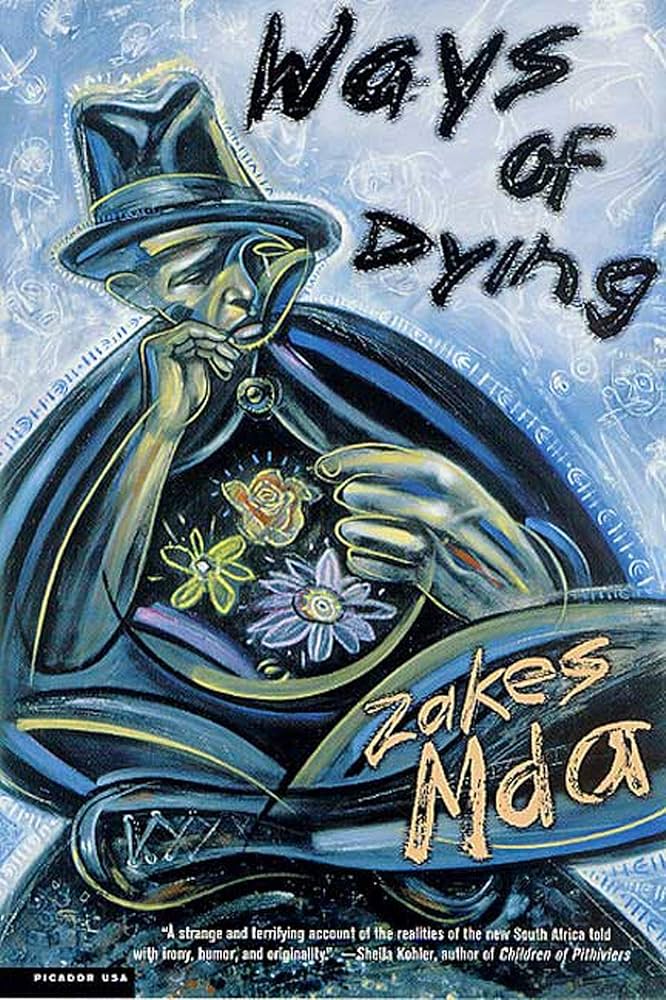
His 1995 debut remains the book most readers begin with, and for good reason. Ways of Dying follows Toloki, the self-appointed professional mourner, through a township in the uncertain interregnum between apartheid’s end and the new order’s beginning. The violence is constant, the deaths are many, and Toloki drifts among the funerals offering his peculiar services. Then he is reunited with Noria, a woman from his home village, and their slow, halting relationship becomes the warm core of an otherwise bleak landscape. It won the M-Net Book Prize in 1997.
The novel is suffused with magic realism, but it is a magic realism rooted in southern African storytelling rather than imported from Latin America. Noria can do impossible things, the dead speak, and the narration belongs to a communal “we” that knows everyone’s business and comments on the action like a village chorus. This collective narrator is one of Mda’s great inventions, dissolving the boundary between the individual story and the community that holds it.
Beneath the invention lies a clear-eyed account of township life in the violent early 1990s, the era of taxi wars and the daily grind of poverty. Toloki’s absurd profession lets Mda look directly at death without flinching, and the love story between Toloki and Noria insists that tenderness survives even there. It is a short, strange, deeply humane book, and it announced a major new voice. The same year brought She Plays with the Darkness, a very different novel set in the Lesotho highlands, following a brother and sister whose lives diverge between village and city, and it is the Mda novel most often skipped by readers who assume the bibliography starts and stops with the famous titles.
The Heart of Redness
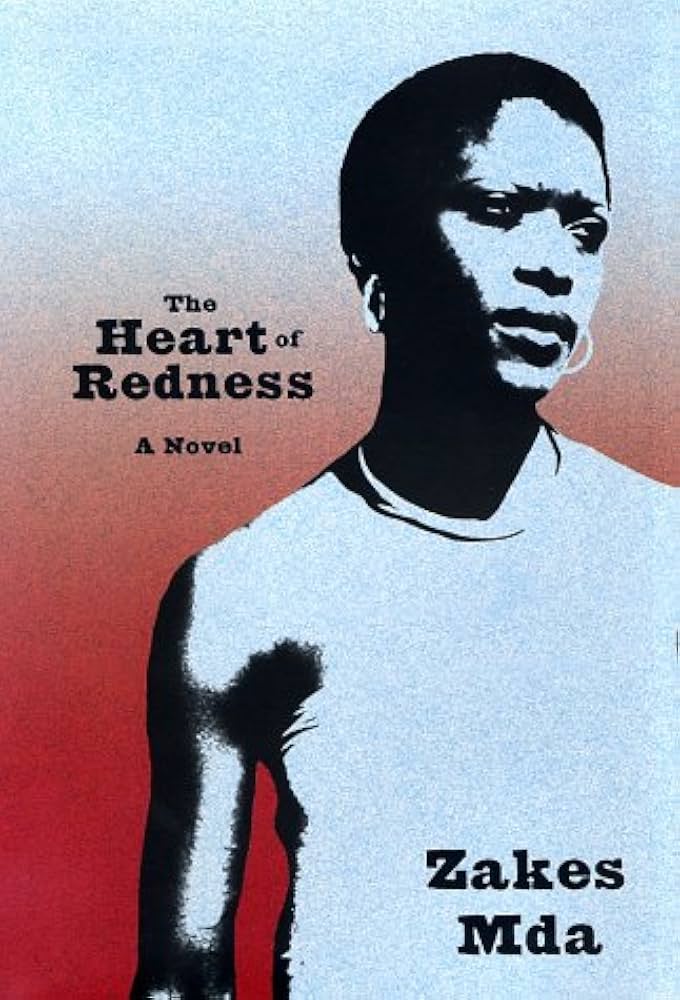
His third novel, published in 2000, is his most ambitious and, for many, his masterpiece. The Heart of Redness braids two timelines together. In the nineteenth century, the Xhosa prophetess Nongqawuse delivers a prophecy that if the people kill all their cattle and destroy their crops, the ancestors will rise, drive the British into the sea, and restore the old world. The cattle-killing of 1856 and 1857 actually happened, and it was catastrophic. Roughly twenty thousand people are believed to have died of the resulting famine, and Xhosa society was broken, opening the way for colonial conquest. Mda sets this historical tragedy alongside a present-day story in the coastal village of Qolorha, where descendants of the believers and the unbelievers still feud over how to face the future, this time over a proposed casino and tourist development.
The structure is the argument. The split between Believers and Unbelievers, those who trusted the prophecy and those who refused, becomes a permanent fault line replaying across a century and a half. The nineteenth-century debate over the cattle-killing and the present-day debate over development are the same debate, the enduring question of whether to preserve the past or surrender to a modernity that arrives on someone else’s terms. Mda is open about his sources, acknowledging at the outset his debt to the historian Jeff Peires and his account of the cattle-killing in The Dead Will Arise.
His sympathies are complicated. He neither mocks the believers as fools nor romanticises them as noble resisters. The novel won the Commonwealth Writers’ Prize for Best Book in the Africa region and the Sunday Times Fiction Prize, both in 2001, as well as the Hurston/Wright Legacy Award, and it earns its place among the essential works of post-apartheid fiction because it understands that the wounds of the colonial past are not settled history but living quarrels.
The Madonna of Excelsior
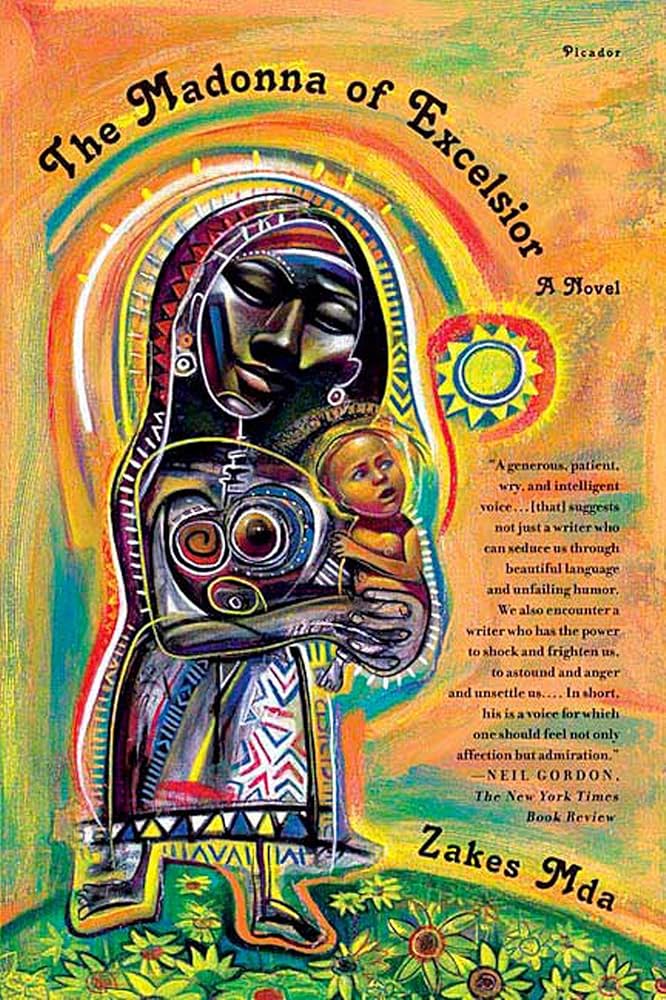
His 2002 novel takes its inspiration from a real scandal. In 1971, in the conservative farming town of Excelsior in the Free State, nineteen people were charged under the Immorality Act, which criminalised sex across the colour line. White Afrikaner men and Black women had been having relationships, and the resulting prosecutions, and the mixed-race children born of those unions, exposed the hypocrisy at the heart of apartheid’s sexual laws.
The Madonna of Excelsior follows Niki, a Black woman caught up in these events, and her daughter Popi, a coloured child born of the forbidden crossings. Mda tells the story across the decades, from the scandal through the end of apartheid and into the democratic era, watching how the town and the family carry the inheritance of that shame. The novel is structured around the brightly coloured paintings of a real artist, Frans Claerhout, whose depictions of rural Free State life Mda uses as recurring images, so that the prose itself seems to move through a gallery of canvases.