Petina Gappah: A Reader's Guide to the Zimbabwean Author's Most Essential Books
Arianne Cole··10 min read
Ad SpaceArticle Top - 728x90
Advertisement
For a long time, the literary biography Petina Gappah was building for herself was the kind that should not have been possible. By the late 2000s she was working in Geneva as an international lawyer, handling trade law for developing-country governments and keeping the hours that elite practice demands. When her debut story collection An Elegy for Easterly appeared in 2009 from Faber and Faber, the jacket copy read like a category error: international trade lawyer, also a fiction writer. The book won the Guardian First Book Award that year. Gappah kept practising law. By her own account she had started writing seriously only three years earlier, in May 2006, after posting a story to an online workshop that caught an editor’s attention. The split life was not a feint. It was, by her description, what kept the writing honest, because the fiction did not have to pay the bills and could therefore be written slowly.
A Life Across Three Countries
Gappah was born in 1971 in Zambia’s Copperbelt Province, where her parents had moved because, as she has written, skilled Black workers could not get the jobs they were qualified for in segregated Rhodesia. The family returned to what would become Zimbabwe when she was nine months old, and Harare is the city she grew up in. After independence her family moved into a formerly white suburb, and she was among the first Black pupils at a primary school that had been reserved for white children. She started writing at about ten or eleven, and her first published story appeared in her secondary school magazine when she was fourteen.
She took a law degree at the University of Zimbabwe, then in 1995 went to Austria for a doctorate in international trade law at the University of Graz, combined with a master’s degree at the University of Cambridge. From 1998 she was based in Geneva working as an international lawyer, including at the Advisory Centre on WTO Law, which provides legal support to developing countries in trade disputes. The trajectory is unusual among African novelists. Most of her peers came to fiction through creative-writing programmes or through journalism. Gappah came to it through the law.
She has spoken at length about what the legal training gave the fiction. Precision, first, and a reluctance to use a word that does not earn its place. Second, the habit of building a story by accumulating evidence rather than by emotional declaration. Third, and most useful, an ear for how people lie to themselves while believing they are telling the truth. Her narrators often have exactly the self-deception of a witness who is in fact constructing an alibi. The trick works because Gappah, having spent two decades cross-examining language for a living, knows where the weak seams are.
In 2010 she moved back to Harare for three years to work on her first novel. In 2016 Brittle Paper named her its African Literary Person of the Year, and since 2017 she has held a DAAD fellowship and writer-in-residence position in Berlin. She has written about Zimbabwe’s politics and institutions for The Financial Times, The New York Times, The Guardian and Suddeutsche Zeitung, and has been a columnist for the Swedish development magazine OmVarlden. She has also been candid about her discomfort with being marketed as a national spokesperson. “It’s very troubling to me,” she told The Guardian in 2009, “because writing of a place is not the same as writing for a place.”
An Elegy for Easterly and the Discipline of the Short Form
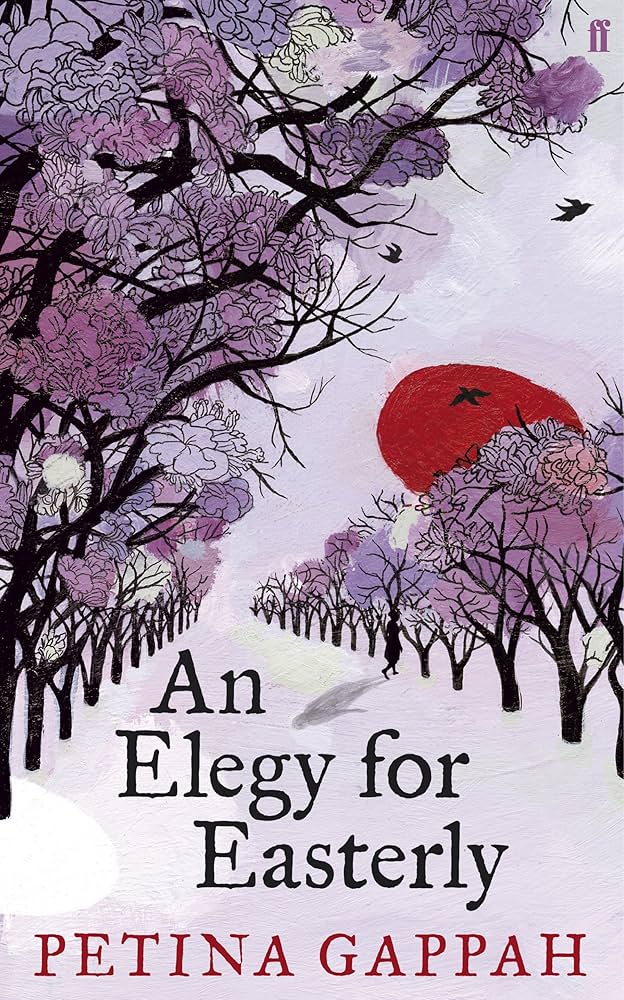
Image: Amazon.com
An Elegy for Easterly collects thirteen stories set in Zimbabwe during the hyperinflation years, when the currency had collapsed and ordinary economic life had become a kind of theatre of last resort. The title story is set in an informal settlement on the edge of Harare, where residents have built their lives on land the authorities keep threatening to clear. The central figure is a pregnant woman, mentally fragile, drifting through the settlement and stealing from neighbours who cannot afford to lose anything. The ending is the kind of writing that does not announce itself: a paragraph of quiet description, the title’s elegiac promise delivered without the flourishes a less disciplined writer would have reached for.
The collection’s range is what surprised readers. There are courtroom stories in which Zimbabwean lawyers parse evidentiary procedure while the country around them comes apart. There are domestic stories set in middle-class Harare households reduced to barter. There is a story narrated by a child whose understanding of the crisis is mediated entirely through her parents’ silences. The collection moves between registers without losing tonal coherence, and it does so in prose that is plain by design. Gappah is not a writer of metaphor pyrotechnics. The sentences are short, direct and almost legalistic in their precision, and the grief sits underneath them rather than on top.
The book won the Guardian First Book Award in 2009 and was shortlisted for the Frank O’Connor International Short Story Award, the Orwell Prize and the Los Angeles Times Art Seidenbaum Award for First Fiction. It has been translated into Chinese, Dutch, Finnish, French, Japanese, Norwegian, Serbian and Swedish. Critics noticed the absence of a single trick: each story sounds like its protagonist rather than like the author. That is harder than it looks, and it is why the collection has aged better than several more famous African debuts from the same period.
The Book of Memory and the Narrator on Death Row
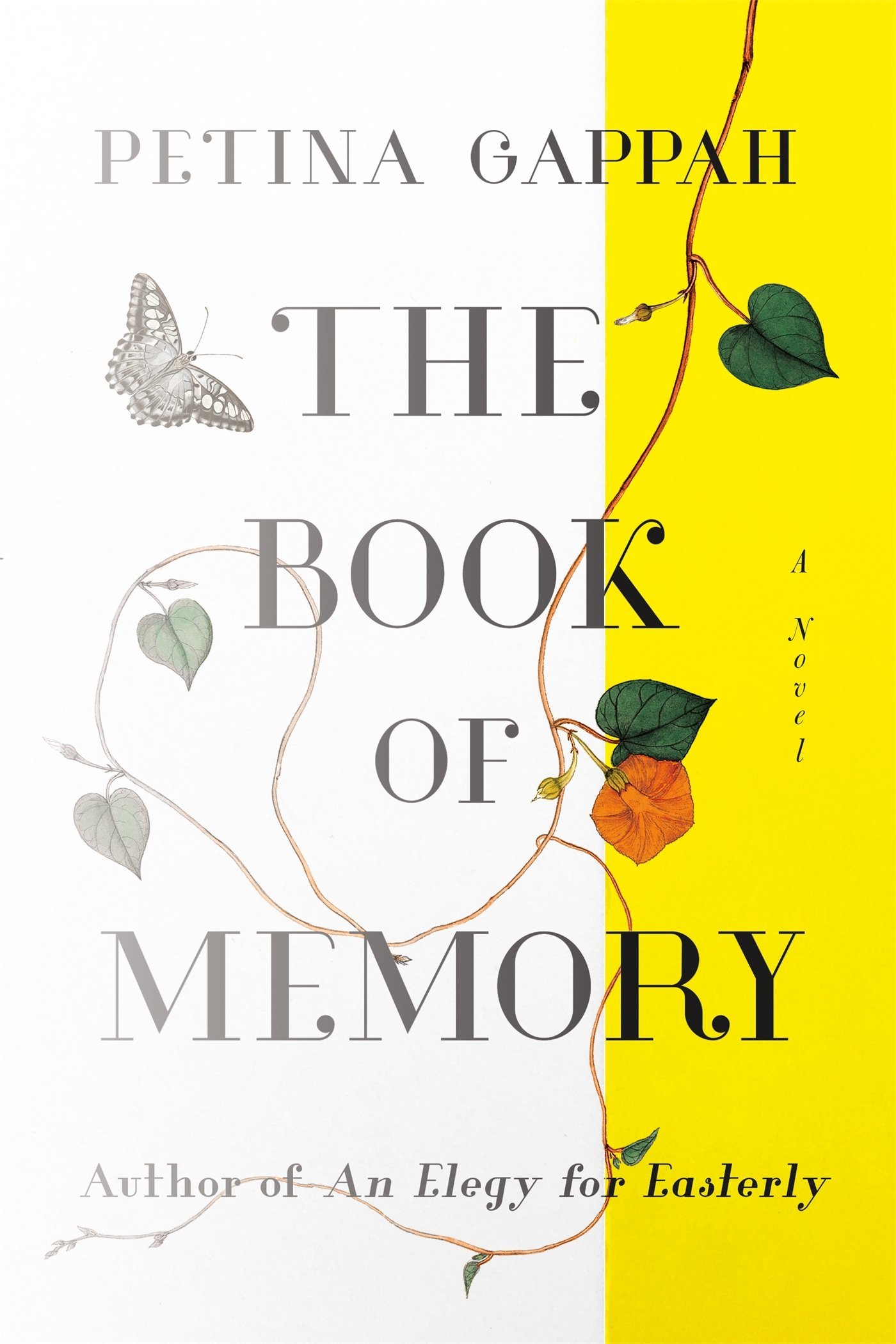
Image: Amazon.ie
The Book of Memory, published in 2015, was Gappah’s first novel. The narrator is Memory, a woman with albinism on death row at Chikurubi Maximum Security Prison in Harare, writing her account at the suggestion of a journalist who has taken an interest in her case and hoping for a presidential reprieve. The plot turns on a question Memory cannot fully answer: why her parents handed her over, as a child, to a wealthy white scholar named Lloyd Hendricks, and how she came to be convicted of his murder years later.
On a first reading it looks like the thriller-adjacent literary novel the British market loves. There is a crime, a captivity, a courtroom and a possible miscarriage of justice, and the structure invites the reader to expect a reveal. Gappah gives several reveals, each of which complicates rather than resolves the central question. The book’s real subject is not what happened to Memory but what she has been able to remember and what the act of writing in prison is doing to that memory. Reviewing it in The Guardian, Maya Jaggi called it “a powerful story of innocent lives destroyed by family secrets and sexual jealousy, prejudice and unacknowledged kinship.”
Ad SpaceIn-Article - 300x250
Advertisement
The albinism is the riskiest element of the design. The condition has been used so often in fiction as shorthand for outsiderhood that the choice could easily have read as a device rather than a person. Gappah avoids the trap by making Memory’s experience specific and physical: the sunburn, the squinting, the way other children treated her, the particular complications of her appearance in a country where colour carried political weight. The novel won the McKitterick Prize from the Society of Authors in 2015, was longlisted for the Baileys Women’s Prize for Fiction and was shortlisted for the Prix Femina etranger. It is the strongest single book she has produced.
Rotten Row and the Return to the Courtroom
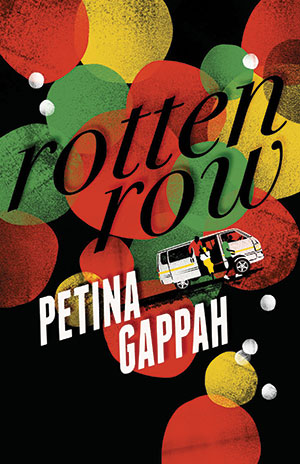
Image: Goodreads
Rotten Row, published in 2016, is a second collection of short stories, not a novel, and it returned Gappah to the territory she knew most intimately. It is named for the Harare street where the city’s magistrates’ courts are clustered, and the stories are set in or near the Zimbabwean legal system: told from the bench, from the dock, from the public gallery, from the holding cells, from the corridor where lawyers wait for cases to be called. The collection is among the closest things African literature has produced to a portrait of a single neighbourhood through its institutional life.
Some reviewers found it narrower than Easterly, and they were not wrong. Rotten Row is more local in setting, more specialised in its vocabulary, and less likely to deliver the single devastating image the earlier book offered. But the depth is real. Writing in The Guardian, FT Kola concluded that the book “hums with life,” and that Gappah “throws open the doors of a million lighted houses, and lets us look inside them.” The stories are written from inside the legal world in a way no one else in African fiction has managed, and the collection’s interest in how the law actually functions for ordinary Zimbabweans, what it does and what it only pretends to do, is a subject most novelists do not have the standing to write.
Out of Darkness, Shining Light and the Long Historical Project
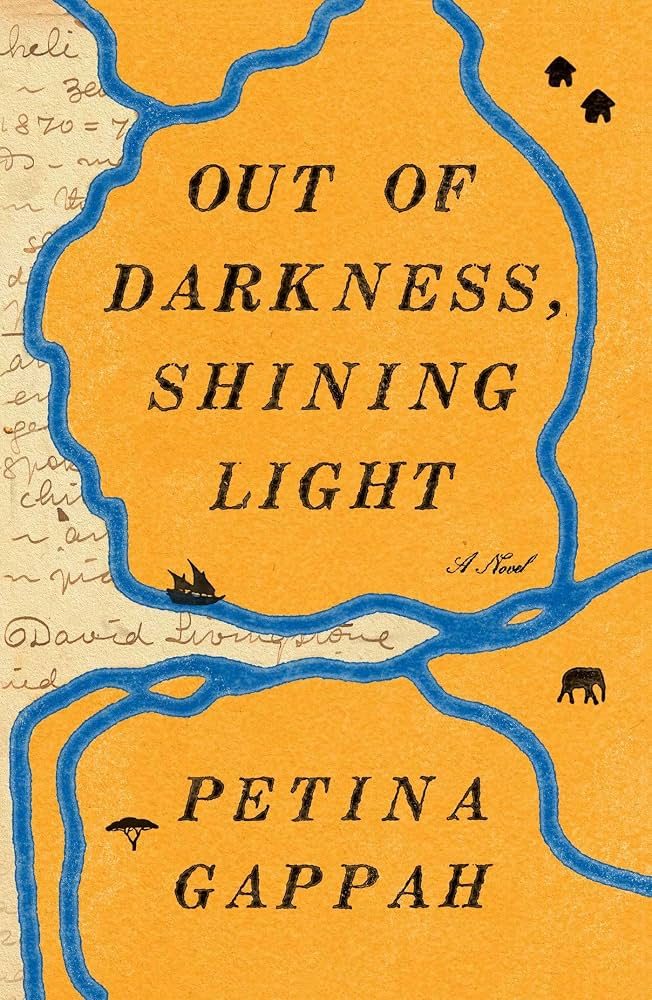
Image: Amazon.com
Out of Darkness, Shining Light, published in 2019, is her most ambitious book and the project she had been circling for years. The novel reconstructs the journey of the African companions and porters who carried David Livingstone’s body more than a thousand miles from the swamps of present-day Zambia to the Indian Ocean coast in 1873 and 1874, so that the missionary could be returned to England for burial. The outward facts are documented in colonial archives. The interior lives of the people who made the journey, their names, their disagreements, their reasons for completing a march no one had asked them to make, had never been written.
Gappah wrote them. The novel alternates between two narrators: Halima, Livingstone’s cook, whose voice carries the daily texture of the expedition, and Jacob Wainwright, a freed slave and mission-school student who narrates in the high Victorian register of the man he is trying to become. The double narration is the book’s central formal achievement. The two voices argue with each other across the chapters without either being placed above the other. The novel does not need to tell the reader which one is right; it needs only to let both speak. It was nominated for an NAACP Image Award for Outstanding Literary Work in 2020 and won the 2020 National Arts Merit Award in Zimbabwe for outstanding fiction book. Gappah later worked with the David Livingstone Birthplace Museum in Scotland on reinterpreting its tableaux of the expedition, several of whose figures appear in her book. The weaknesses are real, including a slow middle stretch and Wainwright sections that lean hard on period diction, but the argument lands. Livingstone’s African companions had lives, and Gappah gave them sentences.
What She Keeps Returning To
Across four books certain preoccupations recur. The relationship between law and justice, treated not as a tidy equation but as two machines that only sometimes intersect. The Zimbabwean middle-class woman, written with a specificity most diaspora fiction does not bother with. The act of memory itself, especially memory under pressure, whether in the prison cell, the courtroom or the historical archive that almost erased the speaker. And the plain prose that absorbs violence rather than performing it. “I’m a frustrated historian,” she said in 2016. “I’m interested in excavating the social histories of Zimbabwe.”
Stylistically Gappah is the most restrained of her generation of African women writers. She does not write sentences that draw attention to themselves, and that discipline is one reason her best work has aged better than the more lyrically pyrotechnic fiction of the same period.
Where She Sits in the Canon
Gappah belongs, alongside NoViolet Bulawayo and Tsitsi Dangarembga, to the group that has carried Zimbabwean fiction across the last two decades. Within it she is the most formally traditional and the most committed to short fiction. Her closest international cousins are probably Edward P. Jones, for the institutional portraiture of Rotten Row, and Edwidge Danticat, for the patient treatment of national trauma in Easterly. Inside African letters she sits in the lineage of Yvonne Vera and Charles Mungoshi, but she has refused the lyrical register both of those writers used. Her work has more in common with the documentary realism of Bessie Head than with the symbolist Zimbabwean tradition.
Recommended Reading Order
Start with An Elegy for Easterly. The collection is the most accessible entry into her sensibility and introduces all the major preoccupations in compressed form. Move to Out of Darkness, Shining Light for the historical ambition. The Book of Memory is the strongest single novel and the right book to read third, once you trust the writer with a more compressed and risky design. Rotten Row is the specialist’s book and the right place to finish, because by then the legal world it describes will feel familiar rather than technical.
Bibliography at a Glance
Title
Year
Form
An Elegy for Easterly
2009
Stories
The Book of Memory
2015
Novel
Rotten Row
2016
Stories
Out of Darkness, Shining Light
2019
Novel
A Smaller Shelf With No Weak Book On It
What is unusual about Gappah is the shape of the career rather than its volume. Four books is not many by contemporary standards, and she has been less visible on the international prize circuit than several of her contemporaries. The trade has been deliberate. She has written what she wanted to write at the pace she could sustain alongside a legal career, and the result is a body of work that is smaller than her peers’ but more even in quality. There is no weak book in the catalogue, only books that ask different things of the reader. Two story collections and two novels, one of them a courtroom anatomy and one of them a reclaimed piece of nineteenth-century history, is a strange and coherent shelf, and the reading order above is the fastest way into it.
Ad SpaceIn-Article - 300x250
Advertisement
Share
Get the recap
Loved this story? Get more like it.
Join readers who get our weekly entertainment recap - the stories worth your time, delivered every Friday.
No spam. Unsubscribe anytime. By signing up you agree to our Privacy Policy.