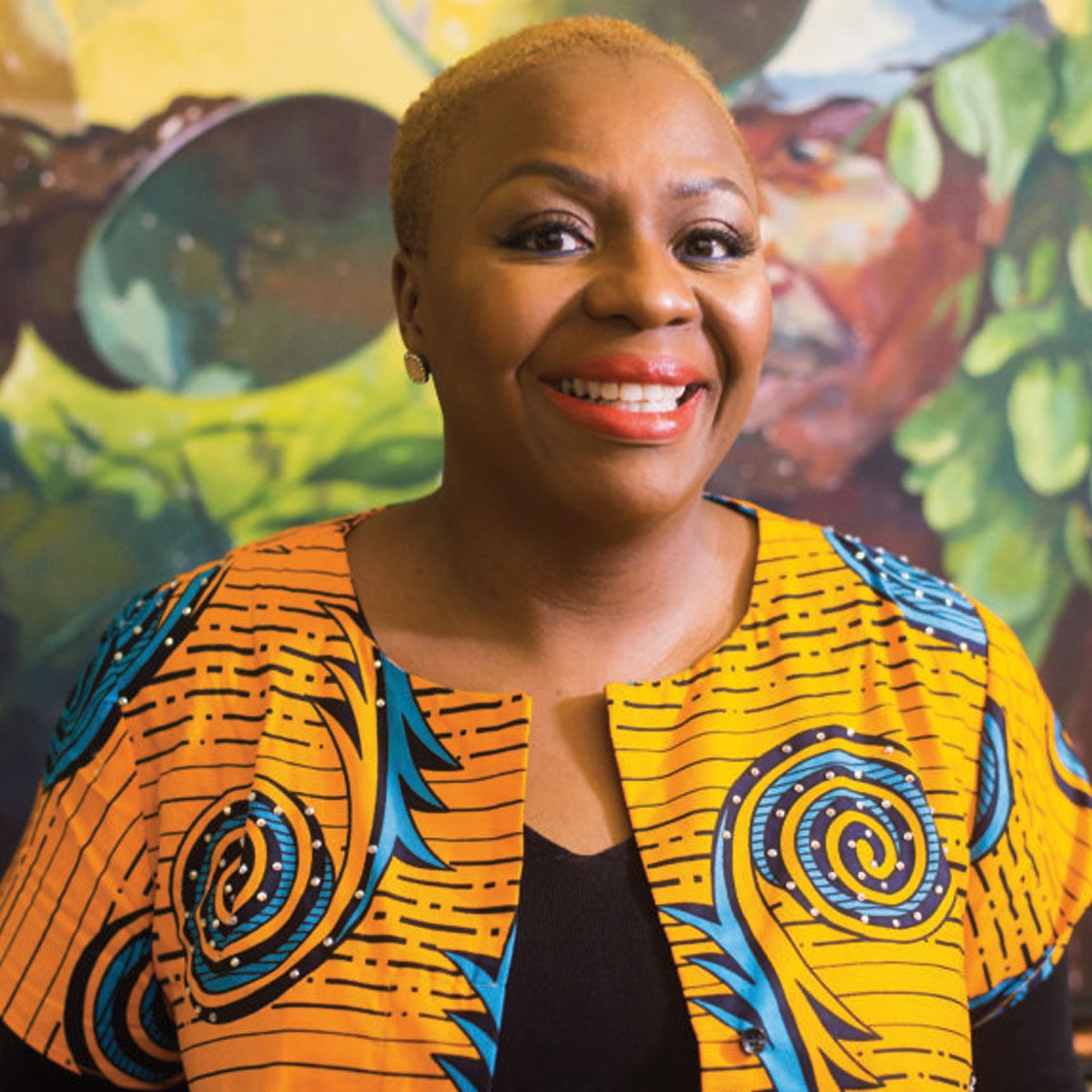

Lola Shoneyin: A Reader's Guide to the Nigerian Author's Most Essential Books
Image: Ouida Books
Books

Lola Shoneyin: A Reader's Guide to the Nigerian Author's Most Essential Books

Arianne ColeArianne Cole··9 min read
Ad SpaceArticle Top - 728x90
Advertisement

Lola Shoneyin has published one novel, three volumes of poetry and two children’s books, and she has built two institutions that matter more to younger African writers than most prize lists do. She founded the Aké Arts and Book Festival in 2013 and directs the Book Buzz Foundation that runs it, and she runs the Lagos publishing imprint and bookshop Ouida Books. To read her only through The Secret Lives of Baba Segi’s Wives is to miss half of the project. She is one of the rare African writers whose work as an institution builder now sits alongside her work on the page rather than behind it.

This is partly a feature of her generation. Many Nigerian writers born in the 1970s ended up doing the editorial, publishing and festival labour that nobody was around to do for them, and Shoneyin is the most visible example. The one novel she has published is among the most widely taught Nigerian novels of the post-Adichie wave. The poetry that preceded it is less read and worth finding. The children’s books are almost never mentioned. The festival and the imprint that followed have changed what is possible for the writers who came after her.

Background

She was born Titilola Atinuke Alexandrah Shoneyin on 26 February 1974 in Ibadan, the youngest of six children and the only girl. Her parents were Remo indigenes from Ogun State. Her maternal grandfather, Abraham Olayinka Okupe, was the traditional ruler of Iperu Remo and had five wives, a household Shoneyin has pointed to as source material for her novel. She went to boarding school in the United Kingdom from the age of six, returned to Nigeria after her father was imprisoned by the military government of the day, finished her secondary education at Abadina College, and took a BA from Ogun State University in the mid 1990s. While living in England she obtained a teaching degree from London Metropolitan University in 2005.

She is married to the medical doctor Olaokun Soyinka, a son of the Nobel laureate Wole Soyinka, and they have four children. That connection placed her inside the best known literary family in West Africa, and she has discussed it in interviews without making much of it. Her positions on polygyny, on women’s bodily autonomy and on the policing of female desire are her own and argued under her own byline: she wrote against polygamy in The Guardian in March 2010, and has also written for The Scotsman and The Times. Her early work appeared in the Nigerian Post Express in the mid 1990s, including a short story about a Nigerian woman who leaves her husband for an Austrian woman.

The poetry years
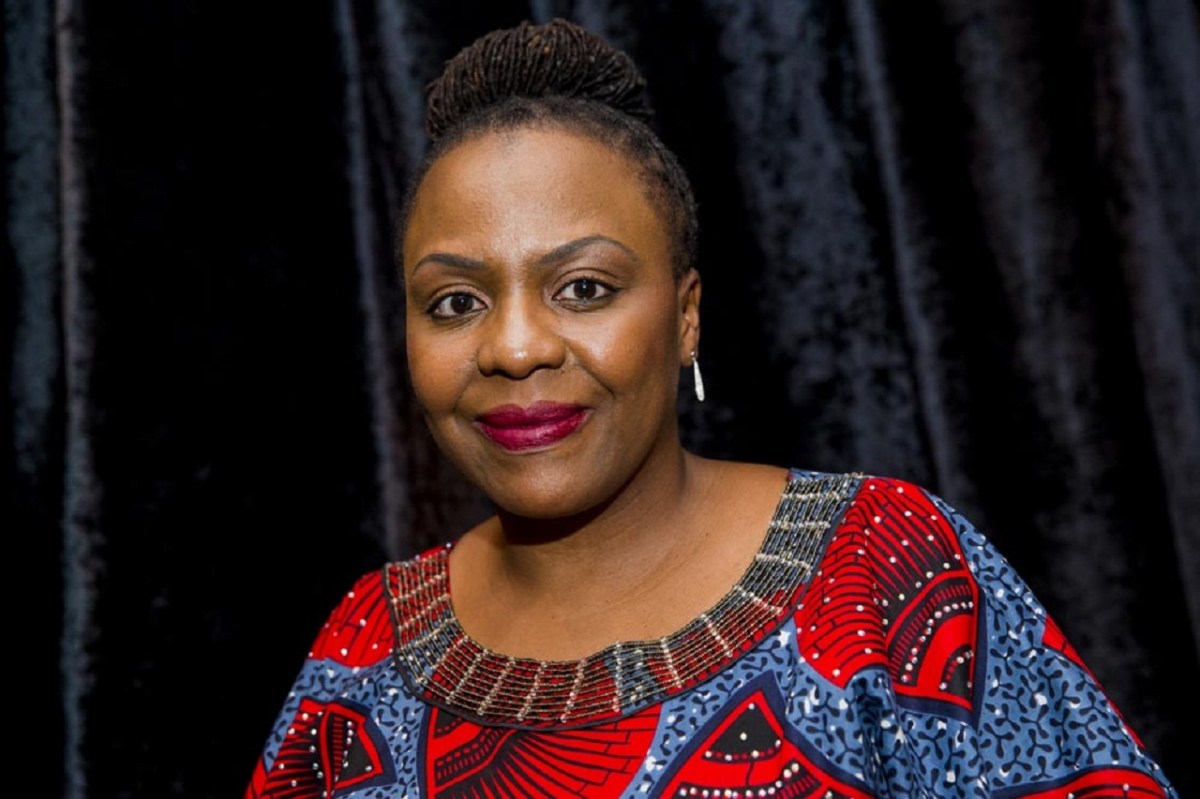
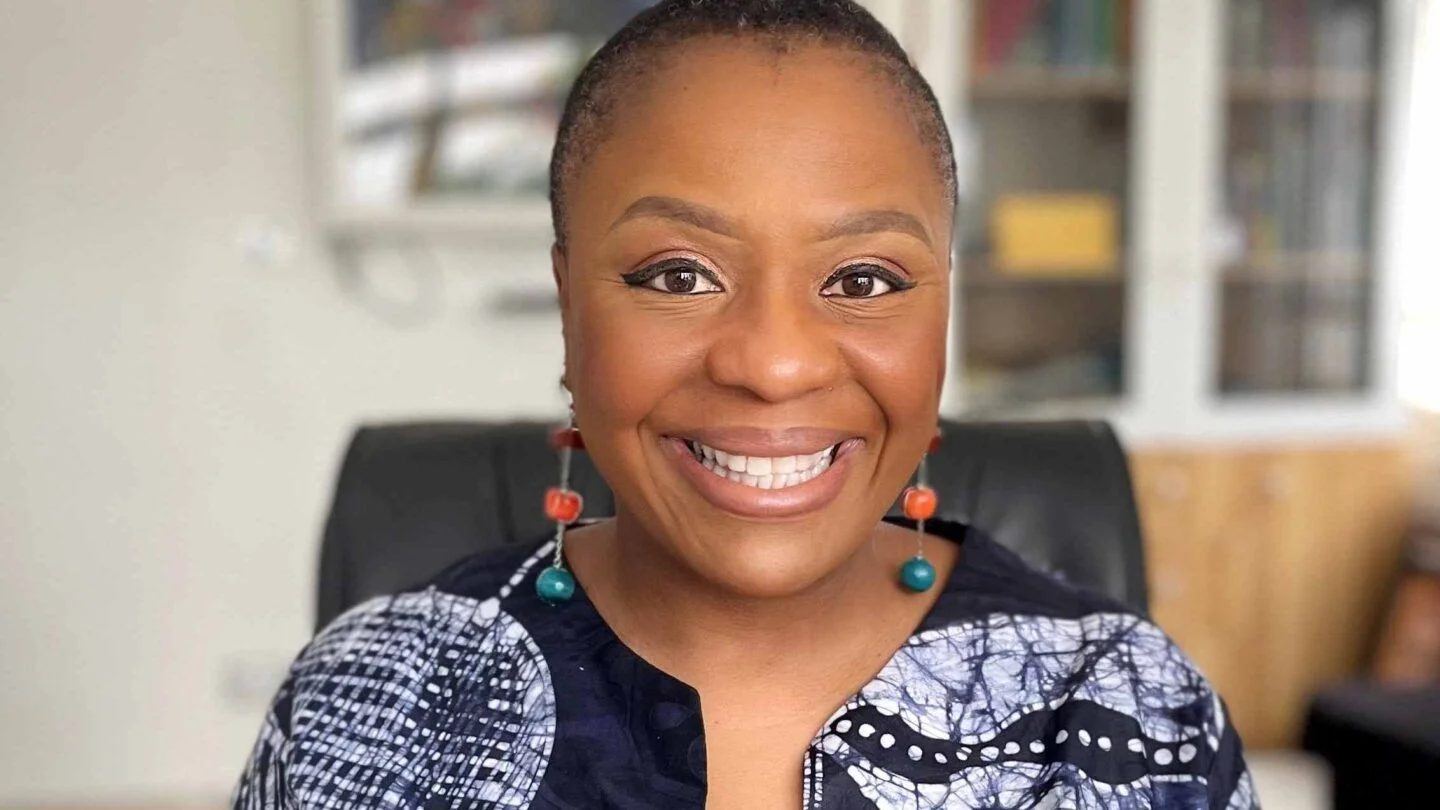
Lola Shoneyin - The poetry years
Image: Hurs & Ryder

Her first collection, So All the Time I Was Sitting on an Egg, was published by Ovalonion House in Nigeria in 1998. It is the book of a young writer working out which subjects she is allowed to have: openly sexual in places, uneven in others, which is the usual shape of a first poetry book. Song of a Riverbird followed from the same publisher in 2002 and is the tighter of the two. Cassava Republic Press published her third collection, For the Love of Flight, in February 2010, within months of the novel. Read in order, the three show her shifting weight from the lyric toward the dramatic monologue the novel would need. The poems are not uniformly strong at the line, and they remain the clearest available record of how the novelist was formed. Between the first and second collections she attended the International Writing Program at Iowa in 1999.

Two children’s books and a novel that was never published

The poetry and the novel are not the whole bibliography, and most guides to Shoneyin stop there. Cassava Republic published Mayowa and the Masquerades, a children’s book, in July 2010, and it was later issued in the United States. Iyaji, the Housegirl followed in 2014 and is published by Ouida Books. She also contributed the essay “Nostalgia is an Extreme Sport” to the anthology Of This Our Country. Two earlier novels sit behind the published one. She completed a first novel in 2000, and a second, Harlot, about a girl growing up in colonial Nigeria who makes a fortune as a madame, attracted interest but remains unpublished. The Secret Lives of Baba Segi’s Wives was, by her own account, the third novel she wrote and the first to find a publisher.

The Secret Lives of Baba Segi’s Wives
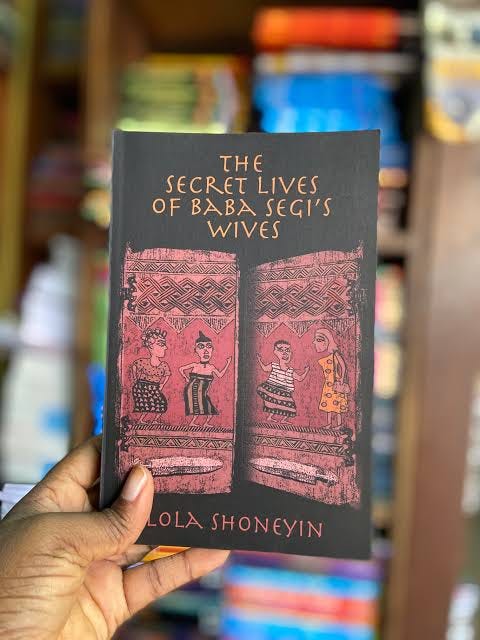
Lola Shoneyin - The Secret Lives of Baba Segi's Wives
Image: Medium

Serpent’s Tail published the novel in London in May 2010, Cassava Republic published it in Nigeria and William Morrow in the United States. The premise could have been farce. Baba Segi, head of the Alao household in Ibadan, has four wives and seven children. Bolanle, the fourth and youngest, is the only one with a university education, and she has not conceived. In plot terms the novel is about why. In structural terms it is about the other three wives, Iya Segi, Iya Tope and Iya Femi, each of whom gets her own chapters, as do Baba Segi and his driver Taju, and each of whom is carrying something older and heavier than Bolanle’s silence.

The comedy and the cruelty are difficult to separate here, which is true of a good deal of Yoruba domestic writing. Baba Segi is drawn with more tenderness than a novel that finally judges him was obliged to give him. What makes the book durable is that it takes polygyny seriously as a subject for the contemporary Nigerian novel rather than as material inherited from an earlier literary moment, and writes it without nostalgia, without exoticism and without the reformer’s pointed finger. The household is the political unit, and the economics of the compound, who buys what and who gets fed first, carry as much weight as anything said aloud.

The record on prizes is worth stating precisely, because it is often reported loosely. The novel was longlisted, not shortlisted, for the Orange Prize for Fiction in 2011. It won the PEN Oakland/Josephine Miles Literary Award in 2011 and the Association of Nigerian Authors Ken Saro-Wiwa Prose Prize in the same year, and it was shortlisted for the NLNG Nigeria Prize for Literature in 2012, which it did not win. The Observer included it in a list of the top ten books about Nigeria in 2014. It has been translated into several languages, among them Arabic, Dutch, French, German, Italian and Turkish.
Ad SpaceIn-Article - 300x250
Advertisement

On adaptations, be careful. Rotimi Babatunde adapted the novel for the stage, directed by Femi Elufowoju Jr, and the production ran at the Arcola Theatre in London in 2018, where The Guardian reviewed it at five stars; it returned to the Arcola in 2025. A screen version was announced in January 2026, with Mo Abudu’s EbonyLife Films attached, Daniel Oriahi directing and a script by Adze Ugah. That film should be treated as announced rather than as seen.

Aké, Ouida and the second career

Shoneyin founded the Aké Arts and Book Festival in 2013. It takes its name from Aké in Abeokuta, where the early editions were held before the festival moved to Lagos, and it is now in its fourteenth year. It runs under the Book Buzz Foundation, the non-governmental organisation she established in 2012 and directs, and the festival says it has brought together more than a thousand writers, poets, musicians, actors, filmmakers and artists. She separately runs Ouida Books, an imprint and bookshop in Lagos. Its list includes the Nigerian edition of Ayobami Adebayo’s Stay With Me and Shoneyin’s own Iyaji, the Housegirl. The two roles are distinct and frequently confused: the festival convenes, the imprint publishes.

The recognition for that second career is documented. She was named on the Hay Festival’s Africa39 list of writers under forty in 2014, judged the Caine Prize for African Writing in 2018, was named Brittle Paper‘s African Literary Person of the Year for 2017, and was elected a Fellow of the Royal Society of Literature in 2026. Both projects are best read as an attempt to build the infrastructure she did not have when she was starting out, which is also the most useful way to understand why there has been one novel rather than four.

Themes and preoccupations

Across the poems, the novel and the journalism, Shoneyin returns to a small set of subjects: the interior life of the wife who is expected to keep quiet, the economics of marriage, the female body and the anxiety that religious institutions have about it, and what passes between mothers and daughters, including the inheritances nobody wants. Ibadan and Lagos appear as places where women’s choices are constrained in locally specific ways rather than as generic African cities. She is not a novelist of state power or war. She is a novelist of households, which in Nigeria are political units in their own right. A reader who comes to her looking for Biafra or oil is in the wrong room.

Honest critique

One novel in fifteen years is the obvious criticism, and Shoneyin has answered it in interviews: the festival and the press take the time a second novel would take. The poetry, while interesting, is not consistently strong at the level of the line, and the first collection in particular contains poems that read like drafts. The novel’s rotation of chapters works better in some hands than in others, and Bolanle is the most thinly drawn of the four wives, which is a problem in a book that turns on her situation. Some younger Nigerian readers also argue that the novel lets Baba Segi off lightly by making him a buffoon rather than a beneficiary of a system. That argument has force, and so does the reply that she was writing the man as Nigerian women see him.

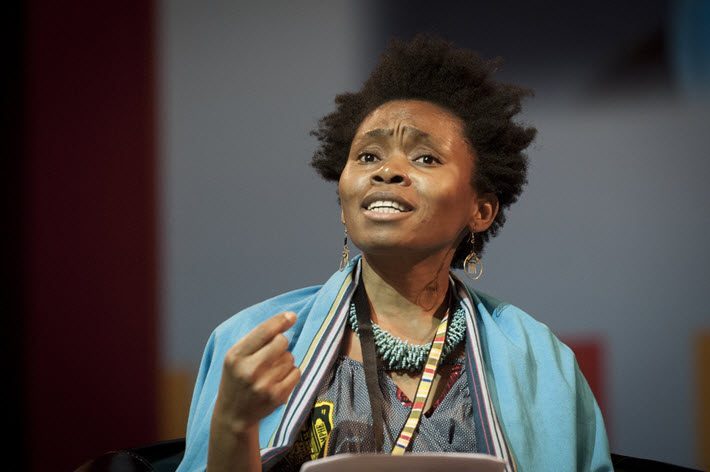
Lola Shoneyin
Image: internationales literaturfestival berlin

Where she fits

Shoneyin sits at a useful crossroads in the contemporary Nigerian canon. She is younger than Chimamanda Ngozi Adichie and older than Oyinkan Braithwaite, and she writes closer to the comic domestic tradition of Buchi Emecheta than to the lyrical register of Helon Habila or Chris Abani. Her position as Wole Soyinka’s daughter-in-law has cast less of a shadow than one might expect, partly because the prose has so little in common with his. Her real significance may end up being less the books than what she built around them. There is no contemporary West African festival circuit without Aké, and the Nigerian independent publishing scene that Cassava Republic, Farafina, Narrative Landscape, Parresia and Ouida make up includes one imprint that is hers.

The bibliography at a glance

Title Year Form
So All the Time I Was Sitting on an Egg 1998 Poetry collection
Song of a Riverbird 2002 Poetry collection
For the Love of Flight 2010 Poetry collection
The Secret Lives of Baba Segi’s Wives 2010 Novel
Mayowa and the Masquerades 2010 Children’s book
Iyaji, the Housegirl 2014 Children’s book
“Nostalgia is an Extreme Sport”, in Of This Our Country 2021 Essay

Recommended reading order

Read The Secret Lives of Baba Segi’s Wives first. It is the breakthrough work, the most efficient introduction to her concerns, and short enough for two sittings. Then, if the voice has interested you, double back to the poetry: Song of a Riverbird is the strongest collection and the right second stop, For the Love of Flight is worth reading next if you want to watch the novel forming in the poems, and So All the Time I Was Sitting on an Egg is for completists. The two children’s books are genuinely for children and read best aloud. Her 2010 Guardian piece on polygamy is the most useful short prose statement of her position, and the Arcola stage adaptation is worth seeking out on the record if you want to see how the novel plays in another form.

Why the festival and the imprint belong in her bibliography

The temptation with Shoneyin is to file her as a one-novel writer who went into arts administration. That misreads the shape of the career. The novel, the three collections, the children’s books, the festival and the imprint are all versions of the same argument, which is that Nigerian women’s interior lives are worth the apparatus: worth publishing, worth convening around, worth teaching. The apparatus is the point. Readers who come for Baba Segi and stay for the poetry get the clearest view of a writer whose most consequential work has been done in two registers at once, one of them on the page and one of them in the room.

Ad SpaceIn-Article - 300x250
Advertisement
Share
Get the recap

Loved this story? Get more like it.

Join readers who get our weekly entertainment recap - the stories worth your time, delivered every Friday.

No spam. Unsubscribe anytime. By signing up you agree to our Privacy Policy.

Lola Shoneyin: A Reader's Guide... | Sidomex Entertainment