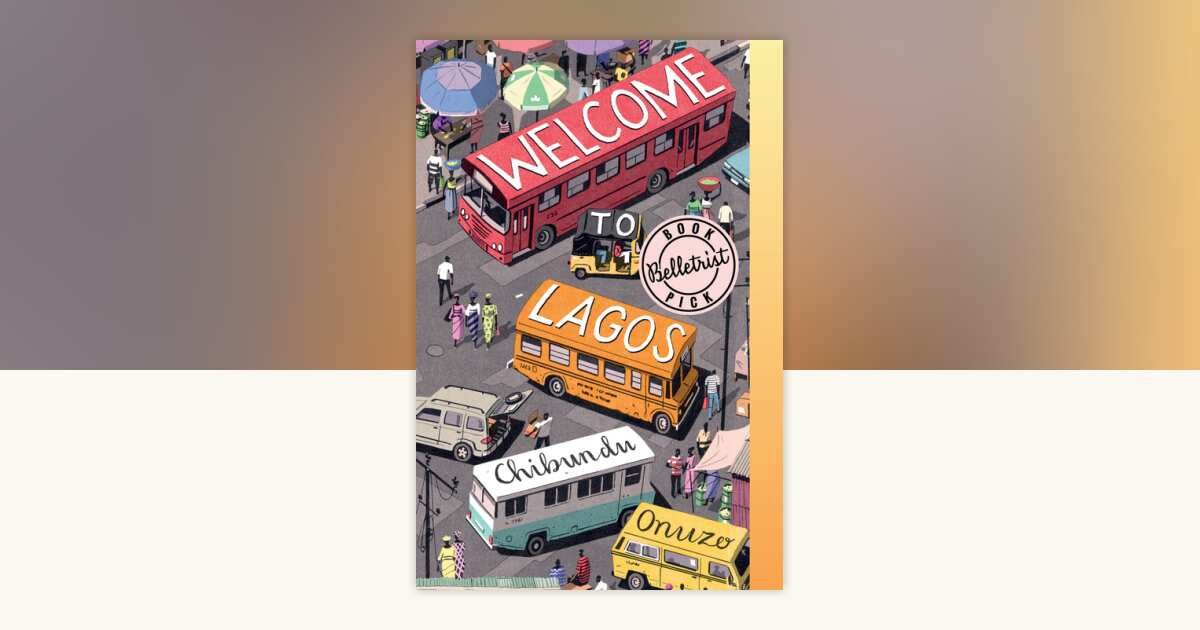
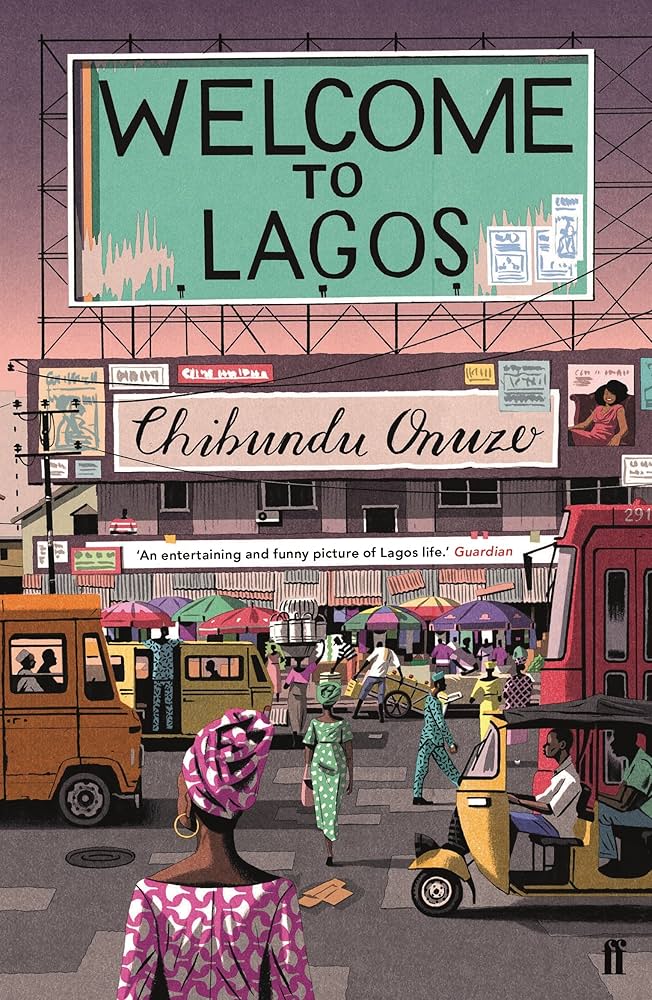

There is a particular pleasure in a novel that likes its characters. Not approves of them, necessarily, since several of Chibundu Onuzo’s are deserters, squatters and a thoroughly corrupt sitting government minister, but likes them, watches them with affection and curiosity rather than judgment. Welcome to Lagos is that kind of book. It gathers five strangers who fall in together on the road out of the Niger Delta, marches them into the chaos of Lagos, and lets them improvise a family out of nothing but proximity and need. It is warm where so much serious fiction about Nigeria is bitter, and the warmth is not naivety. Onuzo knows exactly how corrupt the world she is describing is. She just refuses to let that knowledge curdle into despair.
The Picaresque Reborn
Published by Faber in January 2017, and in the United States by Catapult the following year, Welcome to Lagos is Onuzo’s second novel, written in her mid-twenties, following her precocious debut The Spider King’s Daughter. It is a picaresque in the old sense, a road novel built around a band of travellers and the episodes that befall them, updated for contemporary Nigeria. The form suits the material. Lagos is a city of arrivals and reinventions, and the picaresque is the genre of people remaking themselves on the move.
| Item | Detail | Form or status |
|---|---|---|
| Welcome to Lagos | 2017 | Novel, Faber; Catapult edition in the US, 2018 |
| Prize record | 2018 | Shortlisted for the Royal Society of Literature’s Encore Award |
| Author’s debut | 2012 | The Spider King’s Daughter, winner of a Betty Trask Award |
| Author’s third novel | 2021 | Sankofa, Virago and Catapult |
The five who converge are sharply individuated. Chike Ameobi is an army officer in the Delta who deserts rather than carry out an order against a village, a fundamentally decent man trying to figure out how to live decently in an indecent country. Yemi, his junior, follows him out. Fineboy is a young ex-militant with a smooth, affected American accent and dreams of becoming a radio presenter. Isoken is a sixteen-year-old who has escaped an assault by a rebel group and attaches herself to the group for safety. Oma, met later on a bus, is leaving a wealthy and abusive husband. They meet on the road, and by the time they reach Lagos they have become, against everyone’s expectations including their own, a unit.
In Lagos, after a stretch sleeping rough under a bridge, they end up squatting in a well-hidden and apparently abandoned house, and the house turns out to belong to Chief Sandayo, the Minister of Education, who has taken millions from the fund meant for basic schooling and run from the capital days before he was to be sacked. The collision of the destitute travellers and the fugitive minister, all crammed under one roof, is the novel’s central engine, and it is both very funny and quietly devastating.
Onuzo prefaces her chapters with snippets of fictional media: a radio broadcast, a newspaper item, a snatch of official spin. The device does quiet structural work, building the public Nigeria of official statements around the private Nigeria of the squatters’ house, so the reader is always aware of the gap between the story the country tells about itself and the messy reality on the ground floor. It is the same gap Sandayo lived inside as a minister, mouthing the language of national development while moving the development budget, and the epigraphs keep that hypocrisy in the reader’s peripheral vision throughout.
Found Family and the Ethics of Stolen Money
The heart of the book is what this accidental family decides to do with Sandayo’s stolen millions. The obvious move, for desperate people, is to take it and run. Instead, led by Chike’s stubborn conscience and Sandayo’s flickering, late-arriving guilt, they conceive a plan to spend the money on the schools it was meant to build in the first place. They will play Robin Hood with funds that were stolen from the poor, returning them to the poor through their own irregular channels.
This is where Onuzo’s moral imagination shines. The plan is technically a crime, the use of stolen public money by people with no authority to use it, and the novel knows this. But it is also, arguably, more honest than the system that stole the money to begin with. Onuzo poses a genuinely thorny question, what justice looks like in a country where the official channels are themselves the thieves, and she refuses to resolve it into a simple answer. The found family becomes a tiny, illegitimate, weirdly functional alternative ministry, and the book is clear-eyed about how quickly bureaucracy and graft close in on anyone trying to get a school roof repaired.
Sandayo himself is the novel’s most complex figure, a former idealist and one-time activist who has long since made his peace with the trough. He is a thief, unrepentant for much of the book, and Onuzo neither excuses him nor reduces him to a villain. His gradual, grudging movement toward something like redemption is earned rather than sentimental, and his sparring with Chike gives the novel its richest dialogue. The relationship between the principled deserter and the corrupt minister is the book’s true central bond, two men arguing each other toward a shared and risky purpose.
What keeps Sandayo from becoming a simple morality lesson is Onuzo’s grasp of how corruption rationalises itself. Sandayo does not think of himself as evil. He thinks of himself as a man who played the game everyone plays, who took his turn at a trough that every official before him had fed from, and who is now being singled out by hypocrites no cleaner than he is. The novel takes this self-justification seriously enough to let the reader feel its pull, which is far more unsettling than a cartoon villain would be. By the time he begins, almost against his will, to care about the schools the money was meant for, the change reads as a conversion rather than a plot convenience, because Onuzo has made us understand the man he is converting from. Chike never lectures him. He simply lives by a different code, and proximity to that code slowly shames Sandayo into something better.
Lagos as a Character
The city itself is the sixth member of the cast, and Onuzo renders it with evident love. This is not the Lagos of misery tourism, all squalor and suffering, nor the glossy Lagos of aspirational lifestyle fiction. It is a working city of hustle and noise and improvisation, of danfo buses and power cuts and the relentless ingenuity required to survive. Onuzo writes the city as a place of possibility precisely because it is a place of chaos. In Lagos, no one knows who you were, which means you can become someone new, and the novel treats that as a gift as much as a hardship. She also lets the languages of the city do their own work, moving between English, Yoruba and Igbo without pausing to translate for outsiders.

The media strand deepens the portrait. Ahmed Bakare, a wealthy, London-educated young editor running an independent newspaper and chasing the Sandayo story, brings in the world of Nigerian press freedom, the danger of investigating power, and the question of who controls the narrative. Onuzo is sharp about the limits of his courage, since he can always retreat to his parents’ flat in London when his journalism upsets the wrong people, which is a privilege none of the squatters has. A later sequence in which a visiting British television crew arrives to interview the fugitive minister is the book’s funniest and most pointed, skewering the foreign correspondent who has come to confirm what he already believes about a failed African state.
If the city is rendered with affection, it is not rendered with sentimentality. The threat of violence is constant, the police are not allies, and the novel closes on a death that Chike reads in frankly near-messianic terms, followed by outcomes for the survivors that are closer to settled than the setup had any right to deliver. Lagos gives and Lagos takes, and the novel honours both, though it tips its hand toward giving.