


Three times Galgut’s name was read out on a Booker Prize shortlist, and twice he watched someone else collect the cheque. He was shortlisted in 2003 for The Good Doctor and again in 2010 for In a Strange Room, the bridesmaid of South African letters, admired and underread. Then in 2021, on his third appearance on the list, The Promise won. Galgut had been publishing fine, austere, undersold novels for four decades by then, since the appearance in 1982 of a first novel he had written at seventeen. The win recognised not one book but a long, patient career spent watching his country through the cold, restless eye of a narrator who can never quite settle anywhere.
Illness, Reading, and a Teenage First Novel
Damon Galgut was born on 12 November 1963 in Pretoria, in the heart of apartheid South Africa, into a white family on the privileged side of the racial order. The defining event of his childhood was illness. At the age of six he was diagnosed with lymphoma, and the long stretches of treatment and convalescence turned him into a reader, since a sick child confined to bed has little else to do but disappear into books. He has described his mother reading to him through that period, and the habit of literature took root in the enforced stillness of it.
That origin matters because it explains the kind of writer he became, interior, observant, comfortable with solitude, attuned to the body’s frailty and to the way consciousness drifts when it has nowhere to go. He was head boy at Pretoria Boys High School, matriculated in 1981, and went on to study drama at the University of Cape Town. He wrote his first novel, A Sinless Season, at seventeen, and it was published in 1982. Then he spent decades developing a style of remarkable control, spare and exact, with none of the warmth or expansiveness that wins easy popularity.
Galgut occupies a particular position in South African literature as a white writer reckoning with the guilt and complicity of his class. He came of age inside apartheid and watched it fall, and his work returns again and again to the moral predicament of white South Africans, their inherited privilege, their relationship to land taken and never returned, their alienation from the country they claim and the people they have wronged. He writes from inside that discomfort rather than absolving himself of it. He has lived in Cape Town since the early 1990s, and besides the novels he has written for the stage.
The Shelf in Full
Galgut’s bibliography is longer and starts earlier than the Booker coverage of 2021 tended to suggest. Readers who arrive through The Promise often assume a thin career crowned late. In fact there are nine novels across four decades, a volume of short fiction and several plays, and the early titles were published by small South African houses long before his work was widely reissued abroad. The gaps matter too, since no new novel appeared between The Quarry in 1995 and The Good Doctor in 2003, and that eight-year gap sits exactly where the country changed, and the first four books are so hard to find secondhand that even admiring profiles tend to begin at The Good Doctor and treat everything before it as a rumour.
| Title | Year | Form |
|---|---|---|
| A Sinless Season | 1982 | Novel, written when Galgut was seventeen |
| Small Circle of Beings | 1988 | Short fiction, built around a title novella |
| The Beautiful Screaming of Pigs | 1991 | Novel; won the CNA Literary Award in 1992 |
| The Quarry | 1995 | Novel; filmed in 1998 and again in 2020 |
| The Good Doctor | 2003 | Novel; Booker shortlist |
| The Impostor | 2008 | Novel |
| In a Strange Room | 2010 | Three linked parts, first published separately in The Paris Review; Booker shortlist |
| Arctic Summer | 2014 | Novel about E. M. Forster |
| The Promise | 2021 | Novel; won the Booker Prize |
| Echoes of Anger and other plays | from 1983 | Work for the stage |
Before the Booker Noticed Him
The books before 2003 are the least read and the most useful for understanding what came later. Small Circle of Beings, a collection whose title novella follows a mother through her young son’s illness, draws so plainly on Galgut’s own childhood that critics have treated his biography as the obvious frame for reading it. The Beautiful Screaming of Pigs, which won the CNA Literary Award in 1992, takes a young white conscript back from the border war into a country on the edge of transition. The Quarry, a lean and brutal story of a man who takes a dead minister’s identity, is the Galgut novel most often described as a thriller, and it has been filmed twice, in 1998 and again in 2020.
The later middle period is just as substantial. The Impostor, from 2008, follows a man retreating to a small Karoo town and the old schoolmate who draws him into the new country’s property and patronage deals, and it was shortlisted for the Commonwealth Writers Prize for Best Book in the Africa region in 2009. Arctic Summer, from 2014, is a fictionalised account of E. M. Forster’s middle years in India and Alexandria. It was shortlisted for the Walter Scott Prize and won the Barry Ronge Fiction Prize in 2015, which makes it one of the more decorated books of his pre-Booker career and one of the least discussed.
The Good Doctor
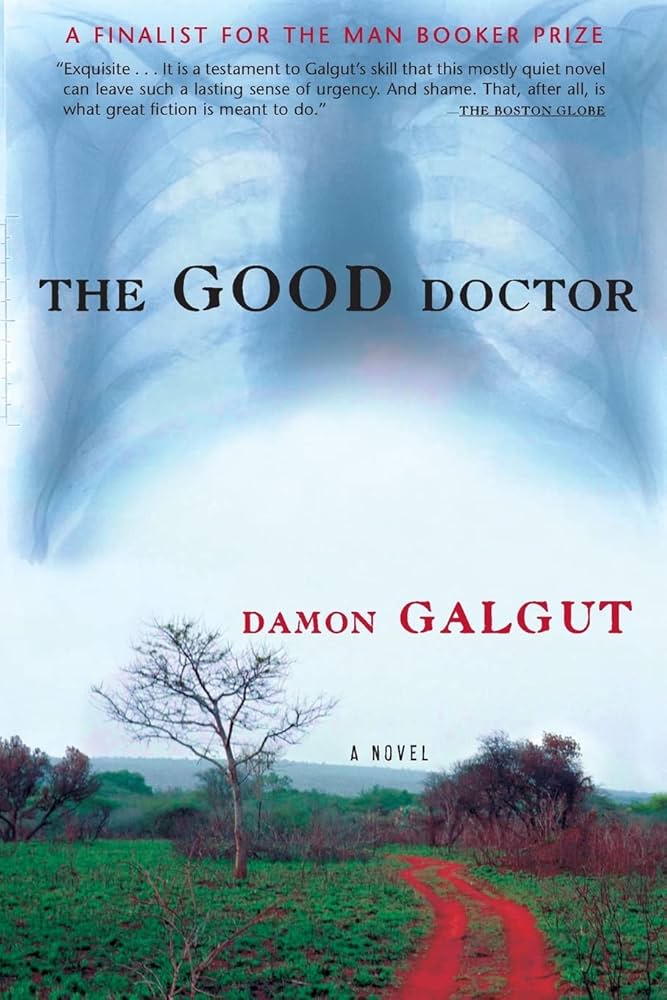
The Good Doctor, his fifth novel, earned his first Booker shortlisting in 2003 and brought him serious international attention. It is set in a rundown hospital in a former homeland, one of the bantustans created under apartheid, in the uncertain years after the transition to democracy. The narrator, Frank, is a jaded, middle-aged doctor who has retreated to this forgotten outpost, and his settled cynicism is disturbed by the arrival of Laurence, a young, idealistic newcomer determined to do good. Galgut wrote much of it while travelling, a good deal of it in a hotel in Goa.
The novel is a study in the collision between disillusionment and idealism, and Galgut refuses to let either man be right. Frank’s resignation is corrosive, but Laurence’s eagerness is naive and ultimately destructive, his good intentions blind to the realities of the place. The decaying hospital becomes a portrait of the new South Africa itself, full of promise and rot in equal measure, haunted by the structures of the old order even as it gropes toward something new.
What distinguishes the book is Galgut’s restraint. He writes the tension between the two men with a slow, accumulating dread, and the prose is cool and precise, withholding judgment, letting the reader feel the moral weather without being told what to think. The narrator’s detachment, his inability to fully commit to anyone or anything, would become a signature of Galgut’s fiction. Beyond the Booker shortlisting, the novel won the Commonwealth Writers Prize for Best Book in the Africa region and then the International Dublin Literary Award in 2005, and it announced him to the wider world as a master of atmosphere and moral ambiguity.
In a Strange Room
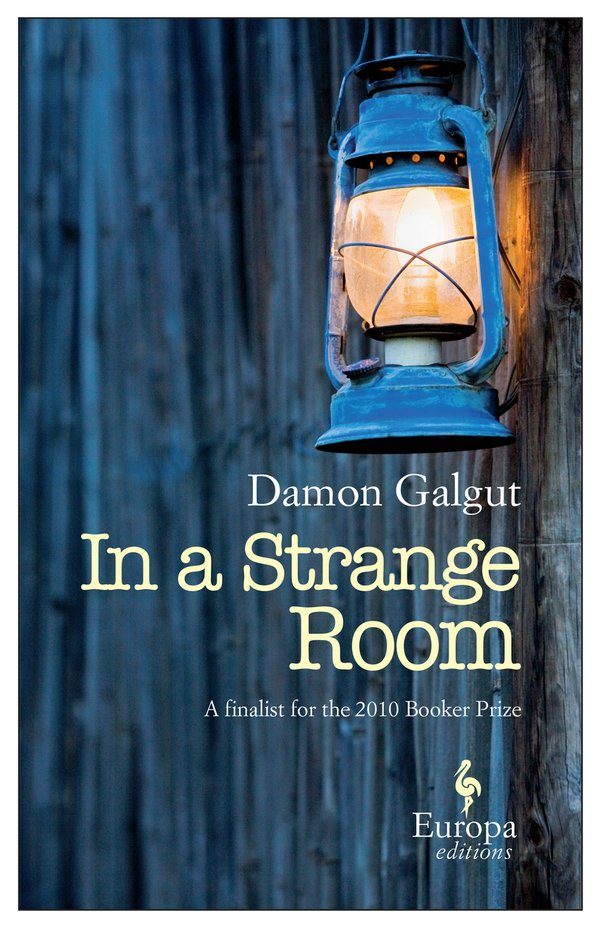
His 2010 book, which brought his second Booker shortlisting, is one of his strangest and most beautiful achievements, and also the one whose form is genuinely contested. In a Strange Room is made up of three linked parts, each of which first appeared on its own in The Paris Review before the three were gathered between covers. Readers and critics have variously called the result a novel, a triptych of novellas and a sequence of linked travel pieces, and the Booker judged it as fiction. Each part follows a restless wanderer named Damon across journeys in Greece, Africa and India, and the narration slips unnervingly between the first and third person, the narrator referring to himself as both “I” and “he,” enacting the dissociation of a man estranged from his own life.
The three sections, titled “The Follower,” “The Lover,” and “The Guardian,” trace different forms of failed connection. In the first, Damon attaches himself to a German backpacker, Reiner, in Greece. In the second he travels through Africa behind a Frenchman and a pair of Swiss twins, drawn to one of them, Jerome. In the third he is in India, minding a friend, Anna, through a severe psychiatric crisis, and the section is harrowing, a study of the limits of care and the failure of the would-be guardian. The book blurs the line between fiction and memoir, since the protagonist shares the author’s name, and Galgut never settles whether we are reading invention or confession.
It is a hypnotic, melancholy book about rootlessness, about the traveller who is always moving precisely because he cannot belong anywhere. The split narration is not a gimmick but the formal embodiment of alienation, a man so detached from himself that he watches his own life from outside. It was shortlisted for the Ondaatje Prize as well as the Booker, and for many readers it is Galgut’s most purely affecting work, the place where his coldness becomes a kind of devastating intimacy.
The Promise
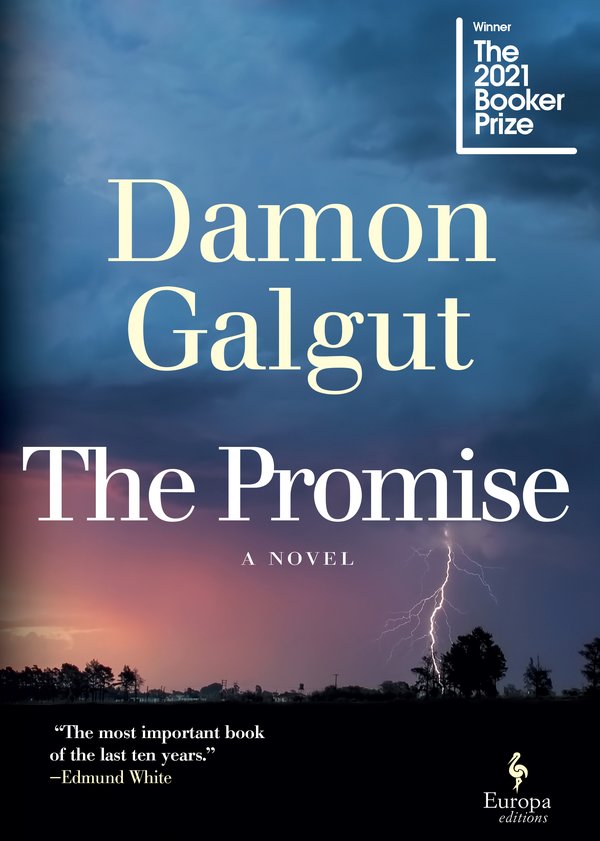
The 2021 novel that finally won the Booker is his most expansive and his most overtly historical. First published in Cape Town by Umuzi, with editions from Chatto & Windus in Britain and Europa Editions in the United States, The Promise follows the Swart family, Afrikaners with a farm outside Pretoria, through four parts set in 1986, 1995, 2004 and 2018, each organised around a family death. At the centre is a promise made to Salome, the Black woman who has worked for the household for years, that she will be given the house and plot of land she lives on. The promise goes unkept for decades, and its broken state becomes the moral indictment running through the generations.