


Somewhere in the archives of the Italian colonial war machine, there are photographs of dead Ethiopians arranged like trophies. Maaza Mengiste found some of them. She spent years looking at images that were never meant to dignify their subjects, only to catalogue them, and out of that act of looking she built a novel that refuses to let the looking be one-directional. The Shadow King begins from a premise that should embarrass the official record: that the history of Italy’s 1935 invasion of Ethiopia, told and retold as a clash of armies and emperors, left out almost everyone who actually did the dying. Chief among the erased were women. The book sets out to drag them back into the frame, and it does so with a ferocity that is rare even among serious historical novels.
A War the History Books Misplaced
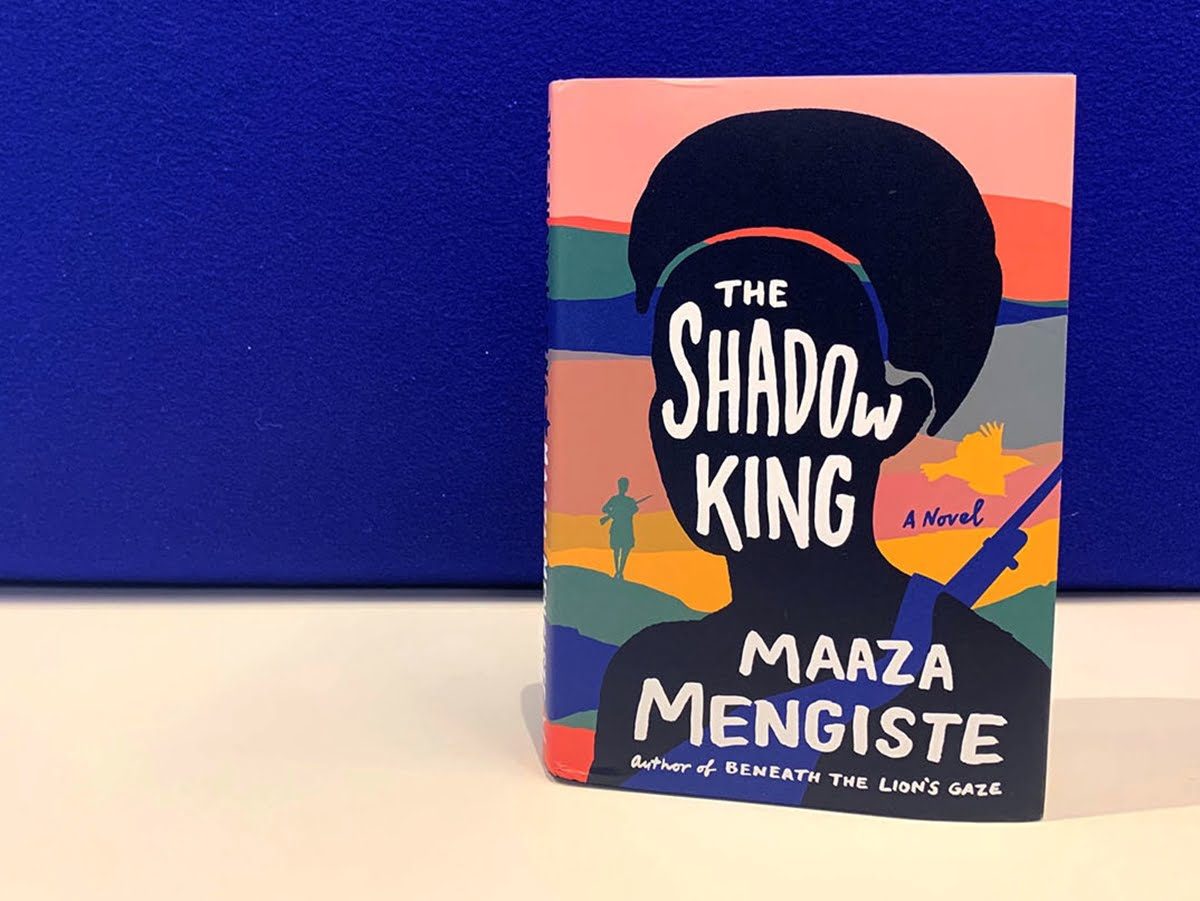
Published in 2019 by W. W. Norton and shortlisted for the Booker Prize in 2020, The Shadow King is Mengiste’s second novel, arriving roughly a decade after her debut Beneath the Lion’s Gaze. The gap shows in the most flattering way. This is a book that took its time, and the patience is audible on every page. The author has said in interviews that the project began as a more conventional account of male soldiers until she learned that her own great-grandmother had gone to war against the Italians as a young woman. That recovered fact reorganised the entire book, and you can feel the redirection in the way the narrative keeps swinging its attention away from the men who expect to own the story.
The history the novel works from is specific and worth getting right. Mussolini’s forces crossed into Ethiopia in October 1935, opening the Second Italo-Ethiopian War, a very different event from the Battle of Adwa in 1896, where an earlier Italian invasion was defeated and Ethiopian independence preserved. This time the invaders had aircraft and poison gas. Emperor Haile Selassie went into exile in 1936, settling eventually in Bath in England, and the Italian occupation of Ethiopia lasted until 1941. The novel occupies the years of resistance inside that occupation, when the emperor was absent and the fighting did not stop.
The plot, reduced to its bones, follows Hirut, an orphaned servant girl in the household of the officer Kidane and his wife Aster on the eve of the invasion. When the war comes and Haile Selassie flees, the Ethiopian resistance faces a morale catastrophe. Their solution is theatrical and desperate: they find a peasant named Minim, a man whose name means “nothing,” who bears a passing resemblance to the absent emperor, and they dress him up as a decoy. This is the shadow king of the title, a hollow figure paraded before the troops to convince them their sovereign has not abandoned them. Hirut becomes his guard and, in a sense, the keeper of the illusion.
What Mengiste does with this material is less a war narrative than an excavation. She is interested in the gap between the event and its recording, and she stages that gap constantly. The decoy emperor is a fiction the Ethiopians tell themselves to survive, and the novel never lets us forget that nations run on exactly this kind of useful fiction. The decoy works because people need a body to rally around, and the book understands that need without sentimentalising it.
The Body as the Real Battlefield

If the shadow king is the novel’s idea about how power performs itself, Hirut’s body is its argument about where war actually lands. Mengiste is unflinching about sexual violence, and she is precise about who commits it. Kidane, the resistance hero, is also Hirut’s rapist. The novel does not allow him the easy redemption of his patriotism. He can be brave against the Italians and monstrous toward the girl who sleeps in his house, and Mengiste holds both truths in the same hand without flinching. The discomfort is the point. A lesser book would have made the enemy the only source of harm.
This is where the book is at its most uncomfortable and its most necessary. The women who become soldiers here are not granted a clean heroism. Aster, the wife, is cruel to Hirut for much of the novel before they are forced into a wary solidarity by the war. Their alliance is not sisterhood in any sentimental sense. It is two women recognising that the men around them, friend and enemy alike, regard their bodies as territory to be claimed, used, and discarded.
The Italian side gets its own embodied figure in Ettore Navarra, a Jewish soldier and photographer whose camera becomes one of the book’s central instruments. Ettore documents the executions and humiliations his army inflicts, and his growing dread, the understanding that the racial logic crushing Ethiopians will soon come for him under Italy’s new race laws, gives the colonial machine a face that is neither pure villain nor convenient liberal conscience. He keeps clicking the shutter even as he hates what he sees, and the novel refuses to let him off the hook for that complicity. He is afraid, and his fear does not make him good.
The general Carlo Fucelli, by contrast, is the colonial enterprise without conscience, a man who treats the cliff executions as spectacle and orders Ettore to photograph them. Through the contrast between the two Italians, Mengiste maps the full spectrum of empire’s foot soldiers: the true believer who relishes cruelty and the frightened functionary who participates anyway. Neither portrait is a caricature, which is part of why the book unsettles rather than merely outrages. The reader is denied the comfort of a villain who can be safely hated from a distance.
The Camera and the Choral Voice
Photography runs through The Shadow King as both plot device and governing metaphor. Mengiste structures portions of the book as captions, as catalogues of images, as descriptions of what a lens froze. The novel is haunted by the idea that the camera both preserves and violates, that to be photographed by your conqueror is to be possessed twice. The scenes in which Ethiopian prisoners are forced to leap to their deaths from a cliff while Ettore photographs them draw on the documented brutality of the occupation, and the prose around them is some of the most controlled and terrible writing in the book. Mengiste slows down at exactly the moments most novels would rush past, forcing the reader to stay inside the frame with the doomed.
Against the cold eye of the camera, Mengiste sets a deliberately operatic prose style. She breaks the narrative with sections headed Chorus, Interlude and Photo, borrowing the architecture of Greek tragedy. The choral passages give voice to the collective, to the women and the dead, in a register that is incantatory and heightened. Haile Selassie himself appears in the interludes, pacing his European exile, listening obsessively to Verdi’s Aida, an opera about an enslaved Ethiopian princess, an irony the novel lets sit without commentary. The emperor in these passages is a man watching his country bleed from a safe distance, and the book is quietly merciless about the privilege of that distance.