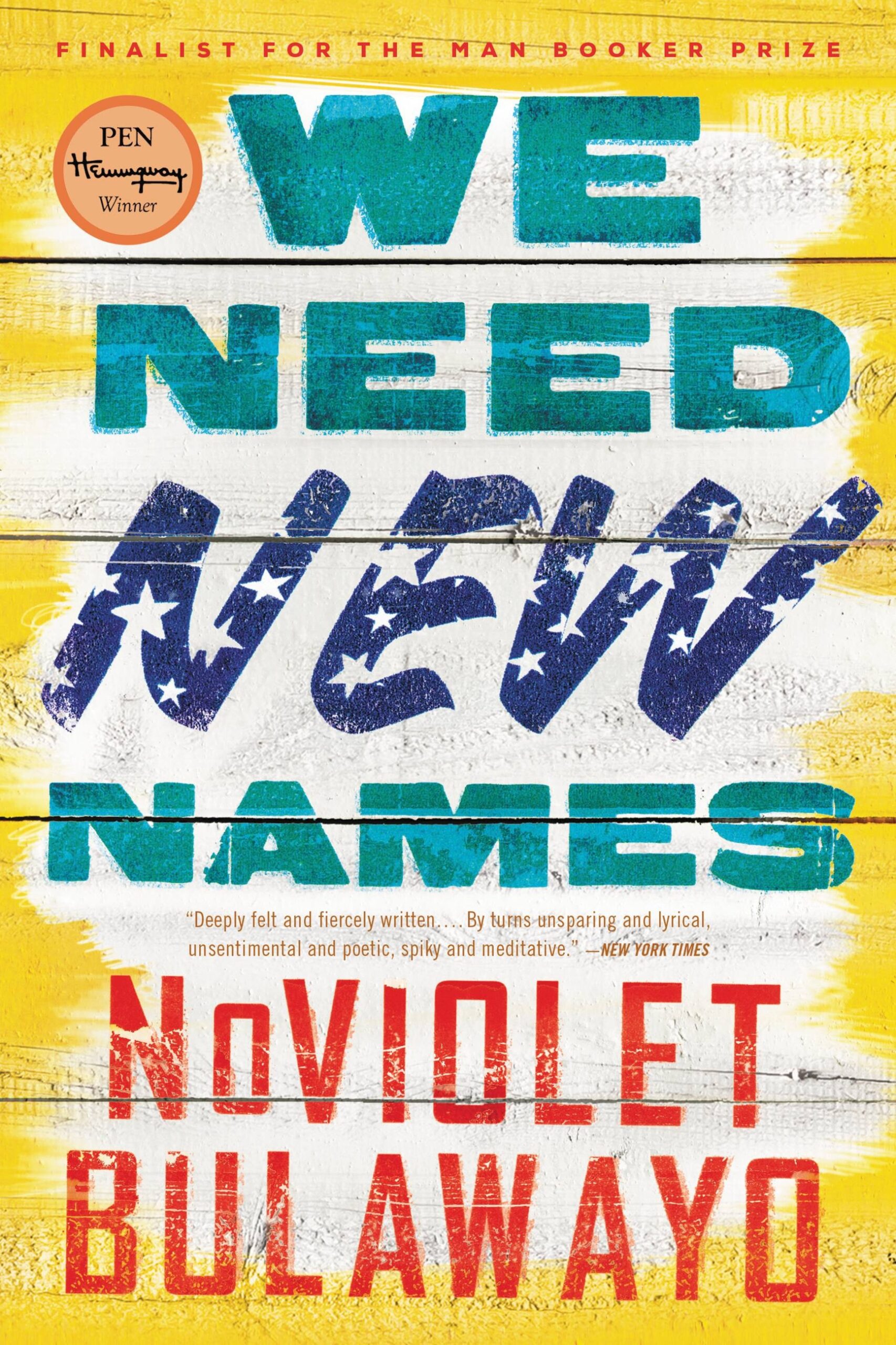
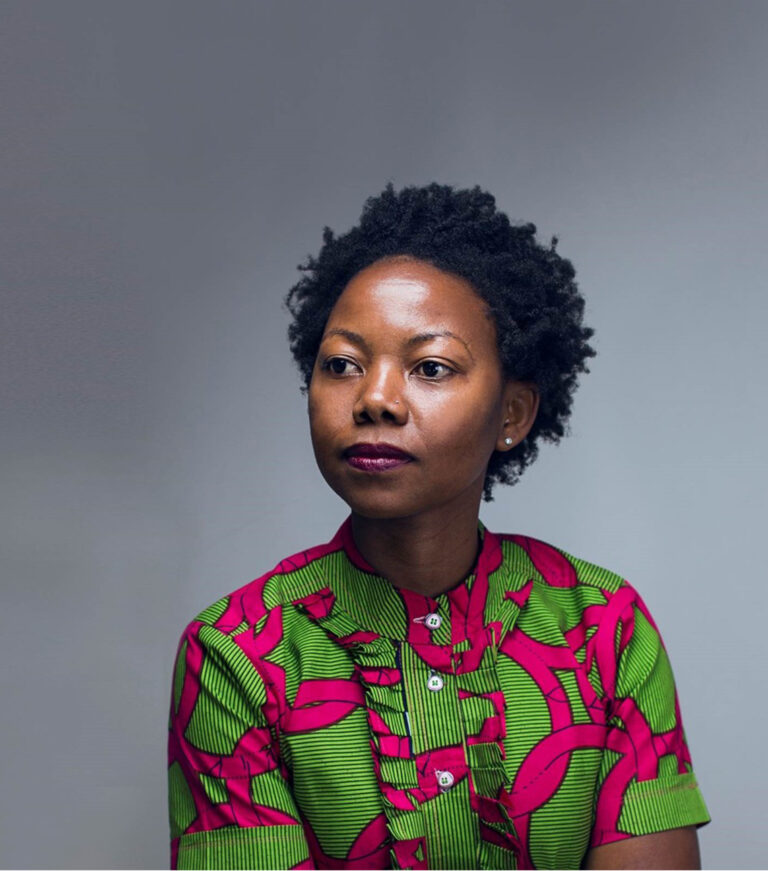

The first sentence of “Hitting Budapest” puts a child’s voice in your ear and refuses to leave: “We are on our way to Budapest: Bastard and Chipo and Godknows and Sbho and Stina and me.” Six children walking out of a Zimbabwean shanty town to steal guavas from the rich suburb their elders have nicknamed after a European capital. The story appeared in the Boston Review in late 2010 and won the 2011 Caine Prize for African Writing, by which point NoViolet Bulawayo had just completed an MFA at Cornell and was still writing the novel the story would open. Two years later that novel, We Need New Names, made her the first Black African woman and the first Zimbabwean shortlisted for the Booker Prize. The voice in those opening lines is the voice that has driven her career: a child looking at adult cruelty without flinching, naming what she sees in language no adult has trained out of her.
A Life Between Tsholotsho and the American Academy
Bulawayo is the pen name of Elizabeth Zandile Tshele, born in October 1981 in Tsholotsho, a rural district in Matabeleland North. The Gukurahundi massacres of the early 1980s fell on that region when she was an infant, too early for her to remember directly, but the texture of life in a province treated with suspicion sits underneath everything she has written. The name itself is a tribute and a coordinate. The prefix “No” comes from the Ndebele word for “with”, Violet was her late mother’s name, and “Bulawayo” is the city her signature claims as home. She attended Njube High School and then Mzilikazi High School before leaving for the United States, where she studied at Kalamazoo Valley Community College, took bachelor’s and master’s degrees in English at Texas A&M University-Commerce and Southern Methodist University, and completed an MFA in creative writing at Cornell in 2010 on a Truman Capote Fellowship.
The trajectory after that is the kind that announces a career before the books arrive: the Caine Prize in 2011, a Wallace Stegner Fellowship at Stanford from 2012 to 2014, further fellowships at Princeton and Harvard, and now an associate professorship in Cornell’s Department of Literatures in English. She has spoken in interviews about the strangeness of writing Zimbabwe from American university towns, and her fiction has absorbed that displacement rather than apologised for it. The diaspora is not a setting she visits. It is the position from which she sees. She writes slowly and rewrites obsessively. Nine years separate We Need New Names in 2013 from Glory in 2022, and when the second novel arrived it was a different machine entirely: longer, stranger, more formally aggressive. The pause was the work. In a publishing economy that rewards writers for delivering the same thing twice, the decision to make each book unlike the last is itself a kind of refusal.
We Need New Names and the Cost of Leaving
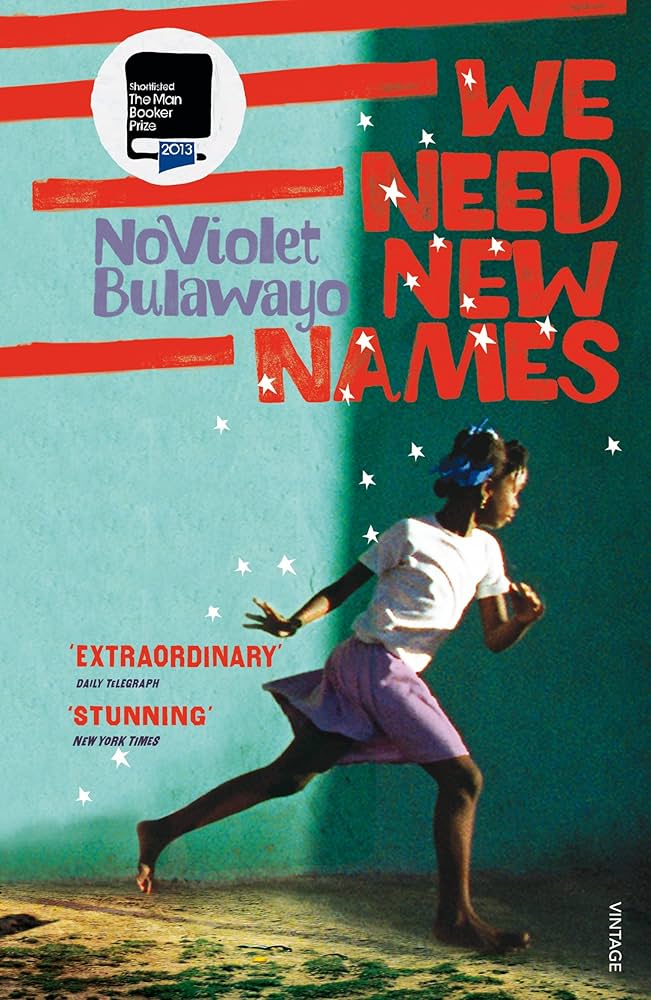
We Need New Names is told entirely in the voice of Darling, who is ten when the novel opens and a teenager when it closes. The first half is set in Paradise, a tin-shack settlement outside an unnamed Zimbabwean city, where Darling lives after her family’s home is bulldozed by the state. The second half follows her to Detroit, which the children of Paradise call “Destroyedmichygen”, to live with her Aunt Fostalina. The structural risk is enormous. Most novels of migration use an adult narrator looking back, and Bulawayo refuses the consolation of retrospect. Darling sees her own arrival in America in the same voice she used for stealing guavas, which means the reader watches a child’s idiom strain and crack against a country it was not built for.
The novel was praised for its language and questioned, including by other African writers, over whether its catalogue of Zimbabwean misery had been assembled for a foreign appetite. Reviewing it in The Guardian, the Nigerian novelist Helon Habila placed it inside what he called a “Caine-prize aesthetic” and accused the new African writing of “performing Africa” for the world, detecting in the novel “a palpable anxiety to cover every ‘African’ topic”. The critique has weight. There are passages where the children’s voices feel borrowed for atmosphere rather than inhabited. Habila also named what rescues the book, “a certain linguistic verve”, and the second half answers the first more honestly than the complaint allows. Darling in Michigan is not a victim looking back at an old country. She is a teenager discovering that she has lost the language to describe her own life, and the novel is at its sharpest when her old friends, Chipo above all, challenge whether she can still call Zimbabwe hers.
The book collected an unusual run of honours for a debut: the 2013 Booker shortlist, the inaugural Etisalat Prize for Literature, the PEN/Hemingway Award for a debut novel, the Hurston/Wright Legacy Award, the Los Angeles Times Book Prize for first fiction, a Guardian First Book Award shortlisting and a National Book Foundation “5 Under 35” selection. The international response was warmer than the African one, and that imbalance has shaped the conversation around her work ever since.
Glory and the Country of Animals
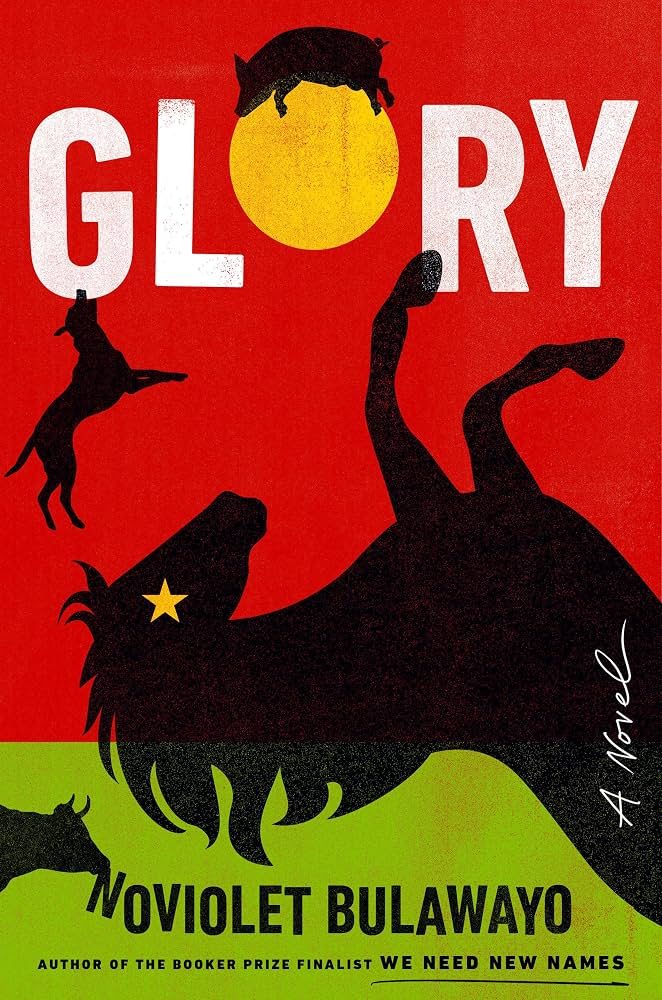
Glory arrived nine years later and announced itself as something else. The comparison the book invites is George Orwell’s Animal Farm, and Bulawayo has said so openly. Her novel is set in Jidada, a country of animals ruled by an aging horse called the Old Horse, whose decades-long reign ends in a coup led by his deputy, Tuvius Delight Shasha. A reader who knows the late Mugabe years recognises the 2017 coup that removed Robert Mugabe. The animals make it bearable. The animals also make it more accurate.
The Orwell comparison is the obvious one and also the limiting one. Orwell’s allegory was a closed system in which each animal stood for a fixed position and the satire moved by translating Soviet history into farmyard furniture. Bulawayo’s animals are not stand-ins. They are inhabitants. The novel is told in choral voices, dipping into social-media feeds, sermons, propaganda broadcasts and the private despair of a goat called Destiny who has returned from exile. The form is closer to a timeline than to a fable, and that is the point: the country she is writing about is one where state propaganda, evangelical Christianity, viral video and ancestral grief sit on the same screen at the same moment.