
Put on an E.T. Mensah recording of “All for You” and then put on a current Afrobeats single. The horn writing is recognisably related. The rhythmic foundation sits in the same place. The through-line runs for roughly seventy years, and the genealogy is more direct than most listeners realise. Before following it, though, one piece of vocabulary has to be settled, because almost every discussion of this lineage founders on it.
Afrobeat and Afrobeats Are Not the Same Thing
Afrobeat, singular, is the genre Fela Anikulapo Kuti built in Nigeria from the late 1960s onward. It is a specific music with a specific architecture: long tracks, interlocking guitar and horn parts, extended instrumental sections, call-and-response vocals and, usually, explicit political argument. It is played by a large band. Fela’s Africa 70 and later Egypt 80 are the reference recordings, and the tradition continues through his sons Femi and Seun Kuti.
Afrobeats, plural, is an umbrella term that emerged in the late 2000s, mostly in the Nigerian and Ghanaian diaspora in London, to describe contemporary West African pop. It covers the studio-built, producer-driven, three-minute pop music of artists such as Wizkid, Burna Boy, Davido, Tiwa Savage and Ayra Starr. It is not a subgenre of Fela’s Afrobeat, and several artists filed under it have said plainly that they dislike the label. The plural is a marketing category. The singular is a genre. Confusing the two is the single most common error in writing about this music, and it matters here because highlife feeds into both, by different routes.
What Highlife Actually Is
Highlife emerged in what was then the Gold Coast, now Ghana, in the early twentieth century, as a fusion of Akan musical traditions with the European brass band music of the colonial garrisons and the Caribbean and sailor-borne rhythms arriving through the coastal ports. The name is generally traced to the elite dance clubs where the orchestras first played, which ordinary listeners outside described as the high life. Its signature features are prominent horn sections, guitar lines drawn from Akan plucking patterns, melodic and unforced vocals, and a rhythmic footing that sits between European dance-band convention and West African polyrhythm.
Two broad strands developed. The dance-band highlife of the urban orchestras was horn-led and played in ballrooms and nightclubs. Guitar-band highlife, descended from palm-wine music, was smaller, cheaper and rural in its circulation, and it is the strand that carried the guitar vocabulary later generations inherited. By the 1950s and 1960s highlife was the dominant popular music across the region, with substantial scenes in both Ghana and Nigeria, and its commercial success built the recording studios, labels, venues and touring circuits that every later West African genre used.
The Figures Who Built It
| Musician | Country | Associated with | Known for |
|---|---|---|---|
| E.T. Mensah | Ghana | The Tempos | “All for You,” the dance-band template |
| Bobby Benson | Nigeria | Bobby Benson and his Combo | “Taxi Driver,” Lagos venues and band training |
| Victor Olaiya | Nigeria | The Cool Cats | Independence-era Lagos highlife |
| Cardinal Rex Lawson | Nigeria | Mayors Dance Band | “Sawale,” Niger Delta highlife |
| Victor Uwaifo | Nigeria | Melody Maestroes | “Joromi,” guitar-led Benin highlife |
| Osita Osadebe | Nigeria | Nigeria Sound Makers | “Osondi Owendi,” Igbo highlife |
E.T. Mensah and the Dance Band Template
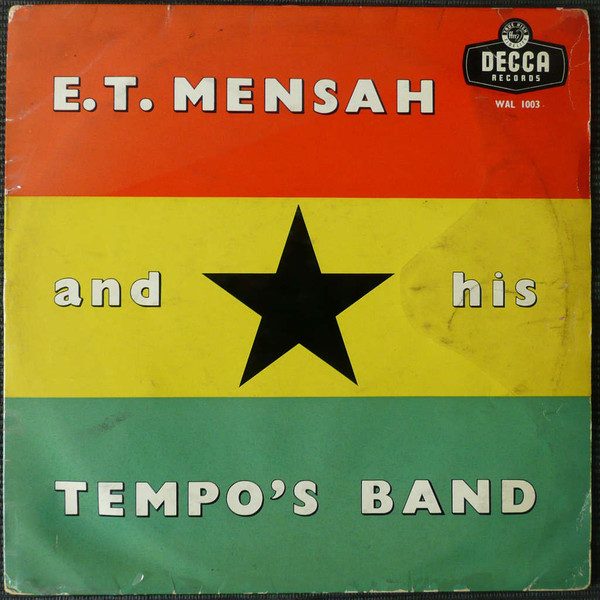
E.T. Mensah, a Ghanaian trumpeter and saxophonist who led The Tempos, is the figure most often called the king of highlife, and the dance-band template his group settled in the 1940s and 1950s is the one the wider tradition followed. His arrangements and recordings became the reference standard for what highlife was supposed to sound like, and his reputation reached well beyond the region after Louis Armstrong visited Accra in 1956 and played with him.
The Tempos toured hard across West Africa through the late colonial and early independence years, with dates in Lagos, Accra, Freetown and other regional centres, and that touring did the work of seeding local highlife scenes in the cities they played. His recordings for Decca were among the most widely distributed African popular music of the period, which established something later African musicians could build on: the idea that West African popular music could travel as a commercial product rather than as ethnographic curiosity.
Bobby Benson and the Lagos Dance Band Tradition
Bobby Benson built the Nigerian dance band tradition that became the local counterpart to Ghanaian highlife. Returning to Lagos after years abroad, he formed his orchestra in the late 1940s, and his 1960 recording “Taxi Driver” is one of the defining Nigerian highlife sides of the independence era. What made him unusually consequential was that he worked on several fronts at once, running a band, operating venues, recording and training musicians, so that he was building infrastructure rather than performing inside someone else’s.
A long list of Nigerian musicians passed through his orbit, and the Lagos club and band economy of the 1950s and 1960s owes a great deal to the venues and the training pipeline he set up. Fela Kuti was among the musicians who played in Benson’s circle early in his career, which makes the connection to what came later unusually direct.
Victor Olaiya and the Independence Sound
Victor Olaiya’s Cool Cats became one of the most important Nigerian highlife bands of the 1950s and 1960s, and the band played at the Nigerian independence celebrations in 1960, an engagement that tied highlife directly to the project of post-colonial Nigerian identity. Olaiya was a trumpeter, and his arrangements built on the Mensah template while pulling in distinctly Nigerian material, producing a Nigerian highlife that was related to the Ghanaian version but clearly distinguishable from it. That regional divergence set a pattern repeated many times since, in which West African genres share roots and then develop local characters. Olaiya was still recording late in life, and his 2013 collaboration with 2Baba on a reworking of his own “Baby Jowo” is a rare direct handshake between the highlife generation and the contemporary one.
Rex Lawson, Victor Uwaifo and the Regional Variants
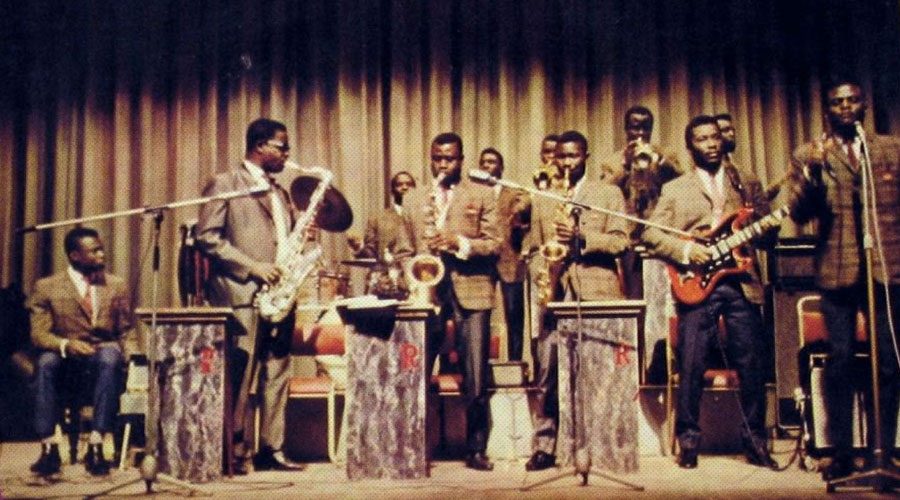
Cardinal Rex Lawson came from Buguma in what is now Rivers State and was of Kalabari and Igbo parentage, a Niger Delta musician rather than an Igbo-heartland one, and this is worth stating precisely because he is often filed under Igbo highlife. His Mayors Dance Band recordings of the 1960s, “Sawale” above all, sold across Nigeria, and he sang in several Nigerian languages, which was part of the point. His career ended early with his death in 1971, and his catalogue has been covered and sampled by Nigerian musicians ever since.