

Chigozie Obioma: A Reader's Guide to the Nigerian Author's Most Essential Books
Image: Hachette Book Group
Books

Chigozie Obioma: A Reader's Guide to the Nigerian Author's Most Essential Books

Arianne ColeArianne Cole··10 min read
Ad SpaceArticle Top - 728x90
Advertisement

Chigozie Obioma writes at the register of myth. He writes the way an elder at a village gathering speaks when he wants the children to remember, and he has said that the Igbo storytelling tradition, in which stories exist to explain things, is the tradition he is working inside. That single choice explains almost everything about his fiction: why the prose reads like oration, why the four brothers of his debut function as much as archetypes as characters, why an Akure family drama scaled into something the British press kept comparing to Greek tragedy.

This is not a fashionable register. Most novelists trained in American writing programmes learn to flatten the prose, trust the reader and leave the moral question for the reader to assemble. Obioma does the opposite. His narrators announce. They digress into proverb. They name the thing the reader is meant to feel. The decision has cost him with critics who find the prose overripe. It has also produced three of the most distinctive Nigerian novels of the last decade, two of them shortlisted for the Booker Prize.

Background

Obioma was born in 1986 in Akure, the Ondo State capital where The Fishermen is set. He is Igbo, raised in Yoruba country, and grew up speaking Yoruba, Igbo and English, which matters for the novels in ways that become clearer when the books are read in sequence. He has described a childhood of brothers and books, fascinated early by Greek myth and by Shakespeare, Milton and Bunyan, and drawn among African writers to Soyinka, Cyprian Ekwensi, Camara Laye and D. O. Fagunwa, whose Ogboju Ode ninu Igbo Irunmale he read in the original Yoruba. He names Amos Tutuola’s The Palm-Wine Drinkard and Achebe’s Arrow of God among his seminal influences, along with Hardy, Arundhati Roy and Nabokov.

His formal training is unusual for a Nigerian novelist of his generation. Many of his contemporaries went through Britain or straight into the American workshop circuit. Obioma took a longer route: an undergraduate degree at Cyprus International University in northern Cyprus, then graduate study at the University of Michigan, where he won a Hopwood Award. The Cyprus years matter. They supplied the material that became his second novel, and he has written about them directly in a Guardian essay on his student years there. He completed The Fishermen during a residency at Ledig House in 2012, far from both Nigeria and the Western literary establishment, and the book reads like something written by someone who had time to think.

He taught for several years at the University of Nebraska-Lincoln as the James E. Ryan Associate Professor of English, and is now Helen S. Lanier Distinguished Professor of English at the University of Georgia, as well as programme director of the Oxbelly fiction writers’ retreat. He judged the Booker Prize in 2021. His public profile is modest by the standards of his peers. He gives careful interviews, writes essays on African literature for The New York Times, The Guardian and The Millions, and has argued with some heat against the pressure on African writers to produce trauma-shaped fiction for Western markets.

The Fishermen and the prophecy that opens the door

The Fishermen (2015) is the book most readers will encounter first, and it is the right entry point. Four brothers in mid-1990s Akure, Ikenna, Boja, Obembe and the youngest, Ben, who narrates years later, sneak off to fish at the forbidden Omi-Ala River. There they meet Abulu, a local madman, who delivers a prophecy: Ikenna, the eldest, will be killed by one of his brothers. The rest of the novel is that prophecy doing its slow work on a household. Obioma has described the book as a tribute to his siblings, and has said the idea came from watching his father’s pleasure at a growing bond between two older brothers who had once been fierce rivals.

The Greek tragedy comparisons are accurate but slightly misleading. The structural template sits closer to Things Fall Apart than to Sophocles. The inevitability is communal rather than fated; the destruction arrives because of how people react to a forecast, not because the forecast was true. Obioma is writing about how rumour, masculinity and adolescent loyalty can manufacture catastrophe inside a family. The national backdrop, the annulled 1993 presidential election and the years that followed, sits in the corner of the frame, never insisted upon, always shaping what is possible for the boys. Obioma has said he wanted the novel to build a portrait of Nigeria at a seminal moment in its history.

What makes it work is the voice. Ben narrates as an adult looking back, and the chapters carry titles drawn from animals and natural figures, the python, the falconer, the leech, each attached to one of the brothers or to a force acting on them. The device sounds gimmicky in description and earns itself in the reading, because it is exactly the sort of mythic apparatus a family might construct after the fact to explain a disaster. The Fishermen was shortlisted for the Man Booker Prize in 2015 and won the FT/OppenheimerFunds Emerging Voices Award, the NAACP Image Award for debut author and the Los Angeles Times Art Seidenbaum Award for First Fiction. It is now on a number of African literature syllabi.

An Orchestra of Minorities and the cost of ambition
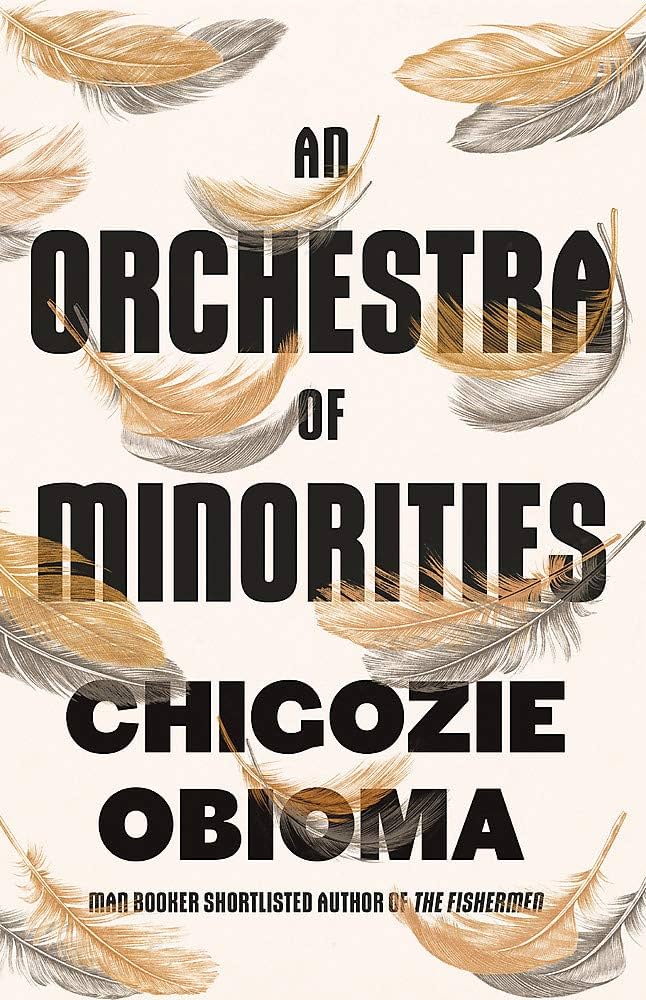
Chigozie Obioma - An Orchestra of Minorities and the cost of ambition

An Orchestra of Minorities (2019) is the more ambitious book and the harder one. Chinonso is a poultry farmer in south-eastern Nigeria. He meets Ndali on a bridge as she is preparing to jump. They fall in love, her family rejects him on grounds of class, and he sells everything to pursue an education in northern Cyprus that turns out to be a fraud. He returns broken and bent on vengeance. Obioma has said the novel was shaped by the death of a friend in Cyprus whose tuition money had been taken by fixers, and by his own years as a student there.

The structural risk is the narrator. The book is told by Chinonso’s chi, his guardian spirit, testifying before Chukwu, the supreme Igbo deity, whom it addresses by honorifics, Egbunu chief among them, in order to account for the actions of the human it was charged with protecting. This is the Igbo metaphysical scaffolding Obioma has spoken about preserving inside English-language fiction, and it is the most direct attempt by a contemporary Nigerian novelist to write in a register that treats Igbo cosmology as ontologically real rather than as folklore. He has also described the book as drawing on the shape of Homer’s Odyssey, with the journey, the deceptions and a homecoming that is not quite a homecoming.

Ad SpaceIn-Article - 300x250
Advertisement

The novel was shortlisted for the Booker Prize in 2019 and was a joint winner of the Internationaler Literaturpreis. Reception was more divided than for the debut. Some critics found the chi’s voice exhausting across the length of the book. Others, including some Igbo readers, felt the cosmological frame finally made room for a kind of African novel that English had not yet hosted. Both reactions are fair. The book is exhausting and necessary in roughly equal measure.

The Road to the Country and the war novel

The Road to the Country and the war novel
Image: Goodreads

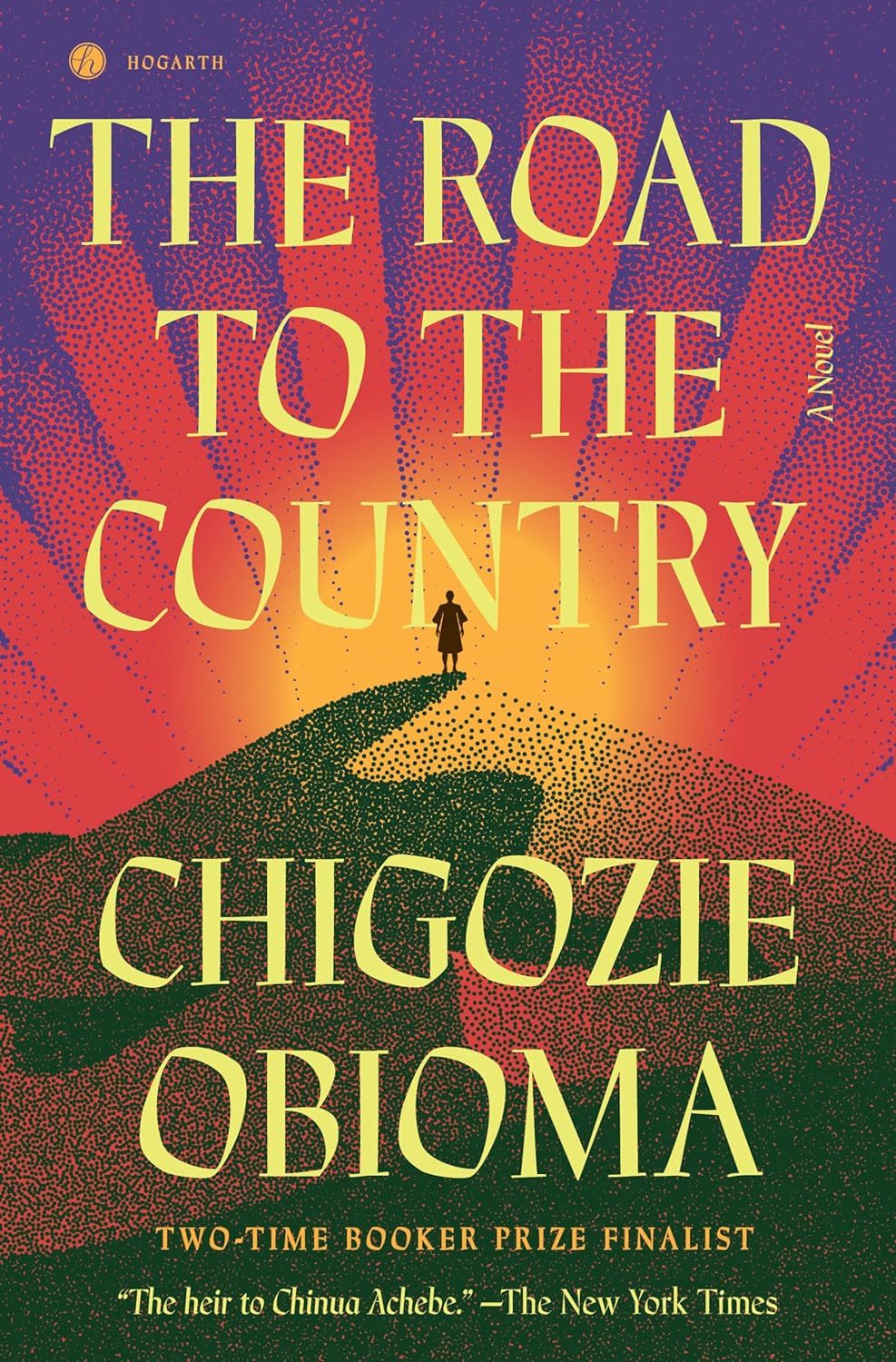
The Road to the Country (2024), published by Hutchinson Heinemann in the United Kingdom and Hogarth in the United States, takes on the Nigerian Civil War of 1967 to 1970. Kunle, a young Yoruba man burdened by guilt over an accident that disabled his brother, crosses into the east to look for him and finds himself conscripted into the Biafran army. The telling is split: a Yoruba seer who foresaw the conflict frames the narrative and names Kunle as one who will die and return to life, and an interlude gives over the testimony of the dead. The Economist, which named it a book of the year, noted how the novel captures the country’s fault lines in both language, mixing English, Yoruba and Igbo, and form.

It was longlisted for the Dublin Literary Award and the Joyce Carol Oates Prize, was a finalist for the Nigeria Prize for Literature, and was named a best book of the year by The Economist and the Boston Globe among others. For readers who had assumed Obioma’s mythic register could only be pointed at domestic tragedy, the war novel is the answer: the seer, the dead witnesses and the prophecy structure transfer intact to a national subject.

Themes across the body of work

Three novels in, the preoccupations are clear. Obioma writes about young men, ambition and a family unit that cannot absorb the cost of that ambition. He writes about prophecy, secular in The Fishermen, cosmological in Orchestra, historical in The Road to the Country, as a thing that organises Nigerian lives even when characters claim not to believe in it. He writes about class, and particularly about the gap between rural south-eastern striving and the urban middle class. And he is interested in tragedy as a form at a moment when most literary fiction has migrated toward irony or autofiction. This is a different project from the social-realist Nigerian novel of the post-Adichie generation, and it accounts for the unease some readers feel. He is not writing about Lagos professionals navigating diaspora. He is writing about rivers, chickens, madmen, soldiers and gods.

Honest critique

The prose can tilt purple. Obioma loves the loaded adjective, the symbolic animal, the proverb that arrives one beat early. Readers coming to him after Adichie or Chibundu Onuzo will notice the difference immediately. There is also a recurring weakness with female characters: Ndali in Orchestra is thinly drawn, and the mothers across the novels tend to exist as occasions for male grief rather than as agents. The second novel is thinner than the first in plot terms, a love story, a betrayal and a revenge, even as it is thicker in cosmology. The Road to the Country answers part of the charge of narrowness by moving the method onto a larger stage, though the seer frame will strike some readers as a device that does the novel’s thinking for it.

Chigozie Obioma
Image: Omaha Magazine

Where he fits

Obioma occupies an interesting position in the contemporary Nigerian canon. He is post-Adichie chronologically but pre-Adichie aesthetically, writing in a register closer to Achebe and Soyinka than to the Lagos realism that dominates the current scene. He is the most prominent Igbo-cosmological novelist working in English, a small but real category, and one of a handful of Nigerian writers of his generation routinely read in graduate seminars on African literature outside Africa. A 2015 New York Times review called him an heir to Achebe, and Foreign Policy named him one of its global thinkers the same year.

He is also a United States-based writer rather than a Lagos-based one, and that produces a different kind of fiction. He is not writing the city he lives in. He is writing the country he left, from the distance that allows mythic compression. The distance is not always an advantage, and some of the Lagos novels of the same period are sharper on contemporary texture, but it is what makes his particular project possible.

Recommended reading order

Start with The Fishermen. It is the most accessible book, the shortest, and the cleanest demonstration of what Obioma can do at sentence level. Read it in two or three sittings if you can, because the prophecy structure rewards continuity. Then read An Orchestra of Minorities, with a willingness to spend time inside the chi’s voice; the first hundred pages are the test, and if the cosmological frame feels welcoming rather than alienating by then, the rest will work for you. Some readers find that Things Fall Apart or Arrow of God in between helps tune the ear. Take The Road to the Country third, once the earlier books have taught you how he uses prophecy, since the war novel assumes that fluency. His short fiction and essays make a useful fourth stop.

Title Year Form
The Fishermen 2015 Novel (read first)
An Orchestra of Minorities 2019 Novel (read second)
The Road to the Country 2024 Novel (read third)

Following his current work

Obioma keeps a relatively quiet online profile, and his university faculty page remains the most reliable source for announcements. His short stories have appeared in the Virginia Quarterly Review, Transition, the New Statesman and Granta, and his essays, among them “The Audacity of Prose” in The Millions and his Guardian pieces on Lagos, on westernisation and on Toni Morrison, are useful companions to the fiction. In 2026 he took on a different kind of credit altogether, serving as a producer on the Nollywood romantic comedy Call of My Life. Three novels in, two of them Booker-shortlisted and the third a civil war epic, he is one of the most distinctive voices in twenty-first-century African fiction, and the clearest argument available that the mythic register still has work to do.

Ad SpaceIn-Article - 300x250
Advertisement
Share
Get the recap

Loved this story? Get more like it.

Join readers who get our weekly entertainment recap - the stories worth your time, delivered every Friday.

No spam. Unsubscribe anytime. By signing up you agree to our Privacy Policy.

Chigozie Obioma: A Reader's Guid... | Sidomex Entertainment