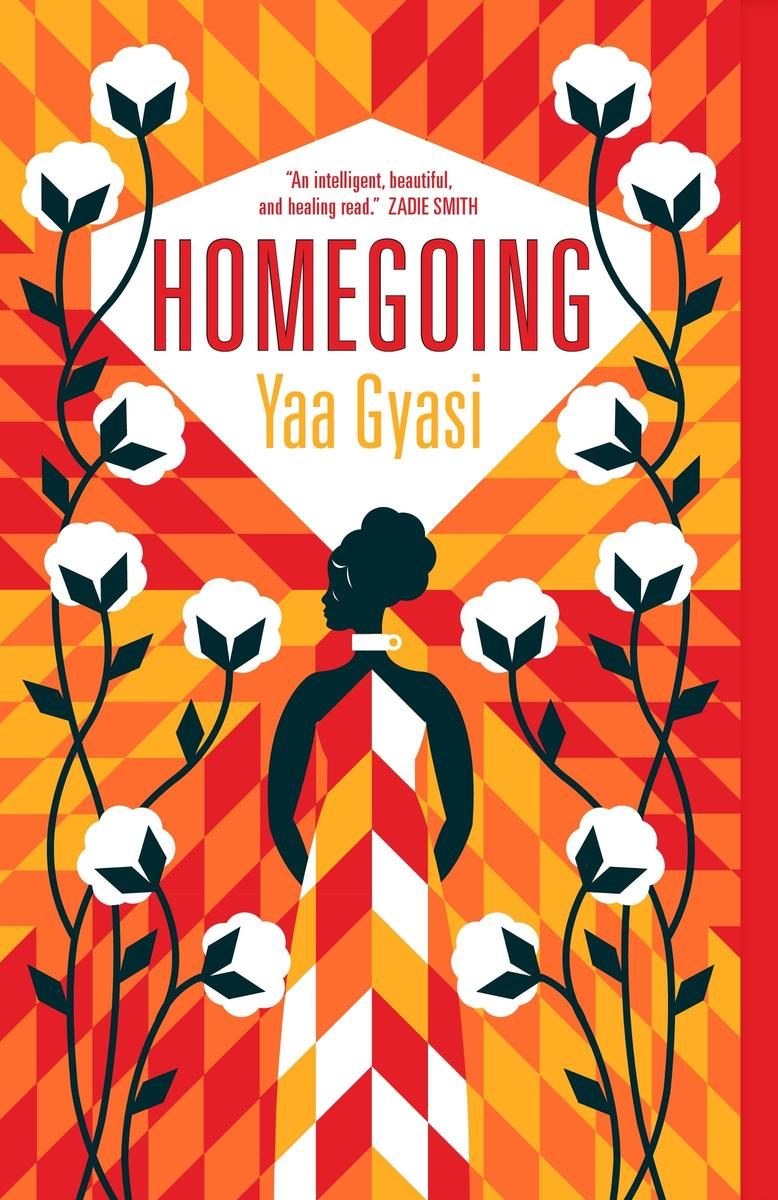
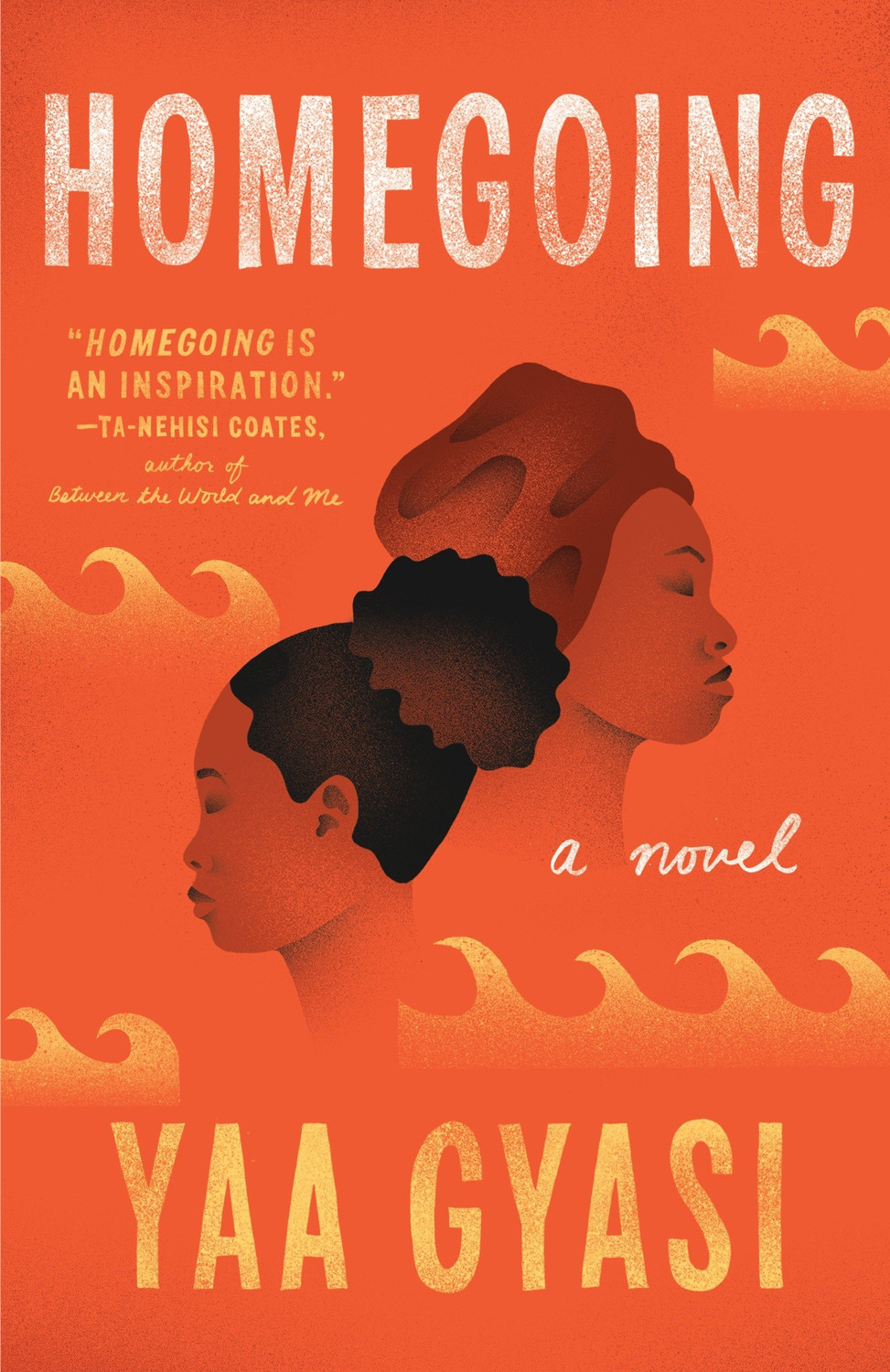

Cape Coast Castle still stands on the Ghanaian coast, whitewashed and absurdly picturesque against the Gulf of Guinea, and guides walk visitors down into the dungeons where captured Africans were held before the Atlantic crossing. The castle’s upper floors housed British officers, governors and chaplains. The lower floors housed cargo. The doorway through which captives were marched out to the waiting ships is still called the Door of No Return. Yaa Gyasi grew up half a world away in Huntsville, Alabama, the daughter of Ghanaian parents, and she visited the castle as a Stanford undergraduate. The novel that grew out of that visit became one of the most talked about debuts of its decade.
That novel, Homegoing, was published in 2016 by Knopf. It opens in an eighteenth-century Fante village and closes on the Ghanaian coast, at the castle itself. Between those two points it travels more than two centuries, seven generations and fourteen chapters, through a long inventory of historical violence: the Asante and Fante wars, British colonial administration, the Fugitive Slave Act, convict leasing, the Great Migration, the civil rights movement, heroin in Harlem. Each chapter is a self-contained short story. Each chapter is also a link in a chain. The chain holds.
| Title | Homegoing |
|---|---|
| Author | Yaa Gyasi |
| First published | 2016 |
| Publisher | Alfred A. Knopf |
| Form | Novel in fourteen chapters, seven generations, two family lines |
| Prizes | PEN/Hemingway Award; National Book Critics Circle John Leonard Prize; American Book Award; National Book Foundation 5 Under 35 honoree |
The Structural Bet
Gyasi’s central formal decision was to organise the novel around two half-sisters who never meet. Their mother, Maame, was enslaved in a Fante compound, bore Effia to the man who owned her, and escaped into Asante territory, where she married and gave birth to Esi. Effia, born in the late eighteenth century, is married off to James Collins, the British governor of Cape Coast Castle, and lives in the upper rooms of the building. Esi is seized in a raid and held in the dungeons below her sister’s bedroom before being shipped to the American South. Neither sister knows the other exists. The novel then alternates chapters between the two bloodlines, one generation at a time, until both threads arrive in the present.
This is a high-risk structure. Most multi-generational novels invest deeply in a small number of characters and trace their relationships across decades. Gyasi gives each descendant a single chapter and then moves on. By the structural logic of the novel, the reader will not see Effia again, and will not see Esi again. Quey, Effia’s son, gets one chapter, and then his son James gets one chapter, and so on down the line. The architecture demands that each character be fully realised in a span shorter than most short stories while also functioning as a relay in a much longer race.
It mostly works. The Ghanaian chapters in particular are dense with sensory texture and historical specificity. The descriptions of palm-wine taverns, missionary schools, the Asante court at Kumasi and the cocoa farms under colonial rule do not feel researched in the bad sense. They feel inhabited. When the architecture wobbles, and it does wobble, the cause is almost always the same: an American chapter with more historical ground to cover than character space to cover it in.
The Ghana Half
Effia’s line stays in West Africa for six generations before the family crosses to the United States. Across those chapters Gyasi tells a history of Ghana that English-language readers rarely get in fictional form. Quey is pressed into the family trade in captives when he would rather have had another life altogether. His son James, born into Asante privilege and in line to inherit a role in that trade, walks away from both to farm and to marry a woman his relatives would never have chosen. James’s daughter Abena waits years on a childhood friend who will not marry her, is left pregnant, and walks to Kumasi, where she gives birth to Akua inside a missionary school and is later killed by the missionary who took her in. Akua, raised in that school and known in her village as Crazy Woman, is haunted by a recurring dream of a woman made of fire, and in one of those episodes she sets her own hut alight and kills her two small daughters. Her son Yaw survives badly scarred and grows up to teach history. Yaw’s daughter Marjorie is born in Ghana and raised in Huntsville, Alabama.
What gives this half its force is Gyasi’s refusal to flatten the Ghanaian side of the Atlantic slave trade into a backdrop. Effia’s husband is a slaver, yes, but Fante and Asante traders also profited from the trade, and Effia’s own mother had been a house slave in her father’s compound. The novel does not lecture, and the moral picture it offers is not a simple one. African kingdoms were not passive victims of European appetite. They were also not equivalent participants. Gyasi sketches a power asymmetry in which Africans operated inside a system whose rules they had not written but whose profits they sometimes shared, a complication that scholars and novelists of the Atlantic world have circled for decades, and she handles it without turning the book into a thesis.
The Akua chapter is for me the strongest in the book. The colonial-era trauma she carries is rendered through dreams and visions that read as folkloric without ever feeling like ornament. Her madness is real madness, the kind that destroys families, but it is also the inheritance of a violence that has no other place to go. Gyasi writes possession and grief in a register that the African literary tradition, Soyinka and Aidoo and Armah among others, has long had room for, and that Anglo-American realist fiction often does not know what to do with.
The America Half
Esi’s bloodline arrives on a slave ship and is funnelled into the cotton economy of the American South. Her daughter Ness is born into slavery. Ness, her husband Sam and their infant son Kojo attempt an escape in which only Kojo gets away: Sam is hanged and Ness is sold on. Kojo grows up a free man in Baltimore until the Fugitive Slave Act makes the city unsafe, and his pregnant wife Anna is seized by slave catchers, so that their son H is born into slavery. H, convicted on a trumped-up charge and sentenced to ten years, ends up in the convict-leasing coal mines of Pratt City, Alabama. H’s daughter Willie joins the Great Migration to Harlem. Willie’s son Sonny becomes an activist who falls into heroin addiction. Sonny’s son Marcus is a Stanford graduate student researching the convict-leasing system that nearly destroyed his great-grandfather.
The American chapters carry the heavier historical load. Each one has to do double duty, rendering a character and glossing an entire period. The Pratt City chapter, on H’s life in the post-Reconstruction mines, is the most successful of these, partly because Gyasi has a genuinely under-told subject to work with and partly because the violence of the system itself supplies the chapter’s drive. The Harlem chapter, by contrast, sags. Willie’s marriage to a light-skinned man who passes for white and abandons her is a story we have read before, in Nella Larsen and elsewhere, and Gyasi’s version does not add a great deal to it.