
Wole Soyinka: A Reader's Guide to the Nigerian Author's Most Essential Books
Image: The Guardian Nigeria News
Books

Wole Soyinka: A Reader's Guide to the Nigerian Author's Most Essential Books

Arianne ColeArianne Cole··9 min read
Ad SpaceArticle Top - 728x90
Advertisement

In 1967 the Nigerian federal government, accusing him of meeting Biafran leaders to broker a settlement of the war, detained the playwright Wole Soyinka without trial. He spent most of the next twenty-two months in solitary confinement, much of it at Kaduna prison, and he was denied books and writing materials for long stretches of it. He wrote anyway, on whatever paper reached him, including toilet paper and the margins of cigarette packets, and the work from those months fed the poems of A Shuttle in the Crypt and the prison memoir The Man Died, both published in 1972. He was released in October 1969. Seventeen years later, in 1986, he became the first African writer awarded the Nobel Prize in Literature, and the cell was still audible in his sentences.

To read Soyinka is to read a writer for whom the political and the mythic are continuous, and for whom both answer to the same Yoruba pantheon. This guide is built for the reader who has heard the name, knows about the Nobel, and is uncertain where to enter a body of work that runs to dozens of books across plays, novels, memoirs, poetry and political essays.

Abeokuta, Leeds, and the playwright who came home
Abeokuta, Leeds, and the playwright who came home
Image: University of Leeds Libraries Blog

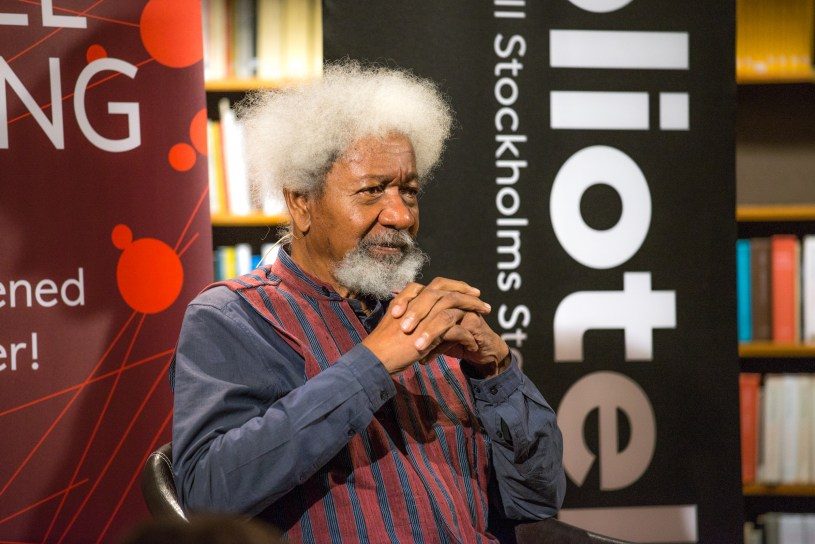
Akinwande Oluwole Babatunde Soyinka was born in Abeokuta in July 1934, in the western Yoruba country, into a household he would later describe with affectionate exactness in his childhood memoir Aké. His father was an Anglican school headmaster. His mother, whom the memoir calls Wild Christian, kept a shop and took part in the Abeokuta women’s protests against colonial taxation in the 1940s. He passed through Government College Ibadan and University College Ibadan before sailing for the University of Leeds in 1954, where he read English under the Shakespearean critic G. Wilson Knight and began writing the plays that would change the shape of Anglophone African theatre.

He returned to Nigeria in 1960, on the eve of independence. The Lion and the Jewel had already been staged in Ibadan the previous year and A Dance of the Forests was written for the independence celebrations. Instead of a flattering pageant he delivered a play that interrupted the new nation’s self-congratulation by hauling the ancestors back from the dead to argue that the past being celebrated had been no better than the present being inaugurated. The play borrows the structure of a Yoruba masquerade, and its point was not hard to read: the dead would not be quiet. This is the first thing to know about Soyinka. The Yoruba gods are not local colour in his work. They are the architecture. Ogun, god of iron, war, creation and the road, runs from A Dance of the Forests through to his version of The Bacchae of Euripides. The mythology is not used to explain Africa to the reader. It is used to explain the reader to himself.

The plays you actually need to read

The Soyinka shelf in the theatre is large, and three plays carry most of the weight. The Lion and the Jewel, first staged in 1959 and published in 1963, is the place to start. It is a village comedy about a beautiful young woman, Sidi, courted by the modernising schoolteacher Lakunle and the wily old chief Baroka. Lakunle wants Sidi to wear high heels and waive the bride price. Baroka wants Sidi for his household. The comedy is precise about which kind of modernity the village will choose, and why. It is funny in performance, quietly devastating on the page, and Soyinka at his most welcoming.

A Dance of the Forests, first staged in 1960 and published in 1963, is the masterpiece in the high register: dense, allegorical, and the play that established him as the writer who would not flatter the new state. It is hard to follow on a first reading and rewards rereading by accumulation rather than by translation. Most readers do better with it once the rest of the shelf is in place.

Death and the King’s Horseman (1975) is the play that most readers, and most directors outside Nigeria, treat as the central work. Based on an incident in colonial Oyo in 1946, it follows Elesin Oba, the king’s horseman who by custom must die so that he can accompany his dead king. A British colonial officer, believing he is preventing barbarism, intervenes. In a prefatory note Soyinka explicitly rejects the reading of the play as a clash of cultures, the phrase he says anthropologists reach for too easily. It is about a metaphysical contract broken from the inside. It has been staged at major theatres in Britain and the United States, including the National Theatre in London and Lincoln Center in New York. If you read only one Soyinka play, read this one.

The novels, and the long quarrel with the nation

The novels, and the long quarrel with the nation
Image: The New Yorker

Soyinka has published three novels, and they are less canonical than his plays. The first, The Interpreters (1965), is essential. It follows five young Nigerian intellectuals, among them a journalist, an engineer, a painter, a university teacher and a man in the foreign service, drifting through Lagos and Ibadan in the years just after independence. The book has the talky, satirical, jazz-inflected shape of a postwar novel about overeducated drinkers. Underneath, it is a furious portrait of a generation promised a country and handed a hangover. Season of Anomy (1973), the second novel, is darker and more schematic, written in the shadow of the civil war.

Chronicles from the Land of the Happiest People on Earth (2021) arrived nearly five decades after Season of Anomy, when Soyinka was eighty-seven. It is a sprawling satire about a country where body parts are trafficked, religious charlatans move among the political class, and four old friends watch the place dissolve. As a novel it is overlong and sometimes confused. As a final argument with the nation he had spent six decades writing toward, it is hard to set aside.

The memoirs: where to find the man
Wole Soyinka - The memoirs

Soyinka has written several volumes of autobiography, and they are the most approachable part of the shelf. Aké: The Years of Childhood (1981) is the first and the most readable: a portrait of his Abeokuta boyhood under the watch of Wild Christian, his headmaster father and the parsonage compound, closing with the Abeokuta women’s tax revolt of the 1940s and his mother’s part in it. Aké is the book to give a teenager who has been told that African literature is hard.
Ad SpaceIn-Article - 300x250
Advertisement

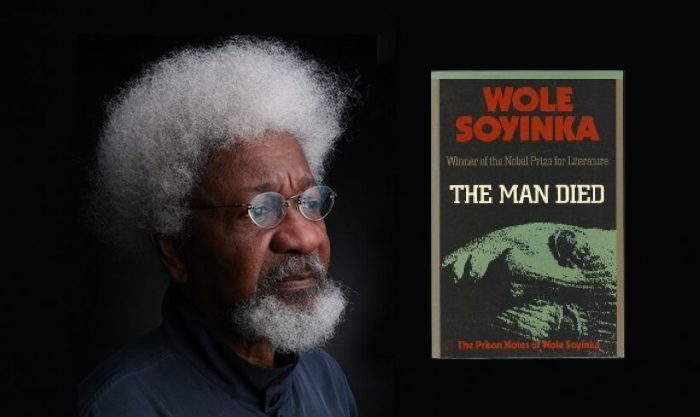
You Must Set Forth at Dawn (2006) is the political memoir, dense and score-settling, in which the years of activism, exile and confrontation with successive Nigerian governments are laid out at length. Ìsarà: A Voyage around “Essay” (1989), a reconstruction of his father’s world, and Ibadan: The Penkelemes Years (1994) fill in the middle. The Man Died: Prison Notes (1972) is shorter than the others and the most painful. Read Aké first and The Man Died when you can.

The Nobel lecture, and what changed after Stockholm

When the Swedish Academy named Soyinka the laureate in 1986, the citation honoured a writer “who in a wide cultural perspective and with poetic overtones fashions the drama of existence.” The lecture he delivered, “This Past Must Address Its Present,” was dedicated to Nelson Mandela, then still imprisoned, and used the platform to attack apartheid in South Africa and the Western governments that accommodated it. It remains the most frequently assigned of his short prose works, it is freely available on the Nobel Prize website, and it takes about twenty minutes to read.

The prize made him a permanent international figure. It did not make him safer at home. Under the military government of Sani Abacha in the 1990s Soyinka left Nigeria, was charged with treason and sentenced to death in absentia, and spent years in exile, including a professorship at Emory University in Atlanta. He returned after Abacha’s death in 1998. The pattern of his public life has been consistent across regimes: he has refused the arrangement in which a laureate is paid in honours to keep quiet.

Strengths, blind spots, and the uneven late work

The strengths are not a mystery. Soyinka writes with a density of language that no other Anglophone African dramatist has approached, and his prose, when it is good, has the cadence of a writer who is also a poet and who has translated both Euripides and the Yoruba novelist D. O. Fagunwa. He has read the Greeks closely and the Yoruba ritual repertoire more closely still. He is funnier on the page than his reputation suggests.

The blind spots are not a mystery either. His female characters, particularly in the early plays, often serve as icon or obstacle rather than as people with their own projects. The high register can tip into opacity in the late essays, and some readers will find Chronicles from the Land of the Happiest People on Earth a draft published as a book. On the long argument about language in African writing he took the side opposite Ngugi wa Thiong’o, defending the writer’s right to work in English, and his dismissals of literary movements he disliked, including the famous jab that a tiger does not proclaim its tigritude, were sharper than they were fair.

The shelf, title by title

A selection of the principal works. Dates are first publication unless noted.

Title Year Form
The Swamp Dwellers 1958 (first staged) Play
The Lion and the Jewel 1959 staged, 1963 published Play
A Dance of the Forests 1960 staged, 1963 published Play
The Trials of Brother Jero 1960 (first staged) Play
The Road 1965 Play
The Interpreters 1965 Novel
Kongi’s Harvest 1965 Play
Idanre and Other Poems 1967 Poetry
Madmen and Specialists 1970 Play
A Shuttle in the Crypt 1972 Poetry
The Man Died: Prison Notes 1972 Prison memoir
Season of Anomy 1973 Novel
The Bacchae of Euripides: A Communion Rite 1973 Play, adaptation
Death and the King’s Horseman 1975 Play
Myth, Literature and the African World 1976 Criticism
Opera Wonyosi 1977 Play
Aké: The Years of Childhood 1981 Memoir
Ìsarà: A Voyage around “Essay” 1989 Memoir, biography
Ibadan: The Penkelemes Years 1994 Memoir
The Open Sore of a Continent 1996 Essays
You Must Set Forth at Dawn 2006 Memoir
Chronicles from the Land of the Happiest People on Earth 2021 Novel

Where he sits, and how to enter the work

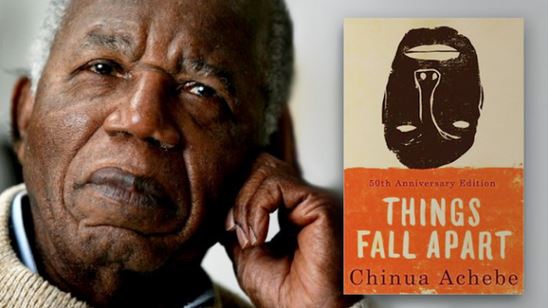
In the map of African literature after 1960, Soyinka is the writer who refused the realist novel as the dominant form of African letters. Achebe gave the continent its great novelistic foundation. Soyinka gave it a theatre, a poetics and a public conscience that worked through ritual and through prose at the same time. The two men are sometimes treated as rivals. They are better read as two halves of what an Anglophone African literature could be.

For a new reader the order is: The Lion and the Jewel, then Aké, then Death and the King’s Horseman, then the Nobel lecture, then The Interpreters. The Man Died comes after that, when the life and the work can be read against each other. A Dance of the Forests should be approached with patience and, ideally, with the introduction in a scholarly edition at hand. Chronicles from the Land of the Happiest People on Earth is the book to read last, when the rest of the shelf is in place and its arguments with the earlier work are audible.

Reading the laureate who never went quiet

Soyinka has kept writing, lecturing and intervening in public argument into his nineties, most visibly through interviews and newspaper essays, and he continues to divide his time between a home near Abeokuta and teaching abroad. He is the last surviving major figure of the first independence generation of African writers, which gives the shelf an unusual quality: it is both a closed canon and an open file.

That is the reason to read him in order rather than in fragments. The plays, the prison notes, the memoirs and the late satire are one continuous argument about power, memory and the obligations of the person who can see what is happening. Start with the comedy. Stay for the rest.

Ad SpaceIn-Article - 300x250
Advertisement
Share
Get the recap

Loved this story? Get more like it.

Join readers who get our weekly entertainment recap - the stories worth your time, delivered every Friday.

No spam. Unsubscribe anytime. By signing up you agree to our Privacy Policy.

Wole Soyinka: A Reader's Guide t... | Sidomex Entertainment