How much does it cost to make a movie? The answer spans an almost incomprehensible range. “Paranormal Activity” was famously made for $15,000 and grossed $193 million worldwide. “Avengers: Endgame” cost an estimated $356 million before marketing and earned $2.8 billion. Both were wildly profitable. Both are “movies.” The gap between them is a masterclass in how film budgets actually work.
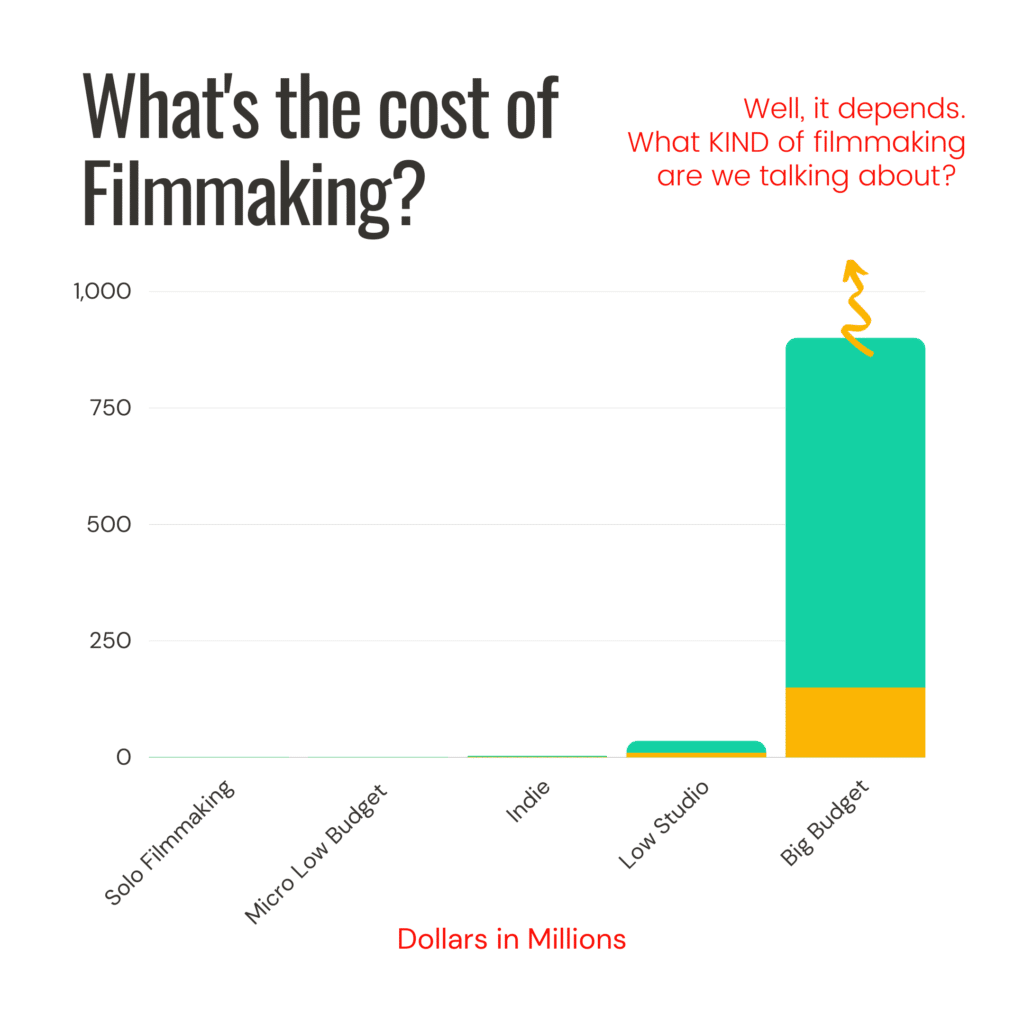
The average cost of making a movie in 2025 varies dramatically by category. A studio feature film averages $65 million in production costs alone, according to data from the Motion Picture Association. An independent feature might cost $2 million. A micro-budget indie can be shot for less than the price of a used car. The question is not just how much does it cost to make a movie - it is what kind of movie do you want to make, and what resources do you actually need to tell that story?
This guide breaks down real production budgets across every tier, with actual line item costs and examples from films you have seen. Whether you are planning your first feature or trying to understand why Marvel movies cost $300 million, you will find the numbers here.
Understanding Budget Tiers
The film industry categorizes budgets into distinct tiers, and each tier comes with different expectations, union requirements, distribution paths, and creative compromises. SAG-AFTRA (the actors’ union) defines these categories formally, which affects how much you pay performers. The Directors Guild of America, IATSE (the crew union), and Teamsters all have their own threshold agreements as well.
Here is the landscape at a glance: micro-budget ($5K-$50K) operates outside union structures entirely; ultra-low-budget ($50K-$300K) qualifies for SAG-AFTRA’s Ultra Low Budget Agreement with minimum pay of $125/day; low-budget ($300K-$1M) falls under SAG’s Low Budget Agreement at $335/day minimum; modified low budget ($1M-$3.75M) has higher minimums; and anything above that falls under full SAG-AFTRA theatrical rates, where day rates start at approximately $1,100 per day for principal actors.
Micro-Budget Films: $5K to $50K
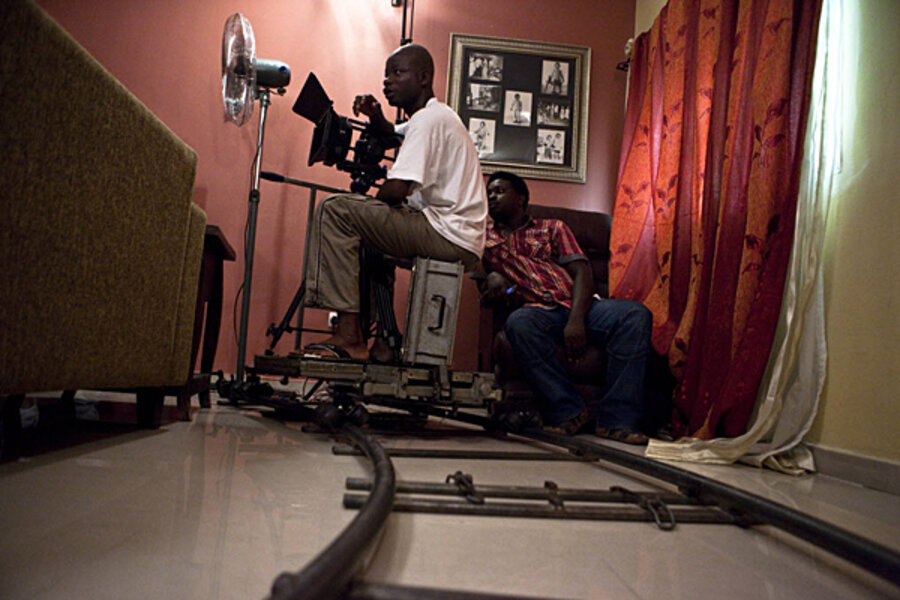
Micro-budget filmmaking is where scrappy creativity meets extreme resourcefulness. At this tier, you are likely self-financing or crowdfunding, using a skeleton crew of 5-10 people, shooting in locations you can access for free, and relying on unknown but talented actors.
The poster child for micro-budget success is “Paranormal Activity” (2007). Director Oren Peli shot the entire film in his own house over seven days with a consumer-grade camera. The total budget was $15,000. Paramount acquired it for $350,000 and spent $11 million on marketing. It earned $193 million worldwide - a return on investment that no blockbuster has ever matched in percentage terms.
Other notable micro-budget successes include “Primer” (2004) by Shane Carruth, made for $7,000, which won the Grand Jury Prize at Sundance; “Tangerine” (2015) by Sean Baker, shot on iPhones for roughly $100,000 (though some estimates place the production budget lower); and “The Blair Witch Project” (1999), which was made for approximately $35,000 and grossed $248 million globally.
Sample Micro-Budget Breakdown ($25,000)
Camera and lens rental for 12 days: $2,000. Sound equipment rental: $800. Lighting and grip: $600. Cast stipends (4 actors, 12 days): $3,000. Crew stipends (6 crew, 12 days): $4,800. Locations and permits: $1,500. Props, wardrobe, and art department: $1,200. Food and craft services: $2,400. Transportation and gas: $800. Production insurance: $1,500. Post-production (editing, color, sound mix): $2,500. Music licensing: $1,000. Festival submissions (30 festivals): $1,500. Contingency (10%): $1,400. Total: $25,000.
Low-Budget Films: $50K to $1M
This is where independent filmmaking gets serious. With $50,000 to $1 million, you can hire a professional crew, cast recognizable actors in supporting roles, afford proper production design, and create something that looks and sounds like a “real movie” to audiences.
Barry Jenkins made “Moonlight” for approximately $1.5 million (some sources cite $4 million after post-production and marketing). It won the Academy Award for Best Picture in 2017. The Safdie Brothers made “Good Time” with Robert Pattinson for about $2 million. Greta Gerwig’s directorial debut “Lady Bird” was made for $10 million, which sits at the upper end of indie budgets but still delivered a 33-to-1 return at the box office.
At the $100K-$500K range, you are typically shooting for 15 to 20 days with a crew of 20-30 people. You can afford a proper camera package - a RED Komodo or ARRI Alexa Mini rental - professional lighting and grip trucks, and union or near-union rates for your department heads. The biggest variable at this level is cast. A single recognizable actor can cost $50,000 to $200,000 for a few days of work, but their name on the poster dramatically increases your chances of securing distribution.
Image: Dreamstime.com
Mid-Budget Films: $1M to $50M
The mid-budget range is often called the “endangered” tier of Hollywood. Studios have increasingly abandoned the $5 million to $50 million drama in favor of franchise blockbusters and micro-budget horror. Yet some of the most critically acclaimed and profitable films of the past decade live in this space.
“Get Out” (2017) was made for $4.5 million and grossed $255 million. “John Wick” (2014) cost $20 million and launched a franchise worth billions. “Everything Everywhere All at Once” (2022) was made for $25 million and won seven Academy Awards including Best Picture. These films prove that mid-budget does not mean mid-quality.
At $5 million, you can afford a 25-day shoot with a full union crew of 60-80 people, professional actors, multiple locations, basic visual effects, and a proper marketing campaign. At $20 million to $50 million, you are in studio territory - A-list actors, elaborate set construction, significant VFX work, and a theatrical marketing push.
Where the Money Goes at $10 Million
A typical $10 million feature allocates its budget roughly as follows: above-the-line costs (director, producers, writer, lead cast) account for 25-35% of the budget, or $2.5M to $3.5M. The production period (crew salaries, equipment, locations, sets, props, wardrobe, transportation, food) takes 35-45%, or $3.5M to $4.5M. Post-production (editing, VFX, color, sound, music) claims 10-15%, or $1M to $1.5M. Insurance, legal, and completion bond adds 5-8%. And a 10% contingency is industry standard - you always need it.
Blockbusters: $100M and Beyond
When people ask how much does it cost to make a movie, they are often picturing the spectacles that dominate the box office. These films have budgets that rival the GDP of small nations.
Ad SpaceIn-Article - 300x250
Advertisement
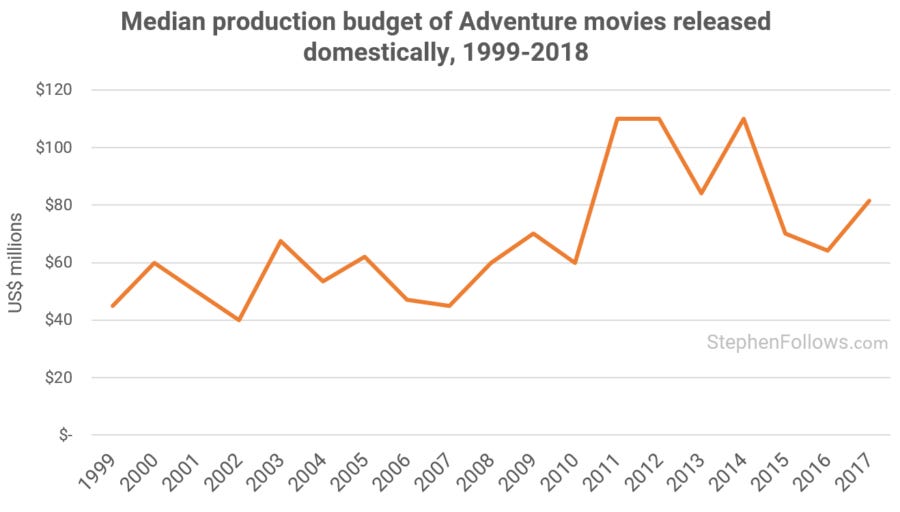
“Avengers: Endgame” (2019) reportedly cost $356 million to produce. “Avatar: The Way of Water” (2022) cost an estimated $350 million to $460 million, depending on which costs are included. “Pirates of the Caribbean: On Stranger Tides” (2011) holds the record as one of the most expensive films ever made at approximately $410 million after tax incentives.
But production costs are only half the story. Marketing a blockbuster - known as P&A (prints and advertising) - typically costs an additional 50-100% of the production budget. So a $200 million Marvel film requires another $150 million to $200 million in global marketing, bringing the total investment to $350 million to $400 million. This is why studios say a film needs to gross roughly 2.5 times its production budget to break even - they are accounting for marketing, theater revenue shares (theaters keep about 50% of domestic ticket sales), and distribution costs.
Why Blockbusters Cost So Much
The biggest cost drivers for tent-pole films are visual effects (VFX), A-list talent, and global marketing. A single Marvel film might require 2,000 to 3,000 VFX shots, each costing anywhere from $5,000 for a simple cleanup to $500,000 for a fully CG character sequence. VFX alone can account for $80 million to $150 million on a major blockbuster.
Star salaries at the top tier are staggering. Robert Downey Jr. reportedly earned $75 million for “Avengers: Endgame” including backend profit participation. Will Smith received $35 million upfront for “King Richard.” Even below the headline names, a supporting cast of 5-6 recognizable actors can cost $10 million to $20 million combined.
Image: Geek Network
Breaking Down the Line Items
Every film budget, regardless of size, is organized into the same basic categories. Understanding these categories helps you grasp where your money goes and where you can save.
Above-the-Line (ATL) Costs
Above-the-line refers to the creative leadership: director, producers, screenwriter, and principal cast. On a studio film, ATL costs typically account for 20-40% of the total budget. On an indie film, they might be 10-15% because creatives work for lower rates or deferred compensation. The “line” itself is a literal line on the budget form that separates creative talent from technical crew.
Below-the-Line (BTL) Production Costs
Below-the-line encompasses everything else during production: crew salaries (camera department, grip, electric, art department, hair and makeup, wardrobe, props, transportation, locations, catering), equipment rentals, set construction, and location fees. This is typically the largest portion of the budget - 40-55% on most films. A key grip on a union film earns approximately $42-$50/hour. A cinematographer on a mid-budget film might earn $5,000-$15,000 per week.
Post-Production
Editing, visual effects, color grading, sound design, foley, scoring, and the final mix. Post-production typically claims 10-20% of the budget. VFX-heavy films skew much higher. A professional film score from a composer with a small orchestra can cost $50,000 to $500,000. A Hans Zimmer score costs millions.
Insurance, Legal, and Overhead
Production insurance is mandatory and typically costs 2-4% of the total budget. Errors and omissions (E&O) insurance, required for distribution, costs $5,000 to $15,000. Legal fees for contracts, chain of title, and clearances add another 1-3%. Completion bonds - insurance that guarantees the film will be finished - cost approximately 2-5% and are required by most investors and distributors.
Hidden Costs Most Filmmakers Forget
When calculating how much does it cost to make a movie, beginners consistently underestimate several line items. Festival submissions cost $2,000 to $5,000 if you submit broadly. Deliverables - the technical materials distributors require (multiple file formats, closed captions, M&E track, key art, trailer) - cost $5,000 to $20,000. Music licensing can be a budget killer: a single well-known song can cost $50,000 to $500,000 to license for worldwide theatrical use.
Reshoots are another hidden cost. Even with perfect planning, most films need additional photography. Studios routinely budget 10-15% of production costs for reshoots. “Rogue One: A Star Wars Story” reportedly spent $30 million on reshoots alone.
Finally, opportunity cost is real. A feature film typically takes 2-3 years from script to screen. That is time the director, writer, and producers are not earning income from other projects. Factor in the value of your time when planning any film budget.
Image: Shutterstock
Key Takeaways
Film budgets range from $5,000 to $500 million - the right budget depends entirely on your story and distribution goals
Micro-budget films ($5K-$50K) can achieve massive returns, as proven by Paranormal Activity ($15K budget, $193M gross)
The mid-budget range ($5M-$50M) is Hollywood’s most endangered tier but produces many of the best films
Marketing costs add 50-100% on top of production budgets for theatrical releases
Above-the-line talent (cast, director) typically accounts for 20-40% of a studio film’s budget
Always include a 10% contingency - unexpected costs are guaranteed in filmmaking
Hidden costs like deliverables, music licensing, and festival submissions can add $10K-$50K to an indie budget
Frequently Asked Questions
What is the cheapest movie ever made that was successful?
“El Mariachi” by Robert Rodriguez was made for approximately $7,000 in 1992 and earned $2 million at the box office after Columbia Pictures acquired and redistributed it. However, “Paranormal Activity” holds the record for highest return on investment - its $15,000 budget generated $193 million in worldwide gross, a return of nearly 1.3 million percent.
How much does it cost to make a movie on Netflix?
Netflix spends a wide range depending on the project. Their original films range from $5 million for smaller acquisitions to $200 million or more for blockbusters like “Red Notice” (estimated $200M) and “The Gray Man” (estimated $200M). Netflix reportedly spent $17 billion on content in 2024 across all categories including series, films, and documentaries.
Can you make a good movie for under $10,000?
Yes, but with significant compromises. You will need to use your own equipment or borrow it, rely on volunteer or heavily deferred cast and crew, shoot in free locations, and handle most post-production yourself. Films like “Primer” ($7,000) and “Following” by Christopher Nolan (approximately $6,000) prove it is possible. The key is writing a script specifically designed for the resources you have available.
Why do Hollywood movies cost so much?
Three primary factors drive blockbuster costs: visual effects (often $80M-$150M per film), A-list talent compensation (lead actors earn $10M-$75M), and global marketing campaigns ($100M-$200M). Union labor rates, elaborate set construction, multi-month shooting schedules, and shooting in expensive cities like Los Angeles and London also contribute. Studios accept these costs because a successful franchise film generates billions across theatrical, streaming, merchandise, and theme park revenue.
How do independent filmmakers fund their movies?
Independent financing typically combines multiple sources: personal savings, credit cards (not recommended but common), crowdfunding on Kickstarter or Seed&Spark, private equity investors, pre-sales to international distributors, state film tax incentives (which can cover 20-40% of in-state spending), grants from organizations like the Sundance Institute or Film Independent, and gap financing from specialist entertainment lenders.
Ad SpaceIn-Article - 300x250
Advertisement
Share
Get the recap
Loved this story? Get more like it.
Join readers who get our weekly entertainment recap - the stories worth your time, delivered every Friday.
No spam. Unsubscribe anytime. By signing up you agree to our Privacy Policy.