Why Literary Adaptations Are Dominating Streaming Platform Strategies
Nova Patricks··10 min read
Ad SpaceArticle Top - 728x90
Advertisement
“The Testaments” arrived on Hulu the way Margaret Atwood’s original sequel arrived on shelves in 2019: with the weight of a sold-out hardcover, a Booker Prize co-win, and a built-in army of readers already debating chapter one. The streaming service did not have to introduce the world of Gilead. It did not have to explain who Aunt Lydia was, or why a teenage girl in a green tunic mattered. It only had to deliver. That is the entire pitch of the literary adaptation era, distilled into a single greenlight memo.
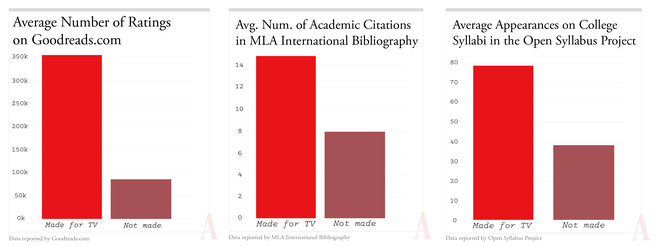
Across every major streaming platform, executives are placing the same bet. Books, particularly novels with proven sales and a recognizable IP halo, have become the most reliable currency in a content economy that has run out of cheap original ideas. The numbers behind this shift are not abstract marketing copy. They are the spine of the slate at Apple, Amazon, Netflix, Hulu, FX, and the BBC.
The book as a de-risked pitch
A novel that has already sold half a million copies arrives at a development meeting with three commercial advantages no original pitch can match. It has a documented audience, a tested narrative structure, and a marketable author whose face can sit next to the showrunner on the press tour.
When Apple TV+ acquired Min Jin Lee’s “Pachinko” in 2018, the property already had a National Book Award finalist citation, eight years on the New York Times bestseller list at various points, and a passionate Korean diaspora readership across four continents. Apple did not have to invent that audience. It only had to convert a fraction of it into subscribers. The same logic applied to “Lessons in Chemistry,” Bonnie Garmus’s 2022 debut, which had moved more than six million copies before Apple’s adaptation aired in late 2023.
Amazon’s “The Wheel of Time” arrived with fourteen Robert Jordan novels and decades of fan forums behind it. “The Power,” based on Naomi Alderman’s 2016 novel, came with a Women’s Prize for Fiction and a place on Barack Obama’s reading list. “A Gentleman in Moscow,” Amor Towles’s novel, gave Paramount+ a pre-built audience of book club members long before Ewan McGregor was cast.
The economics shift dramatically when a platform can market to existing readers rather than build awareness from zero. Marketing budgets, the largest single line item after talent, shrink when the property arrives with its own search volume.
Multi-season pipelines from the printed page
The streaming math rewards properties that can sustain seasons two, three, and four without creative exhaustion. Original concepts often run out of story by episode twelve. Book series do not.
Apple’s bet on Isaac Asimov’s “Foundation” was a bet on seven novels and decades of expanded universe material. Amazon’s “The Wheel of Time” had fourteen books before the showrunner took notes. “House of the Dragon,” derived from George R. R. Martin’s “Fire & Blood,” has enough Targaryen history to occupy HBO for a decade if the audience holds. “Shogun,” FX’s 2024 adaptation of James Clavell’s 1975 novel, arrived as a limited series but quickly opened the door to additional Asian Saga adaptations because Clavell’s bibliography is still on the shelf.
The Sally Rooney corpus has done the same job for the BBC and Hulu at a smaller scale. “Normal People” in 2020 became an unexpected pandemic phenomenon. “Conversations with Friends” followed in 2022. “Intermezzo,” her fourth novel, was acquired before the hardcover hit shelves. The pipeline is not three shows. It is a contractual relationship with a single author whose voice has commercial value.
Hulu’s Atwood pipeline runs the same play. “The Handmaid’s Tale” ran for six seasons across nearly a decade, and “The Testaments” arrived as a natural continuation rather than a reboot. The audience that watched June Osborne escape Gilead is the same audience now watching Agnes and Daisy navigate it. The continuity is not just narrative. It is a subscriber retention strategy.
Prestige halo and awards math
The Emmys and Golden Globes treat literary adaptations more generously than original streaming content. The reasons are partly historical and partly perceptual. Voters who came up in the era of mid-century prestige television associate adapted material with seriousness. A novel-derived series gets a fairer hearing in below-the-line categories like writing, where the screenplay is judged against a recognized source.
The “Underground Railroad,” directed by Barry Jenkins from Colson Whitehead’s Pulitzer-winning 2016 novel, demonstrated this dynamic. Amazon’s investment paid off less in raw subscriber numbers than in seven Emmy nominations, multiple critics’ awards, and a permanent association between the platform and serious adult drama. The same logic shaped FX’s commitment to “Shogun,” which swept the 2024 Emmys with a record for a single season of a limited series.
For platforms competing for cultural credibility, prestige is currency. A subscriber who joins for “The Handmaid’s Tale” stays for everything else on the menu. A novel-derived flagship series justifies the price of the rest of the slate.
When adaptations sing
The successful ones share a common structural trait. They treat the novel as raw material rather than a sacred script. The showrunner has the confidence to cut, restructure, and reimagine, because the audience came for the world and the characters, not the prose rhythm.
“Pachinko” rearranged the novel’s chronology into a dual timeline that flickered between 1930s Korea and 1980s Japan. Min Jin Lee told the New York Times that the showrunner Soo Hugh “respected the book by not being captive to it.” The result expanded the emotional weight of the source rather than diminishing it.
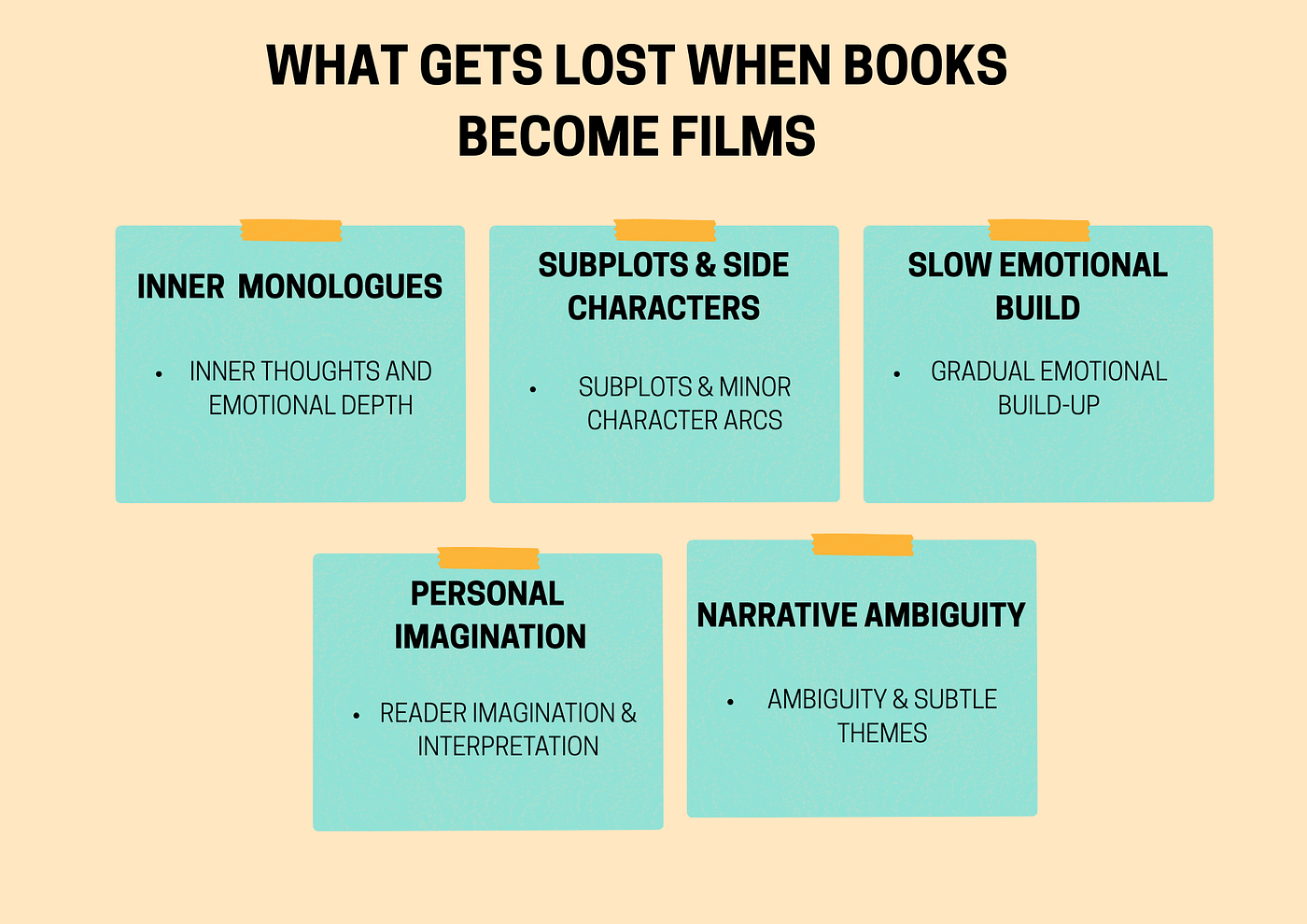
“Normal People” preserved the interiority of Rooney’s prose through long silences and close-up performance, trusting Daisy Edgar-Jones and Paul Mescal to carry what the page handled through free indirect discourse. The adaptation gave up the novel’s narrative voice and replaced it with something equivalent in a visual language. That trade was the entire artistic project.
“Shogun” did something similar with the white-savior framing of Clavell’s original novel. The 1980 NBC miniseries had filtered Edo-period Japan through John Blackthorne’s gaze. The 2024 version centered Toda Mariko, Yoshii Toranaga, and the political weight of the Japanese court. The English translation became the secondary axis rather than the primary one. The result was both more faithful to the actual history and more commercially successful than the original miniseries had been.
Ad SpaceIn-Article - 300x250
Advertisement
“Daisy Jones & The Six” leaned into the oral history structure of Taylor Jenkins Reid’s 2019 novel, using documentary-style interviews to fragment the rock band’s story across decades. The adaptation worked because the form of the book was the form of the show. The producers did not impose a conventional television grammar on a non-conventional source.
When adaptations stumble
The failures share their own pattern. They tend to be overly reverent, overly literal, or attempt to compress a multi-volume series into a season too small to hold it.
Amazon’s “The Wheel of Time” struggled in early seasons with the volume of Robert Jordan’s worldbuilding. The first season tried to seed too many narrative threads from too many books, and the result was a story that felt rushed and confusing to non-readers without satisfying the fan base. Later seasons improved as the writers’ room learned to cut more aggressively, but the early damage shaped the show’s reputation.
“The Power,” despite an acclaimed source novel and a strong cast, never found its visual register. Naomi Alderman’s book worked through documentary inserts and shifting points of view. The Amazon adaptation flattened those layers into a more conventional drama, losing the speculative texture that made the novel work.
Even highly successful adaptations have stumbled when they extend beyond their source. “Game of Thrones” remains the cautionary example. The early seasons, drawn directly from Martin’s published novels, were among the most acclaimed television of the 2010s. The later seasons, written ahead of the unfinished novels, collapsed in front of the entire audience. Streaming services learned from that case. Most current literary acquisitions include either completed series or detailed outlines from the author.
The African adaptation gap
The continent’s literary canon contains some of the most adapted-friendly material on earth, and streaming services are only beginning to engage with it. Chinua Achebe’s “Things Fall Apart” has been adapted before but never at the scale streaming budgets now allow. Chimamanda Ngozi Adichie’s “Half of a Yellow Sun” received a 2013 film. The same novel could sustain a multi-season prestige series.
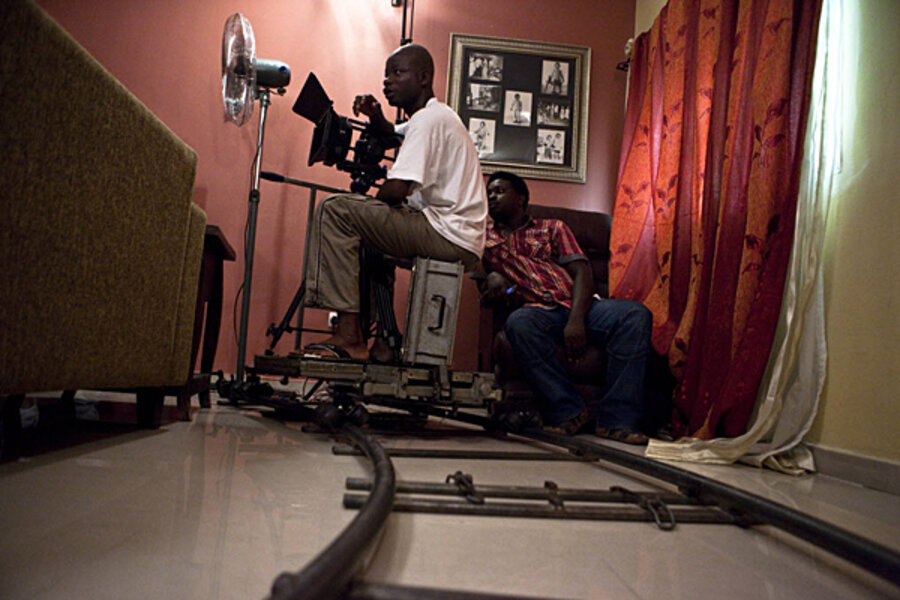
Netflix’s investment in Nigerian originals has been steady but cautious. “Citation,” Kunle Afolayan’s 2020 film, demonstrated the appetite for socially serious African drama on the platform. Adaptations of work by Adichie, NoViolet Bulawayo, Ayobami Adebayo, and Yvonne Adhiambo Owuor remain underdeveloped relative to their literary weight.
The pattern will shift. The same commercial logic that pushed Apple toward “Pachinko” and FX toward “Shogun” applies to African novels with international reputations. The constraint is not source material. It is the willingness of streaming platforms to invest production budgets in African cast and crew at the scale prestige adaptation requires. When that constraint loosens, the catalog opens dramatically.
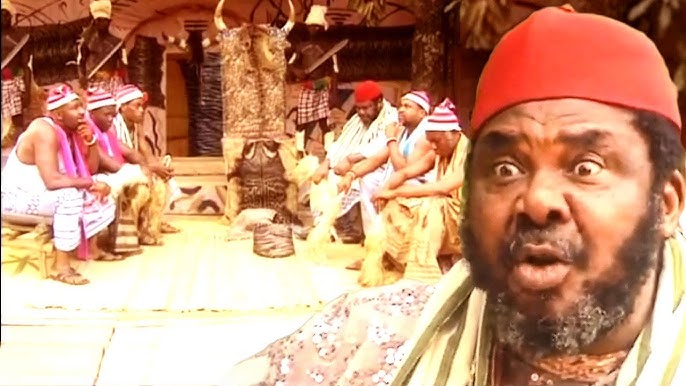
Showmax, MultiChoice, and African streaming services have made limited progress on this front. The 2023 adaptation of Lola Shoneyin’s “The Secret Lives of Baba Segi’s Wives” by Native Filmworks demonstrated what the model can produce when it is given room. The challenge is scale. A handful of regional adaptations cannot compete with the global pipeline Hulu and Apple have built around Atwood and Lee.
The structural shift inside development
Inside studios, the literary adaptation boom has reshaped the development process itself. Acquisitions editors at publishing houses now field calls from streaming scouts before a manuscript reaches galleys. Literary agents structure book deals with adaptation clauses front-loaded. Authors with unsold manuscripts find their representation pitching screen rights and print rights as a single package.
The flow of money has changed which books get written. Editors at major publishing houses have admitted, in interviews and at industry panels, that they actively look for novels with adaptation potential. The result is a generation of literary fiction that reads cinematically by design, with chapter breaks that mirror episode structure and ensemble casts that fit television budgets.
Some critics see this as the corruption of the novel form by Hollywood economics. Others see it as a natural evolution. Either way, the influence is documented. Bonnie Garmus, Taylor Jenkins Reid, and Emily Henry are all working in a publishing ecosystem that has adjusted to streaming demand. The novels they produce sell well in print and convert smoothly to screen because both formats were considered during writing.
What lasts on screen
The literary adaptation wave has produced some of the most accomplished television and film of the streaming era. It has also produced misses, vanity projects, and series that have not justified their budgets. What separates the durable from the disposable is not faithfulness to the source. It is the courage of the adaptation team to make the book into something only the screen can do.
The next decade will continue this pattern. Atwood, Rooney, Lee, Whitehead, Adichie, Owuor, Bulawayo, Towles, Garmus, and Jenkins Reid will see additional work move to the screen. Some adaptations will become permanent fixtures of the cultural memory. Others will fade within a year. The platforms placing these bets know the hit rate is not guaranteed. They are betting on the base rate, which is that adapted material outperforms original concepts often enough to justify the slate strategy.
Inside that calculation sits a slower change in how audiences encounter literary fiction. For many viewers, the streaming adaptation is the first contact with the source. Sales of the novels routinely spike after a successful screen adaptation, sometimes by orders of magnitude. The relationship between print and screen has become genuinely symbiotic. A book becomes a show, the show drives readers back to the book, the readers demand sequels, and the cycle perpetuates itself.
The page-to-platform handshake
The streaming era will be remembered, in part, as the moment when the novel and the screen merged into a single cultural product. Books have always been adapted. What is new is the scale, the speed, and the economic centrality of the practice. A streaming service without a strong literary slate now reads as an incomplete service. Subscribers expect the book they just finished to show up as a series within eighteen months, and the platforms have organized their development priorities around meeting that expectation.
The risk is uniformity. If every streaming service chases the same kind of literary adaptation, the result is a glut of prestige drama with the same beats, the same color grading, and the same award-season campaigns. The opportunity is the inverse. Adaptations from underrepresented literary traditions, including African, South Asian, Latin American, and Indigenous writing, could break the mold and expand what the prestige adaptation looks like. The literary world has the material. Whether the streaming services have the courage to commission it is the open question of the next five years.
Ad SpaceIn-Article - 300x250
Advertisement
Share
Get the recap
Loved this story? Get more like it.
Join readers who get our weekly entertainment recap - the stories worth your time, delivered every Friday.
No spam. Unsubscribe anytime. By signing up you agree to our Privacy Policy.