
In late 2018, Temilade Openiyi was a software engineer in Lagos uploading a song called “Mr Rebel” to her own SoundCloud page. She had self-produced it. She had self-released it. She had no label, no manager with a real Rolodex, and no machinery behind her. The song moved on its own through Twitter and a small constellation of Lagos tastemakers, the kind of audience that finds you because the song is strange enough to be remembered. The voice on the record was already what it would still be eight years later: a low, ash-soft alto that sat where most Nigerian female vocalists never sat, somewhere underneath the men instead of on top of them.
To understand how far Tems has traveled, you have to start with that specific anomaly. Nigerian pop in 2018 ran on bright, upper-register female features. The dominant vocal palette was the slightly nasal, ululating tone Yemi Alade and Tiwa Savage had refined, which descended from older Naija pop forms and from gospel choir training. Tems sounded like none of that. She sounded like she had been listening to Sade, Lauryn Hill, Asa, and a lot of dub. The fact that she produced her own beats, often skeletal arrangements with one keyboard pad and a programmed kick, meant the voice was always exposed. There was nothing to hide behind, and she did not seem to want anything to hide behind.
The Try Me Inflection Point
“Try Me” arrived in September 2019. It is, in retrospect, the song that made the rest of the career legible. The arrangement is almost embarrassingly sparse, a slow log-drum pattern, a few synth chords, and that voice doing the thing where it slides into a phrase from underneath rather than landing on it cleanly. The lyric was a warning to a man who had tried to push her around, and the delivery had no rage in it, just a flat, settled confidence that made the rage unnecessary.
The song crossed over to wider Naija radio without anyone really pushing it. It went up on Apple Music’s Africa Now editorial. It started getting flipped on Instagram. By early 2020 “Try Me” had become the kind of song other artists referenced in interviews when asked about new Nigerian voices, which is usually the first sign that the industry has noticed something it cannot yet categorize. She released the For Broken Ears EP in September 2020 and the EP did the second thing that matters here: it proved “Try Me” was not a one-song accident. “Damages” and “Higher” sat in the same emotional register, the same compositional restraint, the same refusal to bend toward Naija-pop convention.
It is worth saying plainly what was unusual. Almost every successful Nigerian female artist before Tems had been forced into one of two roles, the love-song romantic lead or the dancefloor diva. Tems was working a third lane that did not really exist in the market yet, a kind of R&B-adjacent introspection with Afrobeat low end. The closest reference point internationally was probably Sault or Cleo Sol. The closest reference point domestically was Asa, and Asa had spent most of her career on a different commercial trajectory entirely.
Essence and the Globalization Moment
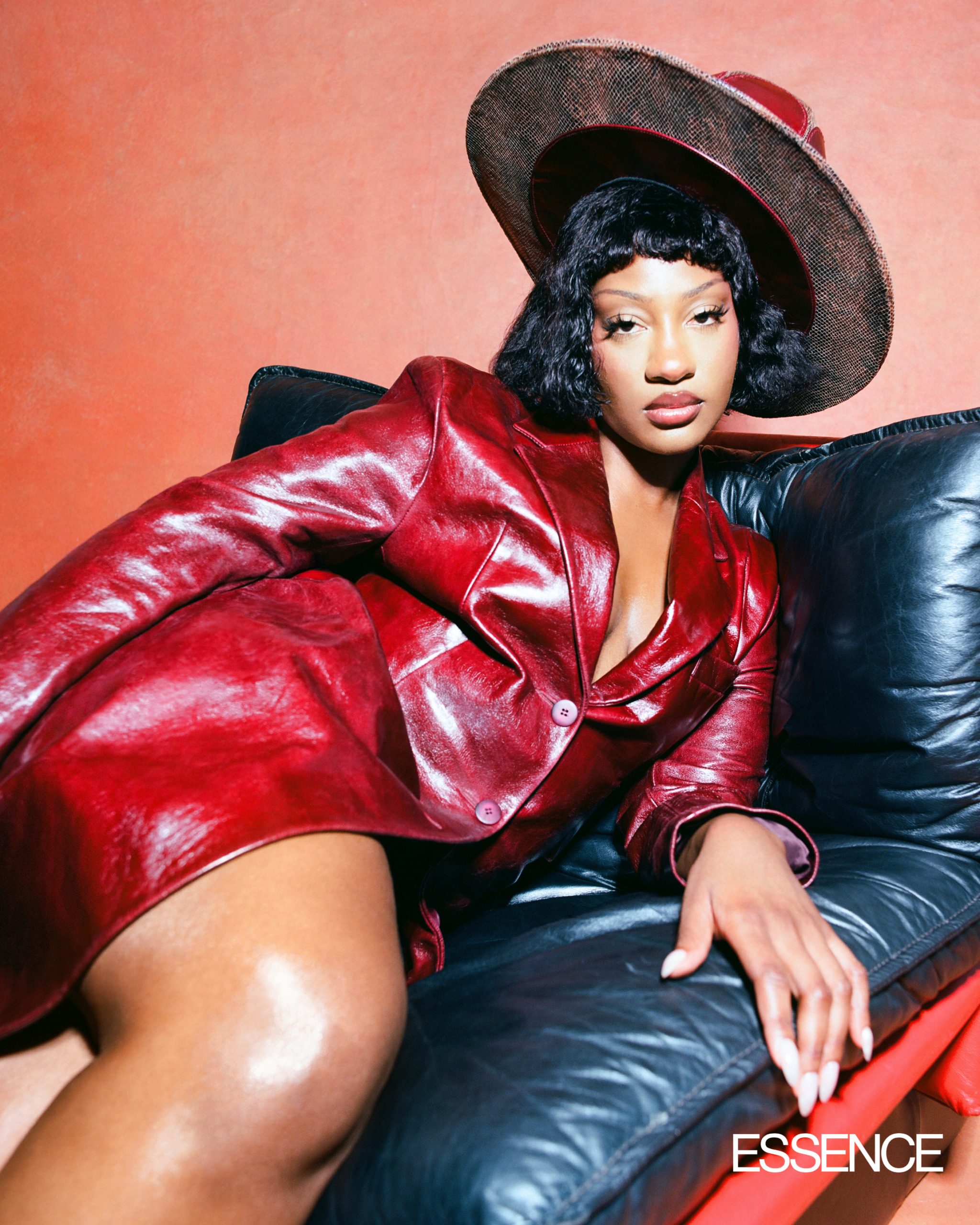
In 2020 Wizkid invited her onto a song called “Essence” for Made in Lagos. The story she has told in interviews, including a 2021 sit-down with Apple Music’s Ebro Darden, is that she recorded her parts at home and Wizkid built the rest around her. The song was not a single at first. It was a deep cut, track 11 of 14. Then TikTok happened to it in mid-2021, and then radio in the United States happened to it, and then Justin Bieber jumped on the remix in August 2021, and “Essence” became the song that Billboard would eventually credit as the first Nigerian-led record to crack the Hot 100 top 10.
What that did for Tems specifically is hard to overstate. She was not the lead artist. But the hook was hers, and the hook was the whole song. American listeners who had never heard of Wizkid before 2021 were Googling Tems by name. The voice was the thing they kept coming back to, that low, blurred quality that sat completely outside the loud Top 40 vocal style of that year. Future called her about Drake’s “Wait For U” in early 2022. The sample of “Higher” sat at the front of that song too, and when “Wait For U” debuted at number one on the Billboard Hot 100 in May 2022, Tems became the first female Nigerian artist to top that chart.
By the time she won the Grammy for Best Melodic Rap Performance for that record in February 2023, the global press had already moved her into a different category. She was no longer being written about as “a Nigerian Afrobeats artist.” She was being written about as a vocalist in the same paragraph as H.E.R. and Daniel Caesar, which is closer to where her actual influences live.
The Songwriting Maturation
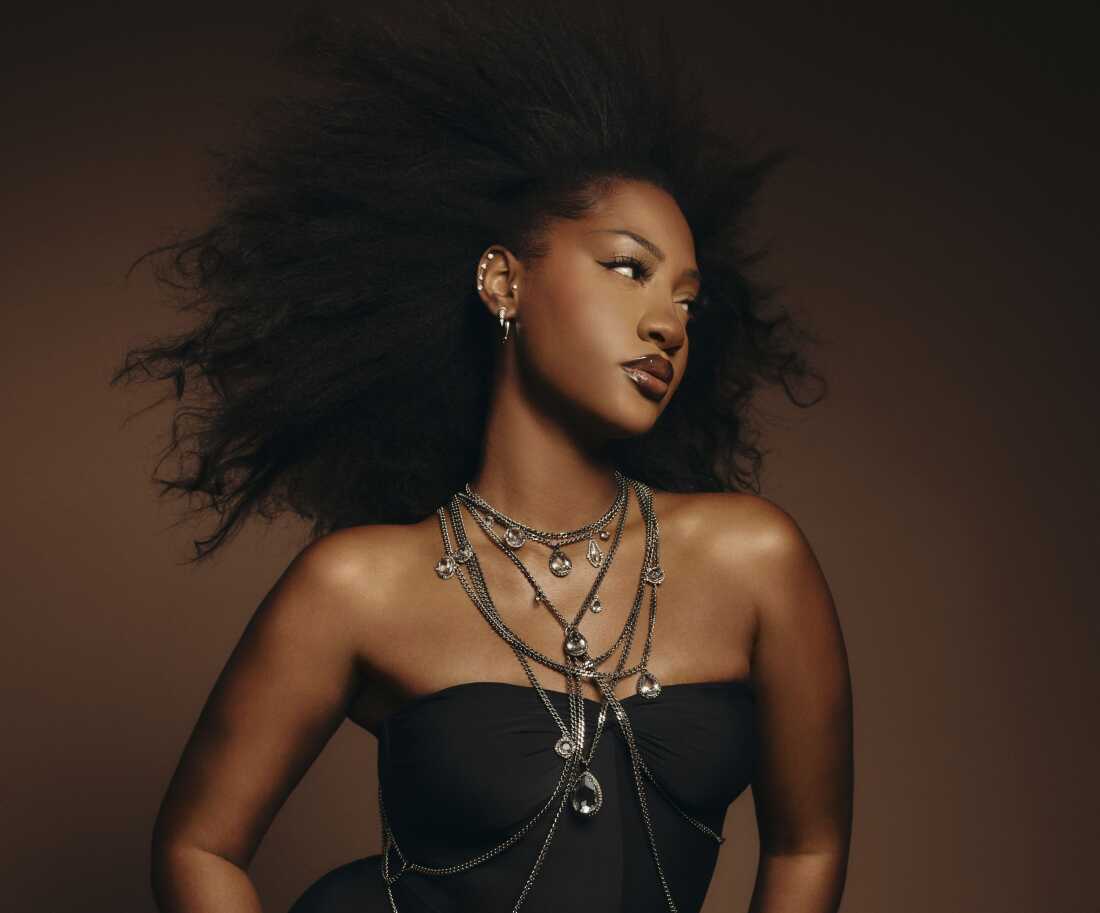
People talk about Tems’ voice constantly. They do not talk enough about her writing. The lyrical evolution from “Try Me” to “Free Mind” to the songs on Born in the Wild is real. The early material leans on direct, almost confrontational address. “Try me, I go show you say me I no dey carry last.” It is plain-spoken and Lagos-specific.
By “Free Mind,” released originally on For Broken Ears in 2020 but blowing up in 2022 after TikTok, the writing is more abstract and more spiritually loaded. “Lord, give me a moment of peace, in my mind there’s a lot of beasts.” The line lets two readings sit on top of each other, the personal and the cosmic, without picking one. That ambiguity, the willingness to leave the listener inside the question, became the dominant mode on Born in the Wild, her debut album released in June 2024.
Born in the Wild is the project where you can hear her writing in long arcs rather than song-by-song. “Burning” works as the emotional inverse of “Free Mind.” “Love Me JeJe,” her reinterpretation of the Seyi Sodimu 1997 highlife record, is a study in how to remake a Nigerian classic without flattening it. The decision to keep the original’s pidgin chorus and rebuild only the production around it is the kind of editorial choice that signals a writer who has stopped being afraid of the tradition she came out of.
The Live Show, Then and Now

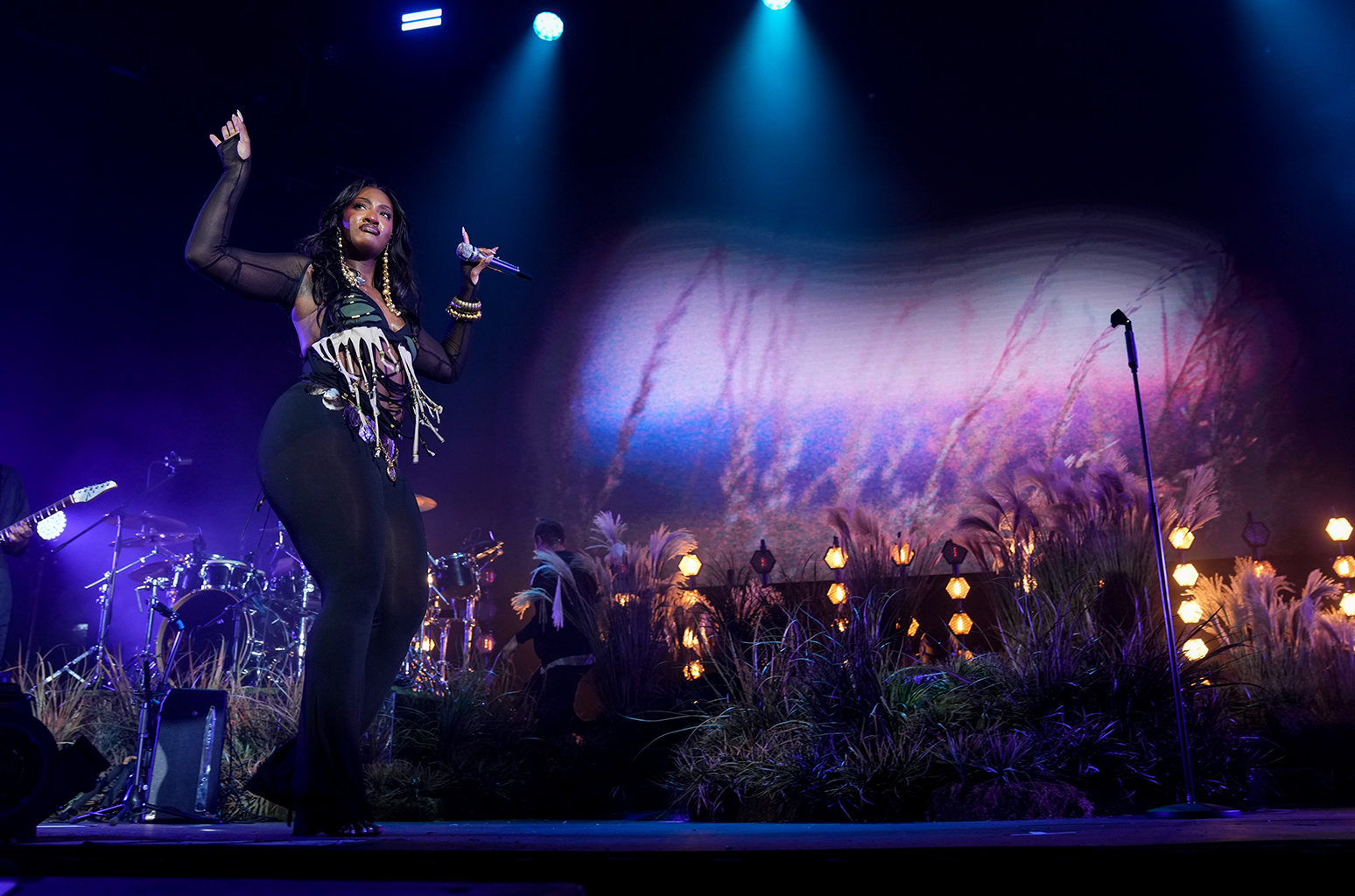
The early Tems live show, the one she was doing in small Lagos rooms in 2019 and 2020, was modest. A laptop, a couple of musicians, her voice up front and unprocessed. The voice was the entire show. There was no choreography because there did not need to be any. People who went to those early sets describe a room that fell completely quiet when she got to the verses on “Damages,” which is a thing that almost never happens at a Nigerian show.