
When the headlines drop that another Afrobeats star has “signed to a major,” the announcement usually frames it as a single, glamorous event. A handshake, a press photo, a label logo next to the artist’s name. The reality underneath is messier and far more interesting. A signing to Sony, Warner, or Universal is not one deal. It is a category that contains four or five distinct structures, each with its own math and its own long-term consequences for who ends up owning what.
For the wave of Nigerian and broader African artists who have crossed into the major-label system since roughly 2016, the deal types have ranged from straightforward artist agreements to label acquisitions reported in the hundreds of millions of dollars. Understanding which kind of deal a given artist actually signed explains a great deal: why some operate with more creative freedom, why some still control their masters and others do not, and why the advance figures circulating on social media rarely line up with what the artist actually takes home.
The Five Deal Structures That Actually Exist
There is no single template. The deals fall into five broad buckets.
The first is the traditional major-label artist deal. The artist signs directly to Universal Music Group, Sony Music Entertainment, or Warner Music Group, or to one of their subsidiary labels such as RCA, Columbia, Atlantic, Def Jam, Republic, Capitol, or Epic. The label owns the recorded masters for the term of the contract, pays an advance, funds recording and marketing, and collects revenue first to recoup that investment before the artist sees a royalty payment. It is the structure with the most money upfront and the least ownership at the end.
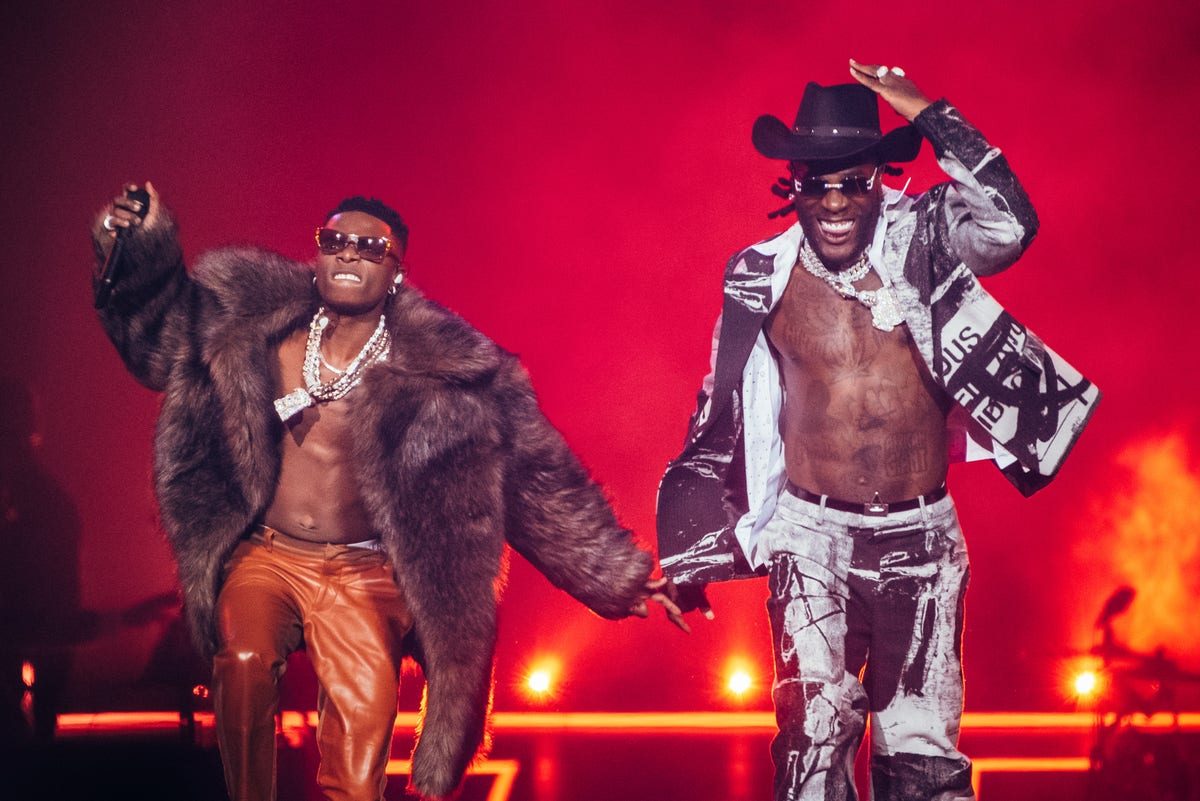
The second is the joint-venture or label-services deal, where the artist’s own imprint partners with a major. Wizkid’s Starboy Entertainment partnered with RCA Records around 2017, and Burna Boy’s Spaceship Entertainment partnered with Atlantic Records. In these arrangements the artist’s label retains a measure of ownership, a higher revenue share, and meaningful creative control, while the major brings global distribution, marketing budget, and radio infrastructure.
The third is the label-acquisition model, where a major buys all or part of an African label and inherits its roster. The clearest case is Universal Music Group’s acquisition of a controlling interest in Mavin Records, announced in early 2024 and reported across industry press as a nine-figure transaction. Rema, Ayra Starr, Crayon, Magixx, Bayanni, and the rest of the Mavin roster moved into the UMG distribution and marketing system, though they remained Mavin artists by contract.
The fourth is the independent-distribution partnership, where Empire Distribution has been the standard-bearer. Empire is technically both a label and a distributor, but its deals with African labels and artists have typically left masters in the hands of the original owner and offered aggressive global distribution and marketing services in exchange for a distribution share rather than a royalty. Asake’s career ran through a version of this: YBNL Nation, Olamide’s label, signed him, and YBNL’s partnership with Empire carried the international rollout.
The fifth is the distribution-only deal, sometimes called an M and D (manufacturing and distribution) arrangement. No advance, no marketing spend, just distribution rights for a percentage cut. Many Nigerian artists use this route through services such as DistroKid, TuneCore, Stem, Venice, or a distributor’s self-serve tier. The artist keeps the masters and the large majority of revenue, and bears the marketing burden themselves.
These five structures are not mutually exclusive, and an artist can layer them. Untangling who gets paid what inside a stacked arrangement is a job for a lawyer with a calculator, which is precisely why the announcements never explain it.
What the Advances Actually Look Like
Advance figures for African artist signings are almost never officially disclosed. What circulates publicly is a mix of industry rumour, leaks from people close to negotiations, and inflated numbers floated for press purposes. Treating any specific figure as fact is a mistake, and this publication has not been able to verify any individual advance quoted in the market. What can be said is that lawyers and managers who work on these deals describe a wide spread, running from the low tens of thousands of dollars for a developing artist to seven figures and occasionally beyond for an artist with established global streaming numbers, a festival headlining record, and a credible path to commercial return.
Multiple-album commitments and bonus structures can push total contracted value far above the headline, but the upfront advance is what the artist actually receives before the recoupment clock starts ticking, and the recoupment math is where the advance loses its glamour. An advance is not the only recoupable item. Recording costs and marketing spend, including video budgets, radio promotion, tour support, and public relations, are fronted by the label and charged back against the artist’s share. An artist can therefore be several multiples of their advance in deficit before the first royalty dollar lands, and royalties are calculated on the artist’s share of net revenue. Until that share clears the recoupable balance, no payout arrives from recorded music at all.
This is why advance size is not the number that matters most. The royalty rate and the recoupment terms decide whether the artist ever earns out.
The Royalty Rate Spread
Published guidance from music-business lawyers and industry bodies describes a fairly consistent hierarchy, even if any individual contract can sit outside it. Traditional artist deals at majors are generally described as paying a royalty in the mid-to-high teens as a percentage of net receipts, with the upper end reserved for established artists with leverage. Joint-venture deals, where the artist’s own label is the contracting party, are described as paying materially more, because that label is also carrying marketing and overhead risk. Distribution-only deals leave the large majority of revenue with the artist or their label, but come with no advance and no label-funded marketing.
The trade-off is straightforward. The traditional deal gives the artist money upfront and a marketing machine, and takes the long-term recorded-music value. The joint venture balances both. The distribution-only deal keeps all the long-term equity and forces the artist to fund their own career. For artists with catalogue and a team to fund themselves, the math increasingly favours distribution. For artists without infrastructure or capital, the advance is what makes a career possible at all.
Case Studies in How Real Deals Have Run
Wizkid’s deal with RCA, struck around 2017, was a Starboy Entertainment joint venture rather than a traditional artist signing, and the structure mattered. By contracting through his own imprint, Wizkid preserved a degree of creative and ownership flexibility that a direct artist deal would not have allowed. Reports at the time positioned the partnership as a strategic alliance rather than a sale, and the “Made in Lagos” cycle, the Grammy recognition that followed, and the long international touring run all happened under that umbrella.

Burna Boy’s partnership with Atlantic Records through Spaceship Entertainment has been one of the most discussed examples of an African artist keeping ownership inside a major-label relationship. It has been widely reported as a joint venture in which Spaceship retains recorded-music ownership while Atlantic handles distribution, marketing, and United States promotion. The “African Giant,” “Twice as Tall,” and “Love, Damini” cycles all moved through that arrangement, and the Grammy win for Best Global Music Album for “Twice as Tall” landed inside it.