
Four brothers in Akure walk down to the Omi-Ala river with bamboo rods and a tin of worms. It is 1996. Their father has been transferred by the Central Bank to Yola, more than a thousand kilometres north, and his absence has loosened the discipline that held the household together. The eldest, Ikenna, is fifteen. Boja is fourteen, Obembe eleven, and the narrator, Benjamin, is nine. They have been forbidden to go near the river, which carries a reputation nobody in Akure quite says out loud. They go anyway. They fish for weeks. On one of those afternoons they meet Abulu, a naked, filthy, locally feared madman, who calls out a prophecy that works through the family like a slow toxin until two of the four brothers are dead.
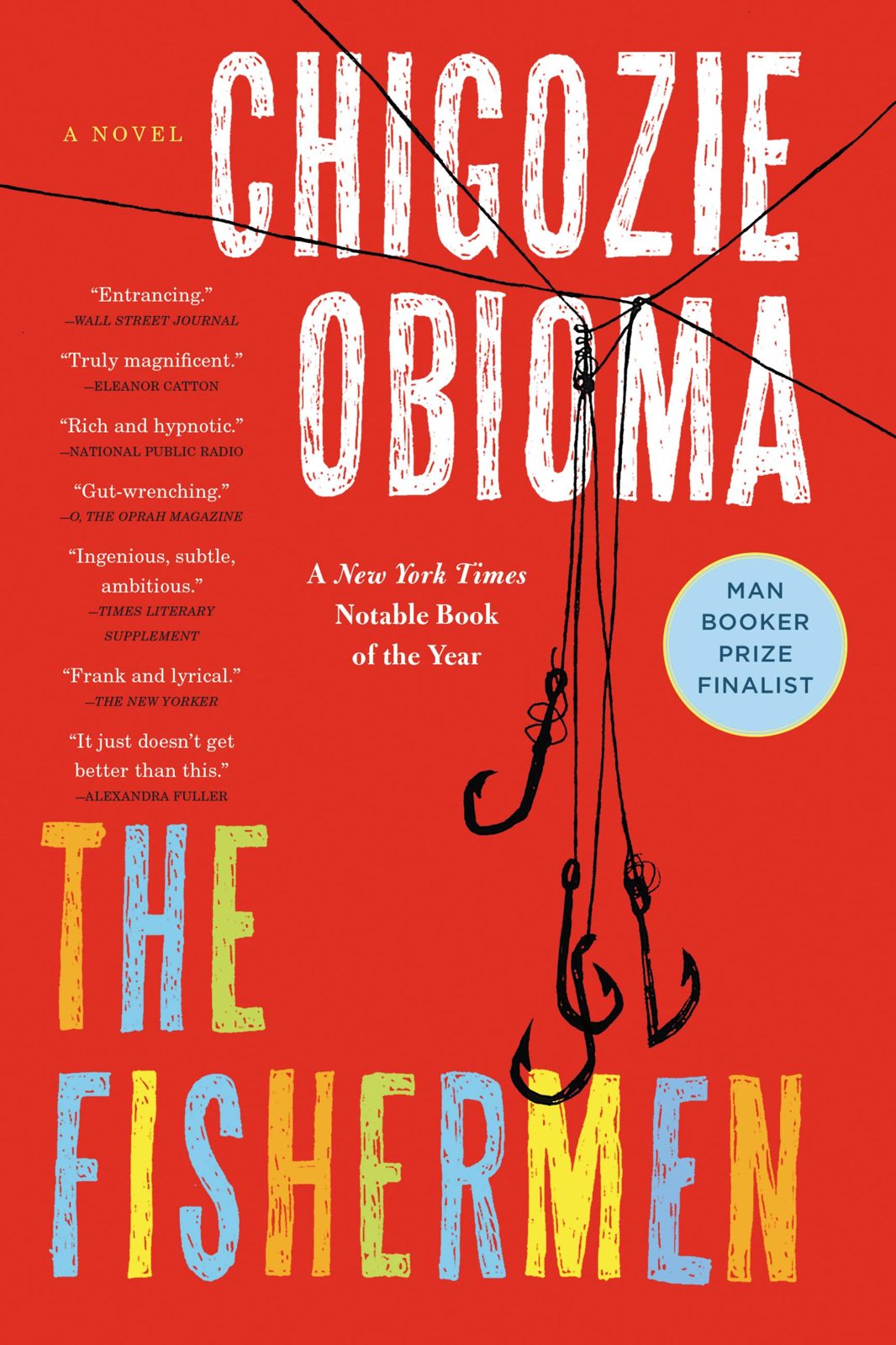
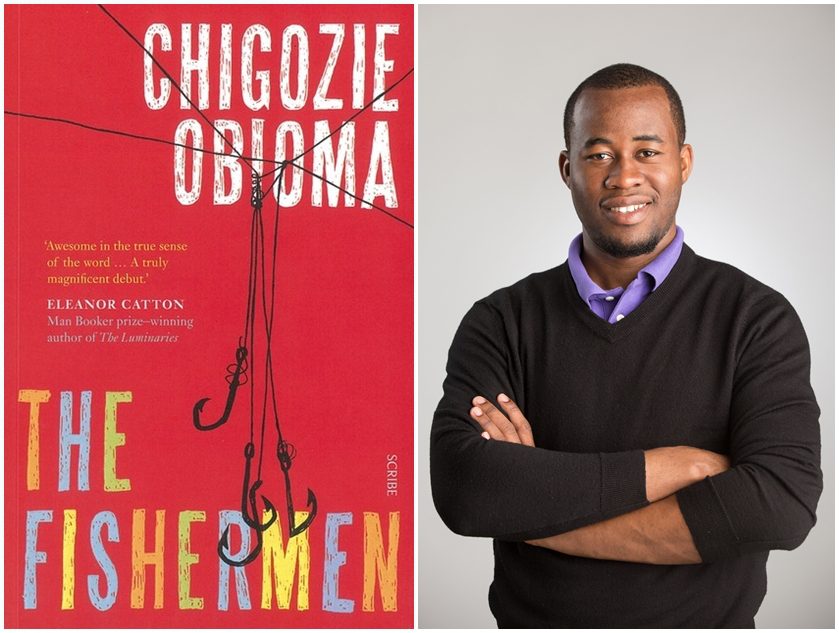
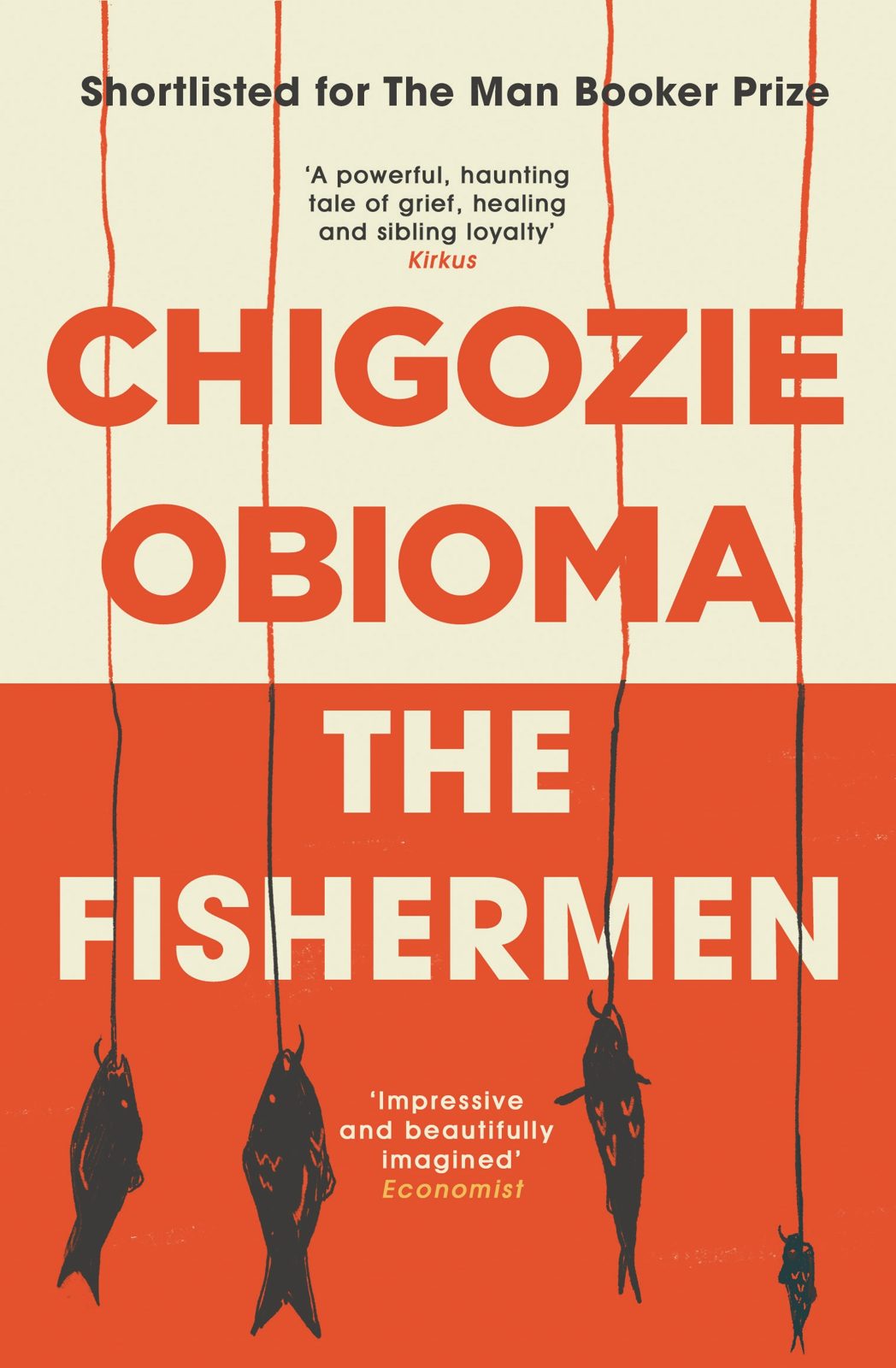
The Fishermen, Chigozie Obioma’s first novel, was published in 2015 by Little, Brown in the United States and by One, an imprint of Pushkin Press, in the United Kingdom. It was shortlisted for the Booker Prize that year, in a field won by Marlon James’s A Brief History of Seven Killings. The shortlisting brought a previously unknown writer from Akure into rooms where Achebe’s name still echoed, and the comparison was immediate: reviewing the novel in the New York Times Book Review, Fiammetta Rocco wrote that Obioma “truly is the heir to Chinua Achebe,” and the New Statesman reached for the same line. It was a heavy garment to drape on a debut.
| Title | The Fishermen |
|---|---|
| Author | Chigozie Obioma |
| First published | 2015 |
| Publishers | One (Pushkin Press), United Kingdom; Little, Brown, United States |
| Setting | Akure, Ondo State, Nigeria, 1996 |
| Prizes | Shortlisted for the Booker Prize, 2015 |
A Family Tragedy In The Abacha Years
The Agwu family is Igbo, living in a largely Yoruba neighbourhood in Akure, Ondo State. The father, Eme, works for the Central Bank of Nigeria and has mapped out his four oldest sons’ futures with the precise hope of a man who lifted himself by clean clerical work: a pilot, a lawyer, a doctor, a professor, in that order of birth. His wife, Adaku, runs a small trade and watches the boys when he is away. There are younger children too, David and Nkem, but the novel’s gravity belongs to the four. It opens with the father’s transfer to Yola, the moment the architecture buckles.
Obioma narrates from Benjamin’s perspective, looking back from adulthood at the nine-year-old he was. The voice is gentle and observational, a brother’s voice, more interested in his siblings than in himself, and the doubleness is one of the book’s craft achievements: the child supplies the mystery and the adult supplies the clarity. Benjamin remembers Ikenna the leader, Boja the second, Obembe the third, himself the fourth, the order they ate in, the way they fought and dressed and slept, the order the prophecy will dismantle.
The book is set during the last brutal years of General Sani Abacha’s regime, and the political weather is everywhere without being announced. The family’s prized possession is a calendar bearing a photograph taken at a campaign rally for Chief M.K.O. Abiola, and Ikenna’s destruction of it is one of the early signs that something in him has turned. Soldiers menace strangers at junctions. The currency convulses. Power cuts last days. Obioma does not lecture about any of this. The Abacha years are simply the air the brothers breathe, in the way Achebe in 1958 let the colonial encounter arrive in Things Fall Apart through small administrative intrusions rather than through pronouncements.
The Prophecy
Abulu is the engine. He is a madman known to the streets of Akure for his nakedness, his filth and his occasional predictions, which have a habit of coming true. When he sees the boys returning from the river he singles Ikenna out by name and foretells a violent death. An aeroplane passes overhead and drowns part of it, so that only Obembe catches the final clause, which he later repeats to his brothers: Ikenna will be killed by a fisherman. Ikenna draws the obvious conclusion, that the fisherman must be one of his own brothers, and hears the words as a sentence already passed. Within weeks he has retreated into himself, suspicious above all of Boja, the brother nearest him in age and the most plausible candidate for the role of executioner.
What Obioma does next is the move that lifts the book from interesting to permanent. He does not write the prophecy as supernatural manipulation. He writes it as psychological infection. Ikenna’s belief poisons his relationship with Boja. Boja, sensing the suspicion, hardens. Their fights escalate. The household watches a fraternal love that had been the spine of the four-boy unit corrode in real time. When the catastrophe comes it is both shocking and inevitable, which is the formal definition of tragedy as Aristotle gave it and as Achebe practised it. Reviewing the novel in the Guardian, Helon Habila made the same point, that for all the prophecies and omens it is character and moral choice that drive the book to its conclusion.
The catastrophe itself is brutally domestic. After weeks of escalating violence the two eldest brothers fight in the backyard, and Benjamin and Obembe run for a neighbour. When they come back the yard is empty and Ikenna is lying stabbed to death in the kitchen. Boja has vanished. A town-wide search ends hours after Ikenna’s funeral, when Boja’s body surfaces in the family well. Because of the taboo on burying a man who has killed his brother and then himself, he is cremated rather than buried. Their mother collapses into a breakdown severe enough to need institutional care. Their father abandons the Yola posting and opens a bookshop in Akure named for the two dead sons.
What Obioma Learned From Achebe
The Achebe comparison was overplayed at the time and is still misunderstood. Obioma is not writing in Achebe’s prose style. His sentences are longer, more lyrical, more given to extended metaphor. What he borrowed is the structural mode. Things Fall Apart is a tragedy of inevitabilities, in which Okonkwo’s flaws and the colonial pressure converge until the rope is the only available exit. The Fishermen runs on the same engine. The catastrophe is loaded in the first chapters. The prophecy is the trigger. Every page after the river is descent.
The other Achebean inheritance is the proverb and the animal. Each chapter carries a single creature as its title, and Benjamin sorts his family into those creatures as he goes, so that Ikenna becomes the python and the chapter earns the name as it proceeds. The frame echoes the Igbo proverb tradition that Achebe described as the palm-oil with which words are eaten. Obioma is announcing his lineage with every chapter heading, and the reader who knows the tradition will recognise what is being claimed.
Where Obioma differs from Achebe is in interiority. Achebe wrote characters whose inner lives we infer from action. Obioma writes brothers whose interior weather we follow minute to minute. This is a twenty-first-century novel as much as it is a child of the 1958 one. The introspective density belongs to Obioma’s generation, the one that read McEwan and Roth alongside Achebe and Soyinka, and it is part of why the book has crossed over to readers who would never have picked up a Heinemann African Writers Series paperback.
The Prose, And What It Risks
Obioma writes in a register that invites the word biblical. Long periodic sentences. Old Testament cadences. Metaphors that swell into multi-clause similes the way water swells a stream after rain. For some readers this is the novel’s incantatory pleasure. For others, especially those raised on Hemingway parsimony, the style can feel mannered. Both responses are honest. The voice is a deliberate non-minimalism, and a reader who needs the kind of sentence Marilynne Robinson writes will be alternately delighted and impatient.