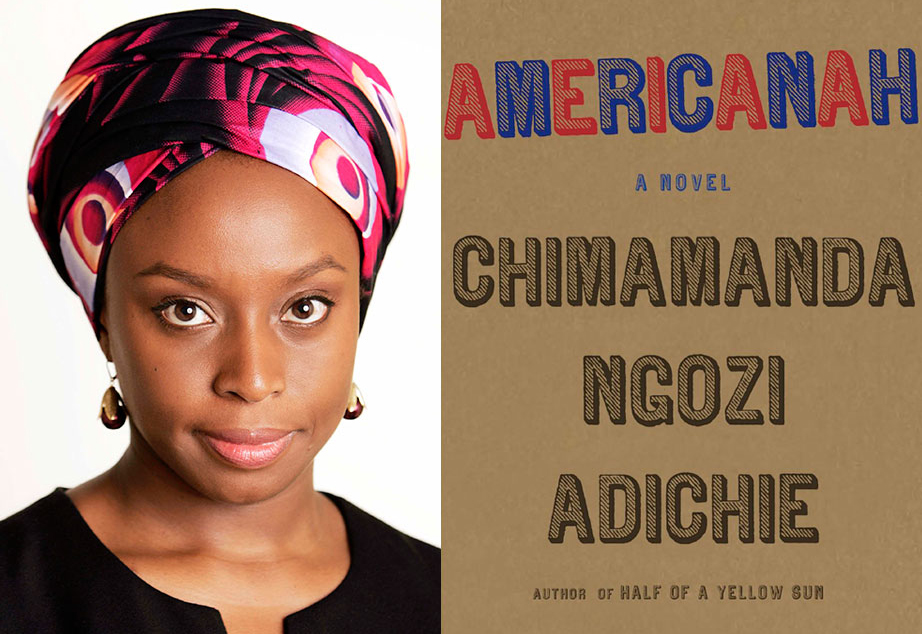


Yaa Gyasi was in her twenties, fresh out of the Iowa Writers’ Workshop, when Knopf bought a debut novel with a premise a cautious publisher would have passed on: two half-sisters in eighteenth-century Ghana, one married to a British officer at Cape Coast Castle and the other held in the dungeon beneath that same fort, with the chapters that follow tracking one descendant from each line down the generations to present-day America. Homegoing arrived in 2016 and did what very few debuts do. It reset a career before that career had properly started, and it did so on the strength of its structure rather than on any promotional push.
A Childhood Between Mampong and Huntsville
Gyasi was born in 1989 in Mampong, Ghana, to Sophia, a nurse, and Kwaku Gyasi, who went on to become a professor of French at the University of Alabama in Huntsville. The family moved to the United States in 1991 so her father could complete a doctorate at Ohio State University, and they lived in Illinois and Tennessee before settling in Huntsville, Alabama, where Gyasi was raised from the age of ten. She has described a childhood spent close to her brothers, shy, with books standing in for friends. The placement matters for the writing. She grew up Ghanaian inside a Southern Black American context, surrounded by a history that did not quite belong to her family and in which her family was nonetheless visibly implicated.
She has written publicly about the position that childhood left her in, most directly in a 2016 New York Times piece titled “I’m Ghanaian-American. Am I Black?” Reading arrived early as compensation. At seventeen, while at Grissom High School in Huntsville, she read Toni Morrison’s Song of Solomon and decided to write. Morrison’s example shows up in Homegoing less as influence than as technical permission. Gyasi rarely glosses Ghanaian terms. She does not slow down for readers who do not know what fufu is or who the Asantehene was. She writes as though the reader already knows, which is its own quiet form of instruction.
She took a BA in English at Stanford and an MFA at the Iowa Writers’ Workshop. The trip that anchored the historical research happened in 2009, funded by a grant: she travelled to her mother’s ancestral Ashanti home in Kumasi, visited relatives, and toured Cape Coast Castle, the colonial trading fort where captives were held before the Middle Passage. The image that started the novel, a building with a slave dungeon below and a chapel and a governor’s quarters above, sat with her for years. She began writing the book after graduating from Stanford while working at a tech start-up in San Francisco, left that job in 2012 when Iowa accepted her, and finished the novel in 2015.
Homegoing and the Audacity of Structure
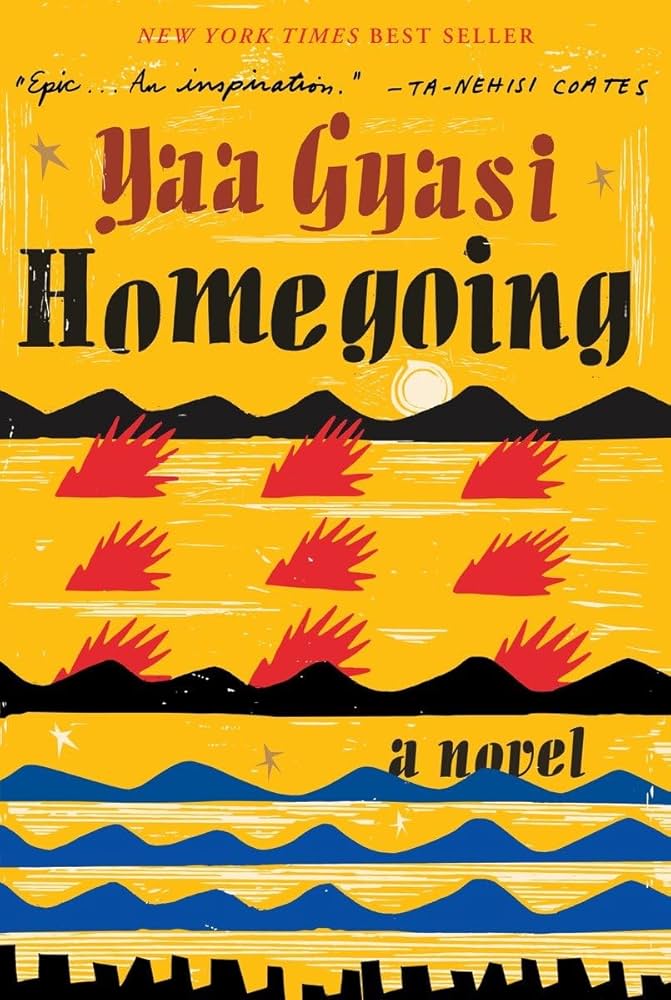
Homegoing opens with Effia, married to a British commander of Cape Coast Castle, and moves in its second chapter to her half-sister Esi, held captive in the dungeon beneath the rooms Effia now occupies. The two never meet. Each subsequent chapter follows a descendant of one line in Ghana or a descendant of the other in America, alternating across seven generations until the book closes in something close to the present day. The historical markers along the way are specific: conflict between the Fante and the Asante, the beginnings of cocoa farming, plantation slavery in the American South, convict labour during Reconstruction, the civil rights movement, the crack epidemic of the 1980s.
The structural ambition is the kind a novelist normally attempts mid-career, with a track record to fall back on if it collapses. Every chapter has to introduce a protagonist, build a world, drive a self-contained narrative and connect backwards by inference rather than by recap. Most writers who try this lose the thread by the fourth chapter and end up with a story collection wearing a novel’s jacket. Gyasi holds the line. The Ghanaian chapters are stronger than the American ones and the nineteenth-century material is stronger than the twentieth, but the design carries. By the closing chapters, the accumulated weight of seven generations is what makes the ending feel inevitable rather than engineered.
The structural argument is also the moral one: that the people who were sold and the descendants of those who did the selling inherit the same wound, and that the wound travels through families the way a recessive trait does, surfacing in one generation and skipping the next. The novel won the National Book Critics Circle’s John Leonard Award for best first book, the PEN/Hemingway Award and, in 2017, an American Book Award. Ta-Nehisi Coates selected Gyasi for the National Book Foundation’s 5 Under 35 in 2016, and Granta named her one of its Best of Young American Novelists in 2017.
Transcendent Kingdom and the Smaller Frame
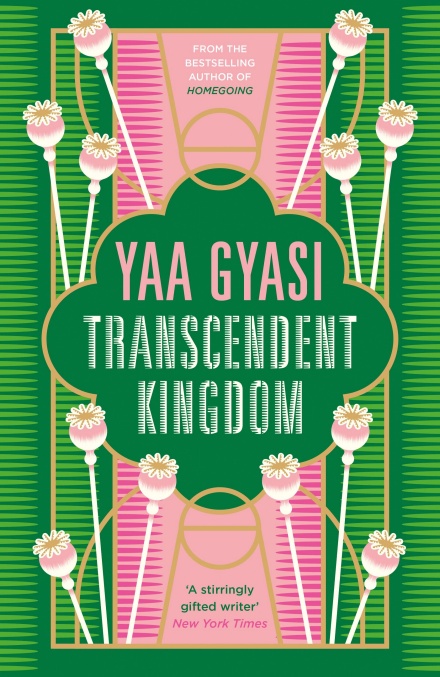
Transcendent Kingdom, published by Knopf in 2020, does almost everything the debut did not. The first novel was generational, geographically vast and structurally bold. The second is interior, set largely inside one woman’s head, and proceeds by association rather than by design. The narrator is Gifty, a Ghanaian-American neuroscientist studying addiction in mice. Her brother Nana, a basketball prodigy in Alabama, died years earlier of an overdose that began with a painkiller prescribed after a sports injury. Her mother, who emigrated hoping for a better life and got Nana’s death instead, is in Gifty’s apartment, severely depressed and unable to get out of bed. The novel moves between the laboratory and Gifty’s memories of an evangelical Pentecostal childhood, the family’s slow disintegration, and her own attempt to find a position from which she can hold all of it. The book grew out of “Inscape,” a short story Gyasi published in Guernica in 2015.
Critics divided in ways worth noticing. Readers who had loved Homegoing for its scale found the second novel claustrophobic. Readers who had thought the debut too enamoured of its own architecture found the second more emotionally precise. Both readings are partly right. The book is narrower, and it is also more daring in treating faith and science as rival languages for the same grief. Gifty’s work on addiction is not a metaphor for her brother’s death. It is an attempt to outrun that death by swapping one explanatory system, Pentecostal certainty about salvation, for another, the dopamine pathways of the brain. The novel refuses to let the swap complete. Neither system is adequate and both turn out to be necessary. Transcendent Kingdom was shortlisted for the Women’s Prize for Fiction in 2021.