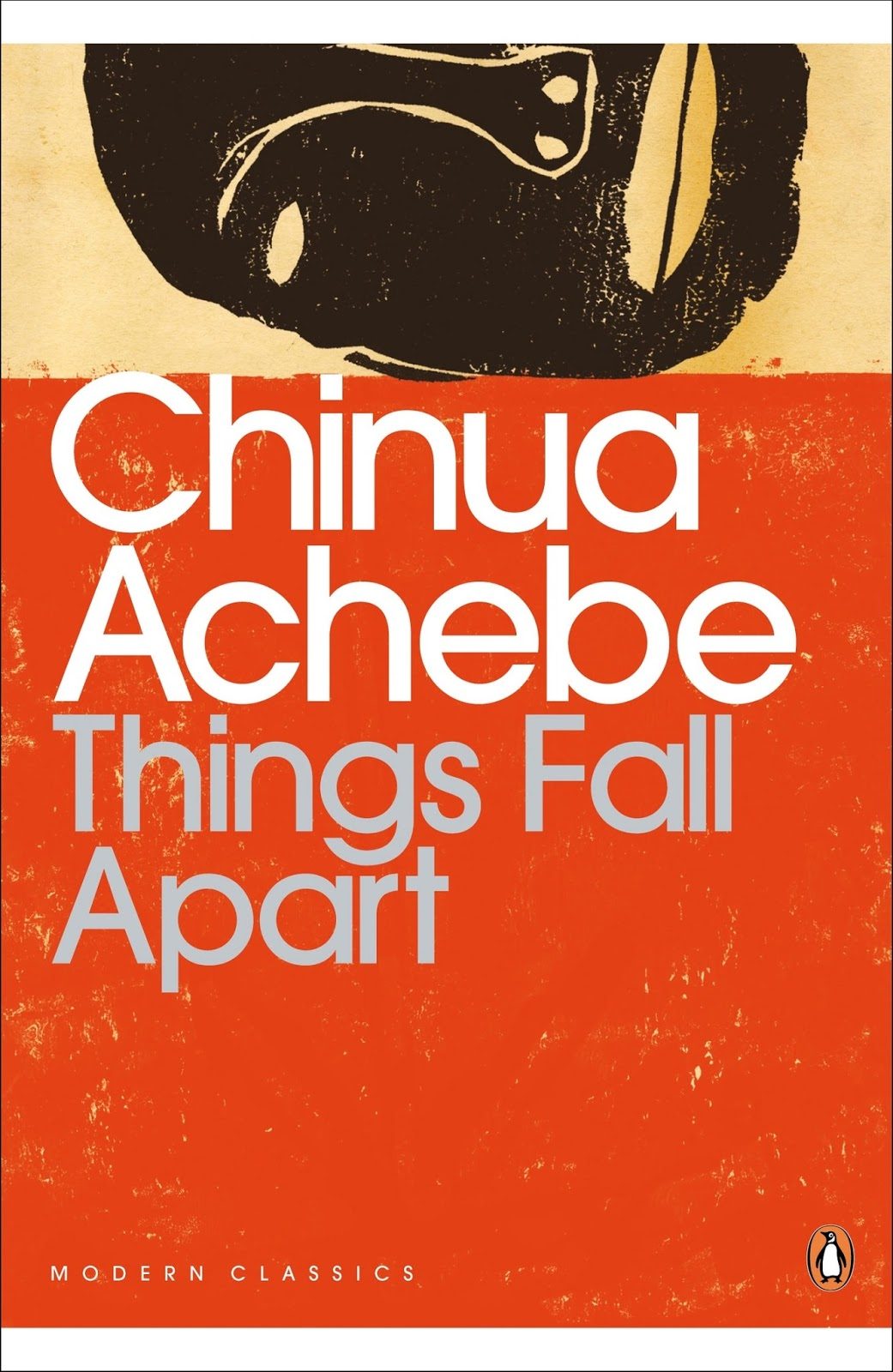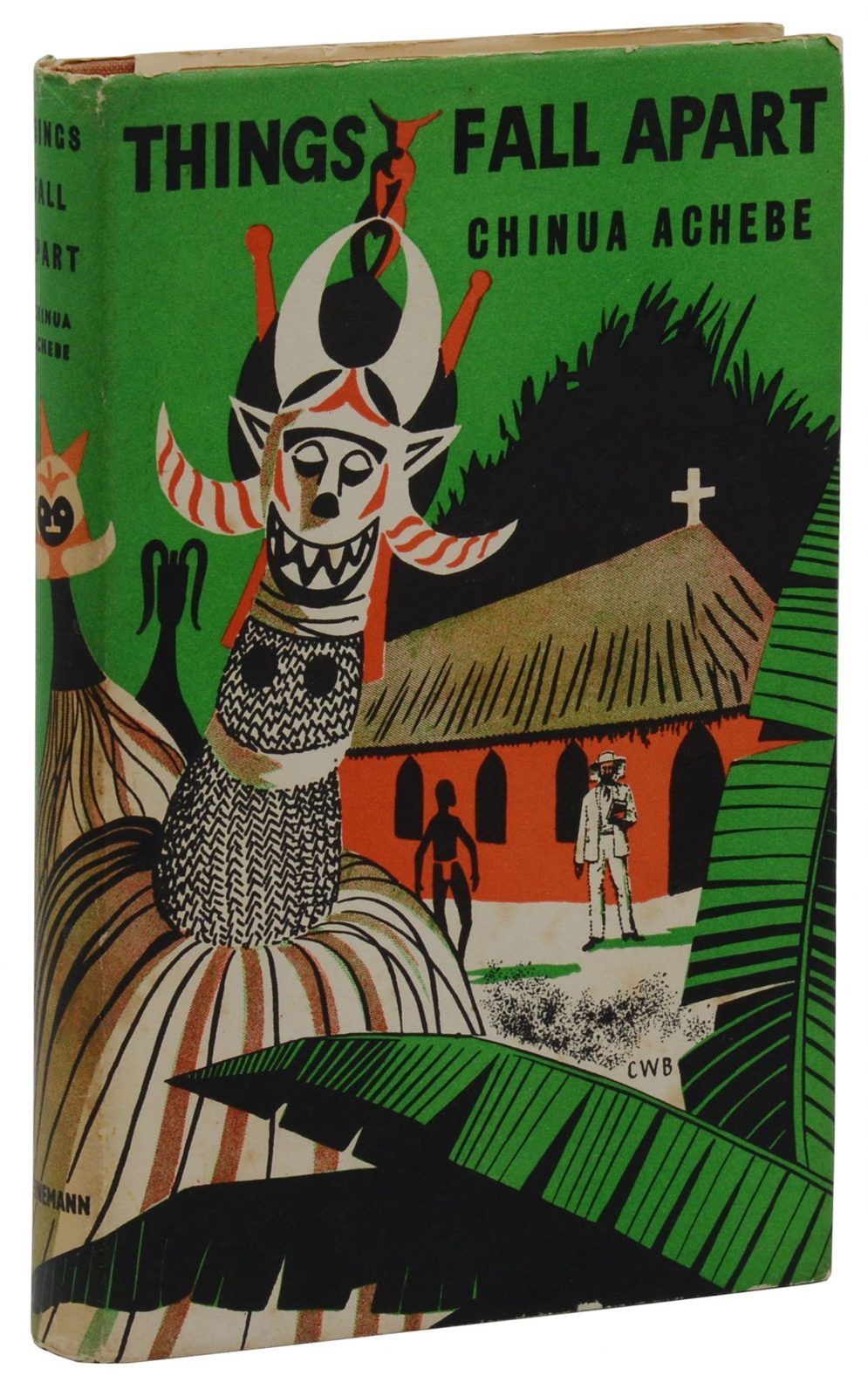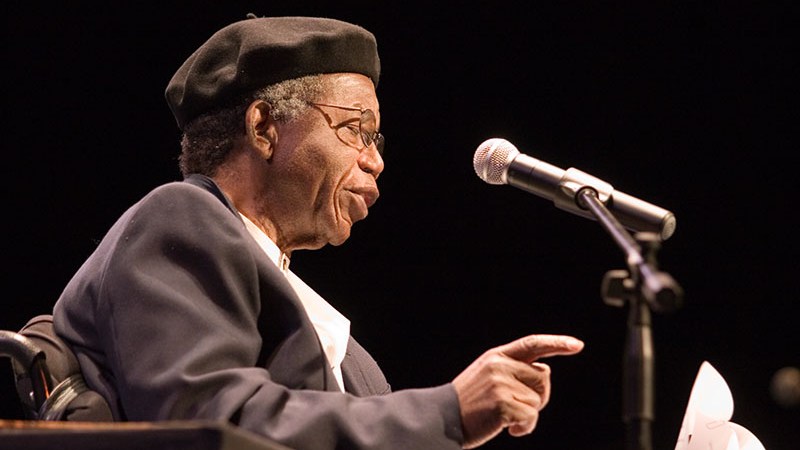
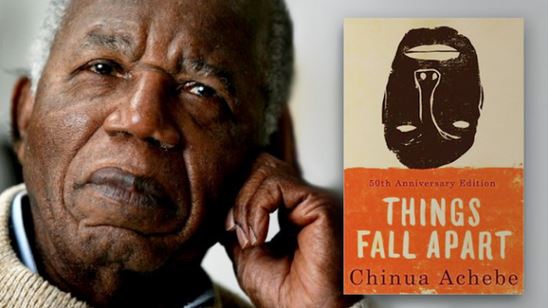

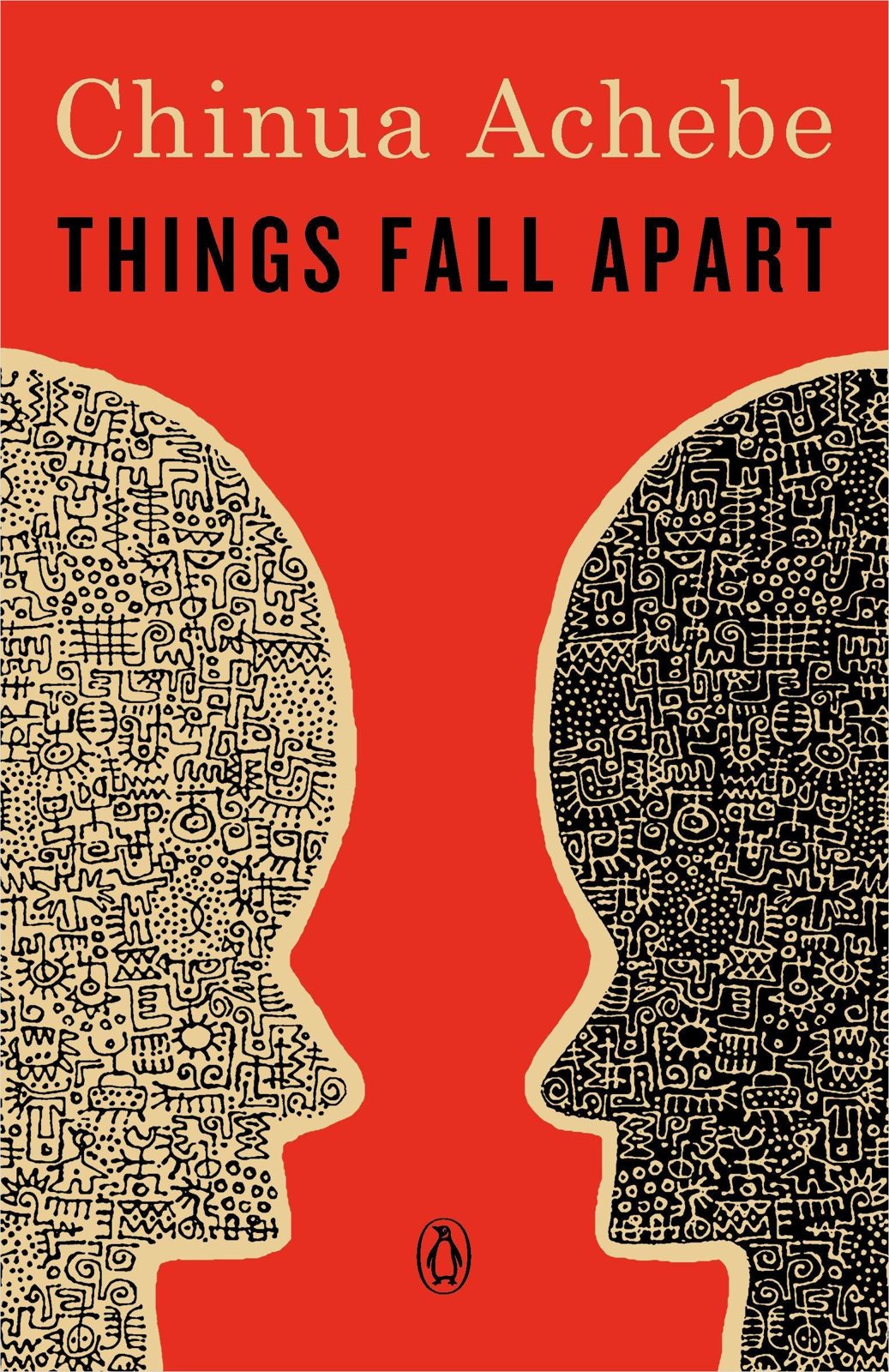
Okonkwo throws Amalinze the Cat in the opening pages, and a continent of literature begins. Heinemann published the book in London on 17 June 1958, a hardback first run of roughly two thousand copies by an author then working as a producer at the Nigerian Broadcasting Corporation. More than twenty million copies and translations into some fifty languages later, the wrestling match still reads like a thesis statement. Chinua Achebe wanted to prove that an Igbo man could be a tragic hero in the Aristotelian sense, that his fall could matter as much as Oedipus’s or Lear’s, and that the colonial machine which arrived to flatten him into a footnote in a District Commissioner’s manuscript was, by any honest accounting, the smaller and meaner thing.
| Title | Things Fall Apart |
|---|---|
| Author | Chinua Achebe |
| First published | 17 June 1958 |
| Publisher | William Heinemann, London |
| Series | Reissued as the first title in the Heinemann African Writers Series, launched in 1962 |
| Setting | Umuofia and Mbanta, Igbo southeast, late nineteenth century |
| Prizes | No major literary prize on publication |
A Novel Written Against a Sentence
Achebe said in interviews, and argued at length in his 1975 lecture on Joseph Conrad, that Things Fall Apart was written against the Africa he had found in Joyce Cary’s Mister Johnson, the 1939 novel set in northern Nigeria that Time once praised as the best book ever written about Africa. Cary’s African characters were grotesques. His protagonist sang nonsense rhymes and shuffled toward his own execution with a grin. Achebe read it as an undergraduate at Ibadan and decided that someone had to write back. What he produced is not a polemic, and that is the first thing to say about a novel taught in so many secondary school classrooms that its strangeness has been sanded down.
The early chapters are slow on purpose. We are inside Umuofia, a fictional clan of nine villages in the Igbo southeast in the closing decades of the nineteenth century, and Achebe is in no rush. He gives us the New Yam Festival, the egwugwu masquerade with its nine ancestral spirits, the stick-by-stick haggling over the bride price for Obierika’s daughter Akueke, and the proverbs Okonkwo’s father Unoka used to soften a debtor and which his son hates him for. Proverbs, Achebe writes in one of the book’s most quoted lines, are the palm oil with which words are eaten. By the time the first missionaries reach Mbanta, and Mr Brown later opens a church and a school in Umuofia, the reader knows precisely what stands to be lost.
The Tragic Hero, the Yam, the Gun
Okonkwo is not a sympathetic man and Achebe does not write him to be loved. He beats his youngest wife Ojiugo during the Week of Peace and is fined by Ezeani, priest of the earth goddess Ani: a she goat, a hen, a length of cloth and a hundred cowries. He takes part in the killing of Ikemefuna, the boy from Mbaino who has lived in his compound for three years and who calls him father, after the Oracle of the Hills and Caves orders the boy’s death. Ogbuefi Ezeudu, the oldest man in the village, warns him to have no hand in it. Okonkwo, terrified of being thought weak, strikes the killing blow himself. The novel does not let him off the hook for any of it.
What Achebe does instead is more interesting than sympathy. He gives Okonkwo a logic. The man is a son who has spent his adult life refusing to become his father, that flute playing debtor who died of a swelling and was carried into the Evil Forest. Every yam Okonkwo plants, every title he takes, every wife he marries is a vote against Unoka. His tragedy has the proper Aristotelian shape: the qualities that made him a clan elder are exactly the qualities that destroy him once the world rearranges itself. Strength was a virtue in the Umuofia of the opening chapters. A generation later, with a colonial court at Umuru and a District Commissioner empowered to hang men for murder, strength had become a liability.
The turn comes at Ezeudu’s funeral, when Okonkwo’s gun explodes and a piece of iron kills the dead man’s sixteen year old son. The accidental killing of a clansman sends Okonkwo and his family into seven years of exile in Mbanta, his mother’s village. He returns to find a church standing on land the clan had given the missionaries on the assumption that it was haunted, a colonial government and court in place, and his son Nwoye gone to the mission school at Umuru under the name Isaac. Umuofia has not waited for him. Nobody organises a feast for his homecoming. The clan he left has quietly become a different clan.
The Famous Last Page
The ending is a sequence rather than a single act, and it is worth getting right. The convert Enoch unmasks an egwugwu in public, which in Igbo terms kills an ancestral spirit. The clan, answering the sacrilege, burns the mission church of Reverend James Smith, the rigid successor to the conciliatory Mr Brown. The District Commissioner then summons six leaders of Umuofia, Okonkwo among them, detains them, has their heads shaved and demands a fine from the village. At the meeting called afterwards, court messengers arrive to break it up and Okonkwo cuts one of them down with his machete. The clan does not rise. It lets the other messengers escape. Okonkwo walks away and hangs himself from a tree.
Suicide is an abomination in Igbo cosmology, so his kinsmen can neither cut him down nor bury him; Obierika has to ask the Commissioner’s men to do it. The closing image is one of the most efficient pieces of literary violence in twentieth century fiction. The District Commissioner, having come to arrest Okonkwo and found him already dead, decides the story will make a reasonable paragraph in the book he is writing, and in the last line Achebe gives us his title: The Pacification of the Primitive Tribes of the Lower Niger. A whole intricate society, a man’s entire life and world, reduced to a paragraph in someone else’s monograph. The novel has been waiting the whole time to spring that trap.
It is also, on rereading, a darkly funny line. Achebe was a sly writer. The pacification gag works because the Commissioner is so genuinely confident in his sentence. The horror of him is the horror of any colonial archive: he is not a monster, he is a clerk. He has a job to do and he means to do it tidily.
What Achebe Did to English
The other technical achievement of the book is its prose. Achebe wrote in English, which he had to defend for the rest of his career, particularly against Ngugi wa Thiong’o, who would later renounce English and write in Gikuyu. Achebe’s argument, made most fully in his essay “The African Writer and the English Language,” was that English had been given to him and he intended to use it for his own purposes. The English of Things Fall Apart is therefore a deliberately stretched English. It is grammatical, plain, inflected by the Bible that the son of an Anglican catechist grew up inside, and it absorbs Igbo proverbs, Igbo speech rhythms and untranslated Igbo words for masquerades and titles and gods. He does not italicise them. He does not gloss them. The reader works it out from context, the way a guest in a stranger’s house works out where the cups are kept.