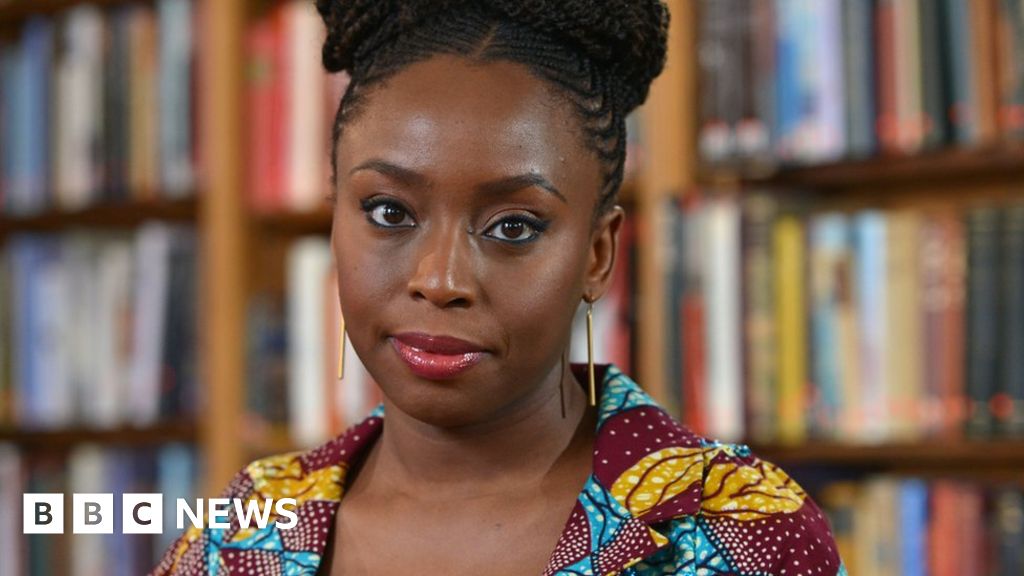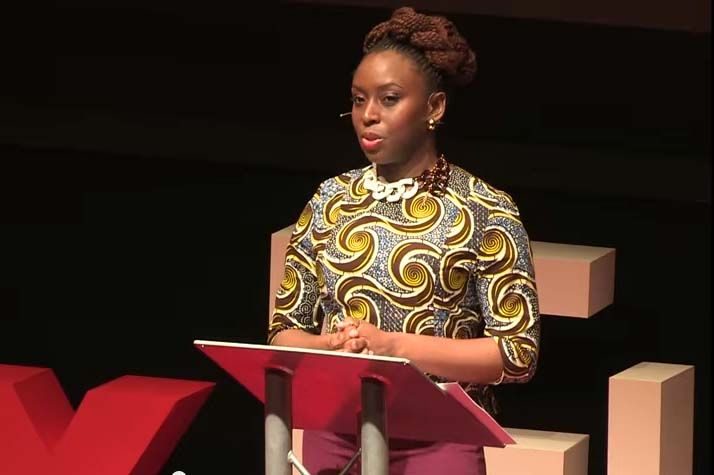
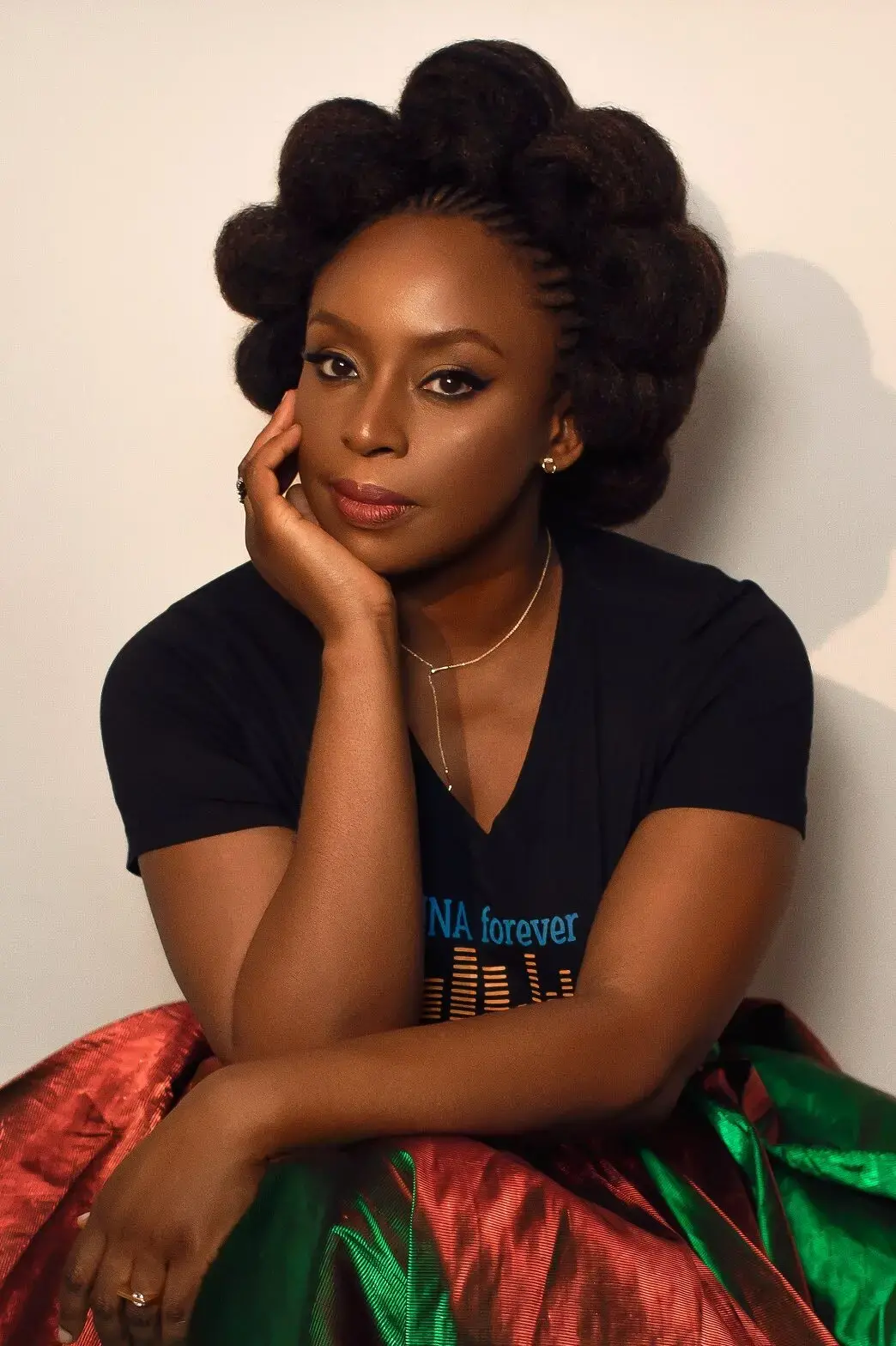

On a stage at TEDGlobal in Oxford in 2009, a Nigerian novelist in her early thirties told an auditorium of mostly Western listeners that they had been reading her wrong. “The single story creates stereotypes,” she said, “and the problem with stereotypes is not that they are untrue, but that they are incomplete.” The talk ran under twenty minutes and became one of the most watched talks TED has published. By the time it had migrated from graduate reading lists into corporate training rooms, Chimamanda Ngozi Adichie had become something neither she nor her publishers had quite planned for: a global figure of conscience, quoted on a Beyoncé record and photographed in a cosmetics campaign, while still being asked at literary festivals whether she was working on another novel.
This guide is for the reader who has watched the TED talk, owns at least one of her books, and wants to understand the shape of the career underneath the celebrity.
Enugu, Nsukka, and the long path to Purple Hibiscus
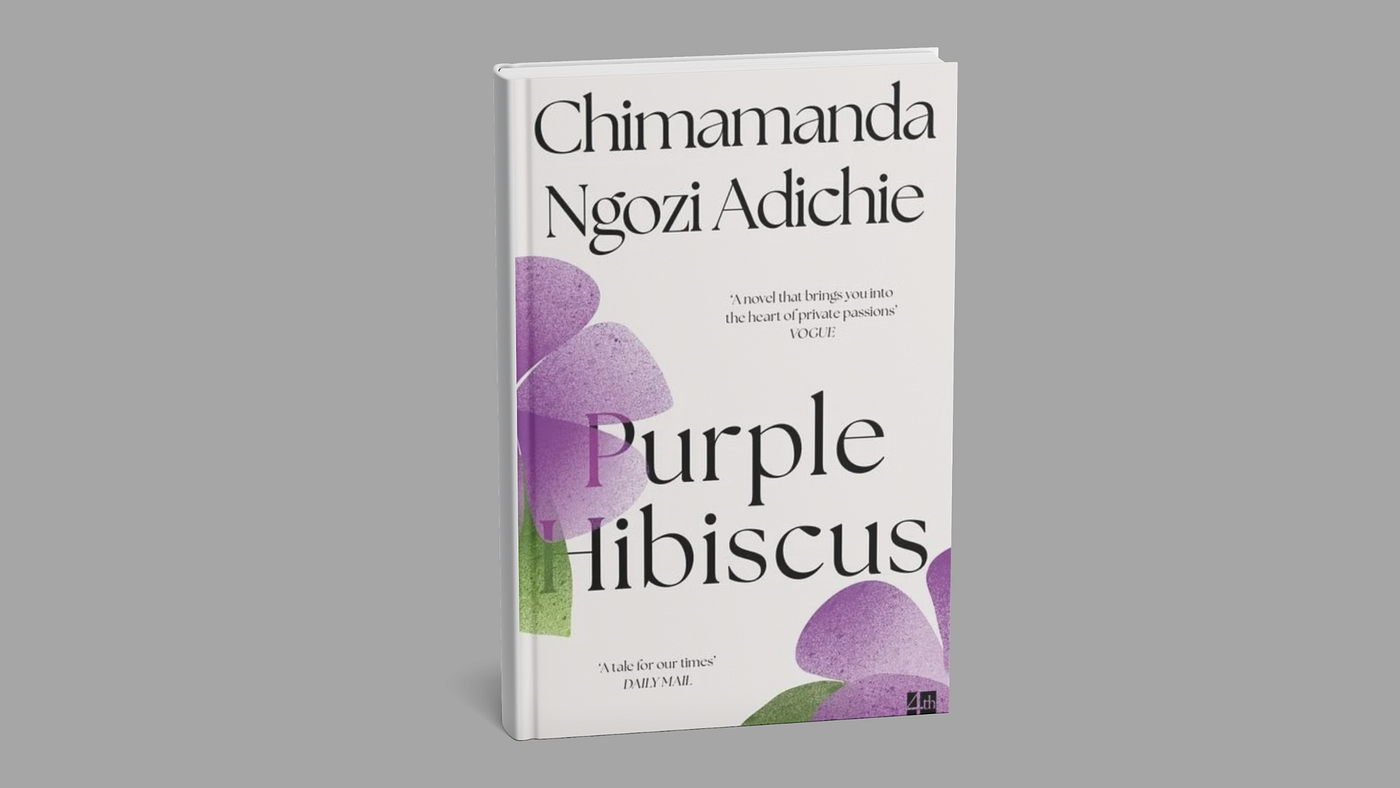
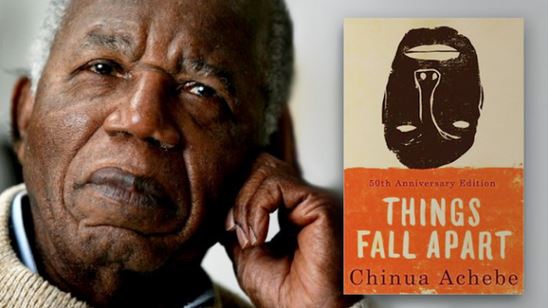
Adichie was born in Enugu in 1977 and raised in Nsukka, the university town where her family eventually moved into a house Chinua Achebe had once lived in. She has said in interviews that growing up in Achebe’s former house was less a literary blessing than a quiet fact of her childhood, one that became significant only later. Her father, James Nwoye Adichie, was a professor of statistics at the University of Nigeria; her mother, Grace Ifeoma Adichie, was the university’s first female registrar. Adichie began studying medicine and pharmacy at Nsukka before leaving for the United States at nineteen, finishing a degree at Eastern Connecticut State University and later taking a master’s in creative writing at Johns Hopkins and a master’s in African studies at Yale.
The standard origin story stresses precocity. The more useful version stresses architecture. Her Nsukka childhood supplied a fully furnished intellectual inheritance: Achebe on the shelf, the civil war in living memory, Igbo Catholicism as the religion of the household, English as the language of school. None of it had to be discovered later. It was already arranged when she began to write, and that arrangement is what makes Purple Hibiscus (2003), her first novel, feel disconcertingly mature. The book is narrated by Kambili, a fifteen-year-old girl whose wealthy, devout, violent father Eugene runs the household by Catholic terror. The narrative engine is small, a school holiday at an aunt’s house in Nsukka and the discovery that one can pray in a different key, and the prose is plain in a way early reviewers underrated. Purple Hibiscus does not announce itself as ambitious. It is. It won the Commonwealth Writers’ Prize for Best First Book in 2005.
Half of a Yellow Sun and the war her family survived
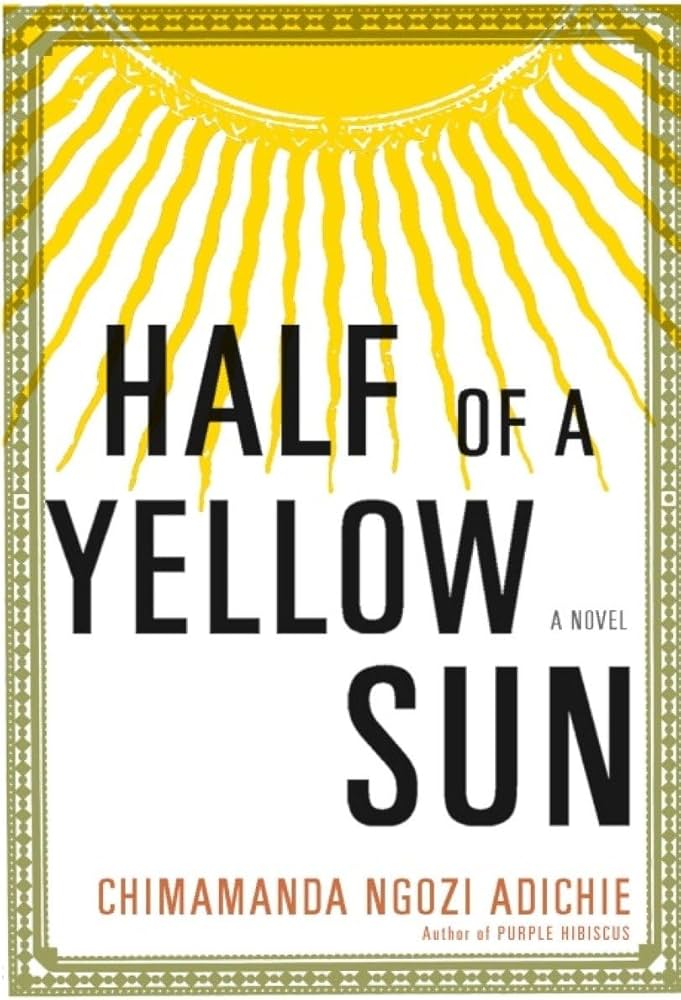
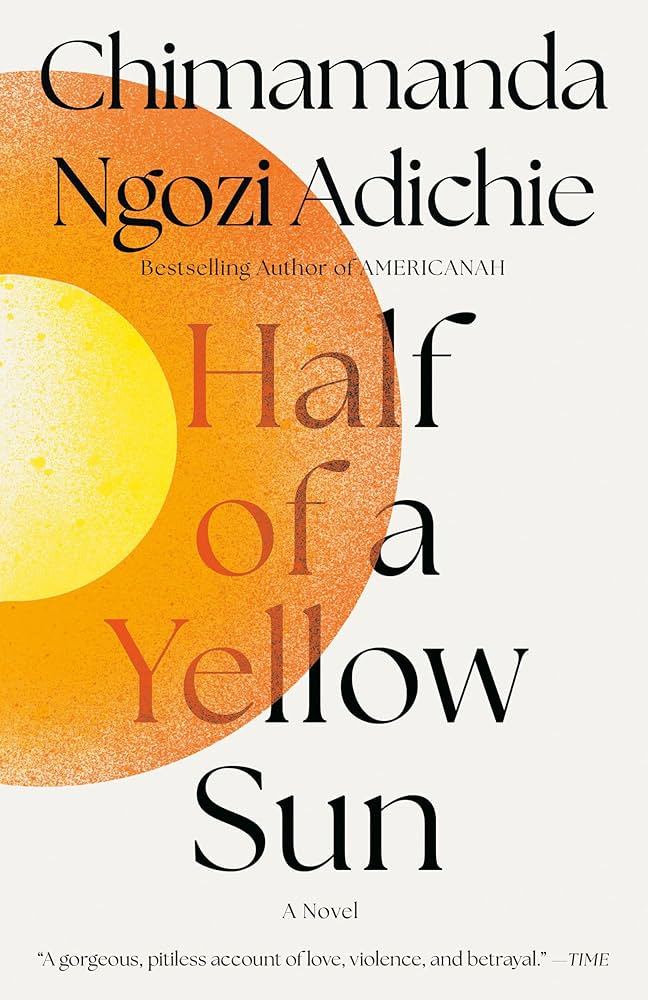
If Purple Hibiscus was the writer arriving, Half of a Yellow Sun (2006) was the writer staking a claim. The novel returns to the Nigerian civil war of 1967 to 1970 and the Biafran secession, and tells it across three points of view: Ugwu, a houseboy from a rural village; Olanna, an Igbo university lecturer; and Richard, the English expatriate in love with Olanna’s twin sister Kainene. The book won the Orange Prize for Fiction in 2007, and in 2020 readers voted it the best of all the novels to have won that prize in its first twenty-five years.
Half of a Yellow Sun did three things at once. It introduced a global readership, much of which had never encountered the word Biafra, to a war whose death toll is usually estimated between one and three million. It declined to write the conflict as an epic of authentic suffering. And it placed a Black female academic at the moral centre of an African war novel, a position the genre had rarely offered. The book has weaknesses: Richard’s plotline sometimes functions as a mannequin for ideas about who is entitled to tell the story. But its emotional accounting is exact. Adichie has said both her grandfathers died in the war, and the novel reads like a writer settling a private debt in public. She received a MacArthur Fellowship in 2008.
The stories, and the move to Americanah
Between the two big novels came The Thing Around Your Neck (2009), a collection of twelve stories and the most underread book on the Adichie shelf. The stories move between Nigeria and the United States and are less polished and more exposed than the novels. “Jumping Monkey Hill,” set at a writers’ workshop outside Cape Town where a senior African writer harasses a young female participant, is among the sharpest pieces of literary score-settling in recent African fiction. “The Headstrong Historian” closes the book by compressing three generations into a single story that argues, in miniature, with Things Fall Apart.
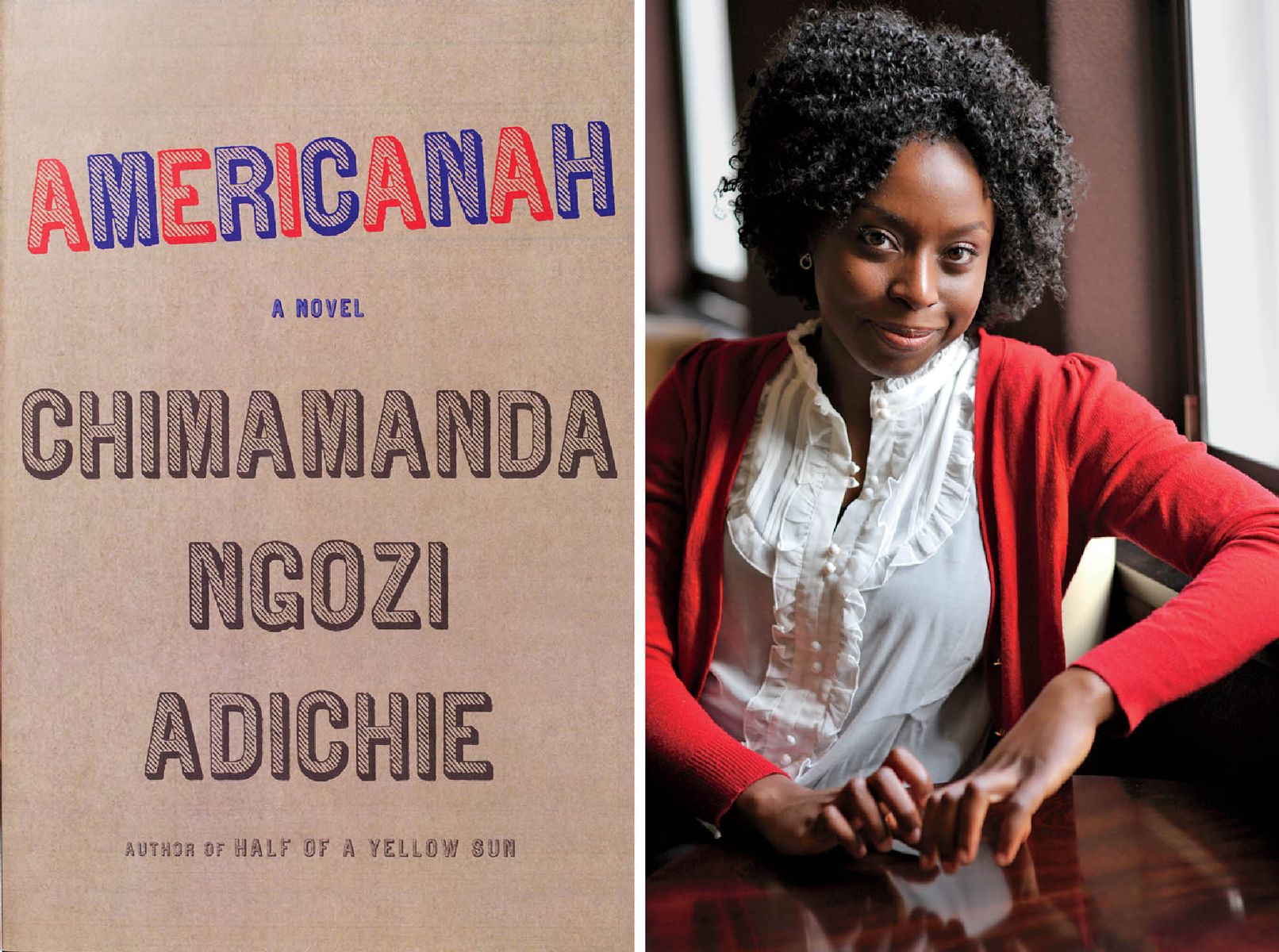
Then came Americanah (2013), the novel that fixed her place in the global popular canon and won the National Book Critics Circle Award for Fiction. Ifemelu, a Nigerian woman who moves to the United States for university, builds a career writing a blog about race under the title “Raceteenth.” Obinze, her teenage love, takes a darker route through undocumented life in London before returning to Lagos and prospering in property. The book is a love story, a treatise on hair politics, a Lagos satire and a long argument about what race becomes when you cross the Atlantic.
Americanah is uneven. The blog sections sometimes read like opinion columns dropped into a novel, and the returnee chapters can feel sociological, observed from the air-conditioned car. But the book’s central observation, that race in America is not the same condition as the racialised identities Africans grow up inside, had not been made with that clarity in literary fiction before. A screen adaptation developed with Lupita Nyong’o was announced and then shelved, which is its own small commentary on how the industry handles this material.
The essays, the brand, the sampled speech
We Should All Be Feminists (2014), adapted from a TEDxEuston talk she gave in 2012, did what the Oxford talk had done: it moved her work into rooms where novels rarely travel. Beyoncé sampled a section of the talk on “Flawless” in late 2013. In 2015 Sweden’s women’s lobby arranged for copies to be distributed to the country’s sixteen-year-olds, and in 2017 Dior printed the title on a T-shirt. The essay became a gift-shop object, which is a strange fate for an argument.