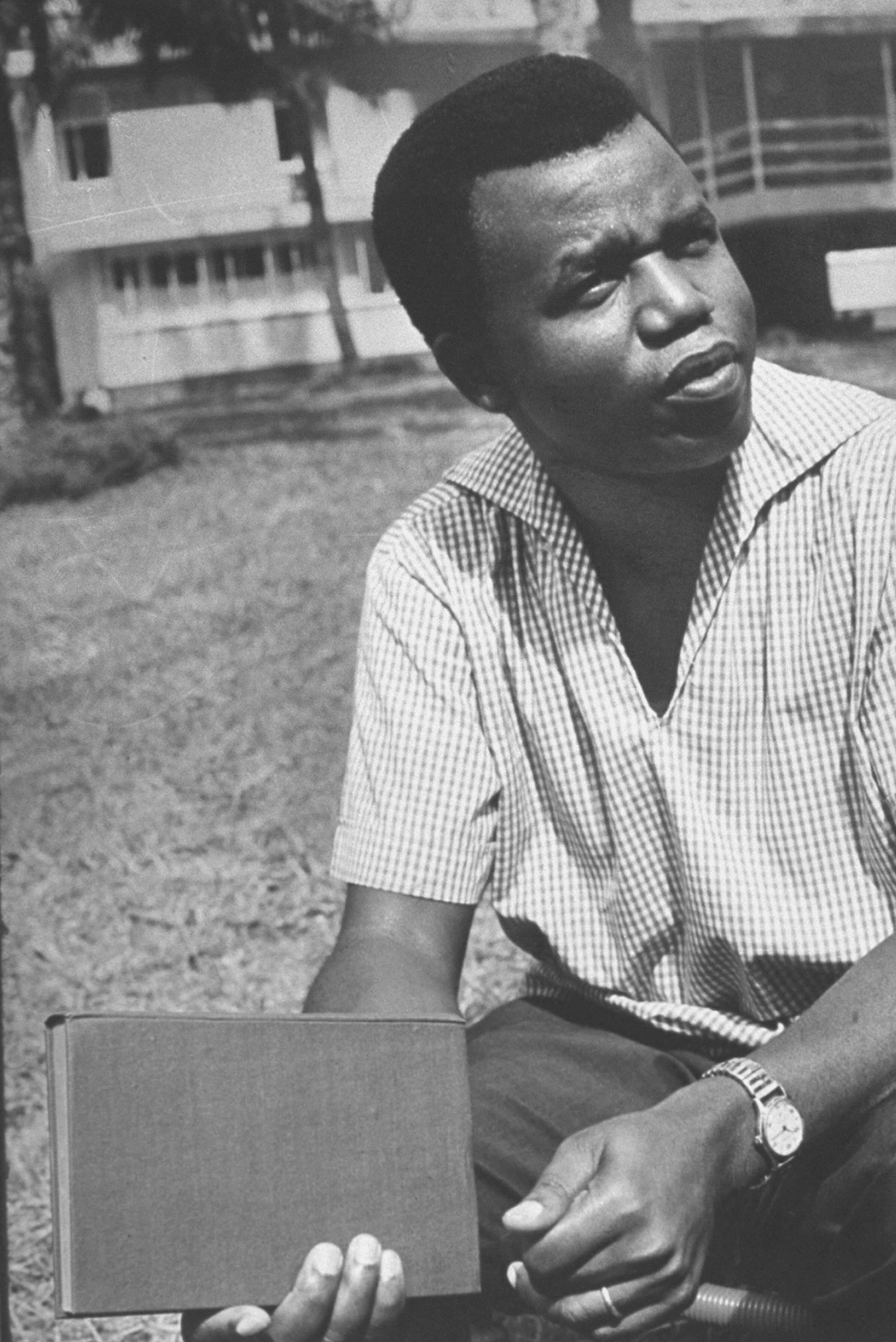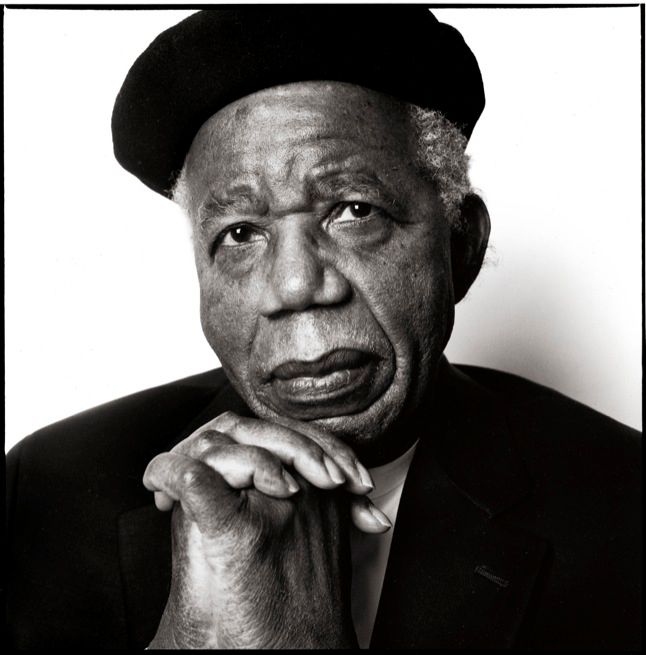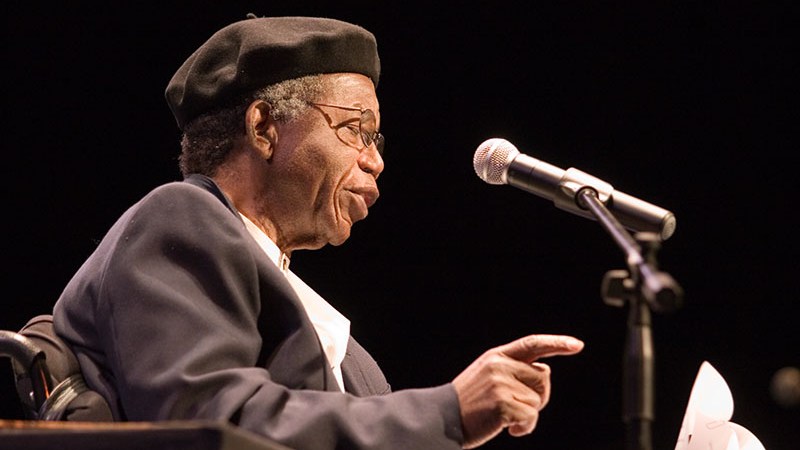

“Among the Igbo the art of conversation is regarded very highly, and proverbs are the palm-oil with which words are eaten.” The sentence comes early in Things Fall Apart, published in London by William Heinemann in 1958 in a small first print run. Within fifty years the book had been translated into more than fifty languages and had become the foundation text of a literature that did not, when its first chapter was written, exist as a recognised category. Albert Chinualumogu Achebe, born in Ogidi in November 1930, had not set out to invent African literature in English. He had set out to argue with Joseph Conrad, and to write a novel about his grandfather’s generation. The first he did in an essay. The second became one of the most widely read novels of the twentieth century.
This guide is for the reader who has read Things Fall Apart, possibly in school, and wants to understand why the rest of the shelf matters.
Ogidi, Ibadan, and the missionary’s son who returned the gift
Achebe was born Albert Chinualumogu Achebe in Ogidi, in what is now Anambra State, in November 1930. His father, Isaiah Okafo Achebe, was an evangelist and teacher with the Church Missionary Society. His mother was Janet Anaenechi Iloegbunam. He grew up between the Christian compound and the unconverted branches of the wider family, and he returned often, in interviews and essays, to the image of a childhood lived at a crossroads of cultures. That metaphor was Igbo before it was literary, and it does a great deal of work in the fiction: almost every Achebe novel puts a character at a junction where two systems of meaning make incompatible demands.
He took the name Chinua, a shortening of his middle name, after entering University College Ibadan in 1948 as a member of its first intake. He read English, history and theology in the same colonial syllabus that Wole Soyinka would pass through a few years later. The syllabus required Heart of Darkness. Achebe read it and decided, as he would say repeatedly across the next half century, that someone needed to write about Africans from the inside rather than as a shadow on the wall of Conrad’s symbolic Europe. He joined the Nigerian Broadcasting Service in 1954 and rose to Director of External Broadcasting by 1961. In the evenings he was writing the manuscript that he sent to a London typing service, which nearly lost it. What came back became Things Fall Apart.
The African Trilogy and the founding text
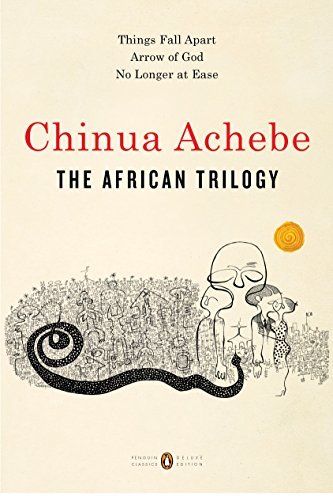
Things Fall Apart (1958) is the novel whose argument is so completely absorbed into world literature that readers sometimes miss how radical it was. Okonkwo, a wrestler and yam farmer in the Igbo village of Umuofia in the late nineteenth century, is a man whose strength is also his rigidity. The first two thirds of the novel are a granular, often funny, often tender portrait of pre-colonial Igbo life as a fully functioning social and moral system. The last third brings the missionaries, the slow split of the village, and Okonkwo’s destruction. The novel closes with a District Commissioner deciding that Okonkwo’s life will make a useful paragraph in his book on the pacification of the primitive tribes of the Lower Niger. That final turn, a life narrated in close detail and then reduced by a colonial pen to a paragraph, is the argument the novel was built to make.
The book was later chosen as the first title in Heinemann’s African Writers Series, launched in 1962, the imprint Achebe served as founding editor. Through it he helped publish dozens of African writers in affordable paperback editions sold across the continent. The series was the infrastructure under everything that came after. Without it there is no cheap Ngugi on a Nairobi bookstall, no Bessie Head or Ama Ata Aidoo on a Lagos shelf, and no reliable way for one African readership to find another.
No Longer at Ease (1960) follows Obi Okonkwo, grandson of the first novel’s protagonist, returning from a London education to a 1950s Lagos post in the colonial civil service and to the slow accommodation with petty corruption that breaks him. Arrow of God (1964) approaches the colonial encounter from a different angle, through Ezeulu, chief priest of the god Ulu, whose authority is undermined both by the District Officer and by his own pride. Together with Things Fall Apart, these books form what is usually called the African Trilogy. Read in sequence, they trace the colonial wound across three generations.
A Man of the People, and the coup that arrived on schedule
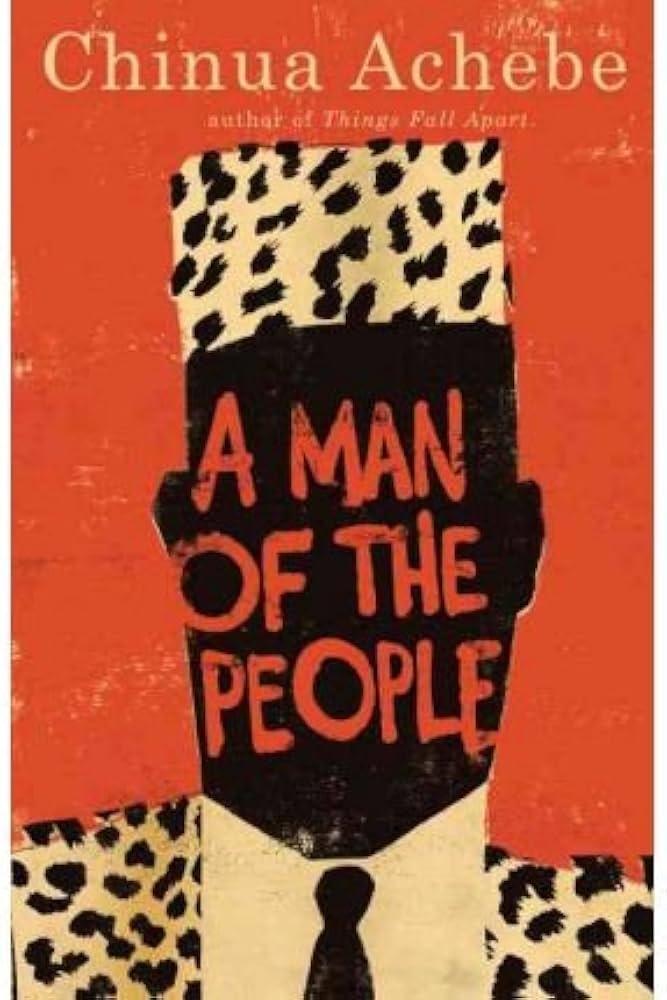
A Man of the People (1966) is the novel that ended Achebe’s life as a private writer. Set in an unnamed African country, it follows Odili Samalu, a young idealistic schoolteacher who tries and fails to unseat Chief Nanga, a corrupt and genial minister. The book ends with a military coup. It appeared in January 1966, the same month that Nigeria’s First Republic was in fact ended by one. Achebe was accused of having known, of being involved, of being part of a conspiracy. He was not. A prediction was read backwards as collusion.
The accusations grew dangerous as the country fell into the Biafran war. Achebe, an Igbo, left the federal side. With his close friend the poet Christopher Okigbo he founded Citadel Press in Enugu, intending to publish books for children. Okigbo, who had joined the Biafran army, was killed in 1967 near Nsukka at the age of thirty-five. The loss stayed with Achebe for the rest of his life, and There Was a Country (2012), his last book, is in part the long memorial he had carried since.
The essays, the Conrad demolition, and the long silence in fiction
After A Man of the People, Achebe did not publish another novel for twenty-one years. The war, Okigbo’s death, the editorial work and a deepening turn to essays and teaching all took the place of fiction. He produced in this period the two short works that anchor the political reading of his career.
“An Image of Africa: Racism in Conrad’s Heart of Darkness” was delivered as a lecture at the University of Massachusetts Amherst in 1975 and later collected in Hopes and Impediments (1988). In the lecture as first given, Achebe called Conrad “a bloody racist”; in the revised published text the phrase became “a thoroughgoing racist.” Either way the essay remains a foundational document of postcolonial criticism. It did not get Conrad off the syllabus. It changed how Conrad is read on the syllabus, which was the more durable victory.