Ngugi wa Thiong'o: A Reader's Guide to the Kenyan Author's Most Essential Books
Arianne Cole··10 min read
Ad SpaceArticle Top - 728x90
Advertisement
Toilet paper, in Kamiti Maximum Security Prison outside Nairobi, came in coarse squares that resisted ink and tore under pressure. The novelist who had been detained without charge at the end of 1977, after villagers staged a Gikuyu-language play he had co-written at a community theatre near Limuru, found a way to write on it anyway. He wrote in Gikuyu, the language of his mother, rather than the English in which his earlier novels had brought him an international readership. The novel he drafted in that cell, Caitaani Mutharaba-Ini, appeared in Gikuyu in 1980 and in English, as Devil on the Cross, in 1982. By then the man who had begun his career as James Ngugi, mission-school boy and Leeds graduate, had discarded his colonial first name, moved the working language of his fiction permanently to Gikuyu, and become Ngugi wa Thiong’o.
This guide is for the reader who knows that Ngugi was a perennial Nobel contender who never won, has heard of Decolonising the Mind, and wants the body of work explained as the long single argument it always was.
Kamiriithu, Makerere, and the boy who walked back from school
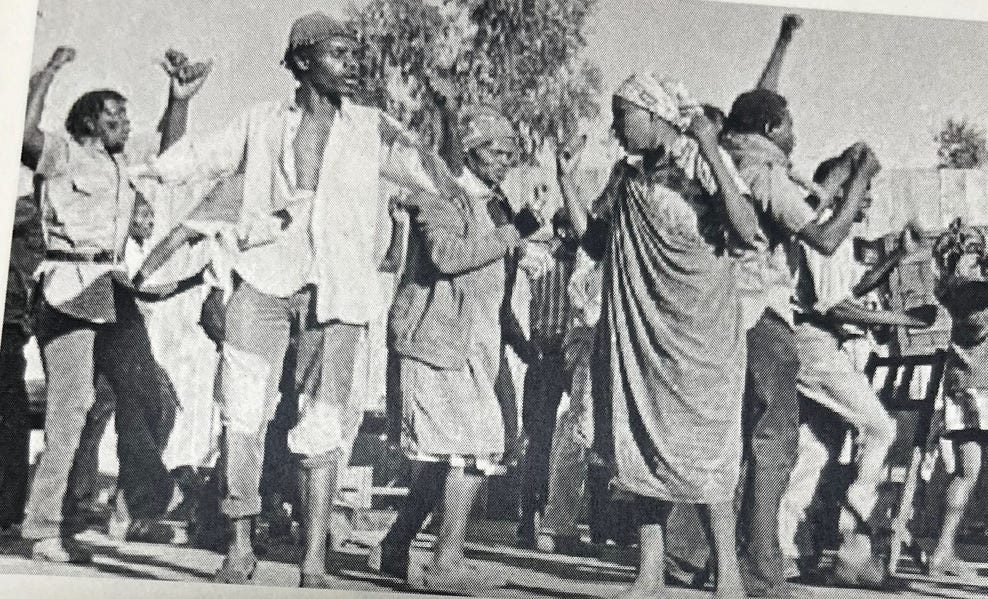
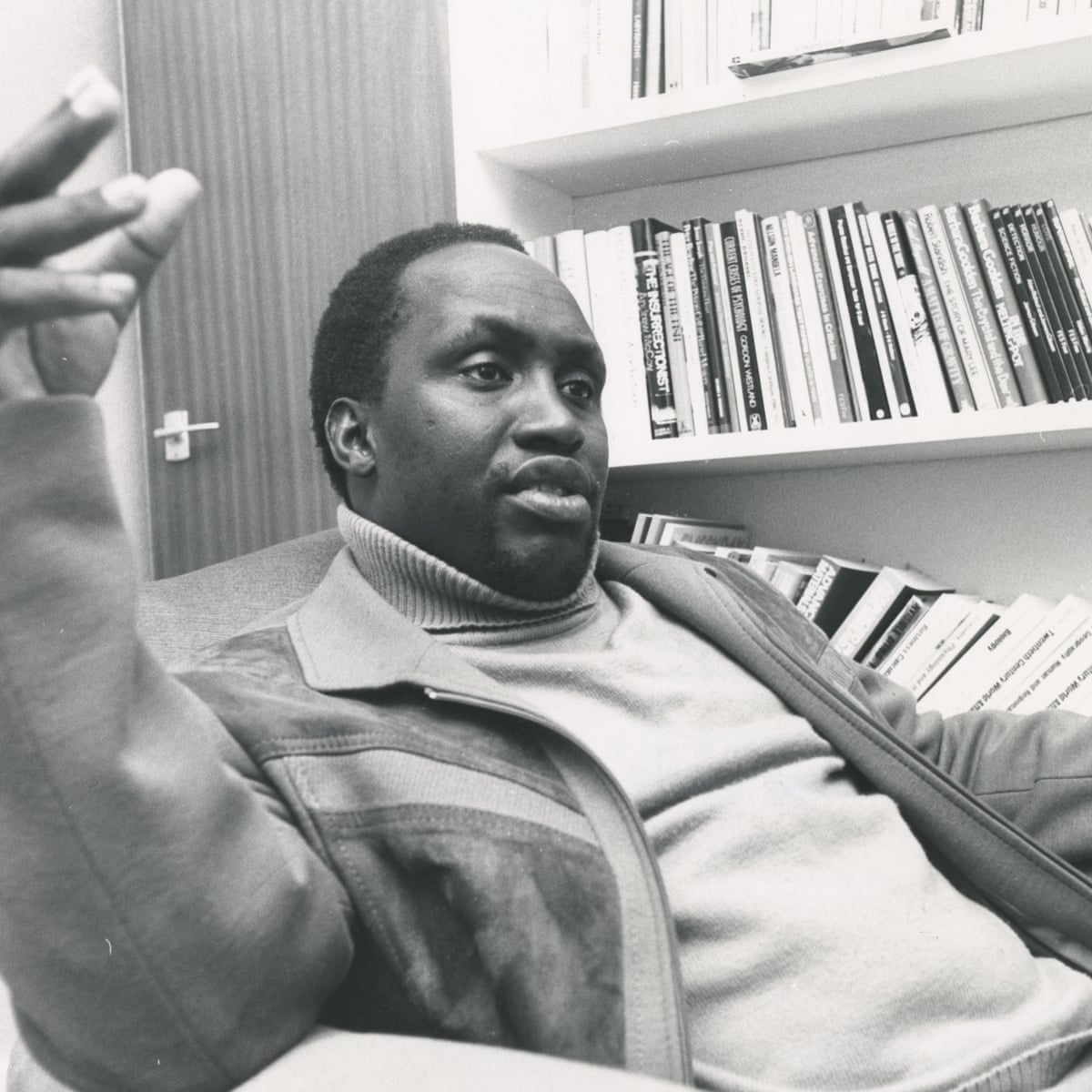
Image: Historia Yetu newsletter
Ngugi was born in Kamiriithu, near Limuru in central Kenya, in January 1938. His mother, Wanjiku, was one of his father’s four wives, and he was one of twenty-eight children in the household. The land around Kamiriithu had been taken from Gikuyu families by white settlers a generation earlier, and his father was among those pushed off it. By the time Ngugi was a teenager, Kenya was inside what the British called the Emergency and Kenyans called the Mau Mau war. One of his brothers fought in the forests. Another, his deaf brother Gitogo, was shot in the back by a British soldier for failing to obey an order he could not hear. Two of his brothers died in the conflict.
He passed through Alliance High School, the elite mission institution that educated much of Kenya’s independence-era professional class, and went on to Makerere University College in Uganda in 1959. Makerere in the early 1960s was the great laboratory of English-language African literature. It was there, at the 1962 African writers’ conference, that Ngugi handed the manuscript of his first novel to Chinua Achebe, who passed it to Heinemann. He went on in 1964 to the University of Leeds, where he read Frantz Fanon and the British Marxist critics and where the political reading of African writing that would shape the rest of his career began to settle. Through the Makerere and Leeds years he was still James Ngugi, the writer the African Writers Series was preparing to publish.
The first three novels: writing the Emergency
Weep Not, Child (1964), published under the name James Ngugi, is widely described as the first novel in English by an East African writer. It tells the story of Njoroge, a Gikuyu boy whose family is torn apart by the Mau Mau conflict and who clings to the colonial promise that education will redeem him. The promise breaks. The novel is short, restrained and quietly devastating, and it is the book that announced an East African literature.
The River Between (1965), written before Weep Not, Child but published after it, is set earlier in the colonial period and follows the rivalry between two Gikuyu ridges divided over Christianity and the practice of female circumcision. The book is sometimes taught in schools as a love story. It is not. It is a study of how a community can be split from the inside before any external violence is needed to finish the work.
A Grain of Wheat (1967) is the novel in which he became a major writer. Set in the days leading up to Kenyan independence in December 1963, it moves across a small cast of villagers preparing for Uhuru and gradually reveals which of them collaborated, which betrayed, and which survived only because someone else did not. Critics have long noted the Conradian architecture, particularly the shifting multiple perspectives, but the moral weight is entirely Ngugi’s. It is also the book in which his prose stops imitating English models and starts working in a rhythm of its own.
Petals of Blood, and the year in Kamiti
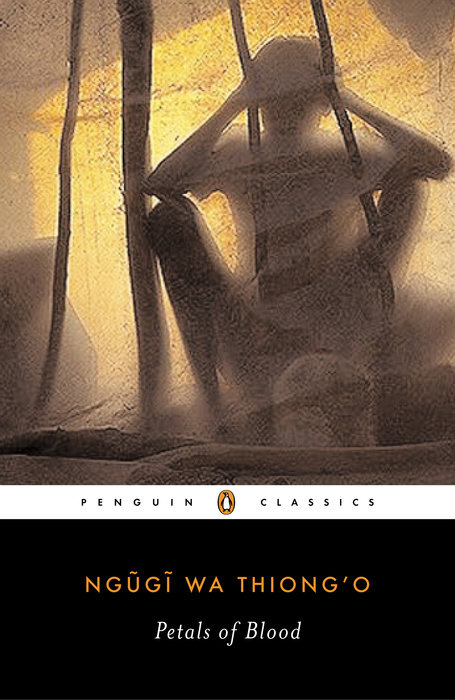
Petals of Blood (1977), his last novel written in English, marks the break between the writer of the early books and the writer of everything after. Four characters, a schoolteacher, a barmaid, a former Mau Mau fighter turned shopkeeper and a young teacher who becomes a trade unionist, are brought together in the village of Ilmorog, where the failures of post-independence Kenya arrive in concentrated form: land taken by a new African elite, the destruction of subsistence farming, an imposed tourist economy and the casual brutality of the police. The novel is structurally ambitious in a way the earlier books are not, and it is openly on the side of the dispossessed.
What broke the government’s patience was not the novel but the play. Ngaahika Ndeenda (I Will Marry When I Want), co-written with Ngugi wa Mirii and staged at the Kamiriithu Community Education and Cultural Centre in 1977 by villagers rather than professional actors, was performed in Gikuyu for an audience of workers and peasants, and it accused the post-independence elite of being the new colonialists. The play was banned, and the open-air theatre was later demolished. Ngugi was detained without charge under the government of Jomo Kenyatta from December 1977 until December 1978, when he was released after Daniel arap Moi succeeded to the presidency. He was never reinstated at the University of Nairobi.
In Kamiti he drafted Caitaani Mutharaba-Ini on prison-issue toilet paper. Published in Gikuyu in 1980, it stands as the major postcolonial African novel written in an African language by a writer who could have written it in English. The act was the argument. Detained: A Writer’s Prison Diary followed in 1981.
Decolonising the Mind, and the language decision
In 1982, while in Britain to promote the English edition of Devil on the Cross, Ngugi learned of a plot against his life and did not go home. The exile lasted twenty-two years, spent largely in Britain and the United States, where he taught at Yale, then at New York University, and from 2002 at the University of California, Irvine. His novel Matigari (Gikuyu 1986, English 1989) was banned in Kenya, and an arrest warrant was reportedly issued for its fictional protagonist.
Ad SpaceIn-Article - 300x250
Advertisement
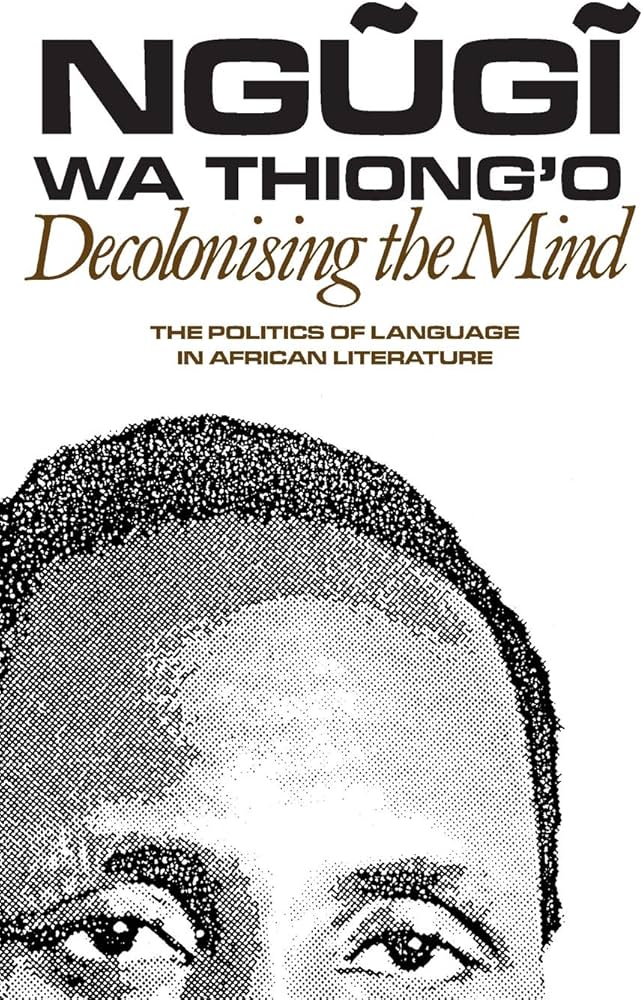
Decolonising the Mind: The Politics of Language in African Literature (1986) is the essay collection he announced in its preface as his farewell to English as a vehicle for his creative writing. The argument, in summary, is that language is not a neutral container for culture; that writing African literature in European languages locks the African intellectual class into dependency on foreign centres of cultural production; that it separates writers from the peasant and working-class communities they come from; and that it starves African languages of the literary investment they would otherwise attract. The position was contested from the start. Achebe had already defended English as a usable African instrument, and Soyinka took the same side. Many younger writers still disagree.
What is harder to dispute is the price Ngugi paid. Switching his fiction to Gikuyu meant giving up the translation pipeline that had carried his early novels into many languages, and his later novels reach English readers only through translation, often his own. His international visibility narrowed for close to two decades while he wrote books most of his foreign readers could not read in the original.
Wizard of the Crow, the memoirs, and the late recognition
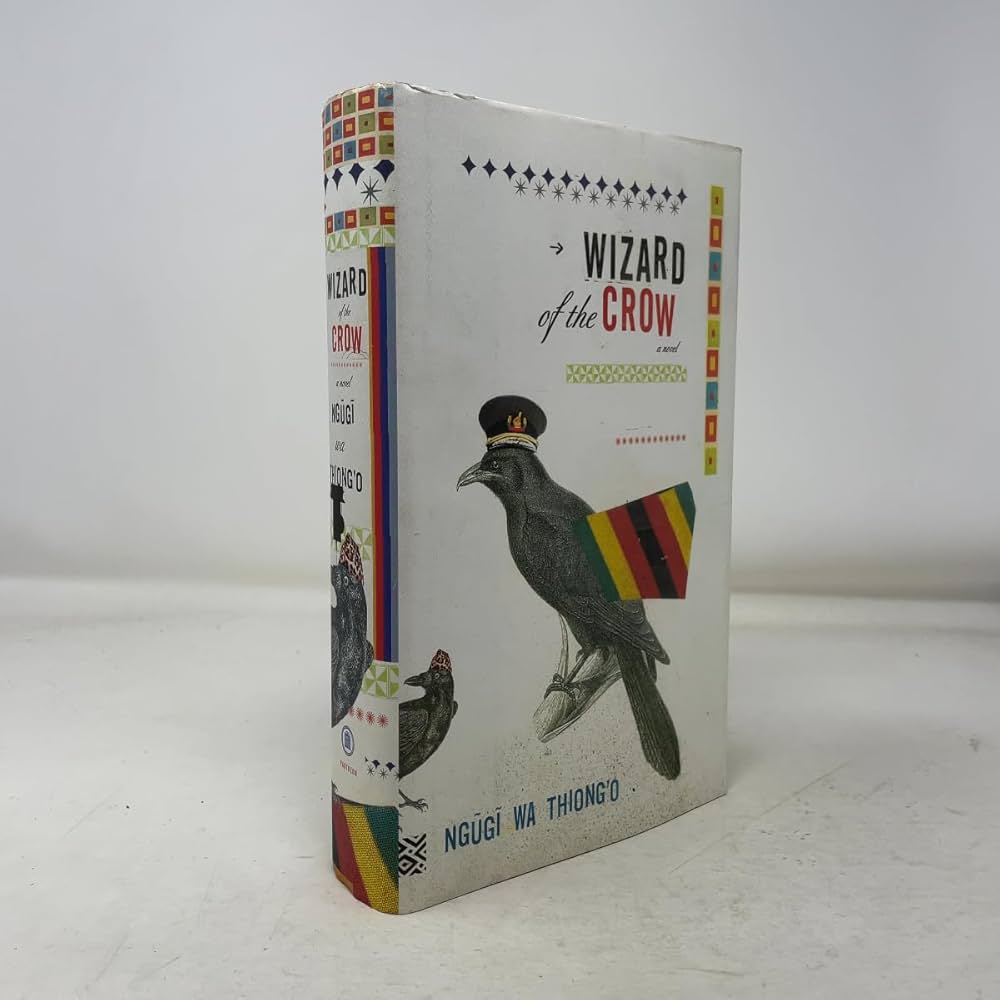
Murogi wa Kagogo, published in Gikuyu in 2004 and in his own English translation as Wizard of the Crow in 2006, is the masterpiece of the late career. Set in the fictional Free Republic of Aburiria, ruled by a paranoid Ruler whose body swells with his own self-regard, it is a long work of satirical, often fantastical political comedy that argues with the African strongman novel as a category. It is funny in a way the early novels are not, and it is the book in which Ngugi finally gives the comic register the room his political seriousness had previously denied it.
The three memoirs, Dreams in a Time of War (2010), In the House of the Interpreter (2012) and Birth of a Dream Weaver (2016), cover his childhood, his Alliance High School years and his Makerere years, in that order. They are the best entry point for a reader who wants the man before the argument, and the first in particular contains the most relaxed prose in his whole body of work.
The Perfect Nine, his verse retelling of the Gikuyu founding myth, was written in Gikuyu as Kenda Muiyuru and appeared in his own English translation in 2020. It was longlisted for the International Booker Prize in 2021, making him the first nominee for a work written in an indigenous African language and the first author nominated as his own translator. The recognition arrived four decades after Devil on the Cross. It was not, by any reading, fast.
The shelf, title by title
Title
Year
Form
The Black Hermit
1963 staged, 1968 published
Play
Weep Not, Child
1964
Novel, as James Ngugi
The River Between
1965
Novel, as James Ngugi
A Grain of Wheat
1967
Novel, as James Ngugi
Homecoming
1972
Essays
Secret Lives
1975
Short stories
The Trial of Dedan Kimathi (with Micere Githae Mugo)
1976
Play
Petals of Blood
1977
Novel
Ngaahika Ndeenda (I Will Marry When I Want, with Ngugi wa Mirii)
1977 staged, 1980 published
Play in Gikuyu
Caitaani Mutharaba-Ini (Devil on the Cross)
1980 Gikuyu, 1982 English
Novel
Detained: A Writer’s Prison Diary
1981
Prison diary
Decolonising the Mind
1986
Essays
Matigari
1986 Gikuyu, 1989 English
Novel
Moving the Centre
1993
Essays
Murogi wa Kagogo (Wizard of the Crow)
2004 Gikuyu, 2006 English
Novel
Dreams in a Time of War
2010
Memoir
In the House of the Interpreter
2012
Memoir
Birth of a Dream Weaver
2016
Memoir
Kenda Muiyuru (The Perfect Nine)
2020 English translation
Verse novel
What he does, and where he stops short
Ngugi’s strengths are the moral seriousness of the fiction, the structural sophistication of A Grain of Wheat and Wizard of the Crow, and a polemical clarity in the essays that has aged better than most of his contemporaries’ political writing. In the memoirs he is a surprisingly funny and tender prose stylist, a register the earlier novels seldom permit.
His blind spots are the price of the seriousness. The Marxist register of Petals of Blood sometimes drowns out the ambiguity the book could carry. His female characters, particularly in the early novels, more often stand for ideas than hold interior lives of their own. And the language argument hardened, in some of the late essays, into a tone of certainty that even sympathetic readers find wearing. None of this touches the central achievement, which is that he made the question of language unavoidable for everyone who came after him.
Where he sits, and where to start
In the map of African letters after Achebe, Ngugi is the writer who took the language question further than anyone else was willing to take it and who paid for the position in international visibility and in lost decades of teaching at home. He was the conscience of the continent in a different register from Soyinka’s. Soyinka is the playwright-philosopher who confronts power through ritual. Ngugi was the realist novelist who confronted it through community theatre and the politics of the mother tongue.
For a new reader the order that works best is A Grain of Wheat first, Petals of Blood second, Decolonising the Mind third. Read Dreams in a Time of War whenever you want the writer rather than the work; it is the best of the memoirs and the gentlest entry to the man. Wizard of the Crow is the book to read fourth, once the politics has been absorbed and the comedy can land. Weep Not, Child and The River Between reward reading after the major novels, as the foundations of the building rather than the building itself. Keep Devil on the Cross for last, because it means most once the prison year is part of the reading furniture.
The corpus he left, and the argument he settled
Ngugi returned to Kenya in 2004 after the end of the Moi era to a public welcome, and the visit was cut short when assailants broke into the Nairobi flat where he and his wife Njeeri were staying and violently attacked them both. He insisted the attack was political. He went back to teaching in California, where he spent the rest of his working life at the University of California, Irvine. He died on 28 May 2025 in the United States, at the age of eighty-seven, after a long illness. He had nine children, four of them published authors, among them the novelists Mukoma wa Ngugi and Wanjiku wa Ngugi.
He won most of the international prizes available to a writer of his standing and never the Nobel, which was the running joke of every October for two decades and which now cannot be fixed. It matters less than it once seemed to. The corpus is complete, it is readable in English through his own translations, and the argument he made about who African literature is written for has outlived the committee that declined to endorse it.
Ad SpaceIn-Article - 300x250
Advertisement
Share
Get the recap
Loved this story? Get more like it.
Join readers who get our weekly entertainment recap - the stories worth your time, delivered every Friday.
No spam. Unsubscribe anytime. By signing up you agree to our Privacy Policy.