Teju Cole: A Reader's Guide to the Nigerian-American Author's Most Essential Books
Image: Harvard Gazette
Books

Teju Cole: A Reader's Guide to the Nigerian-American Author's Most Essential Books

Arianne ColeArianne Cole··9 min read
Ad SpaceArticle Top - 728x90
Advertisement

To call Teju Cole a novelist is to undersell half of what he does, and to call him an essayist is to misweigh the share of his working life spent behind a camera. He has published two novels, a novella, two essay collections and a run of photobooks, and the sorting of his work into those categories tells you less than the continuity running underneath them. The same intelligence is at work in a paragraph of fiction, a column about a photograph and a sequence of images with text set beside it. What follows is a map of that project for a reader approaching him for the first time, with the forms kept straight, because the forms are where most short accounts of Cole go wrong.

He is also one of the few contemporary writers whose public presence has contracted on purpose. The Twitter projects that made him a reference point for a certain kind of online literary practice, among them the compressed Nigerian newspaper rewrites he called “Small Fates” and the 2013 sequence “Seven Short Stories About Drones,” were deleted or left behind, and he has largely stepped away from the platforms since. The withdrawal reads less as a gesture than as a continuation: an artist organising his attention, and declining the demand that he stay legible at the speed the feed requires.

Background

Cole was born in Kalamazoo, Michigan, in June 1975, to Nigerian parents, and returned with his mother to Lagos shortly after his birth. He grew up in Lagos and came back to the United States at seventeen, spending a year at Western Michigan University before transferring to Kalamazoo College, where he took his bachelor’s degree in 1996. He left medical school at the University of Michigan, enrolled in an African art history programme at the School of Oriental and African Studies in London, and then went on to doctoral work in art history at Columbia, which he did not complete. The art historical training, centred on early Netherlandish painting, is visible everywhere in the prose. He looks at images, and at sentences, with the patience that writers such as John Berger and Susan Sontag taught a generation was possible.

The double biography matters beyond the standard diaspora narrative. Cole spent his childhood and adolescence in Lagos and his adult intellectual formation inside the Western art historical canon, and he has written in both fiction and essays about what it means to be a person whose education crosses continents. He wrote the monthly column “On Photography” for The New York Times Magazine as its photography critic, a run that was a finalist for a National Magazine Award in 2016 and that closed with a final column in February 2019. He was previously Distinguished Writer in Residence at Bard College, and he is the Gore Vidal Professor of the Practice of Creative Writing at Harvard. None of these details is decorative. They all turn up, more or less explicitly, inside the work.

The Major Books

Every Day Is for the Thief was published in Nigeria in 2007 by Cassava Republic Press, in a small print run, and reached an international readership only in 2014, when Random House issued it after the success of Open City. It is a novella built from linked vignettes, narrated by an unnamed young Nigerian who returns to Lagos after fifteen years in the United States. The book is restless and observational, often quietly funny, and closer in structure to W.G. Sebald than to anything in the Nigerian novelistic tradition. Photographs taken by Cole are embedded throughout, not as illustration but as evidence, and the slippage between fiction and field report is the point.
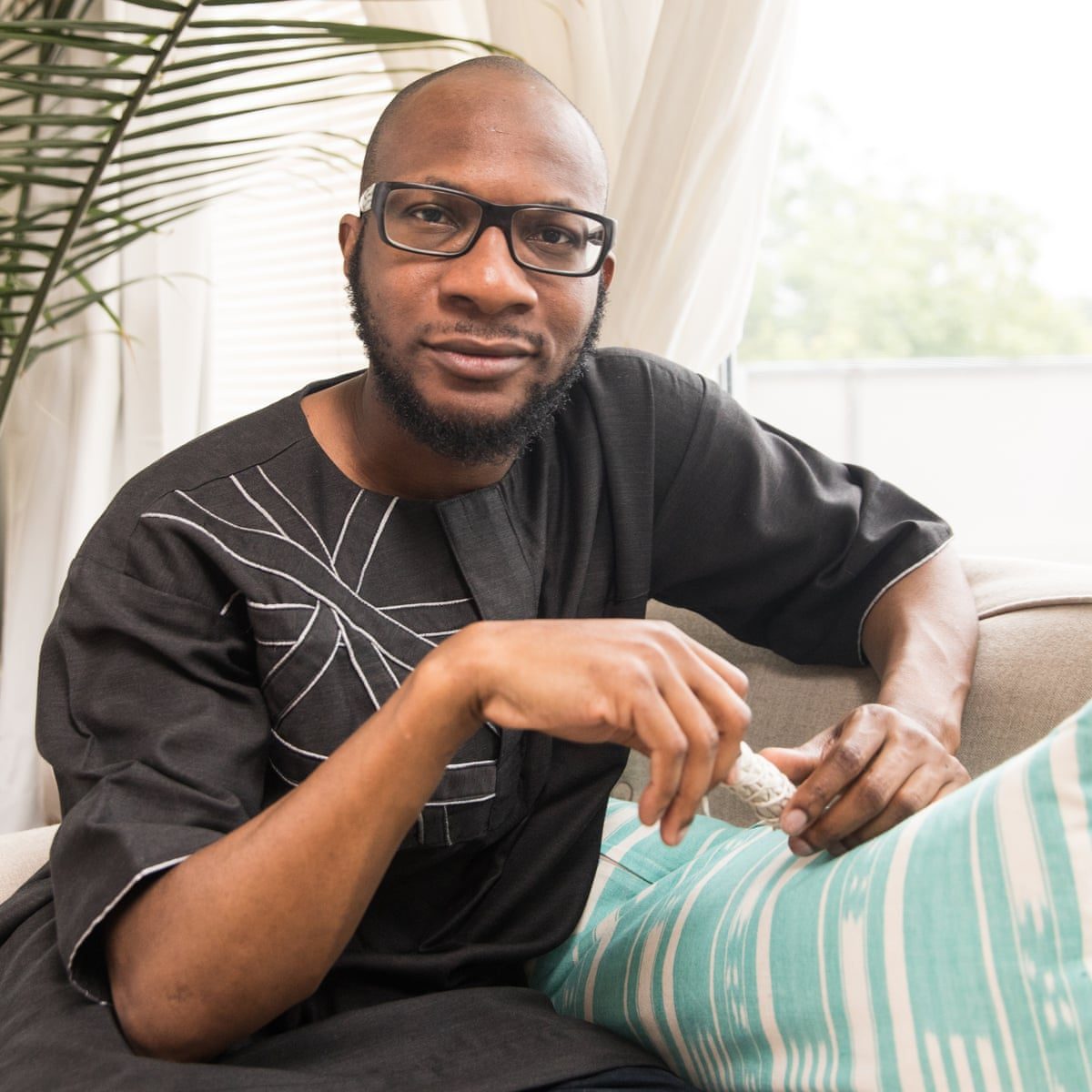
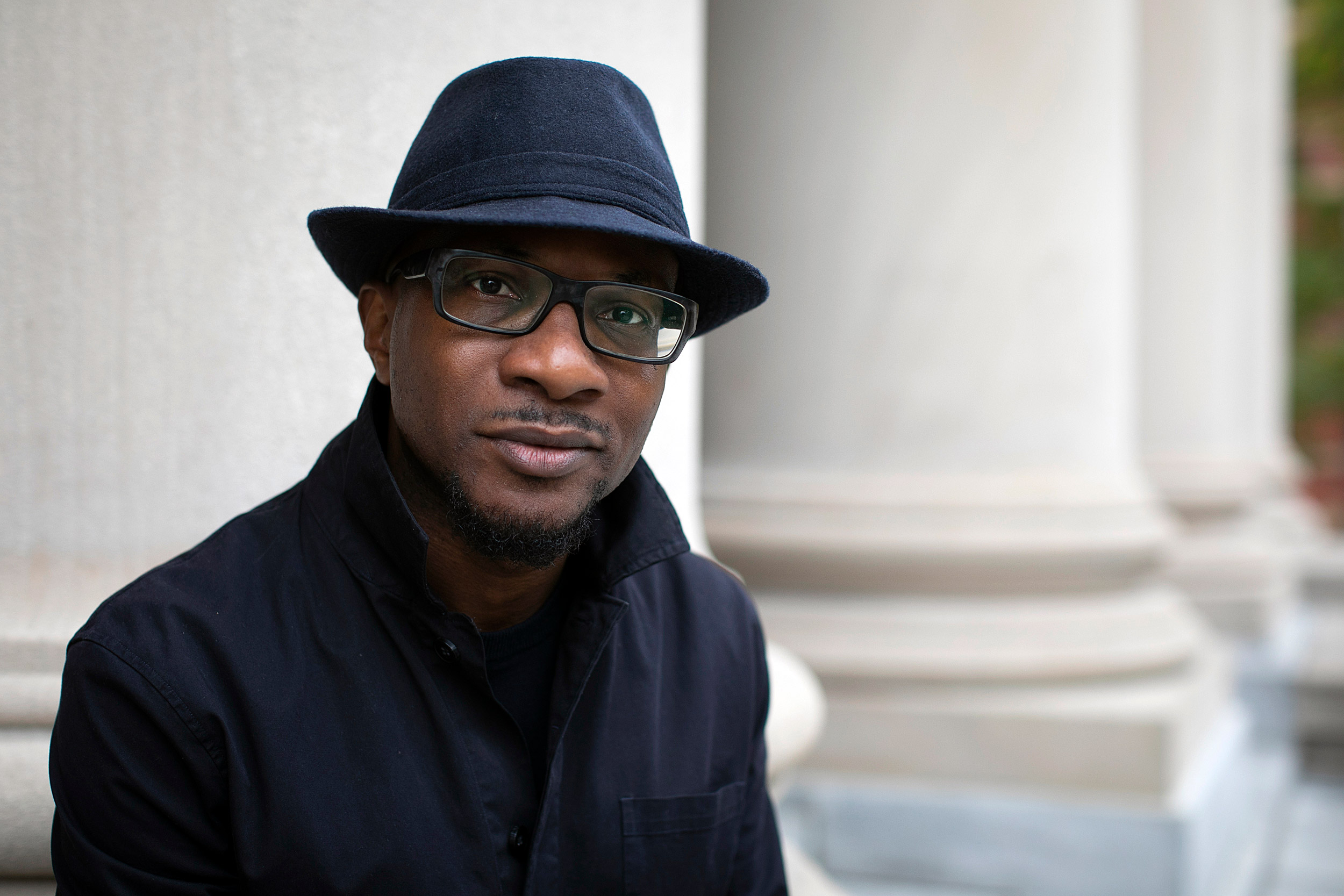
Teju Cole
Image: The Guardian

Open City (2011) is the book most readers know him by. Julius, a Nigerian German psychiatrist finishing his training in New York, walks the city, then walks Brussels, then walks through his own ambiguous past. The novel is often called plotless, which is not quite right, since a revelation late in the book retroactively darkens everything before it. What Open City does is replace conventional novelistic event with a different order of attention. The debt to Sebald is widely noted and Cole has acknowledged the comparison, but the book is reading Achebe, Coetzee and Sontag at the same time. It won the PEN/Hemingway Award in 2012 and was a finalist for the National Book Critics Circle Award, and on a sentence level it remains one of the most beautifully written American novels of its decade.

Known and Strange Things (2016) collects more than forty essays and pieces of criticism from a decade of magazine work, and it is the best single entry point to his non-fiction. There are essays on photography, on Sebald, on James Baldwin, on Nigerian politics and on the American humanitarian imagination. “The White Savior Industrial Complex,” which began as a series of tweets in 2012 and became an article in The Atlantic, is the piece that travelled furthest, and it reads more than a decade on as one of the few pieces of social media era criticism to outlive its moment.

The photobooks are a distinct body of work and should not be described as novels. Punto d’ombra appeared in Italy in 2016 and was published in English in 2017 as Blind Spot, pairing photographs with short prose fragments arranged thematically rather than geographically. It is the clearest statement of his theory of attention: each image stops short of being a postcard, each text stops short of being a caption. Fernweh (2020) and Golden Apple of the Sun (2021) followed from Mack Books, the first made in Switzerland, the second built around photographs and text, with Pharmakon (2024) continuing the sequence. Black Paper (2021), published by the University of Chicago Press, is a darker collection of essays and images written through the late 2010s, more politically explicit and more grieving in register than Known and Strange Things.

Tremor (2023) is his second novel and the most formally restless of all the books: a fictional narrative that swerves into art historical digression, into a reckoning with looted Benin bronzes held in Western collections, and into a long interlude of Lagos voices that reads almost as documentary. It divided critics. It may also be his richest book.
Ad SpaceIn-Article - 300x250
Advertisement

The books at a glance

Title Year Form
Every Day Is for the Thief 2007 Nigeria, 2014 US Novella, with photographs
Open City 2011 Novel
Known and Strange Things 2016 Essays
Punto d’ombra / Blind Spot 2016 Italy, 2017 English Photobook with text
Fernweh 2020 Photobook
Black Paper 2021 Essays and images
Golden Apple of the Sun 2021 Photobook with text
Tremor 2023 Novel
Pharmakon 2024 Photobook

Preoccupations Across the Body of Work

Three preoccupations recur. The first is the ethics of looking. Cole writes constantly about what photography does to the world it records, what tourism does to the cities it visits, and what the Western humanitarian gaze does to the African subjects it claims to help. “The White Savior Industrial Complex” was an early statement of a position he has developed since across photography criticism, fiction and curatorial work. The second is the city. Lagos and New York are his primary subjects, but Brussels in Open City and the Swiss landscapes of Fernweh receive the same quality of attention. Cole is one of the strongest living writers of urban space, and his cities are always doubled, with present tense streets laid over historical violence that the streets carry without announcing.

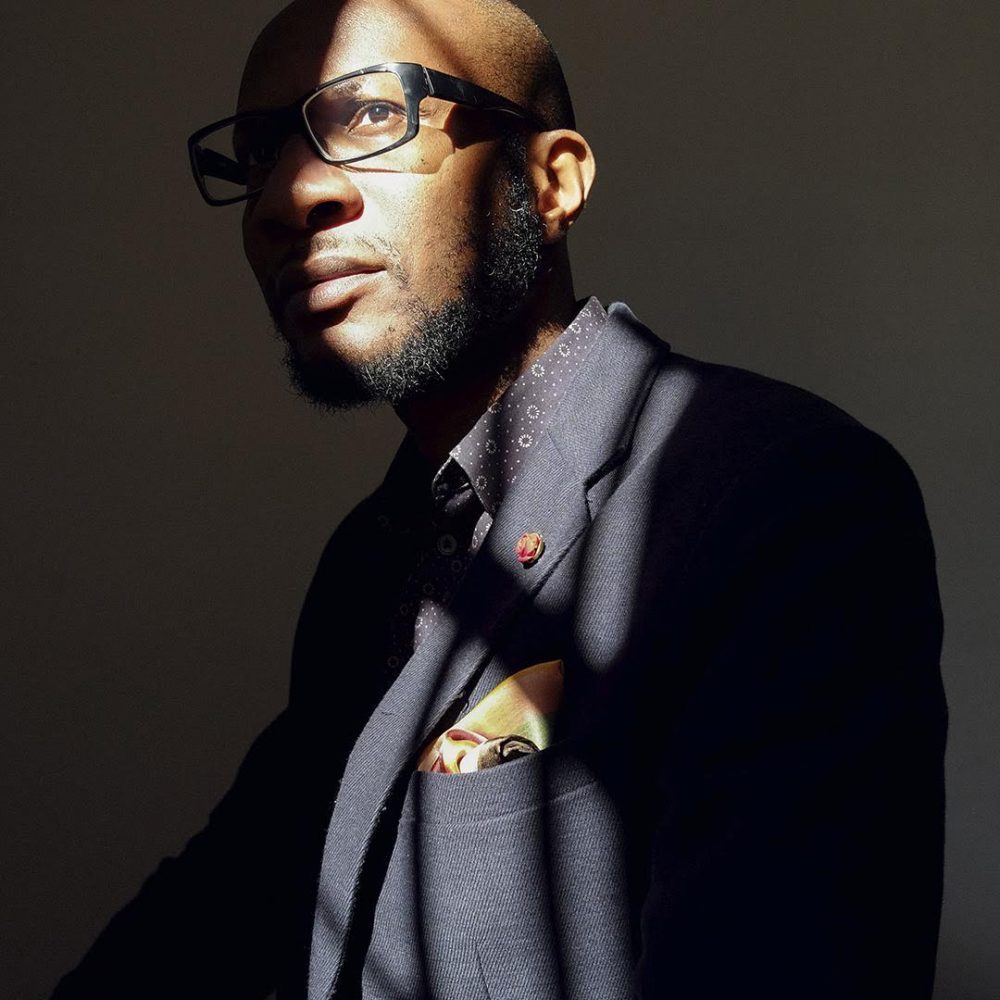
Teju Cole
Image: The New Yorker

The third is the archive. He returns again and again to museums, colonial photographs, looted objects and the way Western institutions hold African material and decide when and whether to release it. The Benin bronzes thread in Tremor is the most explicit instance, but the same reckoning runs through the Brussels chapters of Open City and the catalogue essays he has written for exhibitions. A fourth thread, less often noted, is grief. Cole writes loss with a quietness that some readers first mistake for coolness. A grandmother he cannot find hovers at the edges of Open City. Black Paper is a sustained mourning, public and private at once. Whatever else he is doing, he is also writing through bereavement, and the longer one reads him the clearer that becomes.

Honest Critique

Cole is not a writer for readers who want propulsion. Open City has been abandoned by plenty of people who reached page two hundred without anything clearly happening, and Tremor is more demanding still. He is also occasionally vulnerable to the temptation his own style invites: the gracefully ambiguous sentence that resolves nothing, the perfectly observed detail that does not earn its place in the paragraph, the gesture toward erudition that can read, in the weakest passages, as performance.

Teju Cole
Image: Key West Literary Seminar

The “Small Fates” project has aged unevenly. Some of those fragments are masterpieces of compression. Others read now as close to the dark humoured aestheticising of Nigerian misfortune that he has criticised when others practise it. The most consequential critique made of the work is that its erudition encodes a class position: he writes about Lagos as a returnee, with the affection and the distance that implies, and some Lagos based critics have read this as exactly the diasporic gaze the work elsewhere indicts. He has written about that tension rather than brushing it aside. The argument is unresolved and probably should stay that way.

Where He Sits in the African Literary Canon

Cole belongs nominally to the Nigerian generation that includes Chimamanda Ngozi Adichie, Helon Habila, Sefi Atta and the late Binyavanga Wainaina, but his closest aesthetic relatives are international rather than Nigerian. Sebald is the most cited reference. The more useful comparisons may be John Berger and Susan Sontag, and the photography and text tradition that runs through Walker Evans and Wright Morris. Within African letters his sensibility sits nearest to Wainaina in the satirical essayistic register.

He has been an unusual figure in that he writes for two readerships at once: an international literary audience that reaches him through the same channels that produced Sebald and Sontag, and a Nigerian audience with its own ambivalent relationship to what he represents. He has worked deliberately to keep both in view, and the Lagos voices in Tremor are an attempt to restate where he wants to be located.

Recommended Reading Order

Begin with Open City. It is the most accessible of the major books and the clearest statement of the method. Take Known and Strange Things second, which extends the same attention across topics and shorter forms. Tremor third, since it rewards a reader who has already spent time with the earlier books. Every Day Is for the Thief fourth, worth seeking out in the Cassava Republic edition for the original Nigerian text. The photobooks can be read at any point and are best treated as objects to live with rather than to finish. For context, pair Open City with Sebald’s The Rings of Saturn or Austerlitz. Pair Known and Strange Things with Sontag’s On Photography and Berger’s Ways of Seeing. Pair Tremor with Saidiya Hartman’s Wayward Lives, Beautiful Experiments, the closest American sibling in archival imagination.

What The Body Of Work Adds Up To

Read across the forms, Cole’s output is more coherent than its categories suggest. The novella and the two novels are structured like his photographs, built from juxtaposition rather than incident. The essays are structured like his novels, moving by association and refusing to arrive at the summary a magazine commission would prefer. The photobooks make the method literal by putting the image and the sentence side by side and letting the reader do the work of connecting them. Recognition has followed from several directions at once: the PEN/Hemingway Award for the first novel, a Windham Campbell Prize in 2015, a Guggenheim Fellowship in 2018 and a National Magazine Award nomination for the photography column. What the work asks of a reader is not speed but patience, and the patience is the subject as much as the method.

Ad SpaceIn-Article - 300x250
Advertisement
Share
Get the recap

Loved this story? Get more like it.

Join readers who get our weekly entertainment recap - the stories worth your time, delivered every Friday.

No spam. Unsubscribe anytime. By signing up you agree to our Privacy Policy.

Teju Cole: A Reader's Guide to t... | Sidomex Entertainment