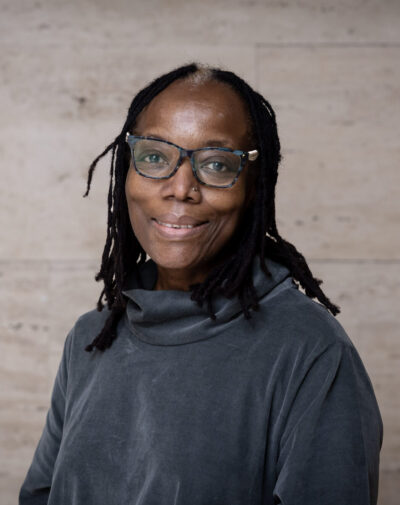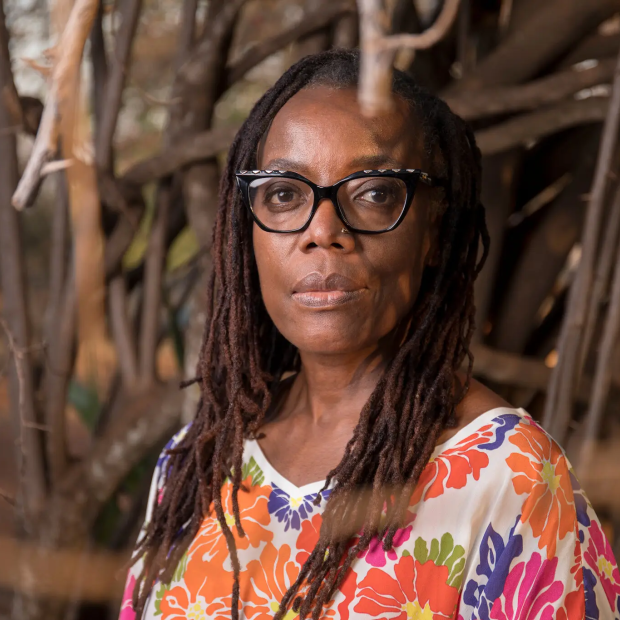

On 31 July 2020, in central Harare, Tsitsi Dangarembga walked through the city holding a placard that read “We Want Better. Reform Our Institutions.” She was arrested within minutes, along with her friend Julie Barnes. Two days earlier her third novel, This Mournable Body, had been named on the Booker Prize longlist; it went on to make the shortlist that September. The prosecution that followed ran for two years. In September 2022 she and Barnes were convicted of inciting public violence, fined and given six-month suspended sentences. In May 2023 the High Court in Harare overturned the conviction. Writers’ organisations, among them PEN and Amnesty International, treated the case as a freedom of expression matter from the day of the arrest to the day the verdict fell away.
That sequence is the cleanest possible introduction to her career, because it contains all of it at once. She has spent four decades writing fiction, making films and building institutions, and the three activities have never been separable. Her first novel was the first novel in English published by a Black Zimbabwean woman. Her most recent novel reached the Booker shortlist. In between came film training in Berlin, a feature film, a festival, a filmmakers’ organisation, essays and a criminal trial. To read Dangarembga is to read a writer who has insisted, at some cost, that a Zimbabwean woman’s writing life is also a public life.
Background
Dangarembga was born on 4 February 1959 in Mutoko, in what was then Southern Rhodesia, where her parents taught at a nearby mission school. The family spent part of her early childhood in England, and she has described returning to Rhodesia in 1965 having forgotten most of the Shona she had learned, with English as the language she thought in. The family settled at Old Mutare, a Methodist mission near what was then Umtali, where her father became headmaster of Hartzell High School and her mother taught there. The biography of that mission compound, and the particular pressures of being the clever daughter inside it, is the raw material the fiction keeps returning to.
She began medical studies at Cambridge and left without qualifying, by her own account worn down by the experience of being a young Black woman in an English university in the 1970s. Back in Zimbabwe she studied at the University of Zimbabwe, worked for two years as a copywriter at a marketing agency, joined the university drama club and wrote and directed plays for it, in part because there were almost no existing plays with roles for Black women. In 1989 she went to Germany to study film direction at the German Film and Television Academy in Berlin. The film training shaped everything after it. She thinks like a director, and her novels are built out of staged scenes, sharp visual detail and a close attention to how bodies occupy rooms.
Nervous Conditions
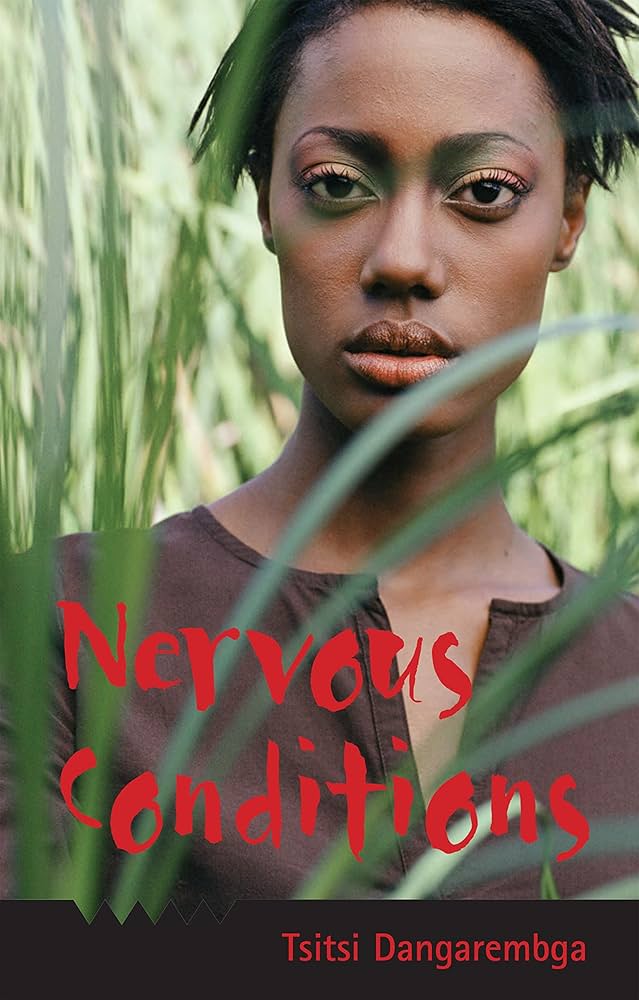
Nervous Conditions, published in 1988 by The Women’s Press in London, was the first novel in English published by a Black Zimbabwean woman. It won the Commonwealth Writers’ Prize for the Africa region in 1989 and was named in 2018 on the BBC’s list of one hundred books that shaped the world. It has stayed in print for more than three decades and sits on more African literature syllabi than any other Zimbabwean novel. Its title comes from its epigraph, a line from Jean-Paul Sartre’s introduction to Frantz Fanon’s The Wretched of the Earth: “The condition of native is a nervous condition.”
The opening sentence is among the most quoted in modern African writing: “I was not sorry when my brother died.” Tambudzai, called Tambu, narrates. She is a Shona girl in her early teens on the family homestead in late 1960s Rhodesia, and the death of her brother Nhamo opens the door she could not otherwise have walked through, because the family’s scarce school fees are now free to follow her to the mission school where her uncle Babamukuru is headmaster. The novel is the story of what she finds there, and of what she watches happen to her cousin Nyasha, who has come back from five years in England and is coming apart.
On the surface this is a coming of age novel about education and class. Underneath it is one of the sharpest accounts in African fiction of the psychic cost of a colonial education. Nyasha’s eating disorder, her rage and her inability to make a home either in the village or in the mission compound are the book’s deepest concern, and Tambu’s slower, more cautious assimilation is set against her cousin’s unravelling. The prose is plainer than the reputation suggests. Dangarembga writes closer to the realist register than to the lyrical tradition, and the force comes from compression and precision of observation rather than from sentence level display. It is the book a young reader can finish in two days and carry for thirty years.
The Book of Not
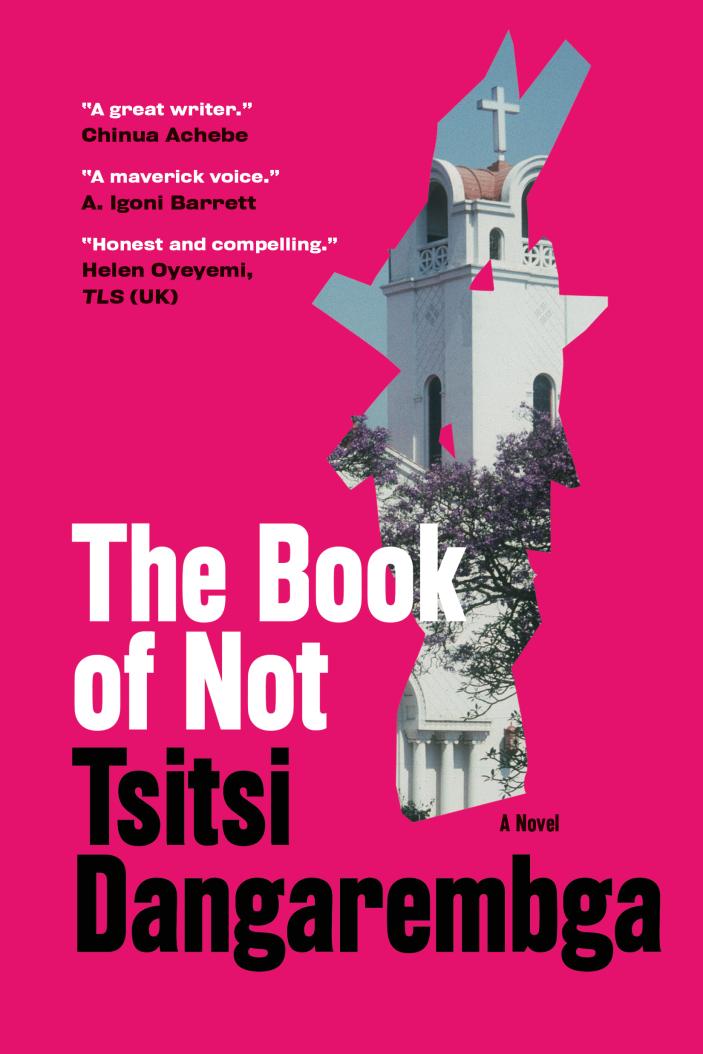
The Book of Not, published in 2006 by Ayebia Clarke, is the middle volume of the Tambu trilogy. It follows Tambu to Sacred Heart, a multiracial convent school where she is one of a handful of Black pupils, during the closing years of the Rhodesian war. The book was largely overlooked when it appeared. Eighteen years had passed since the debut, and the publisher was a smaller house than The Women’s Press.
That neglect is a pity, because this is the harder and in some ways more interesting of the first two books. The teenage Tambu of Nervous Conditions had a clear ambition, which was to get out of the village. The young woman of The Book of Not is inside the institution she fought to reach, and the institution humiliates her in a hundred small daily ways. The war happens offstage. Relatives are killed. Tambu is in the dining hall, being passed over for prizes she has earned. The filmmaker’s eye is more visible here than in the debut, in set pieces that read as though they were storyboarded, and the narrating voice has lost its wide eyed quality without yet acquiring the dissociation that dominates the third book.
This Mournable Body
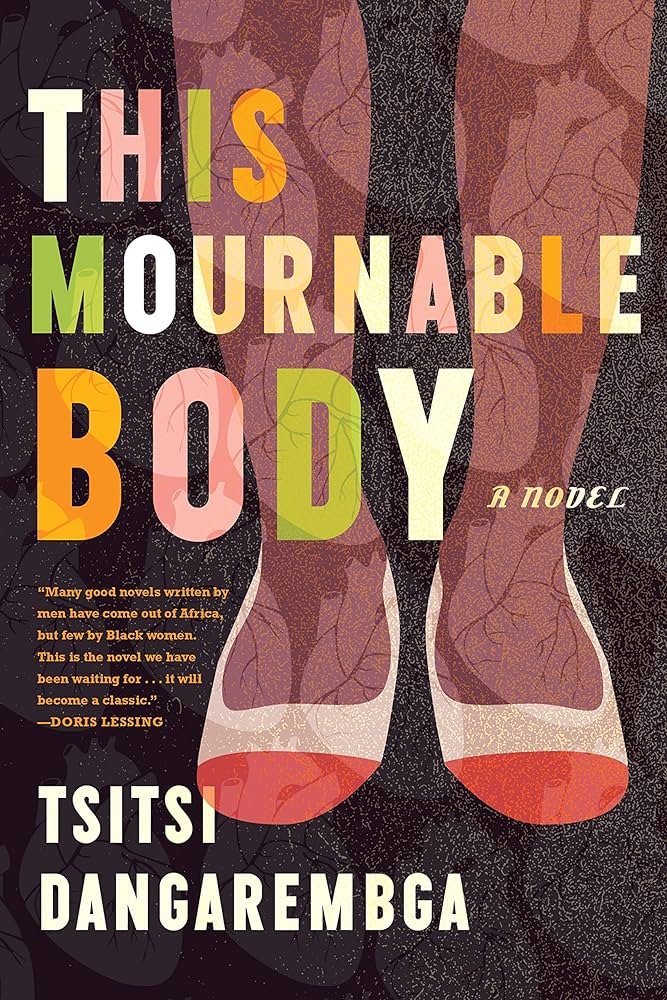
This Mournable Body, published in 2018 by Graywolf in the United States and Faber in the United Kingdom, completes the trilogy. It was longlisted for the Booker Prize in July 2020 and shortlisted that September. It gave Dangarembga her largest international readership and it is the most divisive of the three books, including among Zimbabwean readers.
The structural risk is the voice, which is second person throughout. “You” is Tambu, now middle aged, living in a Harare hostel after walking out of an advertising job where her ideas were credited to white colleagues. The narration forces the reader into her dissociation rather than describing it, and the effect is deliberately uncomfortable. The plot is bleaker than either predecessor. She takes a teaching post and assaults a pupil, a collapse that costs her the job and her health. She ends up working for a former colleague’s eco-tourism venture, which markets rural Zimbabwean poverty to foreign visitors and eventually turns on her own family’s homestead. The ending is ambivalent in a way some readers experience as despair and others as a refusal of cheap resolution.