
Late autumn in Manhattan, in the middle of the 2000s. A psychiatry resident named Julius walks home from his hospital shift through Morningside Heights, down Broadway, into the West Nineties where his apartment is. He walks the next evening too, and the evening after that, because the alternative is the silence of the apartment and the absence of a relationship that has just ended. The walking is the engine and the walking is the form. The novel is the record of where it takes his mind, which is everywhere: to his Lagos boyhood, to a German grandmother he half remembers, to Mahler, to Brussels, to a Liberian detainee in immigration custody, to a Haitian shoeshine, to the birds killed against the city’s lit glass, and finally to a face from his Lagos childhood that he is not prepared to meet again.
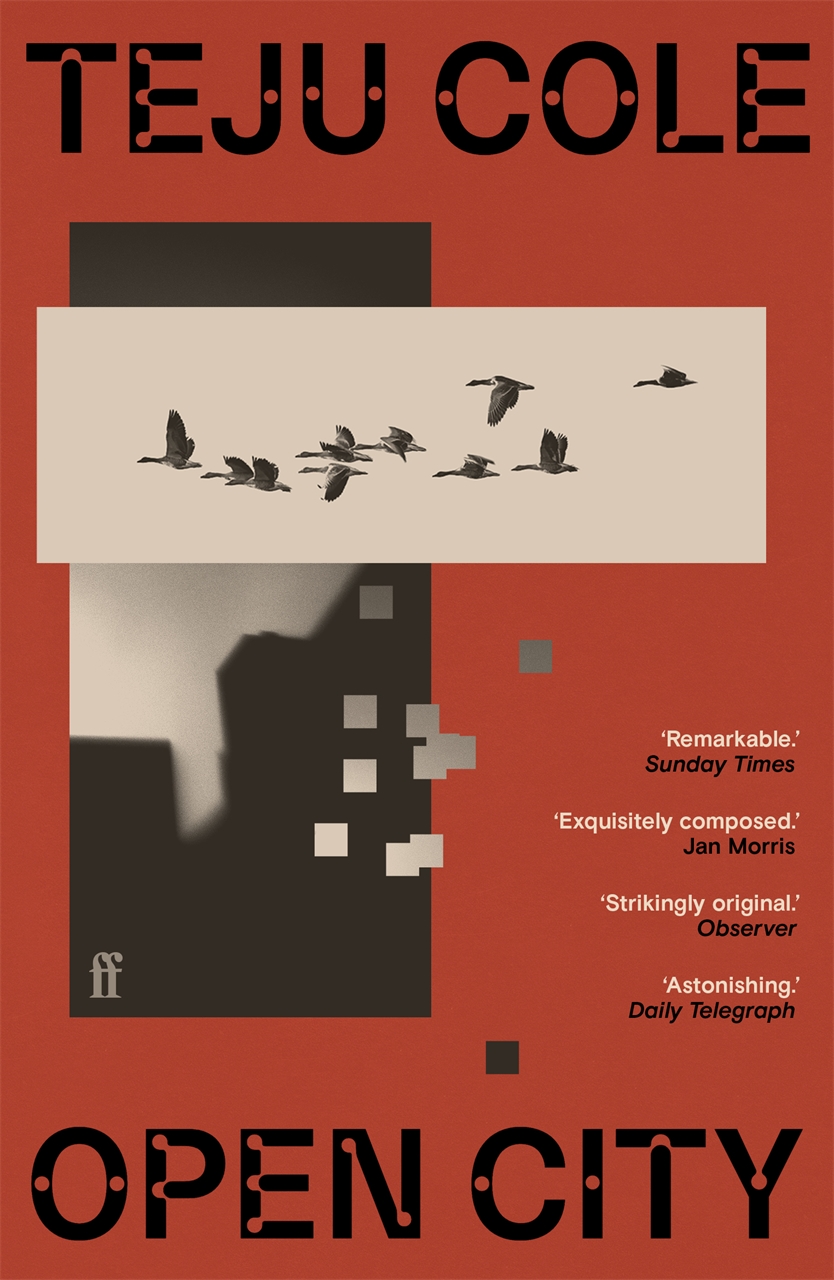
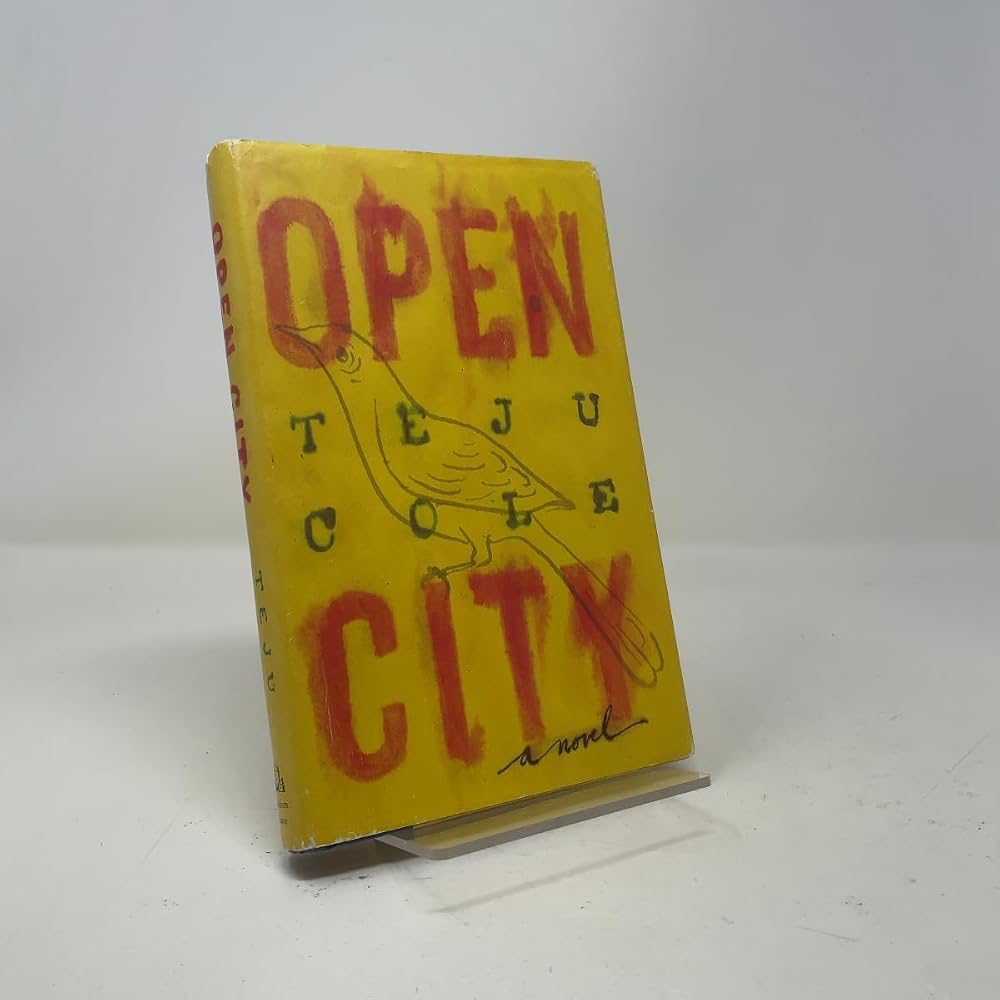
Open City, published by Random House in February 2011, was Teju Cole’s first novel. It won the PEN/Hemingway Award for a debut work of fiction in 2012, was a finalist for the National Book Critics Circle Award and was shortlisted for the Ondaatje Prize, and the German translation took the Internationaler Literaturpreis from the Haus der Kulturen der Welt in 2013. The reception in literary New York was immediate. James Wood, reviewing it in The New Yorker, called it a “beautiful, subtle, and, finally, original novel” and placed it in the tradition of W.G. Sebald, whose digressive walking books The Rings of Saturn and Austerlitz had reshaped the possibilities of literary prose in the preceding decade.
The Sebald comparison was the right one and the limiting one. It got the form correct: the wandering narrator, the gentle digressive memory, the long paragraphs that move through history and landscape without scene breaks. It got the freight wrong. Sebald was a German writer working in the shadow of the Holocaust. Cole’s narrator is a Nigerian German psychiatrist in New York, and the histories pressing on him are those of empire, slavery and the dispersal of a continent’s people. The walking is the same. What it carries is not.
What The Walks Carry
Julius is half Nigerian and half German, raised in Lagos, schooled at the Nigerian Military School before his education continued in the United States. He has recently broken up with a girlfriend named Nadege. He visits Professor Saito, an elderly retired teacher of English literature who was his first mentor in America. He has a maternal grandmother he believes may still be alive somewhere in Belgium and has not seen since childhood. He is finishing his psychiatric training and wondering what comes next. None of these facts produces what most novels would call a plot. What the book has instead is the walking, which is also the thinking.
The thinking is what the book is for. Julius passes a building and the building releases a chapter of New York history that he then narrates: the African burial ground uncovered in lower Manhattan in 1991, the Dutch settlement that preceded the city, the ruined smallpox hospital on Roosevelt Island, the prison known as the Tombs. He passes a man and remembers the man’s face from a Lagos schoolyard. He hears Mahler at Carnegie Hall and lets the music braid with a memory of his mother. The novel is structured by these juxtapositions, by the way the walkable surface of Manhattan releases the strata buried under it. Cole is doing what Sebald did in Suffolk and what Walter Benjamin proposed for Paris: reading the city as a palimpsest whose layers are available to anyone willing to walk slowly enough.
The Brussels Detour
About halfway through, Julius travels to Brussels. He is looking for his grandmother and he does not find her. What he finds instead is a city of immigrants and European Muslims, and conversations with strangers that have the slow exploratory texture of a Sebaldian encounter. He meets Farouq, a young Moroccan Belgian intellectual working in a phone and internet shop, who has things to say about Edward Said, about Palestine and about European hospitality, and whom Julius receives politely and at a certain distance. He walks the grey facades of a city he has no childhood in, half remembering a grandmother who may already be dead.
The detour is the structural anomaly of the book. It interrupts the New York walks and transplants Julius to the European capital that administered some of the violence he has been quietly tracking through American history. Brussels is Leopold’s city. Brussels is where decisions about the Congo were taken. Julius does not lecture about this. He walks past it. A reader who knows the history feels the weight without being told, and a reader who does not feels something heavy and ungraspable that the prose keeps brushing against. That is the method throughout: the novel is consistently quieter than its subject matter, and both responses to it are intended.
The Sentences
It is necessary at some point in any review of this book to say what the sentences feel like. Cole’s prose is among the most distinctive in contemporary American fiction. It is patient. It is long. It admits subordinate clauses without anxiety. It moves between observation and reflection without italics or scene break or any of the signalling devices contemporary American fiction has developed for managing transitions. A paragraph can begin at a corner of West End Avenue and end inside a memory of a school dormitory in Lagos without a shift in tone, and the reader follows because the voice has earned the trust required to follow.
The voice owes a good deal to Sebald, and something to the essayistic novel more broadly, but it is its own instrument. The Lagos memories carry a specific texture: the heat, the schoolyard violence, Yoruba and English moving through the same sentence, a German mother who never quite became a Lagosian. The New York is observed by someone who is not native to the city and never quite will be, who knows it well enough to walk it for years and remains, at some level, a guest.
Moji, And The Recalibration
Near the end of the book Julius meets a woman named Moji, the older sister of a friend from his Lagos years. She reappears in his New York life, and then, in one quiet and devastating scene, she tells him that he raped her at a party when they were teenagers, and that he has carried on ever since as though it never happened. The reader, who has spent two hundred pages inside a gentle, observant, cultivated consciousness, is recalibrated in a handful of pages. Julius does not dispute her account. He does not confirm it either. He listens, he reflects on himself in a way that does not reach contrition, and the narration moves on.