
Freshwater by Akwaeke Emezi: A Full Review of the Modern African Classic
Image: Masobe Books
Books

Freshwater by Akwaeke Emezi: A Full Review of the Modern African Classic

Arianne ColeArianne Cole··8 min read
Ad SpaceArticle Top - 728x90
Advertisement

There are debut novels that announce a writer, and there are debuts that announce a cosmology, and very rarely there is a book that does both at once and leaves its readers arguing about what kind of thing they are even arguing about. Freshwater, Akwaeke Emezi’s first novel, is that rarer kind of debut. Grove Press published it in February 2018 to a reception that did not quite know what to do with it. The New Yorker called it “a startling debut novel” and The Guardian, in a review by the novelist Ayobami Adebayo, called it “a remarkable debut”. Readers steeped in Igbo thought recognised it immediately as something more historically situated than many of its American notices suggested: a novel narrated by the spirits inside a girl, written by an Igbo author who insisted from the first page that those spirits were not metaphors.

The book is short, dense and kinetic. It tells the story of Ada, born in southeastern Nigeria to an Igbo father and a Tamil-Malaysian mother, who arrives in the world with what Igbo tradition calls ogbanje: spirits that occupy a body and have other plans for it. The book is narrated by them. They speak as a chorus first, then individual selves emerge. Asughara is the hard, defended one who takes over after Ada is raped by her college boyfriend, Soren. St Vincent is the gentler masculine self. Behind both sits the original plural voice that has watched Ada since before her birth.

The Premise, and Why the Form Is the Meaning

The plot, summarised in the way summaries fail this book, follows Ada from a Nigerian childhood marked by Christianity and distant parents, through her departure for the United States to study, through the assault that breaks something irreparable and forces Asughara forward as protector. The middle of the novel is Asughara’s tenure: risky sex, alcohol, self-harm, and a relationship with a man named Saeed whose tenderness Asughara cannot accept and Ada cannot fully feel from underneath. The final movement turns on survival and recognition. Asughara’s attempt to end the body’s life fails, Ada is hospitalised, and she travels back to Nigeria, where she consults a traditional healer and begins to reckon with what she is rather than what a clinic would call her.

What Emezi has done is to take the most familiar diasporic trauma arc and refuse to translate it into Western psychiatric idiom. In the novel’s own terms the dissociation is not a symptom, the selves are not a figure for a trauma response, and the assault did not create them but woke them. This is the book’s hardest and most contested claim, and the form enforces it. The narrators speak from inside Igbo cosmology, they name themselves in Igbo, they explain their relationship to Ala, the earth goddess. Readers who try to resolve them into a diagnosis are being gently and then less gently corrected by the prose itself.

It is worth being precise about this rather than settling it. A clinical reading of Freshwater is available, and many reviewers took it; the novel can be read as an account of dissociation after sexual violence. What Emezi has said publicly is that the ogbanje framing is an ontological claim and not a metaphor for illness, and the book is built to hold that position. Both readings are live, and the novel’s energy comes from refusing to let the second one be absorbed into the first.

Asughara, and the Question of Protection

Asughara is one of the most fully realised invented selves in recent fiction. She arrives after the assault and takes over the body’s romantic and sexual decisions. She is brash, defended, funny, and she does not love Saeed because love is a vulnerability she cannot afford. She arranges the hookups, manages the drinking, walks Ada through the days. Emezi writes her with affection. The novel is, among other things, an act of gratitude toward the self that kept Ada alive when the original self could not have done so, which does not mean it is sentimental about her: Asughara also harms the body, and she nearly kills it.

This is where Freshwater departs most decisively from the conventional trauma novel. In that form, the protective dissociated self is a problem to be integrated, a mechanism the character must move beyond in order to heal. Here, Asughara is a person with her own arc, and she is not overcome by the original Ada. The work of the closing section is mutual recognition rather than absorption. The book is making a radical proposition about what survival and personhood look like when the unitary self is not taken as the baseline for adult health.

The novel has also been read, accurately, as a transmasculine narrative. Emezi is non-binary, uses they and them, and has been public about their own ogbanje identity and about their view that the entities the book describes are neither invented nor metaphorical for them. St Vincent is one figure on the road to that framing. The surgical decisions the narrative describes in its later movement, including a mastectomy that the entities and Ada arrive at together, prefigure the longer work of embodiment that Emezi returned to in the memoir Dear Senthuran.

The Autobiographical Question

Emezi has not hidden that Freshwater is autobiographical, and the book is routinely described as autobiographical fiction. The Nigerian childhood, the Tamil-Malaysian mother and Igbo father, the move to the United States to study, the assault, the surgery: these map closely onto Emezi’s own account of their life. The novel was written, by Emezi’s own description, partly as an act of arrival into a self that Western frameworks would have pathologised and that Igbo cosmology already had a place for.
Ad SpaceIn-Article - 300x250
Advertisement
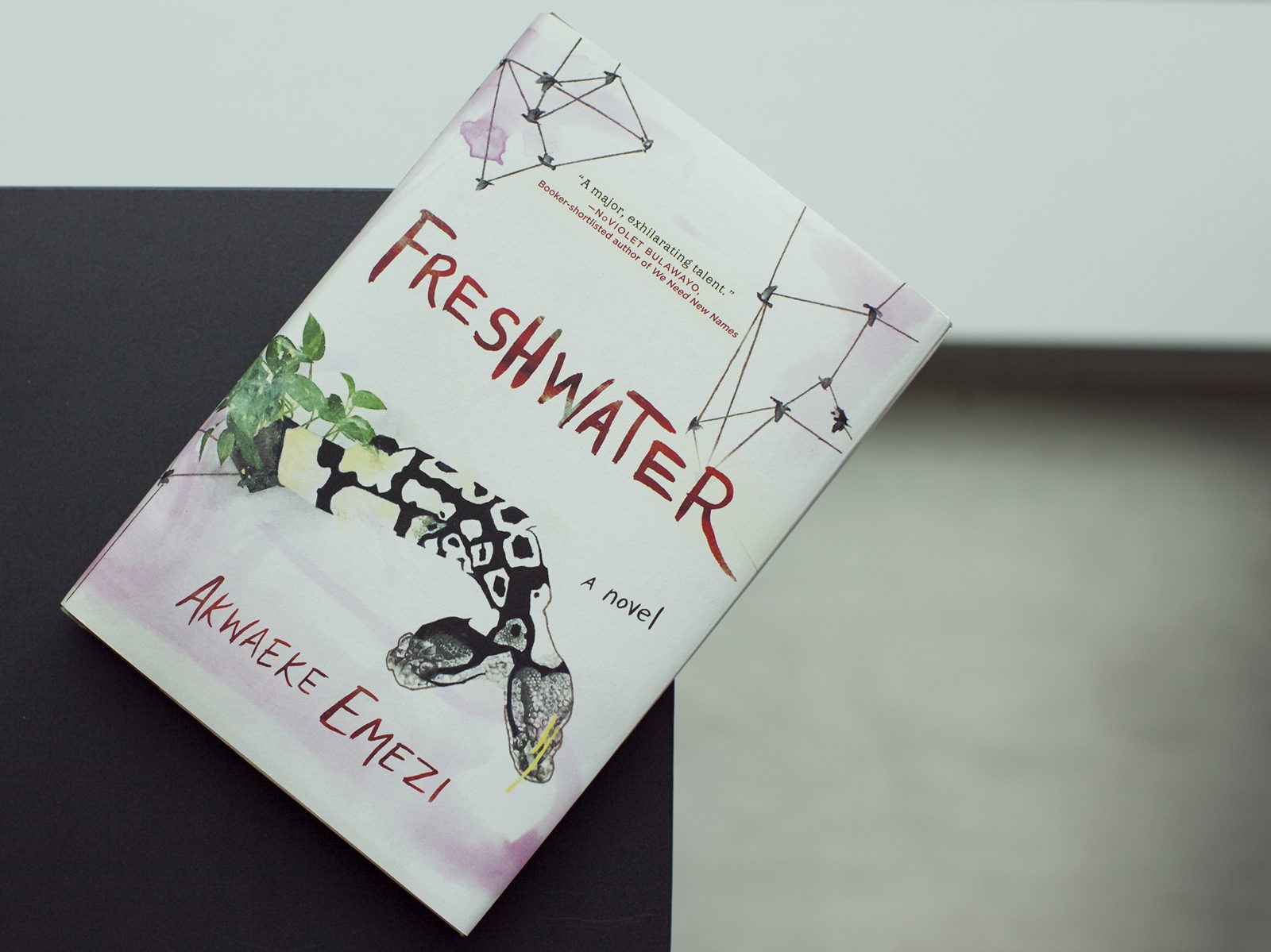
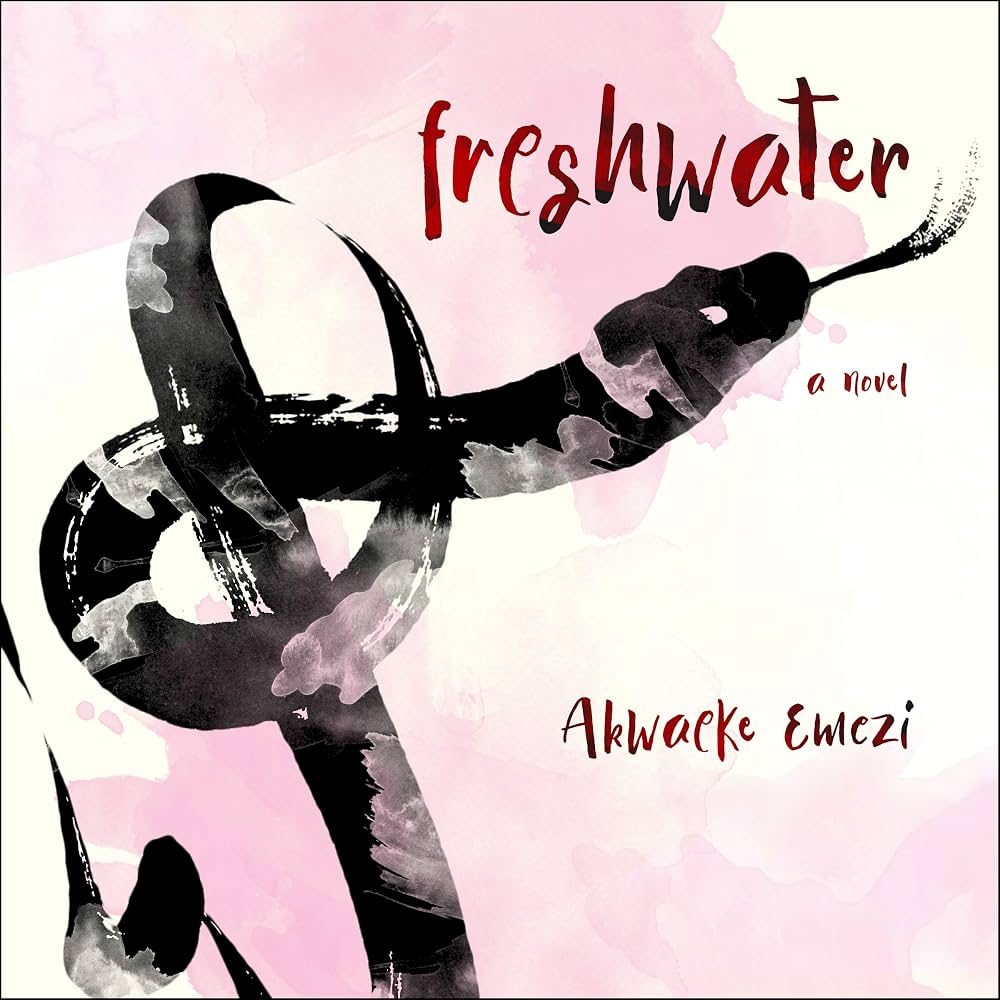
Freshwater
Image: Amazon.com

That entanglement raises the question contemporary autofiction constantly raises and rarely resolves: how should a reader weigh the literary work against the life it is so plainly drawn from? The answer Freshwater suggests is that the question is the wrong one. The book is not a memoir dressed as fiction. The fiction is the philosophical move. By giving the entities first-person narration, by making them the consciousnesses through which the events are filtered, Emezi turns an autobiographical situation into a metaphysical proposition and asks what follows if the framework that has been pathologising Igbo spirit children for a century is the wrong framework.

The Prose, and Its Risks

Emezi writes prose with the density of poetry. Sentences are short and declarative, italicised when an entity speaks directly. The chorus voices use “we”, shifting to “I” as individual selves announce themselves. The book has an incantatory rhythm, and reading it aloud is a different experience from reading it silently. The risks of that compression are real, and the first is narrative momentum: a reader who needs scenes to develop slowly, with secondary characters drawn at length, will find the book thin in those registers.

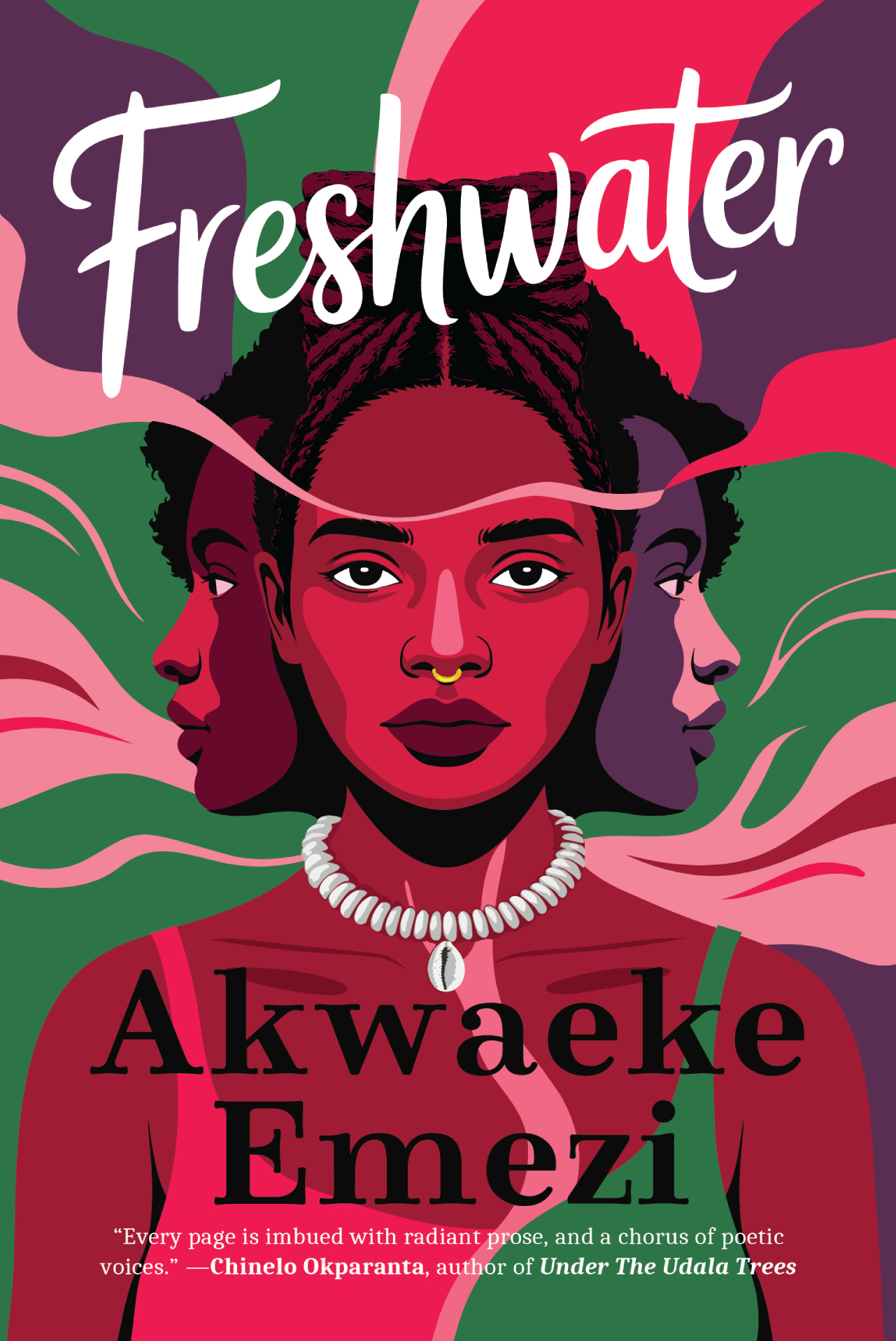
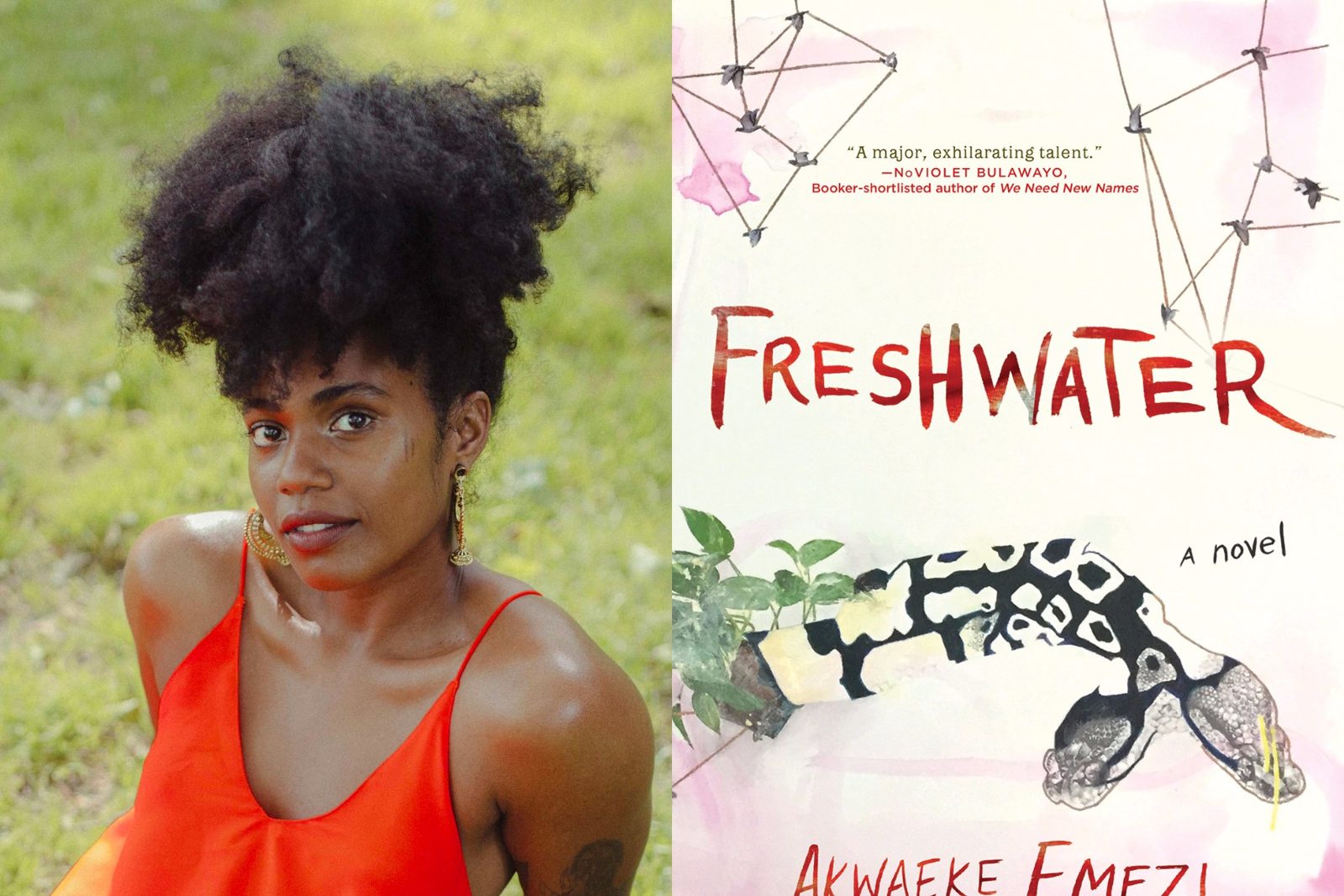
Freshwater
Image: Vox

Ada’s parents are sketched in a few hard strokes. Saeed is rendered as Asughara would see him, in flashes. The novel is not interested in being a panoramic family saga or a campus novel; it is interested in the interior weather of a body that contains a council, and everything outside that weather gets only the attention the entities choose to give it. There are also moments where the narrators’ confidence outruns what a reader who does not share the cosmology can follow. The Igbo theology is consistent and grounded, but Emezi does not explain it for outsiders. For some readers that is the book’s generosity. For others it is the point at which they feel addressed past rather than addressed to.

Reception, Prizes, and the Larger Shift

The prize record is more interesting than a single headline. Freshwater won the Otherwise Award and the Nommo Award for best novel in 2019. It was a finalist for the PEN/Hemingway Award and for the New York Public Library’s Young Lions Fiction Award, shortlisted for the Center for Fiction First Novel Prize, and longlisted for the Women’s Prize for Fiction, the Andrew Carnegie Medal for Excellence in Fiction and the Aspen Words Literary Prize. It was a New York Times Notable Book, and Emezi was named a National Book Foundation “5 Under 35” honoree in 2018.

Freshwater
Image: NPR

The Women’s Prize longlisting in 2019 was the first for a non-binary trans author, and it produced a controversy of its own. The prize subsequently revised its guidance, and from 2020 required entrants to be legally female; Emezi has said they will not submit future work to it. The episode became part of the public conversation around the book and around the prize’s eligibility rules.

The book’s larger effect has been to widen the permission structure for African and Black writers working in indigenous cosmology and queer embodiment at the same time. After Freshwater, a novel that declines to translate its metaphysics into Western psychiatric idiom is an easier proposition to publish, and a cohort of younger Nigerian writers has worked in that opened space, though the lines of influence are better described as a shift in what editors will take seriously than as a debt any individual writer owes.

Title Year Form
Freshwater 2018 Novel
Pet 2019 Young adult novel
The Death of Vivek Oji 2020 Novel
Dear Senthuran 2021 Memoir
Bitter 2022 Young adult novel
You Made a Fool of Death with Your Beauty 2022 Novel
Content Warning 2022 Poetry
Little Rot 2024 Novel

Who Should Read This Book

Read Freshwater if you are interested in what the contemporary African novel can do when it writes from inside an indigenous spiritual framework rather than translating it. Read it if you have lived inside a body that does not match the body you were given language for. Read it if you want to understand why Emezi became one of the most influential younger writers working in English. Skip it if you require unitary selves and reliable narrators, or if Igbo theology is something you would rather meet in footnotes than in narration. The novel is compressed and often punishing, and it moves through assault, self-harm and metaphysical fragmentation at close range. It is a small book and a heavy one, and it asks for full attention.

A Council, Not a Person

If you finish Freshwater feeling disoriented, that disorientation is part of what the book is doing. You have spent a couple of hundred pages inside a body that is not one body, hearing from selves that share a single name and a single physical form without being the same person. You have followed Ada through violence, through a near-ending, and through an arrival that does not look like Western psychiatric integration. The book asks you to consider that integration was the wrong target, that a body can be a council and the person inside it a negotiation, and that surviving is not the same as becoming one self. It settled quickly into its place among the foundational African novels of the late 2010s, alongside Yaa Gyasi’s Homegoing and Ayobami Adebayo’s Stay With Me, and it is the one of the three that pushed the form into open metaphysical territory and let the spirits narrate.

Ad SpaceIn-Article - 300x250
Advertisement
Share
Get the recap

Loved this story? Get more like it.

Join readers who get our weekly entertainment recap - the stories worth your time, delivered every Friday.

No spam. Unsubscribe anytime. By signing up you agree to our Privacy Policy.

Freshwater by Akwaeke Emezi: A F... | Sidomex Entertainment