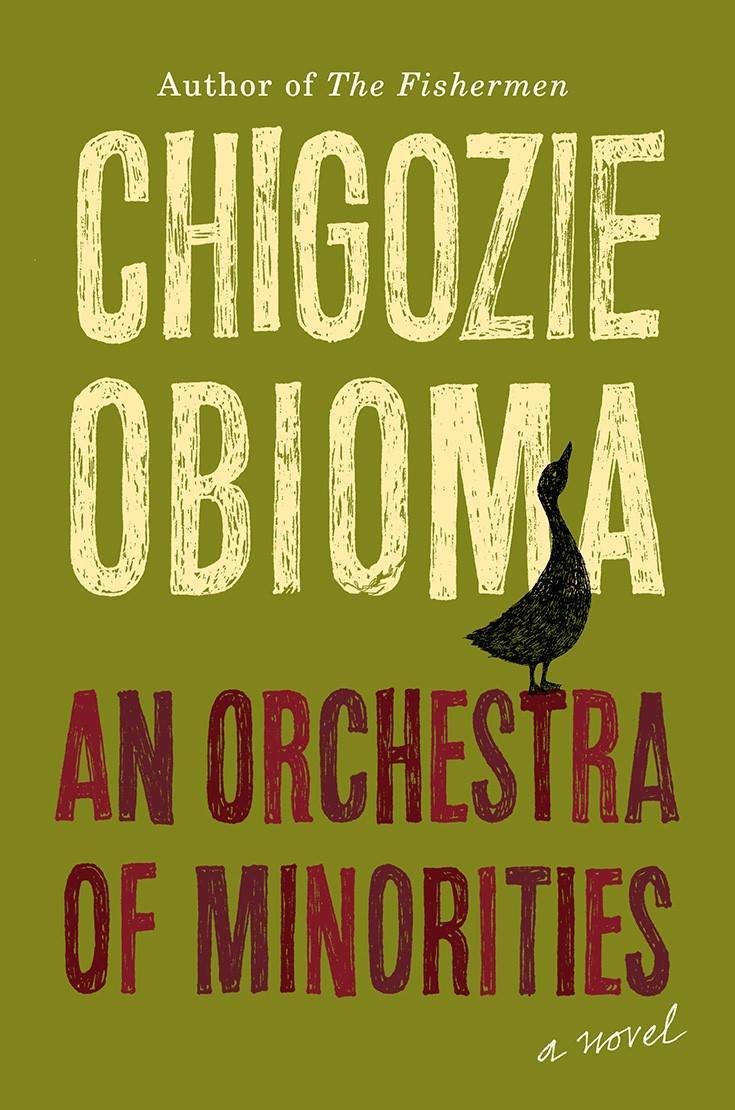

An Orchestra of Minorities by Chigozie Obioma: A Full Review of the Modern African Classic
Image: Goodreads
Books

An Orchestra of Minorities by Chigozie Obioma: A Full Review of the Modern African Classic

Arianne ColeArianne Cole··9 min read
Ad SpaceArticle Top - 728x90
Advertisement

A poultry farmer stands on a bridge near Umuahia. A young woman is climbing the railing to throw herself off. He shouts, then hurls his birds into the water to startle her, to give her something to look at other than the drop. She steps back. She is a pharmacy student named Ndali. He is Chinonso, who keeps chickens on inherited land, who left school early, who speaks Igbo more comfortably than English. From this accident of timing, Chigozie Obioma builds one of the most ambitious novels written in English this century, a book that asks whether a man can rewrite himself by force of love and whether the spirits watching over him will permit the rewriting.

An Orchestra of Minorities, published by Little, Brown in January 2019, was shortlisted for the Booker Prize that year. It was Obioma’s second novel after The Fishermen, which had also been shortlisted, in 2015. Two shortlistings in five years for two different books is the kind of arrival a writer cannot engineer, and it was achieved on formal seriousness rather than market cleverness.

The Premise and Its Ancestors

Chinonso sells everything he owns, the farm, the birds and the modest house his late father left him, in order to follow Ndali into the educated middle class after her wealthy family makes plain that a poultry farmer will not do. An old schoolmate named Jamike, who is studying in Northern Cyprus, encourages him to apply to the university there and offers to handle the payment of his fees. Jamike takes the money and disappears. Chinonso arrives to find no admission and no way home, and becomes one of thousands of West Africans stranded in a half-recognised state, working without papers and waiting for documents that will not come.

Obioma has been transparent about his sources, and the novel takes its frame from Homer. Chinonso is an Odysseus stranded far from home and Ndali is the Penelope he needs to believe is waiting. The deeper armature is Igbo. The narrator is not Chinonso. It is his chi, his guardian spirit, pleading his case before Chukwu, the supreme deity, whom it addresses by a rotation of names. Every chapter is a defence brief. The chi explains, contextualises, makes excuses and occasionally despairs. The cosmology draws on Igbo metaphysics as discussed by writers and scholars including Chinua Achebe, whose essay on chi in Igbo cosmology is the best-known account in English, and the philosopher Pantaleon Iroegbu. The reader is not listening to Chinonso. The reader is listening to something inside him that is not him, that is older than him, and that addresses the courts of heaven in the formal register of ancestral oratory.

The Voice Question

That voice is the central craft decision of the novel and the place where readers divide. Obioma braids high diction with proverbial structure. The chi addresses the deity as Egbunu, as Chukwu, as Obasidinelu, names that recur dozens of times. Sentences open with a direct appeal. Observations are folded inside formulas attributed to the old fathers. Whole passages move in the rhythm of proverb, a rhythm Achebe brought into English in the 1950s and which Obioma deliberately revives.

For some readers this is the novel’s miracle. It restores to English a register in which a sentence may dilate into philosophy without apology, in which repetition is incantatory rather than sloppy, in which a narrator may interrupt his own story to address eternity. For others the chi becomes a drag on momentum. Plot beats that could move at the speed of a thriller stall while the spirit pauses to explain a piece of cosmology or to recall a previous host. The book runs to 464 pages in the Little, Brown edition, and a reader arriving from the taut gathering storm of The Fishermen will be brought up short by how often this novel wants to slow down and pray. I think the slowness is largely the point, since the chi is litigating in a court that runs on eternal time and hurrying would be impious, but Obioma does occasionally indulge the voice past its useful limit, and the long Cyprus stretch in the middle would be sharper for being shorter.

What Cyprus Is

The Northern Cyprus section may be the most underappreciated piece of contemporary African writing about migration. Most diasporic novels by Nigerians of Obioma’s generation route their characters to London, New York or Houston. Obioma routes Chinonso to a city inside a Turkish-speaking state recognised by no one but Ankara. African students arrive on real-looking visas, attend universities that are sometimes real and sometimes paper, work cash jobs, and discover that they have crossed a line that does not legally exist on most maps. Their passports become useless. Their families at home cannot understand why they will not come back. Obioma has said the novel grew out of the experience of someone he knew who studied at the same university.
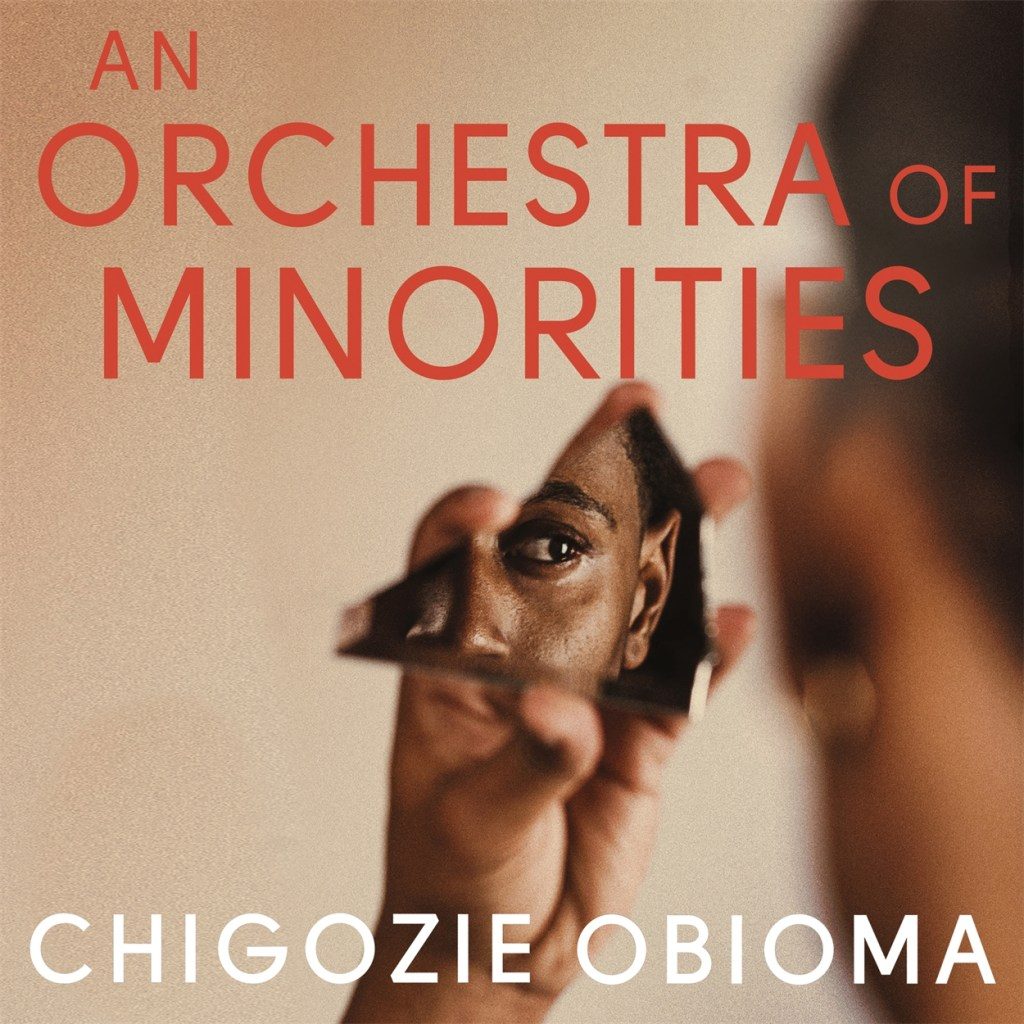
An Orchestra of Minorities
Image: Hachette UK

He writes this Cyprus with cold particularity: the cheap apartments shared by West Africans, the landlords who know exactly what to charge, the sudden violence of a situation in which a foreigner has no standing. Chinonso intervenes to protect a woman from her husband’s assault and is then accused by them both of raping her. The prosecution is openly racist, the jury convicts, and he serves four years before the conviction is overturned. The novel is naming a specific geography of African suffering that has been almost entirely absent from English-language fiction, and naming it not as background but as the place where its hero is broken.

The breaking is total, and the final movement is its arithmetic. Chinonso returns to Nigeria intending revenge, meets Jamike by chance and finds him repentant; Jamike repays the money and is spared. What cannot be repaired is everything else. Ndali has married another man and has a son whom Chinonso recognises as his own, and she will not dismantle the life she has built. Chinonso’s response to that last refusal is catastrophic and is the reason the chi is speaking at all: his defence is being made before the deity because of a death he caused. Obioma has written a tragedy in the old sense, where the catastrophe is implicit in the first hour and the rest of the book is its unfolding.
Ad SpaceIn-Article - 300x250
Advertisement

Politics, Class and the Igbo Frame

The novel has a politics it does not put on the surface. Chinonso is poor and Ndali’s family is wealthy and professional, and her father is openly contemptuous of him from the first meeting. The marriage is impossible not because Ndali rejects it but because her people will not accept a poultry farmer with an interrupted education. The Cyprus scheme is, in that light, a campaign waged by one man against an entire structure. He will become educated. He will become acceptable. He will come back as someone whose feet no longer touch the ground.

This class wound runs deeper than the romance plot. Obioma is writing in part about what the Nigerian economy has done to men like Chinonso, who in a different dispensation would have been respected smallholders and who in this one are humiliated by gatekeepers and visa brokers. The chi knows this, having watched generations of hosts cycle through the same humiliation in different clothes. The cosmology is not decoration. It is the only frame large enough to hold a grievance older than Chinonso that will outlast him.

The book has been criticised, fairly, for what it does with Ndali. She has fewer interior pages than the plot requires, and she is the object of Chinonso’s transformation more than its co-author. The novel does not give her the forensic attention it gives him, and a reader sympathetic to its themes can still feel that the women in it are described from outside even when the descriptions are tender.

Reception and the Booker Question

The 2019 Booker was awarded jointly, in a contested decision, to Margaret Atwood and Bernardine Evaristo. Obioma was on the shortlist alongside Lucy Ellmann’s Ducks, Newburyport and Salman Rushdie’s Quichotte. Reviews split predictably between admiration for the language and impatience with the length. In The Guardian, Eileen Battersby wrote that “few contemporary novels achieve the seductive panache of Obioma’s heightened language”, while Kirkus Reviews called it “a deeply original book”. The Atlantic read it squarely as a recasting of the Odyssey in which, unlike Odysseus, the hero is undone by his fellow man rather than by a god.

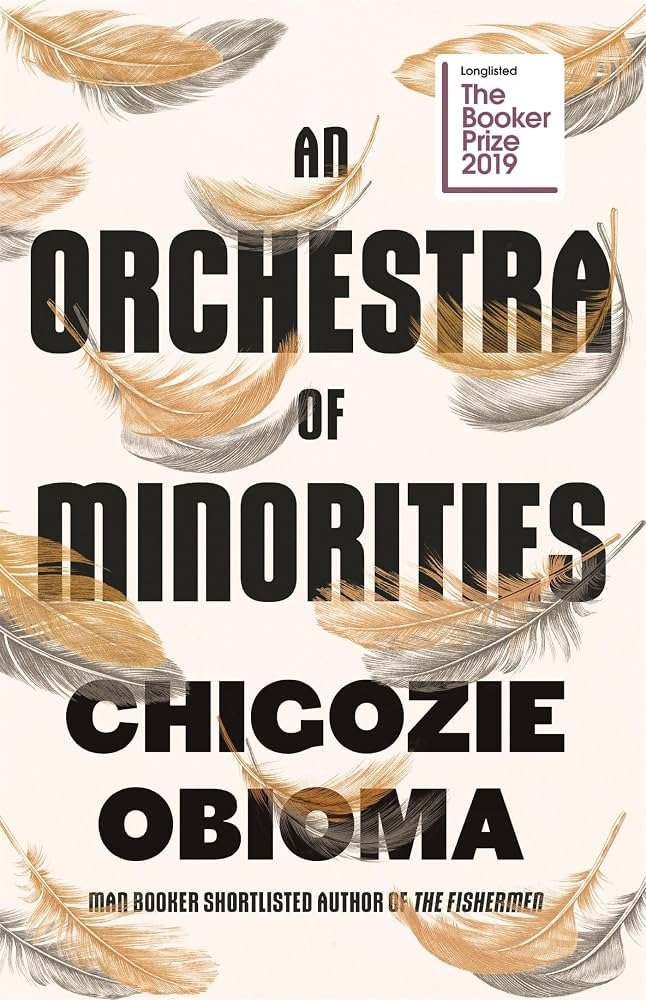
An Orchestra of Minorities by Chigozie Obioma, UK cover
Image: Amazon.com

The book has had a particular afterlife. It is taught in African literature courses in the United States and Britain, and it has not entered the popular conversation the way Half of a Yellow Sun or Americanah did. Part of that is its difficulty. Part of it is that Obioma is not riding the currents, crime fiction, autofiction and speculative work, that have absorbed much of the energy around African writing in English since. He writes books that look more like Achebe and Soyinka than like the scene around him, and he has gone on doing it: The Road to the Country, his third novel, appeared in 2024. He took an MFA at the University of Michigan and is Helen S. Lanier Distinguished Professor at the University of Georgia.

Title Year Form
The Fishermen 2015 Novel, Booker shortlist
An Orchestra of Minorities 2019 Novel, Booker shortlist, 464 pages
The Road to the Country 2024 Novel

Who Should Read It, Who Should Skip It

Read this if you want to see what the African novel can do when it refuses the conventions of social realism and reaches back to indigenous metaphysics for its narrative armature. Read it if you loved Things Fall Apart and want to see what an Igbo writer of the next century does with that inheritance. Read it if you are tired of migration novels that flatten the migrant into a sociological case and want one that treats him as a soul under cosmic adjudication. Skip it if you need plot velocity, if proverbial repetition reads to you as filler rather than music, or if a long tragedy whose outcome is signalled early sounds like a poor use of a weekend. The book asks for patience and punishes readers who will not give it.

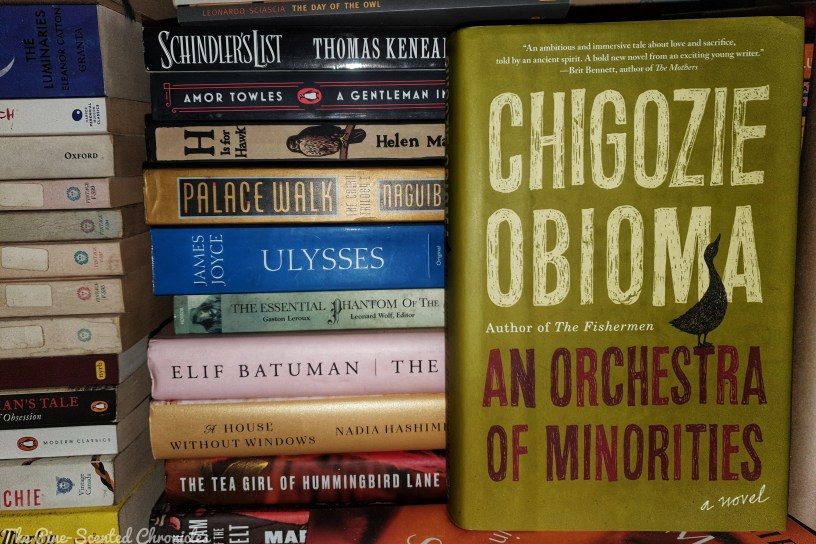
An Orchestra of Minorities
Image: The Pine-Scented Chronicles

Where It Sits in the Canon

An Orchestra of Minorities is one of the few twenty-first-century African novels in English that has tried to do what Achebe did in 1958, which is to write a narrative whose internal logic comes from a non-Western cosmology rather than nodding to one through symbolism. The chi is not a metaphor; the chi is the narrator. The deity is not allegorical; the deity is the audience. That is rarer than it sounds. Most novels that invoke indigenous spirituality treat it as content, as something characters believe, as material a realist narrator describes from outside. Obioma writes from inside the belief system, and the novel does not work otherwise. The choice puts him in conversation with Ben Okri’s The Famished Road, another book that asked English to carry a West African cosmology in its bones, and with Amos Tutuola’s The Palm-Wine Drinkard, and behind both of them with Achebe’s project.

A Tragedy in Slow Time

The ending is brutal, and the chi’s final plea is one of the most affecting passages in recent African fiction: a defence of a host the spirit cannot save and perhaps does not entirely understand. Obioma offers no consolation. There is only the spirit, addressing eternity, asking that the record reflect a love that was real even when the man carrying it could not survive its conditions. That is what the book is. Not a love story but a record. The chi has come to testify, and what it remembers, pleads and confesses is the closest thing in recent African fiction to scripture written in real time. The novel is imperfect. It is also, in the way only a few books in any decade are, unmistakable.

Ad SpaceIn-Article - 300x250
Advertisement
Share
Get the recap

Loved this story? Get more like it.

Join readers who get our weekly entertainment recap - the stories worth your time, delivered every Friday.

No spam. Unsubscribe anytime. By signing up you agree to our Privacy Policy.

An Orchestra of Minorities by Ch... | Sidomex Entertainment