The Secret Lives of Baba Segi's Wives by Lola Shoneyin: A Full Review of the Modern African Classic
Arianne Cole··9 min read
Ad SpaceArticle Top - 728x90
Advertisement
Take a polygamous household in Ibadan. Set inside it a prosperous, comic, self-important husband whose business has done well enough to support four wives in one compound. Give him three wives who have between them seven children, and a fourth wife, newly married, who is a university graduate and carries herself like someone who does not quite belong. Let the fourth wife fail to conceive. Let the husband, baffled and humiliated, take her to a hospital, and let the hospital then ask to test him. This is Lola Shoneyin’s first published novel, and from that premise she builds one of the clearest-eyed Nigerian novels of the last twenty years about marriage, fertility, women’s interior lives and the arithmetic that holds a polygamous household together.
The novel is also, despite its subject, frequently funny. Shoneyin came to fiction from poetry, having published two collections before this book and a third within months of it, and she has the poet’s habit of making a sentence do three things at once.
How the book arrived
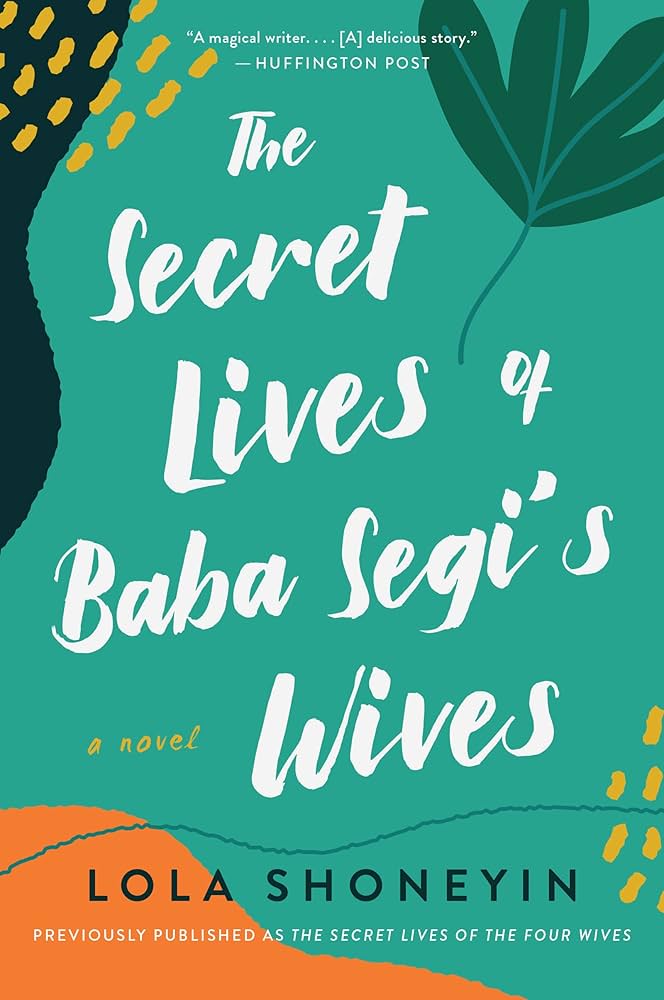
Image: Goodreads
The Secret Lives of Baba Segi’s Wives was published in Nigeria in 2010 by Cassava Republic Press, the independent publisher founded by Bibi Bakare-Yusuf and Jeremy Weate that has become one of the most important imprints in African literature this century. Serpent’s Tail published it in London in May 2010 and William Morrow issued it in the United States. The prize record is worth getting right, because it is widely misreported. The novel was longlisted for the Orange Prize for Fiction in 2011. It won the PEN Oakland/Josephine Miles Literary Award in 2011 and the Association of Nigerian Authors Ken Saro-Wiwa Prose Prize in the same year. It was shortlisted for the NLNG Nigeria Prize for Literature in 2012 and did not win it.
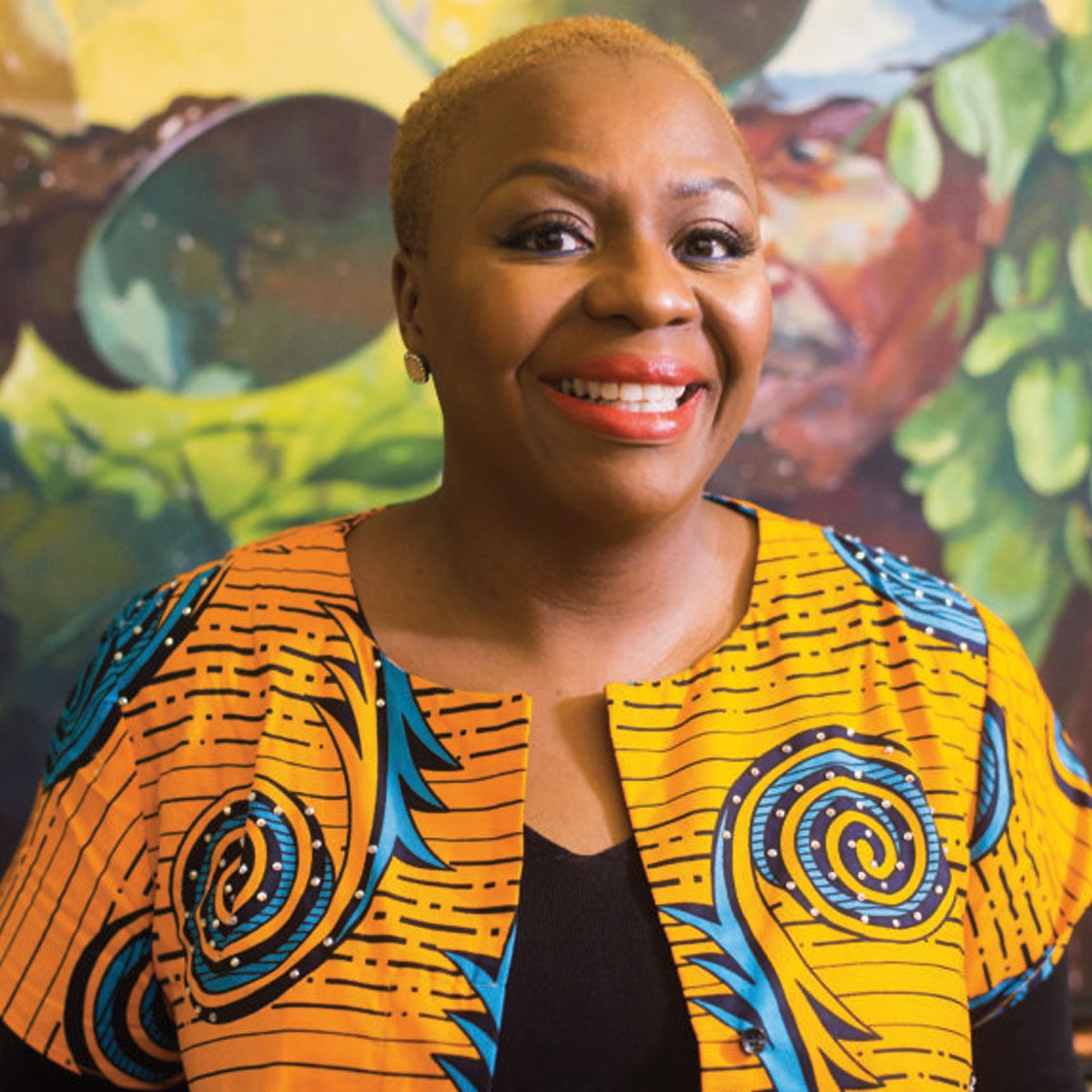
Shoneyin was already a recognised figure when the novel arrived. She had published two poetry collections, So All the Time I Was Sitting on an Egg in 1998 and Song of a Riverbird in 2002, with a third, For the Love of Flight, appearing from Cassava Republic in February 2010. She had worked as a teacher, and she was publicly known as the wife of Olaokun Soyinka and therefore as Wole Soyinka’s daughter-in-law, though she has been clear over the years that the relationship has shaped her life more than her writing. This was her fiction debut in print, although she had in fact written two earlier novels, one completed in 2000 and one, Harlot, that remains unpublished. She followed the book not with another novel but by founding the Aké Arts and Book Festival in 2013 and, later, the Lagos imprint Ouida Books.
The structure: four wives, one husband, several truths
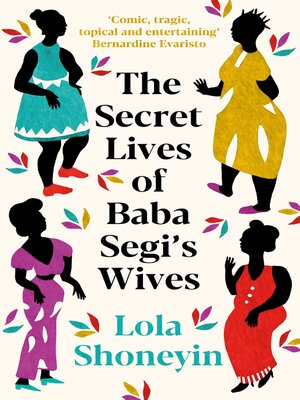
Image: Goodreads
The novel rotates its point of view. The four wives, Baba Segi himself and his driver Taju each get their own chapters, and through them the reader learns how each of them arrived in this household and what each is keeping from Bolanle and from the husband. That distribution is the book’s smartest structural decision. Polygamous fiction by male writers has tended to treat the wives as types or as a chorus. Shoneyin gives each woman her own grammar.
Iya Segi is the senior wife, the woman who built the household with Baba Segi from his first market stall. She is shrewd, she runs the compound’s finances, and she is the strategist behind its secrets. Iya Tope is the second wife, soft and anxious, a woman given in marriage as a girl by a desperate father and now eager above all to keep the peace. Iya Femi is the third, sharp-tongued and permanently alert to slight, a woman who worked as a housemaid before this marriage and who asked Taju to persuade Baba Segi to take her. Bolanle is the fourth, arriving with a degree, an air of having read too much, and an experience from her girlhood, a rape and the abortion that followed, that the novel exposes slowly.
The plot turn that the novel earns
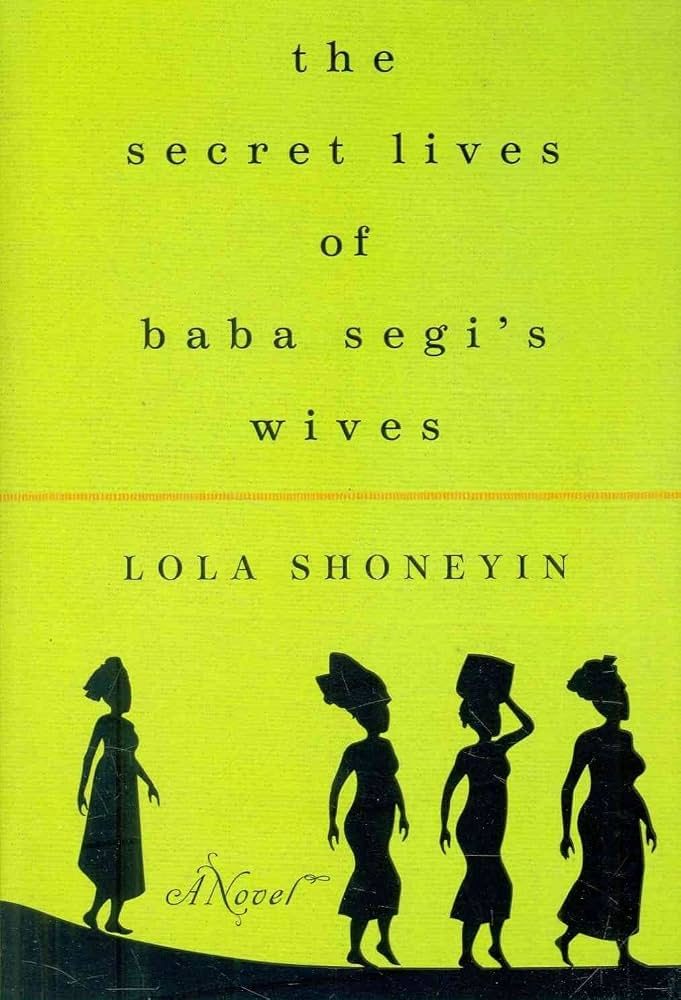
Image: Amazon.com
The mechanical engine of the book is Bolanle’s failure to conceive. Prompted by acquaintances in a bar, Baba Segi takes her to a hospital, convinced the problem must be hers. The tests find nothing wrong with her. The hospital then wants to test him, and the first three wives know the game is nearly up.
What the tests establish, and what Bolanle eventually learns, is that Baba Segi cannot father children. The children of the household, whom he has raised as his own and paraded around Ibadan as evidence of his manhood, are not his. Faced with the disgrace of being a barren wife in a polygamous Yoruba household, each of the first three wives arranged to be made pregnant by another man: Iya Segi’s children came from Taju, Baba Segi’s own driver, Iya Tope’s from a meat seller nearby, and Iya Femi’s from Segun, the son of the wealthy woman in whose house she had been a maid. They have kept it among themselves for years.
This is the kind of revelation that in lesser hands would feel melodramatic. Shoneyin earns it, because the reader has been given enough of each wife’s interior life to understand that the secret was not a single moral failure but a sequence of survivals. Iya Segi did not betray Baba Segi for pleasure; she had built a life with him and refused to be sent home barren. Iya Tope was pressed into it. Iya Femi made her own peace with it. The novel is generous to all three without excusing any of them, and it is equally clear that the stigma attached to a man’s infertility is part of what makes the arrangement necessary.
Ad SpaceIn-Article - 300x250
Advertisement
How it ends, and why the ending matters
Readers who want the last forty pages left intact should stop here. The crisis does not arrive as a confession. A plot to poison Bolanle goes wrong, and Segi, the eldest daughter and the child the household is named for, dies instead. Baba Segi, who is a loving father whatever else he is, has to absorb that death and the news that none of the children in his compound are biologically his. His response is to offer his wives their freedom. The first three choose to stay, under new restrictions that keep them at home and keep his infertility a secret. Bolanle is the only one who walks out, intending to answer her new status as a damaged woman with education, training and endurance. The novel therefore does not end with a liberation. It ends with three women accepting a tighter cage in exchange for security and one woman leaving with nothing but her own resolve, which is a harder and better ending than the one the premise promises.
Baba Segi himself
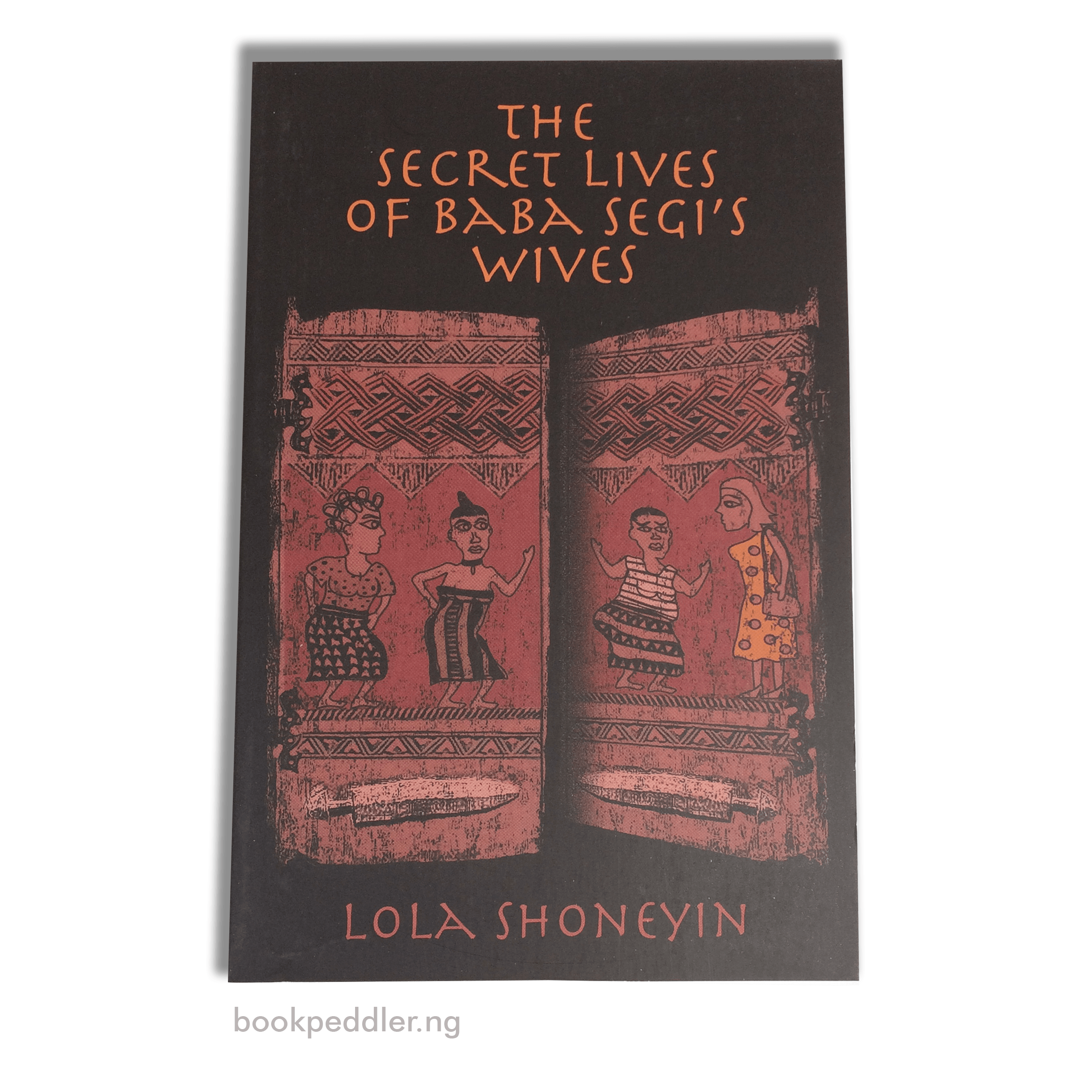
Image: Bookpeddler
Baba Segi is the comic engine of the novel, and Shoneyin risks caricature with him in a way that pays off. He is large, vain, loud and given to lectures about his own importance, and he is described in bodily terms that border on the grotesque. He is also, in the moments where Shoneyin chooses to soften him, capable of tenderness, of bewilderment and of a hurt he has no language for. The risk of writing a polygamous patriarch this way is that he becomes a target rather than a character. Some readers took him as exactly that. The novel does not: when the truth lands, his grief is not played for laughs, and that generosity to a flawed man is what lifts the book above polemic.
Yoruba specificity, on the page
Image: Amazon.com
Shoneyin writes Ibadan with the confidence of someone who knows it. Yoruba words sit on the page without italics or footnotes, and the food, the market geography and the class register of each character are specific rather than decorative. For Nigerian readers this is part of the pleasure. For others it is a mild challenge that pays off once accepted, because Shoneyin does not write to translate. Religion is handled with similar precision. Church attendance in the compound is a matter of temperament as much as faith, and it feeds directly into what the wives decide to do rather than sitting behind them as background colour. Academic readers have since used the novel to examine co-wife rivalry, female agency and the stress strategies available to women in polygamous households.
What does not entirely work
The novel is not flawless. The opening stretch, which introduces the household and its routines, is slower than it needs to be, and a reader who does not yet know what kind of book this is can feel that Shoneyin is gathering rather than building. Iya Tope’s backstory, one of the most affecting threads in the book, feels rushed and would have rewarded another twenty pages. Bolanle, the character closest in education and class to the implied reader, has the most thinly drawn interior life of the four wives. The novel wants us to take her seriously and does much of the work to make us do so, but it leans on the trauma in her past in a way that can feel mechanical rather than inhabited, and her departure, though right, is reported more briskly than it is felt.
Reception, in Nigeria and outside
In Nigeria the book was greeted as something new, and the two Nigerian prizes it won in 2011 reflect that. Internationally the reception was warm but, characteristically, slightly skewed. A number of Western readers took the novel as a critique of polygamy as such, a feminist indictment of an institution presented as backward. That is not quite the book Shoneyin wrote. The novel is not anti-polygamy in any simple sense. It is about what women do to survive inside a structure that does not respect their fertility or their selves, and the pressure it describes translates to other structures. The Observer later listed it among the top ten books about Nigeria, and it has been translated into Arabic, Dutch, French, German, Italian and Turkish, among other languages.
Who this is for
Read it if you want to understand how a Yoruba polygamous household operates from inside the room rather than from the academic outside, if you have an appetite for novels that rotate point of view across several women and trust you to make the connections, or if you have read Buchi Emecheta and want to see what the next generation of Nigerian women novelists did with similar material. You can defer it if you are looking for the spare, controlled, single-protagonist literary novel that has dominated the international African shelf. Baba Segi is broader, busier, more comic and more interested in social texture than in psychological miniature, and a reader who arrives wanting Ayobami Adebayo or NoViolet Bulawayo will need to adjust their ear.
The novel and its afterlives
Title
Year
Form
The Secret Lives of Baba Segi’s Wives (Cassava Republic, Nigeria; Serpent’s Tail, UK; William Morrow, US)
2010
Novel
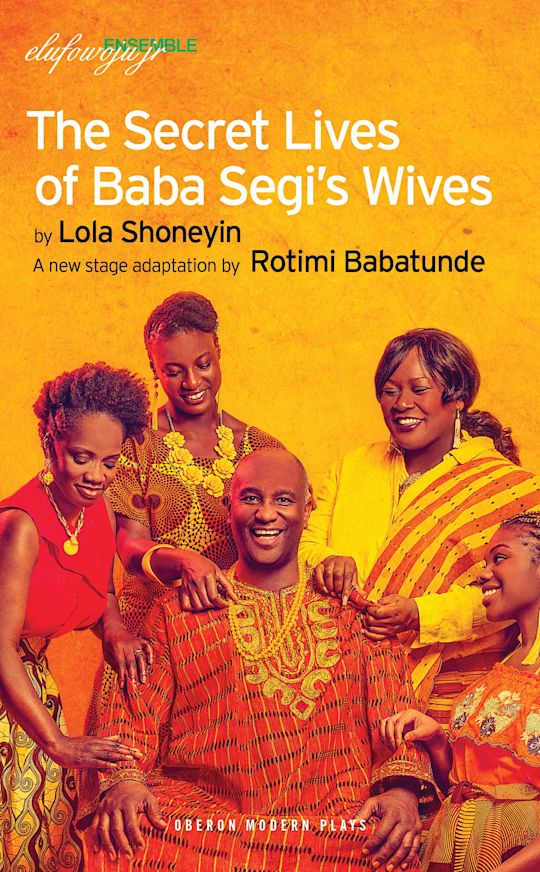
The Secret Lives of Baba Segi’s Wives, adapted by Rotimi Babatunde, Arcola Theatre, London
2018
Stage play
Arcola Theatre revival of the Babatunde adaptation
2025
Stage play
EbonyLife Films screen adaptation, announced with Daniel Oriahi directing
2026
Announced film
The stage version, directed by Femi Elufowoju Jr, took five stars from The Guardian in 2018 and returned to the same theatre in 2025. The film was announced in January 2026 and should be treated as announced rather than released.
Why the four wives have outlasted the premise
The novel sits in the lineage of Nigerian women’s fiction that runs from Flora Nwapa through Buchi Emecheta to Sefi Atta and on to Ayobami Adebayo and Chibundu Onuzo, and Shoneyin’s contribution to it is structural. She distributed the point of view in a way earlier polygamy novels had not, and she refused to make her women either saints or sufferers. She let them be schemers, liars, calculators and survivors, and she let the reader love them for it. What the book offers on a reread is a household that is not lecturing anybody: four women who built lives inside conditions they did not choose, and one man protected from those conditions by his own self-regard. It leaves the reader with sympathy for all five and illusions about none, which is rarer than it sounds.
Ad SpaceIn-Article - 300x250
Advertisement
Share
Get the recap
Loved this story? Get more like it.
Join readers who get our weekly entertainment recap - the stories worth your time, delivered every Friday.
No spam. Unsubscribe anytime. By signing up you agree to our Privacy Policy.