
For more than a decade African music gathered speed on the global charts while the Grammy ballot stayed still. Wizkid was selling out arenas in London. Burna Boy headlined Madison Square Garden. Davido was filling arenas in the United States. Tems sang on a Beyonce album. And yet when the nominations were announced each November, the continent’s biggest sound was crammed into a single bucket called Best Global Music Album, a category that asked voters to choose between an Afrobeats record and a Brazilian release, between Amapiano and Indian classical. The arithmetic was indefensible. The fix took years of public pressure, a slow internal process at the Recording Academy, and one Grammy night that made the imbalance impossible to ignore. In June 2023 the Academy announced a new category: Best African Music Performance. This is how it got there, who pushed for it, and what it has and has not changed.
The lumping problem that powered the fight
To understand why a dedicated African category mattered, you have to understand what came before. From 1992 the Recording Academy maintained a single award called Best World Music Album, created at a time when “world music” was the industry’s catch-all for anything outside Western pop, rock, R&B, country, jazz and classical. A Senegalese mbalax record competed with a Pakistani qawwali album, which competed with a Cuban son album. The category was always a compromise, always too broad to be meaningful, and over the years it became a polite holding pen for music the Academy did not know how to evaluate on its own terms.
In 2021 the Academy renamed it Best Global Music Album, a change meant to signal that “world” was no longer the right word for music made outside the West. The rename was welcome. The structural problem survived it. African artists generating some of the largest streaming numbers on the planet were still sharing one slot with every non-Western tradition on earth, and the Academy had no mechanism for distinguishing Afrobeats from Amapiano from Bongo Flava, let alone from anything outside the continent.
The 2021 night that turned a grumble into a campaign
Two things happened at the 63rd Grammy Awards in March 2021 that changed the temperature. Burna Boy won Best Global Music Album for Twice as Tall. Wizkid won Best Music Video as a credited artist on “Brown Skin Girl”, the Beyonce record from The Lion King: The Gift. Two Nigerian artists won Grammys on the same night, and the genre that carried both of them still had no category of its own.
The argument that followed was simple and was made loudly. Latin music had an entire separate ceremony. Country had multiple categories. Rap had several. African music, by then a continental industry feeding the global pop economy, had a share of one. Burna Boy became the most visible public advocate for change across the following two years, framing the demand around the artists who would come after him rather than around his own shelf. Davido, Wizkid and the Mavin Records founder Don Jazzy all added their voices in interviews and on social platforms, and African music journalists kept the Best Global Music Album problem in print.
The quieter process inside the Recording Academy
Public pressure set the agenda, but the category itself was created by Academy mechanics. New categories only arrive after a multi-step review involving genre subcommittees, the awards committee and the Board of Trustees, and a proposal has to clear bars for submission volume, voter expertise and long-term sustainability. A category that cannot reliably attract enough entries, or be judged by enough qualified voters, does not survive the process.
That is why the growth of the Academy’s African membership mattered as much as any speech. Harvey Mason Jr, the Academy’s chief executive, moved publicly from describing an African category as something under study to describing it as something in development across 2022 and early 2023. By the time the proposal reached a vote, there was a voter pool with regional expertise capable of evaluating submissions on their own terms.
The naming politics
One of the most revealing details is what the category is not called. It is not Best Afrobeats Performance. It is Best African Music Performance, and the choice was deliberate. Afrobeats powered the global breakthrough, but Africa is a continent rather than a sound. South Africa’s Amapiano was on the verge of its own global moment. Tanzania’s Bongo Flava had a regional audience in the tens of millions. Ghanaian Highlife, Congolese Ndombolo and Senegalese mbalax all had claims to representation. Naming the award after Afrobeats would have privileged Nigeria and Ghana. Naming it after the continent kept the door open, and the first winner proved the stakes were real.
The June 2023 announcement
In June 2023 the Recording Academy announced three new categories for the 66th Grammy Awards, Best African Music Performance among them. It was defined as a single-recording award recognising regional melodic, rhythmic and lyrical African traditions, with the Academy’s description naming Afrobeat, Afrobeats, Alte, Amapiano, Bongo Flava, Genge, Kizomba, Chimurenga, High Life, Fuji, Kwaito, Ndombolo, Mapouka, Ghanaian Drill, Afro-House, Afro Jazz and Afro-fusion among the styles in scope. The reaction across Lagos, Accra, Johannesburg, Nairobi and Dar es Salaam was immediate, and the artists who had pushed hardest treated it as overdue rather than generous.
The first ballot and the Tyla win
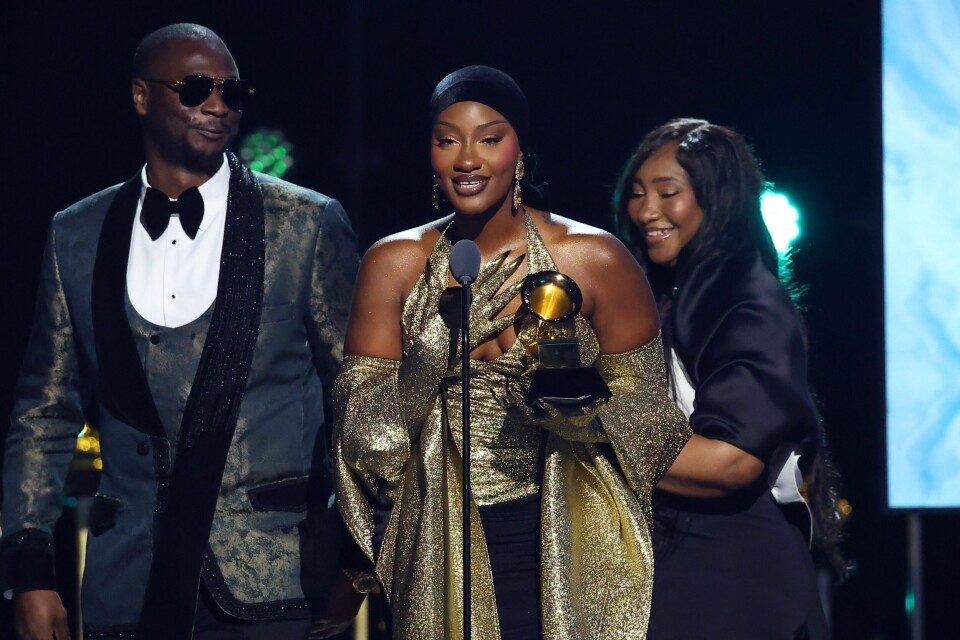
Nominations for the 66th Grammy Awards were announced on 10 November 2023, and the inaugural ballot read like a snapshot of the year.