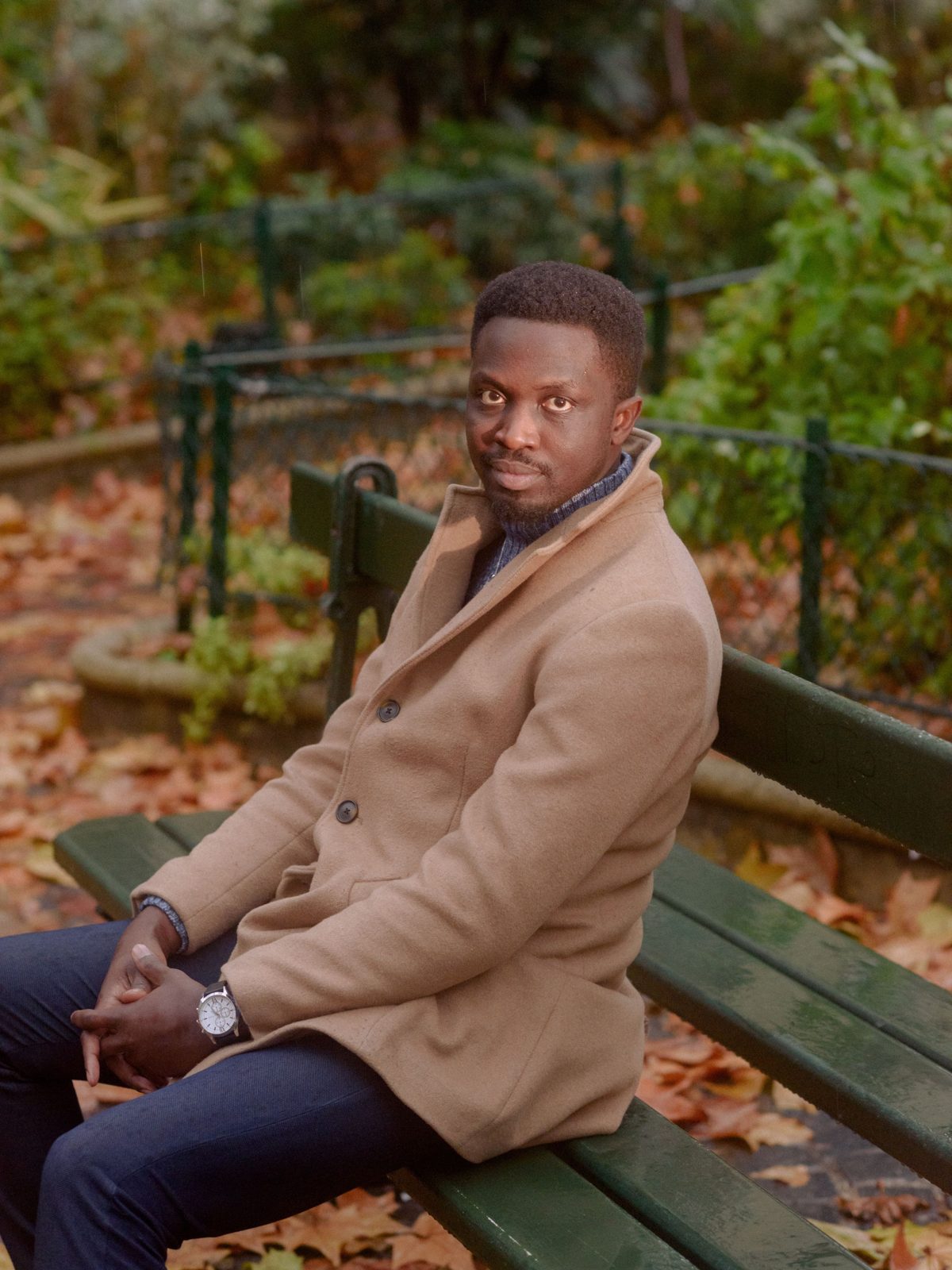


In November 2021, a thirty-one-year-old Senegalese writer stood before the French literary establishment and accepted the Prix Goncourt, the most prestigious award in French letters, for a novel about a forgotten African writer. He was the first person from sub-Saharan Africa to win it in more than a century of the prize’s history, a distinction worth stating carefully: North African writers had taken the Goncourt before him, Tahar Ben Jelloun in 1987 among them, and the Martinique-born René Maran as early as 1921. The book that broke the remaining barrier, La plus secrète mémoire des hommes, published in English as The Most Secret Memory of Men, is itself a novel about literary fame, erasure, and the hunger of African writers to be read on their own terms by a Europe that has rarely bothered. There was a recursive perfection to the moment. Mohamed Mbougar Sarr won France’s highest literary honour for a book about an African writer destroyed by France’s literary world.
A Dakar Childhood and a French Education
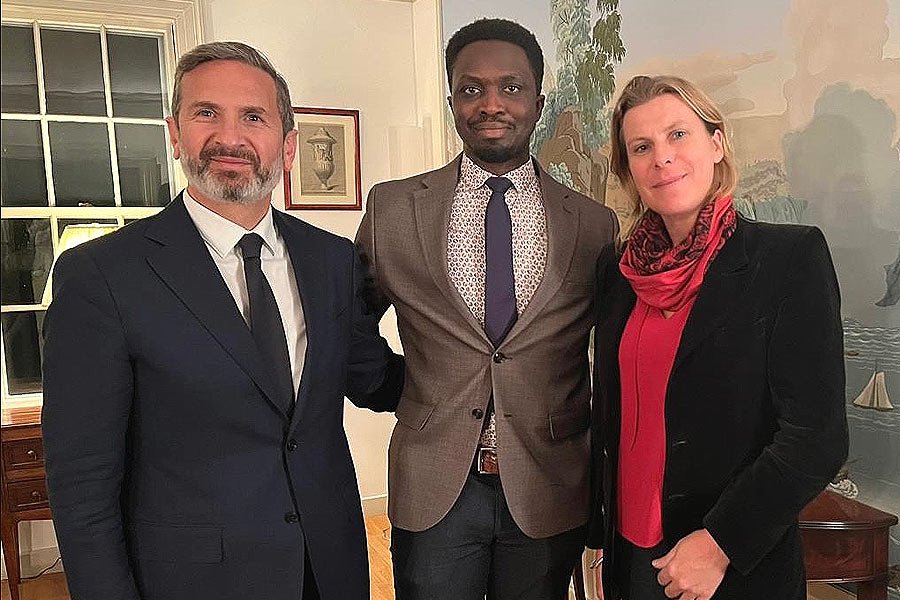
Mohamed Mbougar Sarr was born on 20 June 1990 in Dakar and grew up in a large Serer family in Diourbel, inland from the Senegalese capital. His father was a physician, and the household valued education in the formal, demanding manner that postcolonial Senegal had inherited from the French system. He completed his secondary studies at the Prytanée militaire of Saint-Louis, an elite military school in Senegal, an experience of discipline and isolation that would later surface in his fiction.
He moved to France for higher education, first to the preparatory classes at the lycée Pierre-d’Ailly in Compiegne and then to the School for Advanced Studies in the Social Sciences in Paris, where his research focused on Léopold Sédar Senghor. He read deeply in the European canon while remaining rooted in the African and diasporic writers who came before him, the Negritude poets, the great Francophone novelists, the figures who had wrestled with what it meant to write in the language of the coloniser. He began writing fiction seriously during those years and chose not to finish his thesis. This double inheritance, the French intellectual training and the Senegalese origin, is the productive tension from which all his work grows.
Sarr writes in French, and this fact shapes everything about his career and his reception. He is part of a long, fraught lineage of African writers who use the colonial language to reach a global audience, and who must navigate the suspicion that comes with it, the worry that writing in French means writing for France. His prizes have come from the French system, his readership was built first in Paris, and translation determines how far his reputation travels into the English-speaking world. He is acutely aware of these dynamics, and they are not merely conditions of his career. They are his subject.
The Most Secret Memory of Men
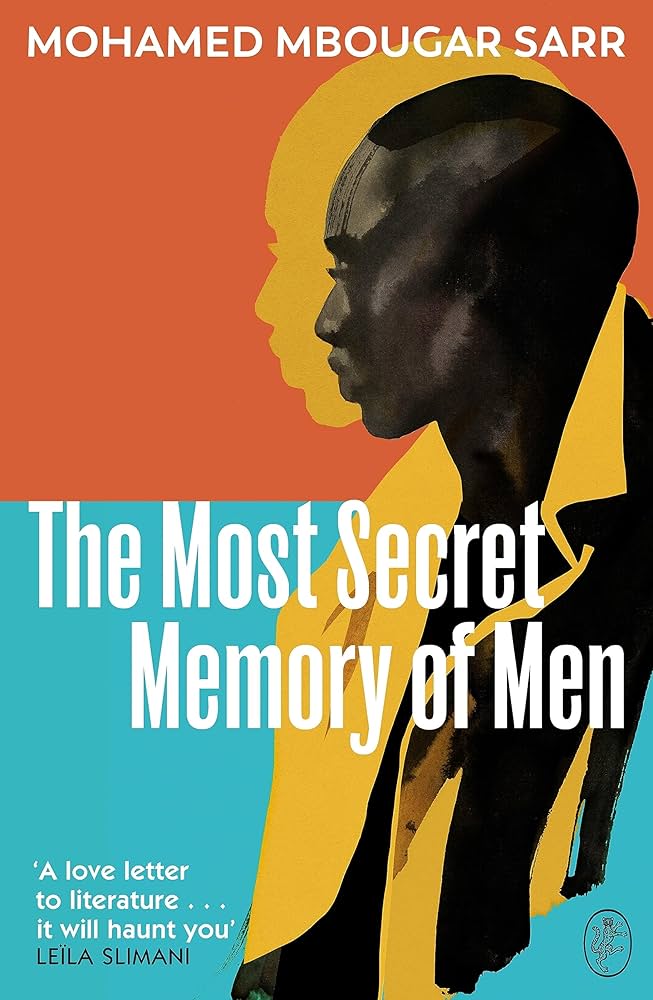
The Goncourt winner, published in French in 2021 and in Lara Vergnaud’s English translation in 2023, is a dazzling, labyrinthine literary mystery. Its young narrator, an African writer living in Paris, becomes obsessed with a vanished author named T. C. Elimane, who in 1938 published a single novel that scandalised French literary society before he disappeared entirely, accused of plagiarism and erased from the record. The narrator sets out to track down the truth of Elimane’s life, and the search spirals across continents and decades, through Senegal, France, Argentina and the wars of twentieth-century Europe.
The fictional Elimane is inspired by a real figure, the Malian writer Yambo Ouologuem, who won France’s Prix Renaudot in 1968 for Le Devoir de violence and was then engulfed by plagiarism accusations and withdrew from public life. Sarr dedicates the novel to him. He takes that true literary tragedy and refracts it through a fictional quest that becomes a meditation on what Europe does to the African writers it briefly celebrates, the way the literary world consumes and discards them.
The novel is structurally intricate, nesting stories within stories, shifting narrators and timelines, accumulating testimonies and documents. It is a book about books, saturated with references to Roberto Bolaño and Jorge Luis Borges and the whole tradition of literature about literature. The debt to Bolaño is open: the hunt for Elimane recalls the pursuit of a vanished poet in The Savage Detectives, where a generation of writers chases a legend across continents and decades. But Sarr makes the form serve a specifically African reckoning. Where Bolaño wrote of Latin American literary obsession, Sarr writes of the African author entering the French literary machine and being chewed up by it.
The reading experience is demanding and exhilarating, a detective story in which the crime is the erasure of a writer and the clues are scattered across the wreckage of the century. Beyond the Goncourt, which Sarr won in the first round of voting, the novel was shortlisted for the Prix Femina and the Prix Renaudot, longlisted for the Prix Médicis, and in translation longlisted for the 2023 National Book Award for Translated Literature.
The Earlier Novels
Sarr did not arrive fully formed, and he did not arrive with a novel either. His first award was for a short story, “La cale,” about the slave trade, which took the Prix Stéphane-Hessel in 2014, and he later won a bronze medal in literature at the 2017 Jeux de la Francophonie for another story, “Ndënd.”
His debut novel, Terre ceinte (2015), confronts religious extremism, depicting a fictional Sahelian town seized by jihadist militias who impose a brutal theocracy, and the underground resistance that forms against them. It is an angrier, more directly engaged book than the Goncourt winner, and it was well decorated on arrival, taking the Prix Ahmadou Kourouma at the Geneva book fair and the Grand prix du roman métis, both in 2015. Alexia Trigo’s English translation appeared from Europa Editions in 2021 as Brotherhood.
His second novel, Silence du chœur (2017), turns to migration. It follows a group of African migrants who have arrived in a small Sicilian town, and the Italians who must decide how to receive them, dramatising the collision of desperate arrivals and an unprepared, ambivalent host community. The book gives voice to the people behind the headlines, the men who have crossed the desert and the sea, and refuses easy sentiment about either the migrants or those who fear them. It won the prix littérature-monde at the Étonnants Voyageurs festival in Saint-Malo, and Alison Anderson’s translation, The Silence of the Choir, was published by Europa Editions in 2024.
His third novel, De purs hommes (2018), takes on the prejudice and violence surrounding homosexuality in Senegal, following a teacher drawn into investigating the desecration of a man’s body after he is suspected of having been gay. It is among his most exposed books, confronting a subject most writers in his society avoid, and it shows Sarr willing to turn his moral attention on his own culture rather than only on the colonial relationship. Lara Vergnaud’s translation, Pure Men, was published by Other Press in 2026, which means that for the first time all four novels can be read in English.
Taken together, the early work forms a portrait of a writer testing himself against the hardest subjects available, extremism, displacement and sexual prejudice, before arriving at the grand literary meditation that made his name. The progression is not from political seriousness to mere cleverness but from one kind of seriousness to another, the social conscience never abandoned, only deepened and turned reflexively upon the act of writing itself.