Lauren Beukes: A Reader's Guide to the South African Author's Most Essential Books
Image: Uncanny Magazine
Books

Lauren Beukes: A Reader's Guide to the South African Author's Most Essential Books

Arianne ColeArianne Cole··13 min read
Ad SpaceArticle Top - 728x90
Advertisement

Zinzi December walks through Johannesburg with a sloth on her back. Not a metaphor, an actual sloth, fused to her shoulders as a kind of magical penalty for the sin she committed, the way every criminal in this version of the city is bound to an animal that marks them as guilty for the rest of their lives. The conceit is preposterous on its face, and Lauren Beukes commits to it so fully that within a few pages the reader is no longer questioning the sloths and the crocodiles and the porcupines but worrying about Zinzi, an ex-junkie ex-journalist scratching out a living by finding lost things in a Johannesburg that hums with bad magic, bad money and the residue of apartheid violence. Zoo City won the Arthur C. Clarke Award in 2011, and it made clear that South African literature had produced a genre writer of genuine international standing, one happy to mix noir and fantasy and cyberpunk and horror in whatever proportions the story demanded.

Joburg, Journalism, and a Writer Who Refused to Stay in One Lane
Joburg, Journalism, and a Writer Who Refused to Stay in One Lane
Image: Writers Write

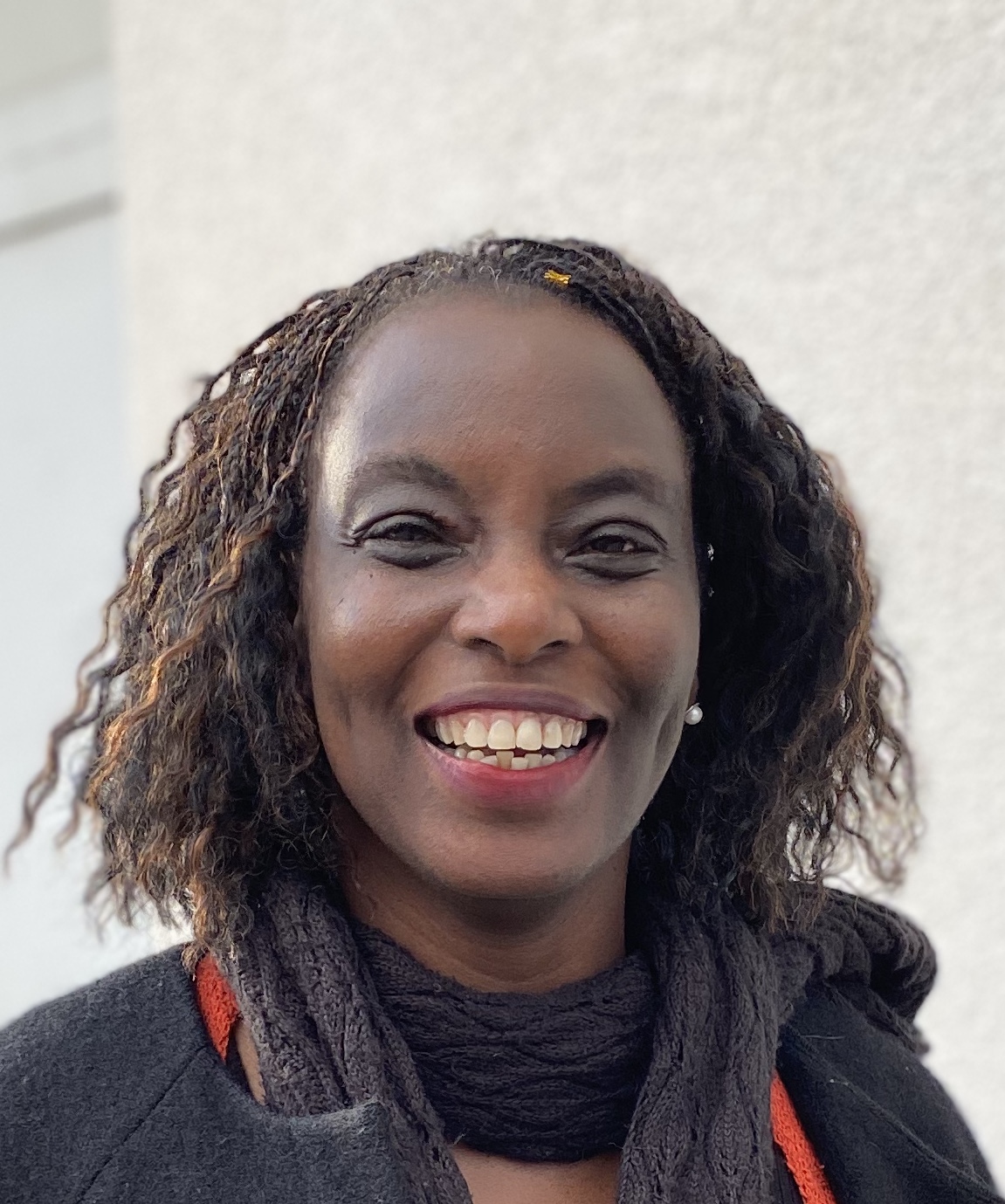
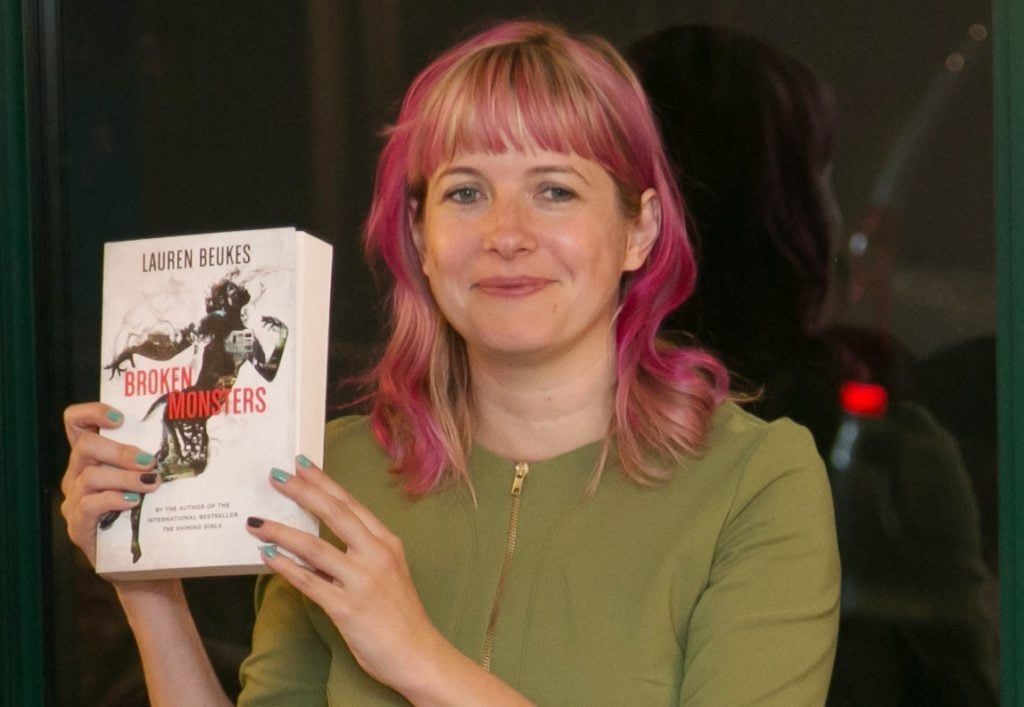
Lauren Beukes was born on 5 June 1976 and grew up in Johannesburg, attending Roedean School there before taking a master’s in creative writing at the University of Cape Town. She came into her adulthood in the early democratic era, the strange new South Africa of the 1990s, and her sensibility carries the marks of that transition. She worked as a freelance journalist for about a decade, including two years based in New York and Chicago, and her bylines ran in everything from Marie Claire and Elle to The Hollywood Reporter and Nature Medicine. She won the regional Western Cape columnist award in the Vodacom Journalist of the Year Awards in 2007 and again in 2008. Journalism gave her a reporter’s appetite for the texture of a place, the slang and brands and brutalities that make a city a city, and her novels are dense with that observed detail.

What sets Beukes apart from most literary novelists is her refusal to sit inside a single genre, or inside a single medium. She writes science fiction, horror, crime thrillers, near-future dystopias, short stories and comics, and she shifts between them not as a tourist but as someone equally at home in each. Her first published book was not a novel at all but Maverick: Extraordinary Women from South Africa’s Past (2004), a work of non-fiction that was longlisted for the Alan Paton Award. Her career looks less like the literary novelist’s slow output of single-genre books and more like that of a working genre professional who takes whatever form the idea requires.

She belongs, in the South African context, to a generation that came up after the protest generation, free to write about something other than apartheid directly, free to take the country’s psychic damage and bend it into fantastical shapes. The violence is still there. The fear is still there. But the form is now the genre novel, and that is itself a kind of liberation.

Moxyland
Lauren Beukes - Moxyland
Image: Internet Archive

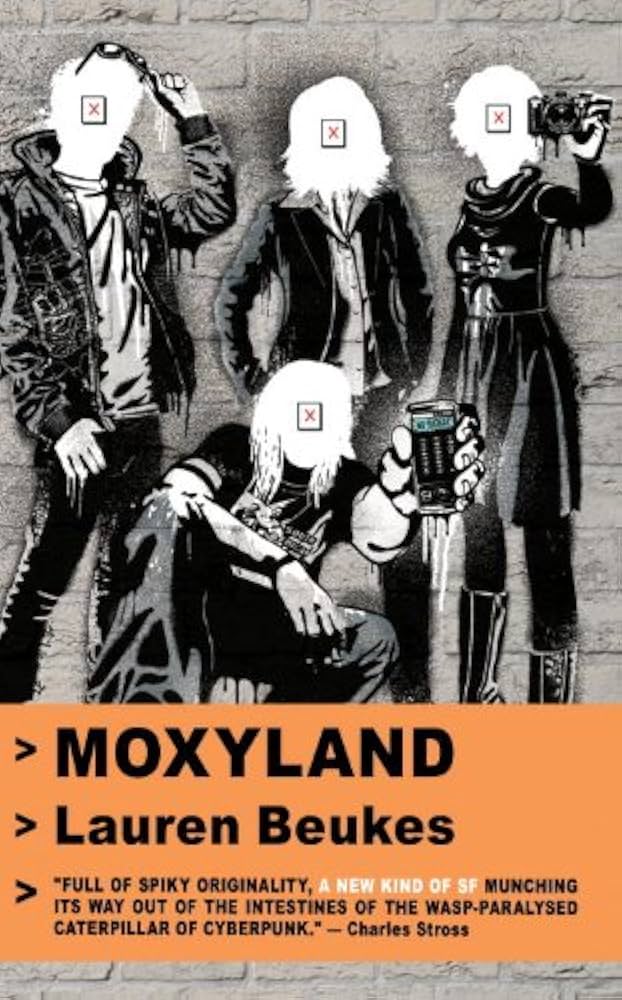
Her 2008 debut novel, Moxyland, is a near-future cyberpunk story set in a Cape Town that has tilted further into surveillance and corporate control than the present one but is recognisably continuous with it. Four young protagonists move through a city where mobile phones are biometric IDs, dissidents can be disabled remotely by their own devices, and brand sponsorship has colonised everything from art to activism. The narrative cycles among the four voices, a corporate-sponsored art-school graduate, a hacker, a club kid with revolutionary sympathies and a young corporate drone, building a picture of a society in which freedom has been quietly converted into a feature of consumption.

What makes the book hold up, well over a decade after publication, is how much of its dystopia has arrived. The phones as ID, the surveillance, the way protest is folded back into branding, all of this reads less as fantasy now than as reportage. Beukes understood early what the digital revolution was going to do to public space and to the body, and she wrote that understanding into a Cape Town that felt then like a warning and now like a description.

Moxyland is a debut, with the small unevennesses of one, but it is a confident, propulsive book, and it established Beukes’s signature method, take a real city, twist one variable and watch how the existing inequalities of that city sharpen and accelerate under the new pressure.

Zoo City
Lauren Beukes - Zoo City
Image: Hachette Book Group

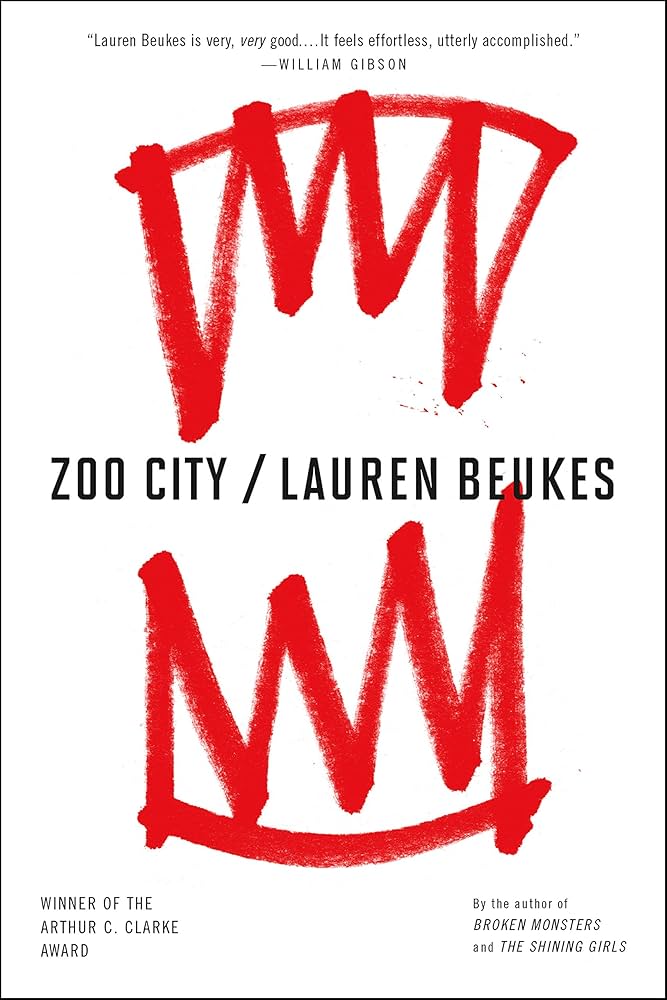
The 2010 follow-up is where she became a major writer. Zoo City is set in a contemporary Johannesburg with one fantastical addition. Anyone who commits a serious crime is “animalled,” meaning a creature appears bound to them, a familiar that marks their guilt and grants them a small magical talent. Zinzi December, the protagonist, has a sloth on her back and a gift for finding lost things, the latter being how she pays the bills now that her addiction and her family’s disowning have left her in Zoo City, the slum where the animalled live.

When Zinzi takes a high-paying missing-person case looking for a vanished teen pop star, the noir machinery kicks in, the plot pulling her into the music industry, into a sangoma’s rooms, into the deep magic that runs underneath the city’s hustle. The genre is recognisable, the lone-wolf investigator in a corrupt town, but the texture is Johannesburg, specific and sweaty and dangerous, and the magical premise is treated as a fully integrated part of the social world. The animalled face discrimination, are crowded into specific neighbourhoods, are denied jobs and housing. The fantasy is a metaphor that refuses to behave like one, sitting on the page as a literal economic fact.

The novel’s award record is unusually thick. Beyond the Arthur C. Clarke Award in 2011 it took the Kitschies Red Tentacle for best novel in 2010, and it was shortlisted for the BSFA Award, the World Fantasy Award and the University of Johannesburg Creative Writing Prize, and longlisted for the Sunday Times Fiction Prize and the International Dublin Literary Award. Zoo City remains one of the great novels of post-apartheid Johannesburg, the city’s energy and menace caught with a precision few literary novelists have matched.

The Shining Girls
The Shining Girls
Image: Lauren Beukes

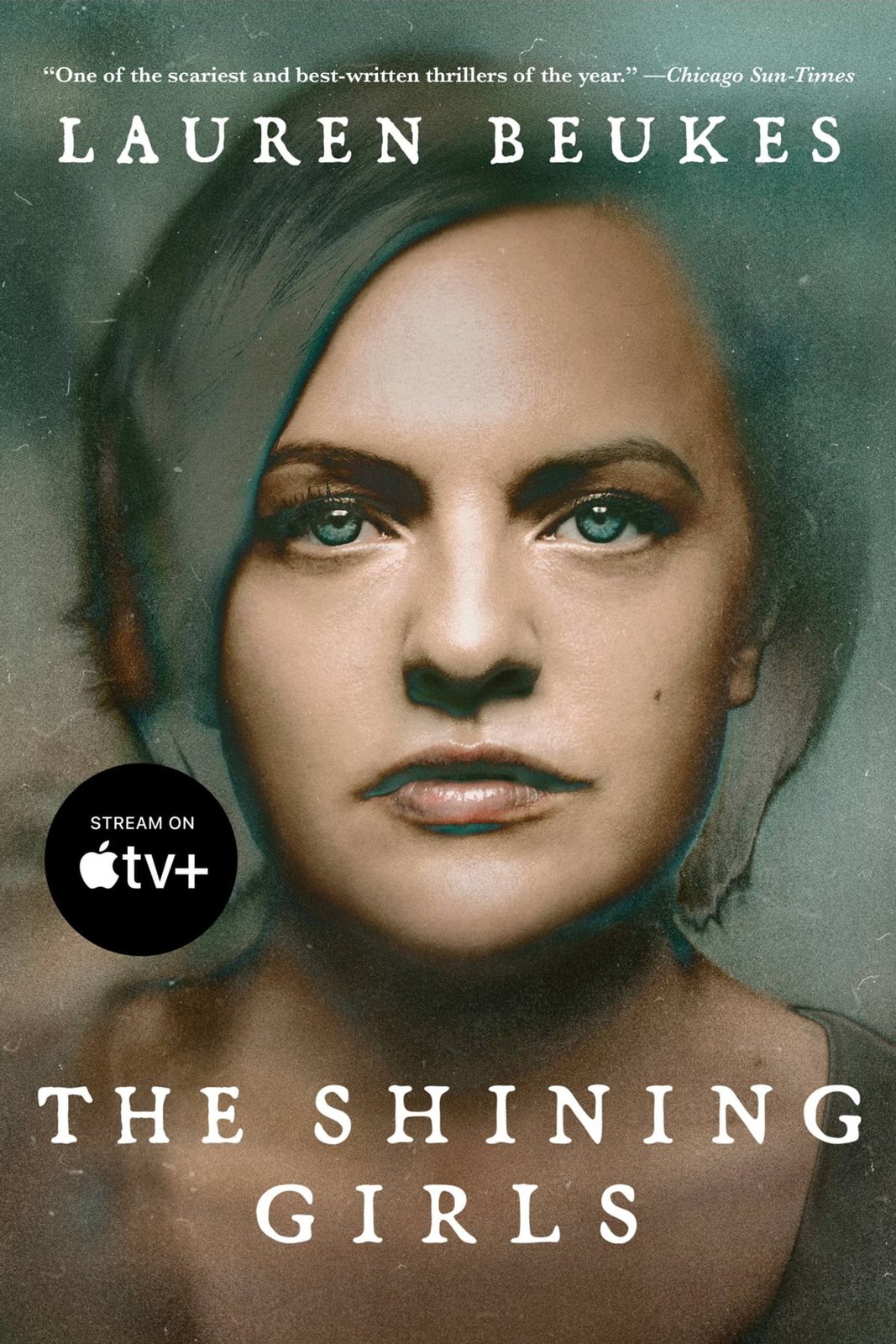
Her 2013 international breakout moved the action to the United States. The Shining Girls features Harper Curtis, a time-travelling serial killer who uses a house in Depression-era Chicago to step into different decades and murder the women he calls his “shining girls.” Kirby Mazrachi, one of his victims, survives, and the novel follows her in the 1990s as she works to track him backward and forward through time. The book was the subject of a competitive auction for international rights and appeared from three publishers across South Africa, the United Kingdom and the United States within weeks of each other.

The premise is lurid and Beukes knows it, but what she does with it is more interesting than the high concept suggests. The structure is mosaic, jumping among Harper’s victims across the twentieth century, and the novel becomes a portrait of women’s lives in different decades, the artists and welders and showgirls and activists whose deaths the killer treats as a hobby. Each shining girl gets her own chapter, her own world, and the cumulative effect is a counterpoint to the serial killer narrative, refusing to let the victims be only victims by letting them live, briefly, on the page first.

It won the Strand Magazine Critics Award for best novel, the RT Thriller of the Year, the Exclusive Books readers’ choice award and the University of Johannesburg Prize. It also drew criticism for trafficking in serial killer iconography while purporting to critique it, a tension some readers found unresolved. Whatever one’s view of that tension, The Shining Girls established Beukes as a writer with global commercial reach.

Broken Monsters and Afterland
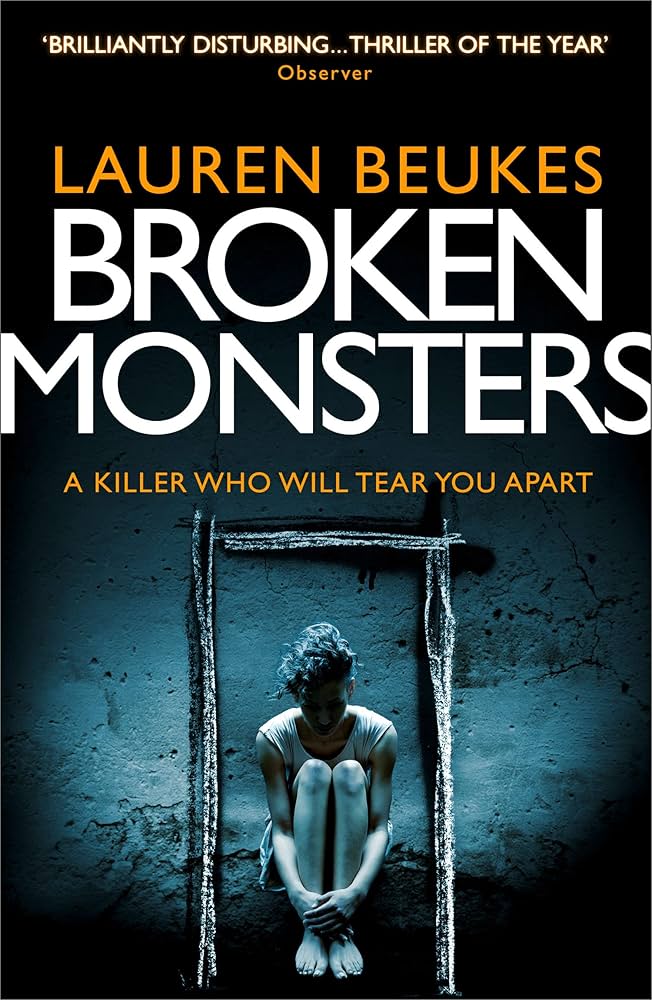
Lauren Beukes - Broken Monsters and Afterland
Image: Kobo

Broken Monsters, published in 2014, stayed in the American setting, moving to Detroit for a horror-tinged crime novel in which a body is found half-spliced with the body of an animal, and the detectives investigating soon realise they are dealing with something beyond conventional crime. The book is a study of post-industrial decay, of the city’s wounded grandeur, and it has Beukes’s signature trick of using horror to look hard at real social damage. Detroit’s collapse, the artists scavenging in its ruins, the online culture spreading the murder as spectacle, all of it is observed with a reporter’s eye.

Afterland, published in 2020 and originally announced under the title Motherland, is the strangest and most prescient of her novels. A plague has killed almost all the men in the world, and Cole, one of the rare surviving boys, must be smuggled across an America transformed by male absence by his mother Nicole, who is on the run from her own sister. The premise sounds high-concept but the book lives in its emotional reality, the mother-and-son road trip across a country reorganised by gendered catastrophe. That it appeared just as a global pandemic arrived was uncanny timing, and the novel reads, with hindsight, as a meditation on what societies do when a large part of the population is taken.
Ad SpaceIn-Article - 300x250
Advertisement

Bridge, the Stories and the Comics

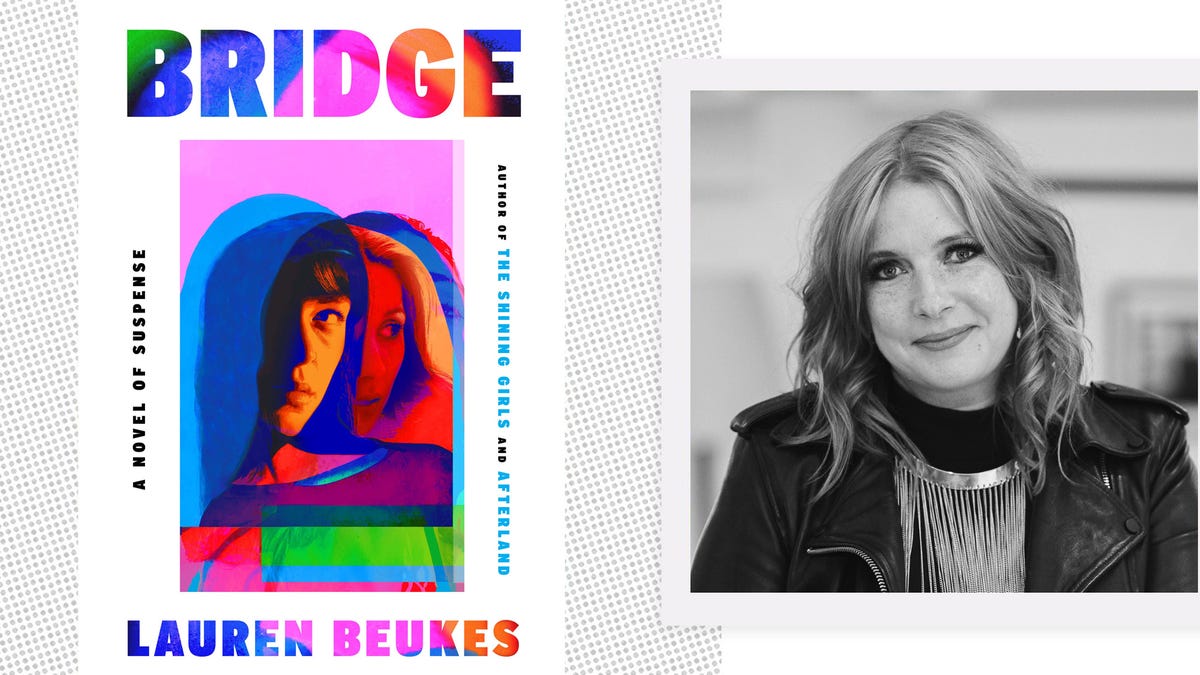
Three parts of the bibliography routinely vanish from guides to Beukes, and all three matter. The first is Bridge, published in 2023, a novel about a young woman who, after her neuroscientist mother’s death, discovers the means to cross between versions of her own life, and which uses the multiverse idea for grief rather than spectacle. It was widely reviewed, including in The New York Times, and it is her most recent novel.

The second is the short fiction. Slipping: Stories, Essays, and Other Writing appeared in 2016 and collects a decade of work, and her stories have turned up in anthologies from Urban 03 and African Road to Pandemonium: Stories of the Apocalypse. The third is the comics, which are genuinely comics and not novels. She debuted in the form with a story in Vertigo’s Strange Adventures one-shot, wrote an arc of Fairest, a spin-off of Bill Willingham’s Fables, contributed a Durham Red story to a 2000 AD anniversary issue, and created her own Vertigo series, Survivors’ Club, drawn by Dale Halvorsen and Ryan Kelly, which ran for nine issues from October 2015 to June 2016.

What Runs Through the Books

Lauren Beukes - What Runs Through the Books
Image: ELLE

Several preoccupations recur across Beukes’s diverse output. The first is the city as a living, dangerous organism. Johannesburg, Cape Town, Chicago, Detroit, each is rendered with the journalist’s attention to detail and the novelist’s appetite for the place’s psyche, and the city is always more than backdrop. It is the field on which the violence plays out, and the violence is shaped by the city’s specific history and inequality.

The second is gendered violence, the violence men do to women, treated not as a thriller convenience but as a permanent crisis worth looking at directly. The shining girls, the missing pop star in Zoo City, the women navigating the post-male world of Afterland, all sit on the same continuum. Beukes is one of the few thriller writers who actually thinks about why the genre is so often built on women’s corpses, and her novels work to give the women an interiority that the conventional thriller withholds.

The third is technology and surveillance, the way digital systems reshape power, identity and freedom. Moxyland anticipated the phone as biometric handcuff. The later books keep returning to social media, to image culture, to the way private suffering becomes public content. Underneath all of it is inequality, the deep structural unfairness her cities carry whether they sit on the Highveld or in the American Midwest, the sense that the world Beukes writes is always one in which somebody is being crushed for somebody else’s profit.

The Tradeoffs of Genre Range

Beukes’s restless range is her great strength and also her chief vulnerability. By moving between cyberpunk, noir, time-travel thriller, horror, pandemic fiction and the multiverse, she resists the easy categorisation that helps a writer build a brand, and some readers who love one of her modes are disappointed by another. Parts of the literary establishment have been condescending toward her precisely because she works in genre, treating her as commercial rather than serious despite the obvious intelligence and political weight of her books.

Inside the books themselves, the trade-offs of high concept sometimes show. The Shining Girls has been criticised, fairly, for sliding occasionally into the gratuitous, for using the very serial killer tropes it sets out to interrogate. Her plots, propelled by the speed of the genre tradition she works in, can leave certain ideas underdeveloped in the rush to the next twist. And her American novels, The Shining Girls and Broken Monsters, while strong, do not have the lived-in density of the South African settings of Moxyland and Zoo City, which is the predictable result of writing about places she knows from reporting trips rather than from home. These are real costs, but they are the costs of a writer who refuses to write the same book twice.

A Different Kind of South African Voice

Beukes occupies a singular position in South African literature. She is not part of the literary lineage that runs from Coetzee through Galgut, the cold austere reckoning with white guilt. She is something else, a genre-fluent, internationally minded, journalism-trained novelist who took the speculative tradition and turned it onto the country and the wider world. In doing so she helped expand what South African writing could be, opening room for the science fiction, horror and crime work that has flourished since.

Internationally she sits in a small group of writers who refuse the literary and genre divide and work across it with equal seriousness, and her South African angle gives her a vantage on inequality, surveillance and violence that her American and British peers cannot quite match. Zoo City in particular has earned a durable place in the canon of African speculative fiction, the book that proved the continent’s writers could take genre and make it carry the full weight of the continent’s history.

Where to Begin

Start with Zoo City. It is the perfect fusion of her gifts, a noir mystery with a fantastical premise, a Johannesburg setting rendered with reportorial precision, and a heroine, Zinzi, who is one of the great protagonists in recent African fiction. The animalled premise will feel strange for a chapter and then will feel inevitable, and the city Beukes builds around it is the truest portrait of post-apartheid Johannesburg in any genre.

Then move to The Shining Girls, the breakout that put her on the international map, where the time-travelling killer and the surviving victim let her run the mosaic-of-women’s-lives method across the twentieth century. Having seen what she can do with a single magical premise in Zoo City, you will appreciate the scaling up of that method here. From there, Moxyland shows her cyberpunk origins, Broken Monsters her American horror mode, Afterland her eeriest premise, and Bridge her most recent and most intimate use of a speculative device. If you want the range in one sitting, Slipping does it in short form, and Survivors’ Club shows what she does when the pictures carry half the work.

The Books in Order

Title Year Form
Maverick: Extraordinary Women from South Africa’s Past 2004 Non-fiction
Moxyland 2008 Novel
Zoo City 2010 Novel
The Shining Girls 2013 Novel
Broken Monsters 2014 Novel
Survivors’ Club 2015 to 2016 Comics, nine issues
Slipping: Stories, Essays, and Other Writing 2016 Stories and essays
Afterland 2020 Novel
Bridge 2023 Novel

Which Beukes Screen Projects Actually Exist

This is worth getting right, because the record is cluttered with options that never became anything. One adaptation definitely exists. The Shining Girls was adapted as the series Shining Girls by MRC and Appian Way, and it premiered on Apple TV+ on 29 April 2022 with Elisabeth Moss in the lead. Beukes wrote the novel, not the series.

The rest is development. Film rights to Zoo City were optioned by the South African producer Helena Spring and reported in the trade press in 2011, and no film has been released. Survivors’ Club was reported to be in development as a television series before the comic was cancelled, and nothing aired. Her own screen credits are separate from all of this and predate the novels: she was head writer on the animated series URBO: The Adventures of Pax Afrika, wrote episodes of Florrie’s Dragons and Mouk, and directed the feature documentary Glitterboys and Ganglands, about the Miss Gay Western Cape pageant, which won best LGBT film at the San Diego Black Film Festival. She has not been the showrunner on an adaptation of her own fiction, and any guide that says otherwise is guessing.

The Shining Girls is the Beukes novel that runs on time travel, and readers who want another time-travel thriller could try Mission 3-R from our own imprint, in which a stolen, trillion-dollar time machine carries rogue American soldiers four hundred years into the past.

If you like Lauren Beukes, tryPublished by Sidomex Publishing, the house behind Sidomex EntertainmentMission 3-R by J. MichaelIt is 3am and the President has gathered his top officials at the White House: Genesis, a top-secret trillion-dollar time machine, has vanished. A time-travel thriller that bends American history. Also on audiobook.Buy on AmazonLearn more
Ad SpaceIn-Article - 300x250
Advertisement
Share
Get the recap

Loved this story? Get more like it.

Join readers who get our weekly entertainment recap - the stories worth your time, delivered every Friday.

No spam. Unsubscribe anytime. By signing up you agree to our Privacy Policy.

Lauren Beukes: A Reader's Guide... | Sidomex Entertainment