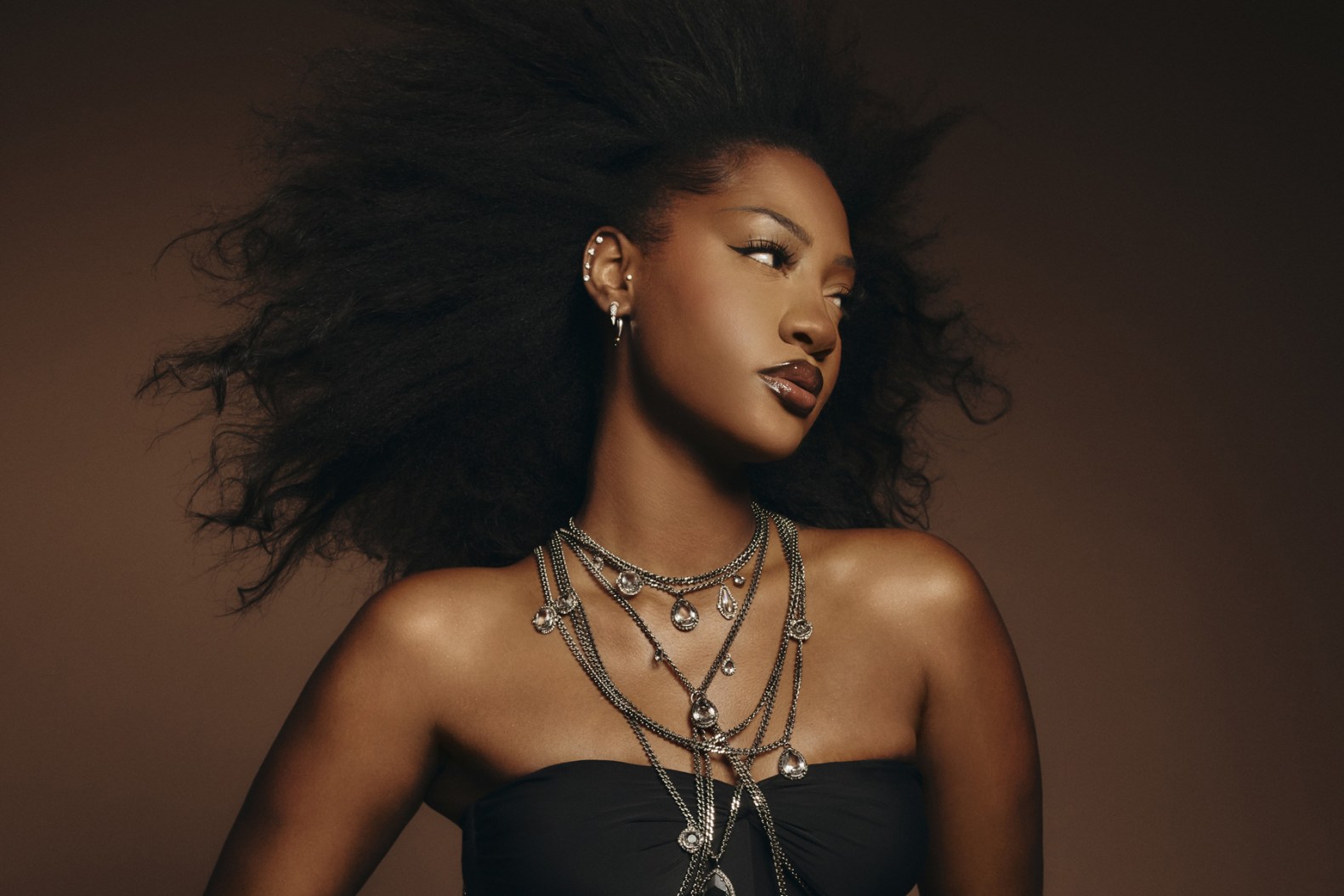

Temilade Openiyi, known to the world as Tems, did something no Nigerian woman in popular music had done before her. She self-produced her own debut single, refused to sit inside the bubblegum lane the industry had built for female Afrobeats artists, and within five years had a Grammy, a Golden Globe, an Academy Award nomination, and the first Billboard Hot 100 number one of any Nigerian woman’s career. She wrote her way into rooms that the genre had not been allowed inside.
This Tems biography traces the arc from a quiet, bullied Lagos schoolgirl with a contralto voice nobody wanted to hear to the most artistically respected voice of the new African pop generation, with full context on her age, net worth, family, discography, awards, and the cultural impact she has had on Afrobeats, R&B, and global pop.
| Quick Facts: Tems | |
|---|---|
| Full Name | Temilade Openiyi |
| Stage Name | Tems |
| Date of Birth | June 11, 1995 |
| Age | 30 (as of 2026) |
| Place of Birth | Lagos, Nigeria |
| Nationality | Nigerian (raised partly in the United Kingdom) |
| Profession | Singer, Songwriter, Record Producer |
| Years Active | 2018 - present |
| Genre | Afrobeats, Afro-Soul, R&B, Alté |
| Net Worth (est.) | $8 million (2026) |
| Partner | Not publicly known |
| Children | None publicly known |
| Education | Dowen College (Lagos); Monash South Africa - Economics |
| Record Label | Leading Vibe / Since ’93 / RCA Records |
| Social Media | Instagram: @temsbaby | X: @temsbaby |
Table of Contents
Early Life and Background
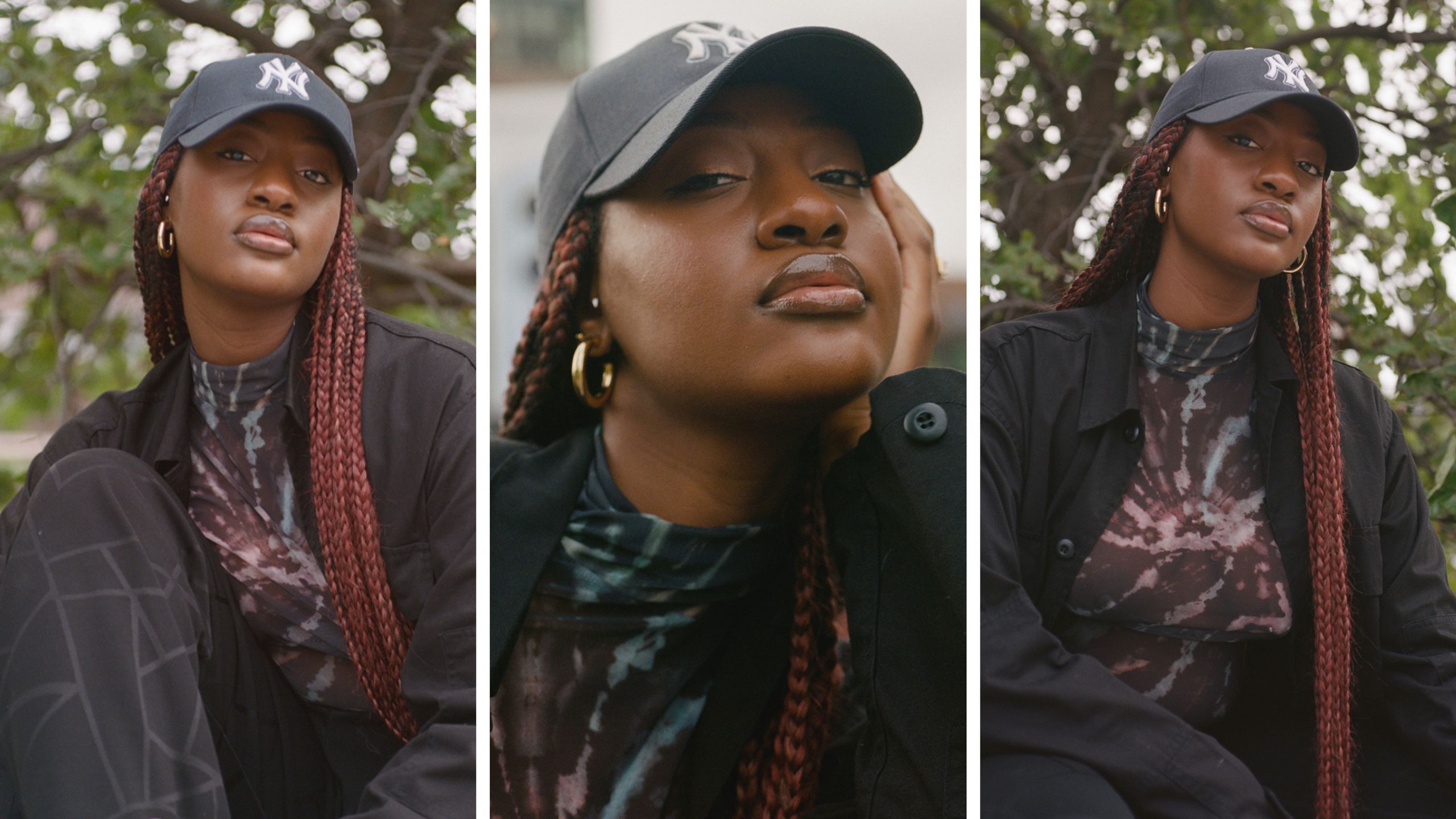
Temilade Openiyi was born on June 11, 1995, in Lagos, Nigeria, to a Nigerian mother and a British-Nigerian father. The family relocated to the United Kingdom shortly after her birth, but the move did not last. Her parents separated when she was around five years old, and her mother brought Tems and her older brother back to Lagos to start over. That early disruption shaped her in ways she has spoken about openly in interviews: a quiet child raised primarily by a single mother, watching the household rebuild itself from scratch.
Back in Lagos, the family moved through several neighbourhoods, including Ilupeju, Lekki, and Ajah. Her mother worked to keep the household stable, and Tems has credited her with the discipline and emotional steadiness she now associates with her own creative process. She has not publicly named her parents.
The defining feature of her childhood was her voice. Tems sings in a deep contralto that did not match the higher-pitched range Nigerian girls were expected to have. She was bullied at school for it, told she sounded like a boy, told to sing quieter or differently. Rather than retreat, she internalised it. By her early teens she was teaching herself piano, listening obsessively to Asa, Lauryn Hill, Adele, Burna Boy, Coldplay, Paramore, and Sade, and writing songs in private. Sade in particular became a north star - the same restrained, husky, minor-key tone that Tems would later make her own commercial signature.
Education
Tems attended Mainland Preparatory School in Lagos as a child and later Dowen College, a private secondary school in Lekki, for her secondary education. At Dowen she participated in the school choir, though she has said the experience was mixed because the same voice that singled her out as a vocalist also drew the bullying that followed her through her teens.
For her tertiary education she travelled to Monash South Africa, the Johannesburg campus of the Australian university, where she earned a degree in economics. The choice was practical. Music was already her obsession, but neither her family nor the broader Nigerian middle-class environment treated a music career as a stable option for a young woman. She finished the degree, returned to Lagos, and took a corporate digital-marketing job before deciding the day-job route was not going to hold. The economics degree is one of the under-discussed details of her story. She is one of the few Afrobeats stars who came up through a formal university programme abroad, and the discipline of it shows in how she runs her releases.
Career Beginnings
Tems released her debut single, “Mr Rebel,” on July 18, 2018. She wrote and produced it herself, which made her almost unique among Nigerian female artists of the era. The Lagos industry was built around a producer class - Don Jazzy, Sarz, Pheelz, Killertunes - and women who fronted records almost always sang to beats men had made for them. Tems handed in a song she had constructed on her own laptop and forced the industry to read it on her terms.
The song did not chart commercially, but it found an audience inside the alté scene, the loose Lagos collective of Cruel Santino, Odunsi (The Engine), Lady Donli, and others who were rejecting mainstream Afropop conventions. She followed it with “Try Me” on August 7, 2019, a darker, slower record that became her first proper viral hit. The chorus - “you thought I was weak, you thought I was meek” - landed because it sounded like a self-defence, and because the Nigerian internet was hungry for a female voice that was not trying to sound sweet.
By 2020 she had assembled enough material for an EP. For Broken Ears, released on September 25, 2020, was almost entirely self-produced and confirmed what “Try Me” had hinted at: she was not a singer with a producer attached, she was a producer who happened to sing. The EP’s stand-out track, “Damages,” peaked at number one on the Nigerian Apple Music chart and number six on TurnTable’s then-newly launched Top 50, while “Higher” - the closing track - quietly set up the moment that would change her life two years later.
The Breakthrough

The turning point arrived on October 30, 2020, on a Wizkid album she was not originally booked to be on. Wizkid was finishing Made in Lagos and had been told about a new singer worth listening to. He invited her to the studio. The song they made together, “Essence,” was buried at track number eight on the album. There was no marketing plan around it. It was supposed to be an album cut.
It became the first Nigerian song to enter the top 10 of the Billboard Hot 100. Through 2021 it built slowly, then fast, then internationally, helped by a Justin Bieber remix that pushed it to a peak of number nine in October 2021. Barack Obama put it on his summer playlist. Beyonce praised it publicly. The Tonight Show booked Wizkid and Tems to perform it together. For Tems specifically, “Essence” did something her own singles had not yet managed: it proved that her voice, in the context of a global pop record, did not need translating. It worked everywhere.
RCA Records signed her in September 2021 through their Since ’93 imprint, the same week she released her second EP, If Orange Was a Place. Apple Music named her their Up Next artist. By the end of 2021 she was the first African act in history to have two songs in the top 40 of the Billboard Hot 100 at the same time. The arc from “Mr Rebel” to RCA had taken three years, which is fast by any global pop standard and almost unheard of for a self-produced Nigerian woman.
Career Highlights and Major Works
“Essence” with Wizkid (2020)

“Essence” remains the song most responsible for her global crossover. Recorded in Lagos, released as the eighth track of Made in Lagos, and remixed with Justin Bieber a year later, it peaked at number nine on the Billboard Hot 100 and made history as the first Nigerian song to crack the top 10. It earned a Grammy nomination for Best Global Music Performance at the 2022 ceremony. More importantly, it gave her an international platform that she then used to build her own catalogue rather than chase features.
“Wait for U” with Future and Drake (2022)
In April 2022, Future released his ninth studio album, I Never Liked You. Track eight, “Wait for U,” sampled Tems’ “Higher” so heavily that she was credited as a featured artist alongside Drake. The song debuted at number one on the Billboard Hot 100 - her first chart-topping single, Drake’s tenth, Future’s first as a lead artist. The next February it won the Grammy Award for Best Melodic Rap Performance at the 65th Annual Grammy Awards, giving Tems her first Grammy. In 2024 she became the first African female artist to clock one billion Spotify streams on a single track, on “Wait for U.”
“Lift Me Up” with Rihanna (2022)
Months later, Rihanna ended a six-year recorded-music silence with “Lift Me Up,” the lead single from Black Panther: Wakanda Forever. Tems co-wrote the song with Ludwig Goransson, Ryan Coogler, and Rihanna as a tribute to Chadwick Boseman. It won the Golden Globe for Best Original Song in 2023 and earned Academy Award and Grammy nominations. Tems became the rare Afrobeats-adjacent figure with a writing credit on a Marvel soundtrack centrepiece - and she did it without singing on the track herself, which was its own kind of statement about her range as a songwriter.
“Free Mind” and the Global Charts (2022)
“Free Mind,” originally from For Broken Ears in 2020, re-entered the global conversation in 2022 after going viral on TikTok. It debuted on the Billboard Hot 100 a full two years after its release - an unusual catalog-revival moment that proved her early independent material had a long international tail. It became the bridge between her EP era and her debut album cycle.
Born in the Wild (2024)
Her debut studio album, Born in the Wild, dropped on June 7, 2024, via Since ’93 and RCA Records. It featured guest verses from J. Cole and Asake, and was framed in interviews as a survival record - her account of the four years between “Essence” and the album, processed at album length. Critics broadly welcomed it as the album the breakthrough had been waiting for. At the 67th Annual Grammy Awards in 2025, the project earned three nominations: Best Global Music Album for the LP, Best R&B Song for “Burning,” and Best African Music Performance for “Love Me JeJe.” She won the latter, making her the first Nigerian artist to win multiple Grammys.
For more on the rising women of the genre, explore our Afrobeats coverage on Sidomex Entertainment.