How Afrobeats DJs Make Their Money: Fees, Mixes, Events and Brand Deals
Jalen Ross··13 min read
Ad SpaceArticle Top - 728x90
Advertisement
Walk into Quilox on a Friday at 1:47 a.m. and the man behind the CDJs is not just spinning Asake into Davido into a Burna Boy edit. He is running a small business. The fee for that four-hour set, the bottle-service kickback, the Hennessy banner above the booth, the phone-number swap with the bride who just booked her sister’s October wedding, the mix that will hit Apple Music on Monday morning. Every one of those is a separate revenue line. The modern Afrobeats DJ is a media company with one employee, a flight case, and a laptop full of unreleased edits Wizkid sent at 3 a.m.
The money in this scene is real, and it scales in stranger ways than most fans realise. A club resident in Victoria Island can out-earn a touring DJ who plays bigger rooms in London because the residency pays weekly and the touring DJ has a manager, an agent, a visa lawyer and a hotel bill. Understanding how Spinall, Tunez, Cuppy, Jimmy Jatt, Neptune and the rising tier of DJ Sose and DJ Krowbar actually pay their rent is a study in stacked income streams, each one feeding the next.
The booking fee is the headline number, not the biggest one
Booking fees are what fans talk about and what trade press loves to print. They are also the most public, most negotiated and most misleading number in any DJ’s accounts. Nobody in Lagos publishes a rate card, and the figures that circulate come from bookers, event planners and DJs comparing notes rather than from anything auditable. The table below sets out the bands that people inside the circuit describe. Treat every row as a working estimate rather than a quoted price, because the same DJ will take a Wednesday slot at a fraction of their Saturday number and a corporate client will pay a multiple of both for the same four hours.
Booking type
Range described by bookers and DJs
Lagos club night
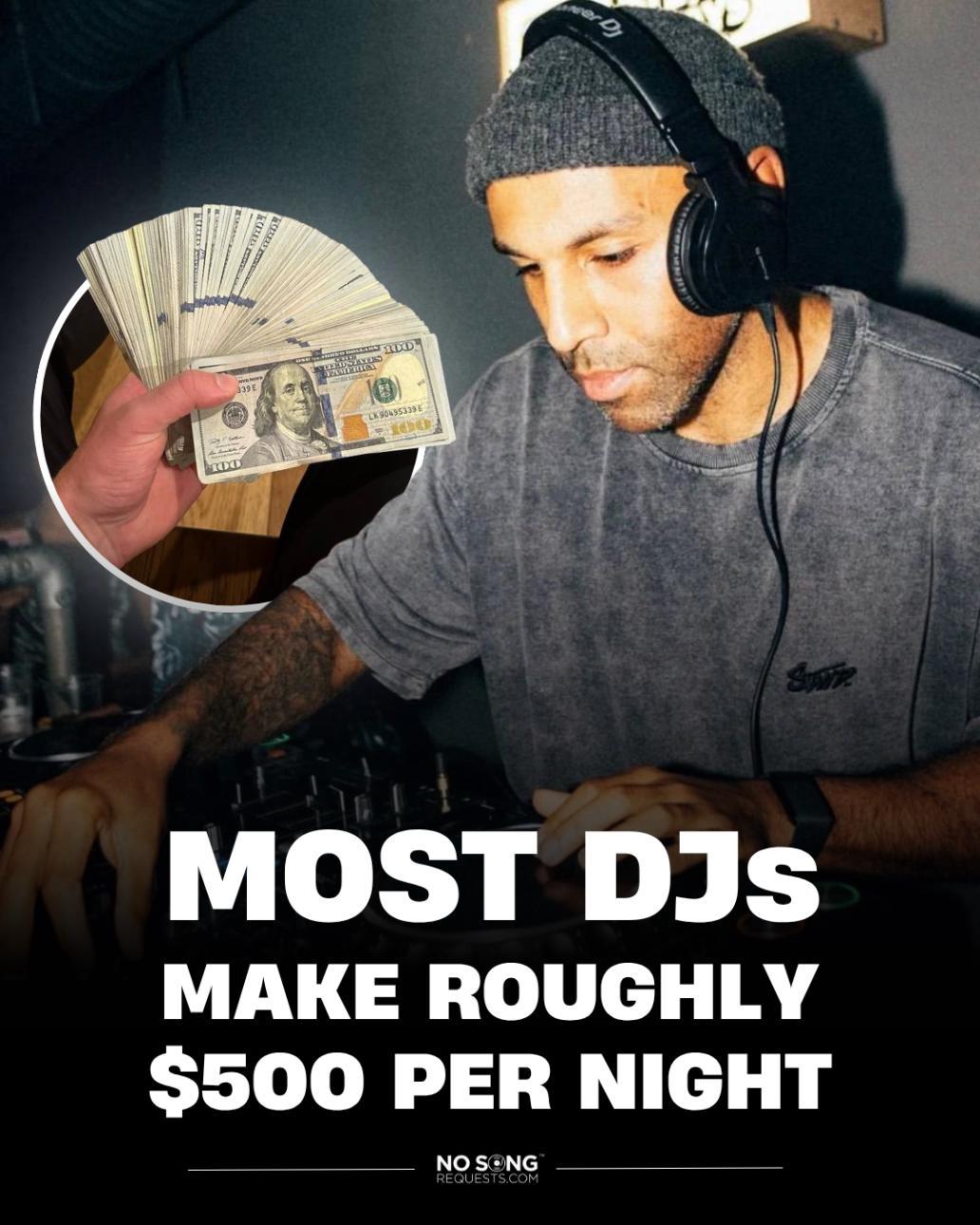
$500 to $5,000
Corporate event
$5,000 to $50,000
Society wedding
₦500,000 to ₦5m
Tour DJ, per show
$5,000 to $15,000
Radio residency, monthly
₦250,000 to ₦1.5m
Club residency, per night
₦300,000 to ₦1.5m
Indicative bands reported inside the Lagos and touring circuit, not confirmed fees.
Lagos club nights: the steady five hundred to five thousand dollar bracket
A working Lagos club DJ with a real name in the scene pulls between $500 and $5,000 for a single night, paid in naira at the prevailing rate, sometimes half in dollars if the venue caters to expat crowds. The lower end is a Wednesday warm-up at a Lekki lounge. The upper end is a Saturday headline at Quilox, Hard Rock Cafe Lagos or a pop-up at Landmark Beach when an album rollout is happening.
DJ Obi, DJ Consequence and the rotating club residents who have built their names on the Lagos Island circuit live in this bracket. The fee is rarely the whole story. A resident who plays the same room three Fridays a month is also getting a flat retainer, a percentage of door on themed nights, and occasionally a cut of bottle sales above a threshold. The booking fee gets quoted. The retainer pays the bills.
Corporate events: where the real cheques get cut
A bank end-of-year, a telco launch, an oil and gas executive’s fiftieth, a Lagos Business School alumni night. These are the gigs that change a DJ’s year. Corporate fees run from $5,000 to $50,000 depending on the brand, the headline act on the bill, and whether the DJ is opening for a Davido or holding the whole night alone.
The fifty thousand dollar number is not theoretical. A Big Four bank booking Spinall or Neptune for a flagship anniversary in Eko Hotel is paying that range, often more once the riders, the equipment hire, the two-DJ tag-team format and the after-party extension get added. The same DJ working a smaller fintech holiday party three weeks later might do it for eight thousand, because the brand is smaller and the relationship is being seeded for the next year.
Weddings: the quiet engine of every Lagos DJ’s calendar
Owambe culture is what keeps the lights on. A Lagos society wedding pays a DJ between five hundred thousand and five million naira per event, with the top tier reserved for three-day affairs where the same DJ holds the introduction on Friday, the white wedding on Saturday and the after-party on Sunday night.
Five million naira gets you a name. The bride’s father wants his guests to recognise the DJ when they walk in. That is why Jimmy Jatt and the veteran tier still book weddings well into their fifties. The fee is partly performance and partly social proof. The same logic explains why a wedding planner will tell a couple they need a DJ who costs at least three million. In that sentence the price is the product.
Outside the top tier, working wedding DJs in Lagos pull five hundred thousand to one and a half million for a single event, and a busy one will play six to ten weekends a month between November and April. That run alone, set against a Lagos cost of living, is a comfortable upper-middle-class income before any other revenue line opens up.
Touring with an artist is glamorous, but the math is different
The fantasy gig is being Wizkid’s tour DJ, Burna Boy’s tour DJ, Davido’s tour DJ. The reality is a per-show fee, a per-diem, and a calendar that belongs to someone else. A tour DJ does not choose the routing, does not choose the venues, and cannot take the Saturday wedding in Ikoyi that would have paid better than the Tuesday in Manchester. What they get instead is proximity, which is its own currency. The artist’s manager becomes a contact. The promoter in Amsterdam becomes a contact. The brand rep who flew in for the London date becomes a contact. Six months after the tour ends, those relationships are what convert into the bookings the DJ actually keeps the money from.
Per-show rates on the global Afrobeats circuit
Tour DJs riding with the top Afrobeats acts earn between $5,000 and $15,000 per show. DJ Tunez, who has been Wizkid’s primary tour DJ for years, sits in the upper half of that range when Made in Lagos or More Love Less Ego touring is active. Poco Lee, whose role with the Wizkid camp blends DJ, hype-man, dancer and promoter, gets paid against a different structure that bundles performance, social content and brand association.
A thirty-show European leg at ten thousand a night sounds like three hundred thousand dollars. After agent commission, manager commission, a portion held back for taxes in whichever jurisdictions, flights between cities the artist’s team did not cover, and the simple fact that the DJ is on the road and not taking weddings at home, the net is closer to one hundred and forty thousand. Real money. Not the headline.
Festival headliner slots: the rarefied tier
When an Afrobeats DJ headlines their own slot at a festival, the fee jumps. Bookers describe main-stage and festival-sidebar slots for a name at Spinall’s level as landing somewhere between the mid five figures and the low six figures in dollars, with the higher end reached when the festival is also paying for the brand association that comes with an Apple Music residency. None of those deals are public, and the spread between two festivals in the same summer can be enormous.
DJ Cuppy’s festival fees follow a different curve. The Otedola last name and the philanthropic profile mean she is often booked as a personality-DJ combination, where the fee covers a set plus a panel or a brand activation tied to one of her foundation initiatives.
Mixes are free, and that is the point
Every working Afrobeats DJ puts out mixes. Soundcloud, Audiomack, Apple Music, Boomplay, Mixcloud. They are released for nothing, and they are the most important free product in the entire business. A mix is a demo, a business card and a marketing campaign folded into one file. It proves the DJ can read a room they have never stood in, it travels to promoters and brand managers who will never see them play live, and it dates itself fast enough that the DJ has a reason to make another one next month. The DJs who treat mixes as an afterthought tend to be the DJs whose booking calendars thin out quietly over two or three years.
The Spinall and Apple Music model
Spinall’s residency with Apple Music’s Africa Now playlist and his Magic Trip mix series put him in front of a global audience without a single ticket sold. The model is simple: Apple gets exclusive or window-exclusive content from a credible Afrobeats curator, the curator gets distribution, editorial placement on the platform’s African and global charts, and a structured fee for the residency itself. The fee itself is not the prize. The platform position is.
That position translates directly into bookings. A festival programmer in Toronto looking for an Afrobeats DJ in 2024 finds Spinall through Apple Music before they find him through Instagram. The mix that earns nothing in direct streaming royalties is the reason a five-figure festival fee arrives six months later.
Ad SpaceIn-Article - 300x250
Advertisement
Boomplay, Audiomack and the streaming royalty trickle
DJ mixes on Boomplay and Audiomack do generate streaming royalty splits when the platforms have struck rights deals with the labels whose songs appear in the mix. The cheques are small for most DJs. A mix with two hundred thousand plays on Boomplay might net the DJ between three hundred and eight hundred dollars, after splits with the rights holders of the included tracks.
The serious money in the mix economy is mixtape sponsorship. A spirits brand or a telco pays a DJ between two and fifteen thousand dollars to attach their name and a short audio drop to a mix that the DJ would have released anyway. The mix gets a sponsored intro, a branded title card on social, three Instagram posts and a story sequence. The DJ keeps full creative control of the music. Everyone wins.
Brand deals are the second income, and sometimes the first
Walk through any Afrobeats DJ’s Instagram grid and count the bottles. Hennessy. Smirnoff. Glenfiddich. Jameson. Martell. Hugo Boss in the rare crossover into fashion. These are not free posts, and the DJs who look like they are simply enjoying a night out are usually working through a contracted deliverable schedule. Brand money behaves differently from booking money. It arrives on a quarterly cycle rather than the night of the gig, it survives a slow wedding season, and it comes with a clause about which competing brands cannot appear in frame. For a lot of working DJs the endorsement line has quietly overtaken the fee line as the thing that pays the rent.
The spirits category dominates
Hennessy has been the single most active sponsor of Afrobeats DJ culture for a decade. The Hennessy Artistry events, the Hennessy VS x Davido and Wizkid-era campaigns, and the ongoing club activations across Lagos, Accra and Nairobi run on a roster of contracted DJ ambassadors. Managers describe an annual spirits deal for a mid-tier club DJ with regional reach as landing somewhere in the fifteen to forty thousand dollar band, covering a defined number of appearances, social posts and event hosting slots. A top-tier name is said to sign for six figures, though the contracts themselves stay sealed.
Smirnoff, through the Smirnoff Battle of the Beats franchise, has paid DJs as competitive prize money and as paid hosts. Glenfiddich and Martell sit at the premium end and pay accordingly, with smaller rosters and tighter brand-fit requirements. The DJ who lands a Glenfiddich annual is usually older, polished, and books weddings as easily as clubs.
Telcos, fintechs and the new sponsorship money
MTN, Glo and Airtel have all rotated DJ ambassadors through their music platform pushes. The fees are competitive with spirits, and the campaigns often bundle radio, TV and out-of-home, which means the DJ gets a billboard somewhere on Third Mainland Bridge for ninety days. Fintech sponsors including Opay, PalmPay and Moniepoint entered the music sponsorship space hard between 2022 and 2025 and now sit alongside the traditional categories. Their DJ deals tend to be shorter, more event-driven and more performance-marketed than the spirits deals.
Radio residencies, club residencies and the steady paycheck
The DJs who survive long careers in this business almost all have a residency of some kind. Booking fees are volatile, seasonal and dependent on somebody else’s marketing budget. Residencies are not. A residency turns a DJ into a fixture, and a fixture gets remembered by the people who commission everything else. It also enforces the discipline of preparing new material on a schedule, which is the difference between a DJ who is current and a DJ who is coasting on a set they built three years ago.
Beat FM, Cool FM, Soundcity Radio
A weekly radio residency on Beat FM Lagos, Cool FM, or Soundcity Radio pays between two hundred and fifty thousand and one and a half million naira a month depending on the slot, the DJ’s name, and whether the show carries title sponsorship. The cash is decent. The on-air mention every week is priceless. A radio DJ who runs the Friday drive-time mix becomes the default name that wedding planners and corporate event bookers think of when they need someone.
Jimmy Jatt built the template. The Jimmy Jatt Show on radio, the Industry Nite events, the Jimmy’s Jump-Off legacy. Through all of it the radio residency was the spine that held a thirty-year career together. Newer DJs like DJ Sose and DJ Krowbar are building their names on the same model: pick a slot, hold it, become inseparable from it.
Club residencies
A weekly club residency at Quilox, Cubana, Hard Rock Cafe Lagos or a major Lekki lounge pays between three hundred thousand and one and a half million naira per night, plus the retainer structure already described. A DJ holding two residencies at non-competing venues nets six to twelve million naira a month in residency cash alone, before any wedding, corporate or brand work.
Production credits, curation deals and the crossover money
The Afrobeats DJ who learns to produce changes their economics permanently. Playing other people’s records, however well, means renting an audience for four hours at a time. Making records means owning something that keeps paying after the room empties. The transition is not easy, and plenty of excellent selectors never manage it, but the ones who do stop being priced as performers and start being priced as rights holders.
DJ Neptune and the producer-DJ hybrid
DJ Neptune’s Greatness albums, executive-produced compilations with original songs featuring the biggest names in Afrobeats, are not DJ mixes. They are albums he wrote, produced, A&R’d and released under his own name. The royalty structure for an original production is fundamentally different from a mix. Neptune earns publishing, master royalties, mechanical splits and synch opportunities every time Nobody featuring Mr Eazi gets placed in a Netflix series or a Premier League highlight reel.
The same model has worked for DJ Spinall on his Ten and Grace albums. The recognition that follows original production work is a different order of thing from the recognition that follows a good set, because it attaches to a credit rather than to a night. It compounds every other revenue line. Bookings go up, brand deals go up, the Apple Music residency hardens, and the DJ stops being quoted as a DJ.
Album curation: the DJ Big N model
DJ Big N’s The Trumpet, the Mavin Records project he curated, sits between a DJ mix and a producer album. He selected the artists, sequenced the songs, oversaw the rollout. The fee structure for a curator role at a major label is a flat curation fee plus a percentage of net receipts, usually capped. For a Mavin-scale project, people who have negotiated similar deals describe an upfront curation fee somewhere between the high six figures of naira and the low millions, with backend tied to streaming performance.
Sound systems, equipment hire and the side businesses
Spinall owns equipment. He rents it back to events that book him and to events that do not. The sound system rental business in Lagos is fragmented and lucrative. A full club-grade rig, line array, subs, mixers, lighting, DJ booth, rents for between three hundred thousand and one and a half million naira per event. A DJ who owns the rig and supplies it to the same wedding he is playing has just doubled his single-event revenue.
Several upper-tier DJs run quiet equipment hire businesses on the side, usually through a sibling or a long-time roadie. The DJ name attracts the booking. The hire company collects a second invoice.
What a Lagos DJ’s Year Actually Adds Up To
Stack every line and the shape of a career becomes visible. Bookers and managers describe a top-tier Afrobeats DJ in the Spinall, Neptune, Cuppy or Tunez bracket as clearing somewhere in the mid six figures of dollars in a hot year, with the very best calendars pushing toward seven. A middle-tier club and wedding DJ working steadily in Lagos is generally put in the low six figures across the same lines, most of it earned and spent in naira. A rising DJ in the Sose or Krowbar tier is building from a five-figure base toward that middle. None of these are audited numbers, and every one of them swings with the exchange rate, the wedding season and whether an album rollout happened that year.
The bottle service kicks in around midnight. The bride’s father has already paid for the white wedding next month. The Hennessy banner is up. The Apple Music notification just buzzed on the laptop next to the CDJ. Asake drops into Burna Boy drops into an unreleased Wizkid edit, the room loses its mind, and somewhere in the booth a small business closes another good night.
Ad SpaceIn-Article - 300x250
Advertisement
Share
Get the recap
Loved this story? Get more like it.
Join readers who get our weekly entertainment recap - the stories worth your time, delivered every Friday.
No spam. Unsubscribe anytime. By signing up you agree to our Privacy Policy.