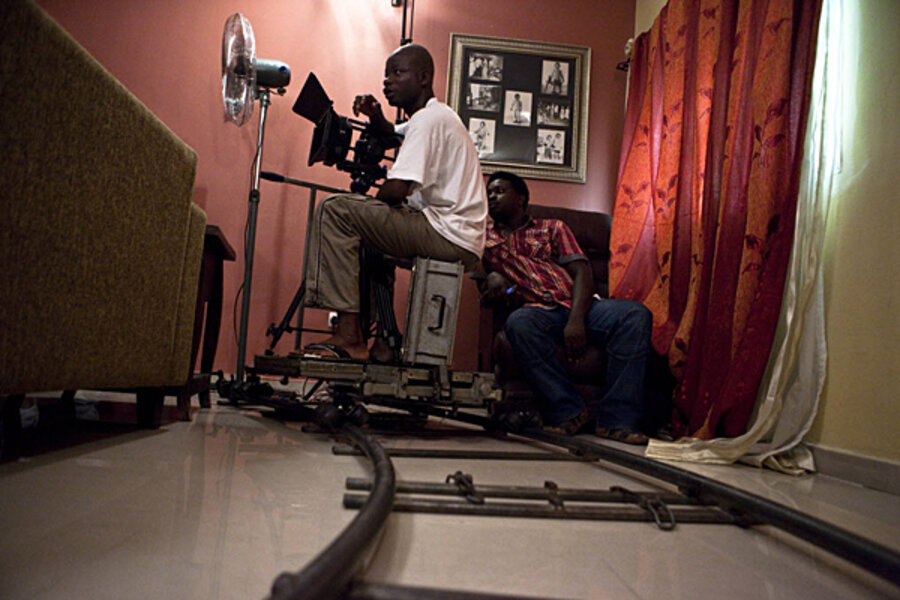
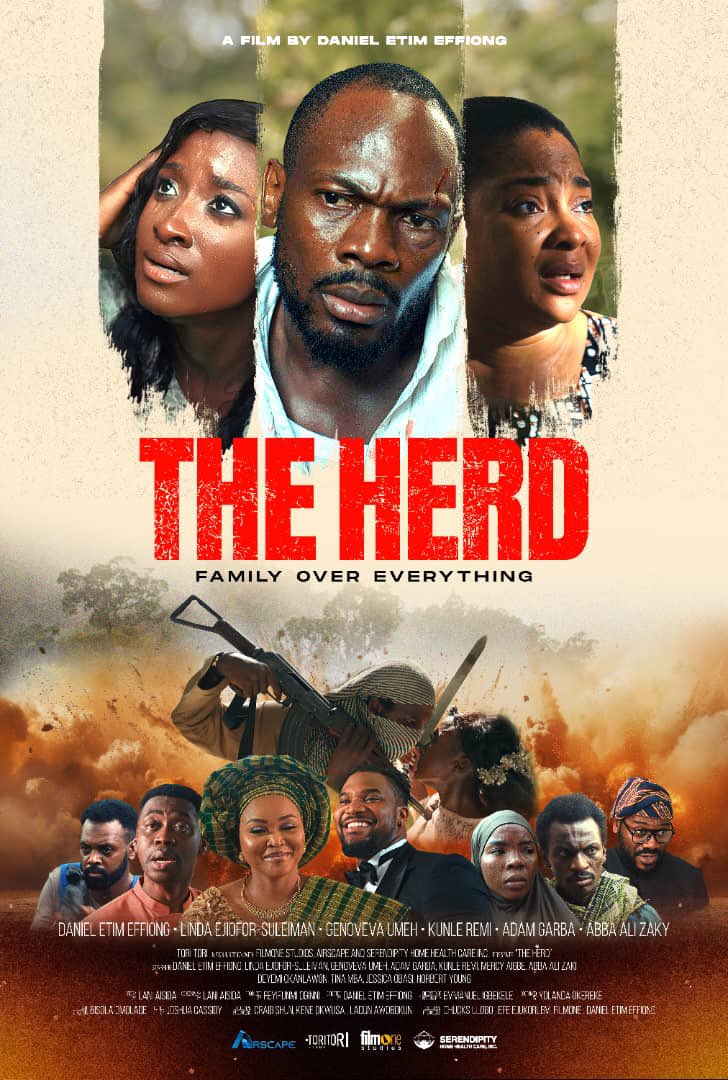
On a film set in South West Nigeria, a director stood behind the monitor watching a kidnapping scene unfold for what must have felt like the hundredth time. The man calling the shots had spent more than a decade in front of cameras, not behind them, and yet here he was, shaping a thriller about herdsmen abductions that would carry the weight of a national fear onto the screen. That director was Daniel Etim Effiong, an actor whose reputation had been built quietly, scene by scene, until the industry looked up one day and realized he had become one of the most trusted dramatic presences in the new Nollywood. The film was “The Herd,” and it would mark the moment his career stepped into a louder chapter.
For a long time, his name carried a particular kind of respect, the sort reserved for actors who never chased the spotlight but always seemed to earn it. He was the performer who showed up, did the work, and left the noise to others. That restraint is exactly what makes the present moment so striking. The man who built his name on stillness has just delivered one of the most talked-about Nigerian films of the year, and he did it from the director’s chair.
A Childhood Shaped By Hardship
The path that led Daniel Etim Effiong to a Cannes panel and a wall of award nominations began far from any film set. He was born on June 24, 1988, in Jaji, Kaduna State, into a family whose story reads like the kind of drama he now brings to the screen. His father, Moses Effiong, was a lieutenant colonel in the Nigerian Army who was accused in connection with the 1985 Mamman Vatsa coup plot and sentenced to life imprisonment when Daniel was only a year old. The boy grew up moving between Benin City, Lagos, and Abuja, navigating a childhood marked by absence and difficulty.
That early instability gave him a thick skin and a long view of what struggle actually costs. It also gave him stories. The kind of upbringing that forces a child to read rooms, to understand silence, to recognize the difference between what people say and what they carry. Those are the exact instincts that later defined his work as an actor, where so much of his craft lives in the unspoken.
The Path Into Nollywood
There was nothing inevitable about an acting career. Daniel attended St. Mary’s Private School on Lagos Island, then Government College, Ikorodu, before earning a first degree in chemical engineering at the Federal University of Technology, Minna, in Niger State. He went into the oil and gas sector, the kind of steady, respectable track that many Nigerian families pray for. On paper, he was set.
The pull toward storytelling proved stronger. He spent a few years at Ndani TV, the digital platform that became a launchpad for a generation of Nigerian screen talent, and the experience reshaped his sense of what he wanted to do with his life. Rather than dabble, he committed fully. He travelled to South Africa and studied at AFDA in Johannesburg, the film school known for its motion picture training, where he earned a degree in motion picture arts. That decision matters. It tells you something about the man, that he treated acting and filmmaking not as a lucky break to stumble into but as a discipline to be learned properly.
His first real screen credit came in 2011, when he appeared in the web series “Goddamit It’s Monday,” part of the early wave of online Nigerian content that predated the streaming boom. From there he began building, role by role, in an industry that does not always reward patience.
The Breakout Roles
For years, Daniel Etim Effiong was a familiar face long before he was a headline. He turned up in projects that defined a certain modern, urban Nollywood, the kind that traded village melodrama for stories about young professionals, ambition, and complicated relationships. He featured in “Gidi Up,” the EbonyLife series that helped set the template for stylish Lagos storytelling. He appeared in “The Men’s Club,” one of the most popular web series of its era, a show that turned conversations about masculinity and friendship into appointment viewing.
His range kept widening. He was part of the cast of “Oloture,” the gritty Netflix film about a journalist infiltrating a human trafficking ring, a project that travelled well beyond Nigeria’s borders. He worked on “Castle & Castle,” the legal drama, and “Fishbone,” and he has carried roles in television and film that demanded very different registers, from comedy to crime to grounded family drama.
The breakthrough that put a spotlight on his leading-man credentials came in 2019 with “Plan B,” where he played Dele Coker, a Nigerian chief executive living in Nairobi. The performance earned him a nomination for Best Actor in a Comedy at the 7th Africa Magic Viewers’ Choice Awards in 2020. It was proof that the quiet workhorse could also carry a film and be recognized for it.
The Range Of A Serious Dramatic Actor
What separates Daniel Etim Effiong from many of his peers is not volume but depth. He is not the most prolific actor in Nollywood, and he has never tried to be. Instead, he has cultivated a reputation as a performer you cast when a role needs interior life, when a character has to communicate more through a held gaze than a raised voice.
That seriousness has been rewarded. He took home the Best Actor prize for his role in “Kofa” at the Africa International Film Festival in 2022, a win on the festival circuit rather than the popular-vote stage, which says something about the regard in which serious film people hold him. He earned another Best Actor nomination at the Africa Magic Viewers’ Choice Awards in 2023, and he has drawn recognition from the Africa Movie Academy Awards conversation for leading dramatic work.
He belongs to a cohort of actors who treat Nollywood as a craft worthy of the same rigour as any global film industry. He studied formally. He chooses roles deliberately. And he carries himself with a professionalism that has made him a steady, bankable presence in an industry that is still maturing in how it develops and protects its talent.
The Producing And Directing Side
The move that has reshaped the public conversation about Daniel Etim Effiong is his step behind the camera. In 2025, he made his directorial debut with “The Herd,” a crime thriller set in South West Nigeria. The film tells a tense, human story rooted in one of the country’s most painful realities, the experience of being kidnapped by herdsmen, an anxiety that has gripped large parts of Nigeria. It is a story about love, survival, and sacrifice, where every choice carries a cost.