


Table of Contents
- Understanding How Auditions Work
- Before the Audition: Preparation Is Everything
- Analyzing the Script and Character
- Memorization Techniques That Work
- In the Audition Room: What to Expect
- Self-Tape Auditions: The New Normal
- Common Mistakes That Kill Auditions
- Handling Rejection and Building Resilience
- Where to Find Auditions as a Beginner
- Key Takeaways
- Frequently Asked Questions
Understanding How Auditions Work
Walking into an audition room for the first time can be terrifying, but understanding the process takes much of the mystery - and anxiety - away. These acting audition tips for beginners start with the basics of how the casting process actually works.
A typical casting process involves several rounds. First, there is a casting call or breakdown, which describes the roles being cast and the requirements (age range, appearance, special skills). Your agent submits you, or you submit yourself if it is an open call. If selected, you attend the first audition (sometimes called a “pre-read”), where you perform the sides (the selected scenes from the script) for a casting director. If you make a strong impression, you may be called back for a “callback” - a second audition with more decision-makers, sometimes including the director and producers. For major roles in film and television, there can be three to five rounds before a final decision.
Here is a reality check that every beginner needs to hear: even the best actors book roughly 1 in 20 to 1 in 50 auditions. Bryan Cranston has spoken openly about going on hundreds of auditions before landing “Breaking Bad.” Lupita Nyong’o auditioned for years before her breakthrough in “12 Years a Slave.” The audition is not about being perfect - it is about being prepared, authentic, and memorable. These acting audition tips for beginners will help you maximize your chances every time you step into the room.
Before the Audition: Preparation Is Everything
The most important of all acting audition tips for beginners is this: preparation separates the amateurs from the professionals. Casting directors can tell within seconds whether an actor has done their homework.
Read the Entire Script (If Available)
If the full script is available, read it - not just your sides. Understanding the entire story gives you context for your character’s journey, relationships, and emotional arc. If only sides are provided, read them multiple times and imagine what happened before and after the scene. What does your character want? What is standing in their way? What just happened to them before this scene began? These questions inform your performance in ways that are immediately apparent to casting directors.
Research the Project
Know what you are auditioning for. Is it a network television drama? An indie film? A commercial? A web series? Each format has different performance styles. Film and television require subtle, naturalistic performances. Theater requires larger, more projected energy. Commercials require warmth, likability, and quick emotional shifts. Understanding the format helps you calibrate your performance appropriately.
Research the Creative Team
Look up the director, writer, and production company. Watch their previous work if possible. Understanding their style helps you align your performance with their creative vision. If a director is known for naturalistic, improvisation-heavy work (like the Duplass brothers), a big theatrical performance is the wrong choice. If a director creates stylized, heightened worlds (like Wes Anderson), a flat realistic read might miss the mark.
Know the Casting Director
Casting directors are your advocates in the room. They want you to succeed because your success reflects well on them. Research who is casting the project. Follow casting directors on social media - many share audition tips, casting notices, and insights into what they look for. Building a reputation with casting directors who work in your type range is one of the most effective long-term career strategies in acting.
Analyzing the Script and Character
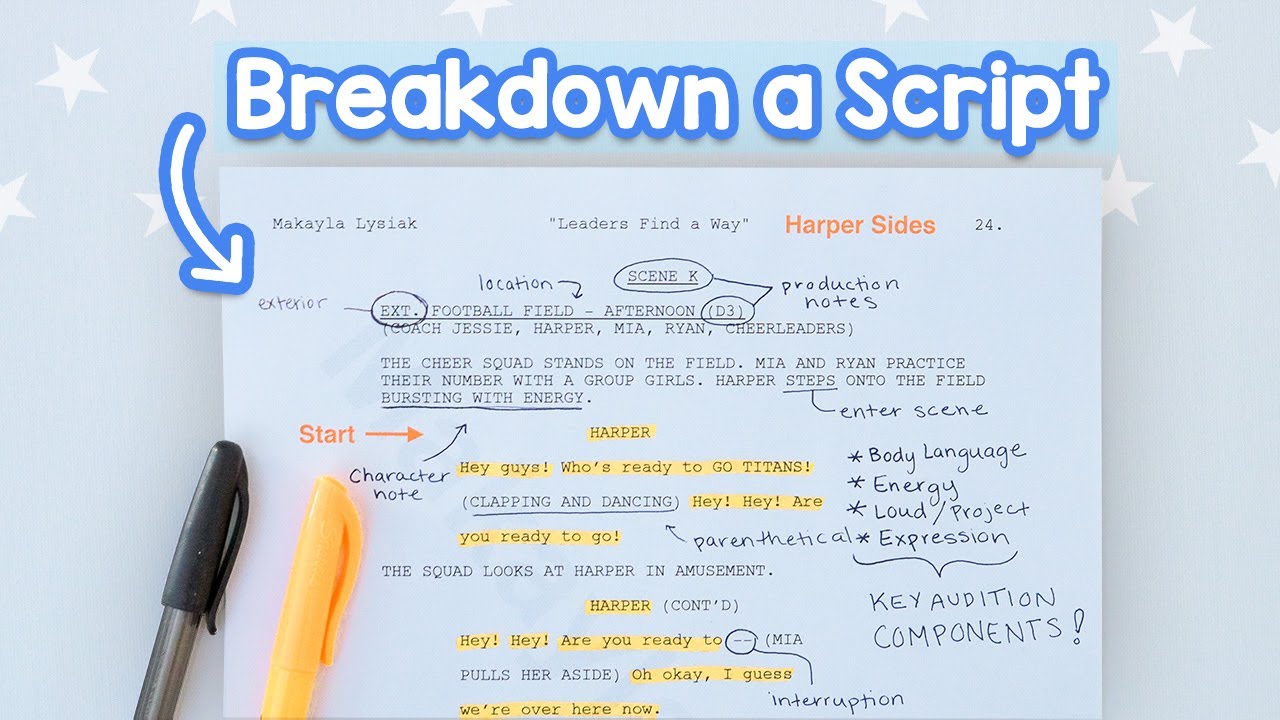
Strong script analysis is what transforms a reading into a performance. Here is a practical framework for breaking down your sides.
Identify the Objective
Every character in every scene wants something. Your objective is what your character is trying to achieve in this specific scene. It should be active and playable - something you can pursue through your actions and words. “I want to convince my mother to let me move to New York” is a strong objective. “I feel sad about leaving” is not an objective - it is a state of being that gives you nothing to play.
Identify the Obstacles
Drama comes from conflict. What is preventing your character from getting what they want? The obstacle might be another character who disagrees, an internal fear, a time constraint, or a moral dilemma. The tension between what your character wants and what stands in their way creates the energy that makes scenes compelling.
Find the Beats
A “beat” is a moment where something shifts in the scene - a new tactic, a new piece of information, an emotional change. Mark the beats in your script. Each beat represents a transition where your character adjusts their approach. Playing these shifts gives your performance dynamic range and prevents the common beginner mistake of playing the entire scene at one emotional level.
Make Bold Choices
Casting directors see dozens of actors perform the same scene. The performances that stand out are the ones that make specific, committed choices. If the scene says your character is angry, decide specifically what kind of angry - cold and controlled? Explosively frustrated? Sarcastically venomous? Making a bold, specific choice (even one the casting director might not agree with) is always better than playing it safe with a vague, generalized emotion.
Memorization Techniques That Work
Memorizing sides is expected for most auditions, though it is acceptable to hold the script as a reference. Here are effective memorization techniques.
Understand Before Memorizing
Never try to memorize lines before you understand what they mean and why your character says them. When you understand the logic behind each line - what your character wants and how each line serves that objective - the words become much easier to remember. Rote memorization without comprehension leads to flat, mechanical delivery.
The Blocking Method
Break the scene into small sections (three to five lines each). Memorize the first section until you can recite it without looking. Then memorize the second section. Then practice both together. Continue adding sections until you have the entire scene. This building-block approach is more efficient than trying to memorize the whole thing at once.
Record and Listen
Record the scene on your phone with a friend reading the other character’s lines (or read them yourself in a neutral voice). Play it back while commuting, exercising, or doing chores. Auditory repetition reinforces memory through a different pathway than visual reading alone.
Move While Memorizing
Physical movement activates additional areas of the brain and strengthens memory formation. Walk around your room, gesture naturally, and let your body connect to the words. Many acting teachers advocate memorizing “on your feet” rather than sitting at a desk reading. This technique also helps you avoid looking stiff in the audition room because the physical and verbal memories are linked.
In the Audition Room: What to Expect
Knowing what happens in the room removes uncertainty and lets you focus on your performance. These acting audition tips for beginners cover the typical in-person audition experience.
Arrival and Check-In
Arrive 10 to 15 minutes early. Sign in at the reception area and fill out any required paperwork. You may be given new sides or adjustments to the material. If you receive new material, use the remaining waiting time to review it calmly. Do not socialize excessively in the waiting room - use the time to stay focused and in character.
Entering the Room
When called, enter with confidence and positive energy. Greet the casting director and anyone else in the room with a natural, friendly hello. Do not shake hands unless they initiate. Place your bag out of the way, take your mark (the designated standing position), and wait for them to tell you to begin. This moment sets the tone - casting directors form impressions within the first five seconds of meeting you.
The Performance
A reader (usually a casting assistant) will read the other characters’ lines with you. Look at the reader, not the camera or the casting director, during the scene. Commit fully to your choices. If you stumble on a line, stay in character and continue - do not break character to apologize. Casting directors care about your instincts and presence, not perfection.
Adjustments
After your first take, the casting director may give you an adjustment - “Can you try it angrier?” or “What if she is trying not to cry?” This is a great sign. It means they are interested and want to see your range. Listen carefully, take a breath, and commit fully to the new direction. Being directable is one of the most valued qualities in an actor.
Leaving the Room
Thank the room, collect your things, and leave promptly. Do not linger, do not ask how you did, and do not apologize for your performance. Project confidence even if you feel uncertain. What happens after you leave the room is out of your control - release it and move on to your next audition.
Self-Tape Auditions: The New Normal
Since 2020, self-tape auditions have become the primary audition format for many projects. Understanding self-tapes is essential among acting audition tips for beginners in 2026.