
Table of Contents
- From Montpellier to Seville: A Transfer That Felt Like a Breakthrough
- What Went Wrong on the Pitch
- Sevilla’s Financial Squeeze and Why It Changes Everything
- The Nigeria Connection: What This Means for the Super Eagles
- Who Might Actually Want Akor Adams Next
- Adams, Sevilla, and the Transfer Window That Could Define His Career
From Montpellier to Seville: A Transfer That Felt Like a Breakthrough

When Akor Adams completed his move to Sevilla from French side Montpellier HSC in the summer of 2024, it felt like a significant moment for Nigerian football. Here was a young, physically imposing centre-forward - born in Nigeria and raised through the football pathways of Europe - making his way into one of Spain’s most historic clubs. Sevilla, despite a turbulent few seasons, remain a La Liga institution with six UEFA Europa League titles to their name. For Adams, it was supposed to be his coming-out party on the biggest stage of his career. The narrative practically wrote itself: Nigerian striker earns his shot at Spain’s top flight, Super Eagles have a new weapon up front, and a club with a rich tradition of developing forwards finally has a rawly talented African striker to shape. The reality, unfortunately, has been considerably messier.

What Went Wrong on the Pitch
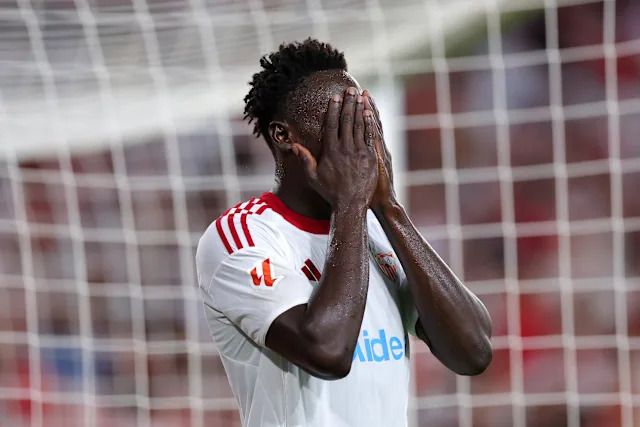
Adams arrived at Sevilla with genuine pedigree. His time at Montpellier had shown flashes of the kind of direct, powerful attacking play that scouts from bigger clubs had been monitoring closely. He had the physique to lead the line in a high-intensity league, the pace to get in behind defences, and the work rate that modern pressing managers demand. But La Liga proved to be a different beast entirely. The adjustment period that most forwards need when stepping up to Spain’s top flight was compounded by Sevilla’s own structural problems - the club had been through serious upheaval both in the boardroom and in their squad management, and integrating a new striker while simultaneously firefighting on multiple fronts was not the ideal environment for Adams to find his footing. His minutes on the pitch remained frustratingly limited, and when he did feature, the consistency that had made him so attractive as a prospect simply did not materialise in the way anyone had hoped. That gap between potential and performance, in a squad that desperately needed results, made his position untenable.
Sevilla’s Financial Squeeze and Why It Changes Everything

Here is the part of this story that gets less attention but is arguably the most important factor driving Sevilla’s openness to selling Adams: the club’s finances. Sevilla spent several years aggressively investing in players while their on-pitch results did not match their ambitions, and the financial hangover from that era is still very much being felt at the Ramon Sanchez Pizjuan. La Liga’s financial fair play regulations - among the strictest in European football - have forced Sevilla to trim their wage bill and recoup transfer fees wherever possible. In that context, a player like Adams, who has not yet justified his transfer cost through consistent performances, becomes a line item that the club’s hierarchy is under pressure to resolve. It is not purely a football decision; it is an economic one. Selling Adams would free up wages and potentially generate a transfer fee that the club could reinvest more strategically, whether that means bringing in a striker better suited to the system the current coaching staff wants to play, or simply balancing the books ahead of another challenging season. Spanish football’s financial structures make this kind of pragmatic thinking unavoidable for mid-table clubs.