
Somewhere between a poolside oyster platter in Cape Town and a champagne flute angled just so against a sunset in Mauritius, a new Nigerian aspirational language took shape. Scroll any Lagos-adjacent timeline on a Sunday afternoon and the grammar is unmistakable: linen sets, brunch boards, infinity pools, captions that read like exhales rather than declarations. This is the soft life, and it has become the most performed, most defended, and most contested aesthetic in Nigerian celebrity culture.
To understand why Tems posts a single, sparsely lit photo of a hotel breakfast and ten thousand people read it as a manifesto, you have to track the soft life back through hustle culture, gender politics, economic anxiety, and the wellness industries blooming along the Lekki-Epe Expressway. It is never just a vacation photo. It is a stance.
The Vocabulary Of A Movement
“Soft life” entered the Nigerian internet lexicon somewhere around 2020, accelerated through TikTok and Twitter (now X) by women in their twenties and thirties who were tired of the prevailing script. The script said: grind, suffer, sacrifice your youth, marry well, then maybe rest at fifty. The soft life said: rest is not a reward at the end of decades. Rest is the point.
The phrase is hedonistic without being decadent in tone. It is leisure-forward without sounding lazy. The word “soft” does heavy lifting here. It signals comfort, cushioning, ease, a refusal of the rough edges that Nigerian daily life so often serves up. Power outages, fuel queues, and Third Mainland Bridge traffic that swallows entire evenings are the textures the soft life is positioning itself against.
Within two years the phrase had crossed from niche feminist Twitter into mainstream parlance, and it quickly grew subcategories: soft girl, soft boy, soft launch, soft era. It has since become the dominant aspirational frame for Nigerian celebrity content, more pervasive than the older billionaire-boy iconography of stacked dollars and Bentleys in driveways.
Soft Girl, Soft Boy, Soft Era
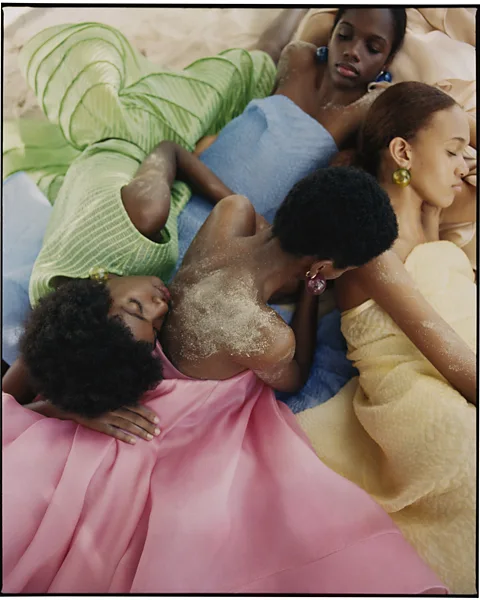
The soft girl identity, female-led from the start, leans on a specific visual code. Slip dresses. Cashmere in air-conditioned rooms. A book held open but unread. The implication is that life is being lived at a tempo other people cannot afford. The soft boy parallel, slower to crystallize, borrows the same code but with linen shorts, espresso cups, and a quieter relationship to gym content. Tobi Bakre’s curated stillness sits in this lane. So does the way Adekunle Gold has gradually swapped showmanship for poolside contemplation.
“Soft era” is the temporal version. To declare yourself in your soft era is to publicly retire from a previous phase that involved striving, explaining, or apologizing. It is closer to a press release than a mood update.
The Hustle Culture It Pushes Back Against
Nigerian hustle culture was forged in the early 2010s, when Lagos became a startup capital and the country’s young professional class internalized a particular gospel. Work eighteen hours. Sleep is for the weak. The grind is the brand. Influencers like Linda Ikeji, in her earlier blogging-empire phase, were held up as proof that ceaseless output was the only path. The motivational speaker industry codified it. Sapa, the slang for being broke, became something to outrun at any cost.
The problem with hustle porn, as a generation discovered, was that it did not actually deliver the promised soft landing. Salaries stagnated. The naira lost ground. The cost of a Lagos apartment outpaced the income of the people who had been told to grind for one. The promise broke.
Soft life arrived in that gap. It said the quiet thing out loud: maybe the deal was never fair. Maybe rest, leisure, slowness, beauty for its own sake, were not rewards to be earned but rights to be claimed. The framing was so effective because it inverted decades of moral instruction without arguing with it directly. It just showed pictures of brunch.
The Influencer Architects
A handful of creators recur in any honest accounting of how this aesthetic was built into a Nigerian language. Dimma Umeh, the beauty creator with a YouTube backlog deep enough to have raised a generation of viewers, modeled a version of soft life that was about deliberate small pleasures: skincare done slowly, mornings unrushed, an espresso machine as a character. A second tier of essay-caption creators gave the movement its literary register. Their posts read like personal essays disguised as Instagram grids, and they made soft life feel intellectually defensible to women who had been raised to apologize for wanting ease.
Toolz Oniru, longer in the public eye, normalized soft life within marriage and motherhood. Her content suggested that the aesthetic was not just for the single twenty-something on a Santorini balcony but also for the wife on a Sunday afternoon in Lekki who refuses to perform stress.
On the celebrity side, Tems built her entire visual identity around it. Her grids are sparse, beige, often unsmiling, almost monastic. The luxury is in what is absent: noise, clutter, captions trying too hard. Davido, whose pre-2022 content was loud, currency-flexing, and constant, has gradually shifted toward brunch tables, family moments, and the kind of “I have nothing to prove” stillness that reads as soft life applied to a billionaire’s son. Adesua Etomi, with her openly protected weekends and refusal to perform constant productivity, made rest itself a celebrity flex.
The Geography Of Soft Life
Soft life has its own map, and the pins are not random.
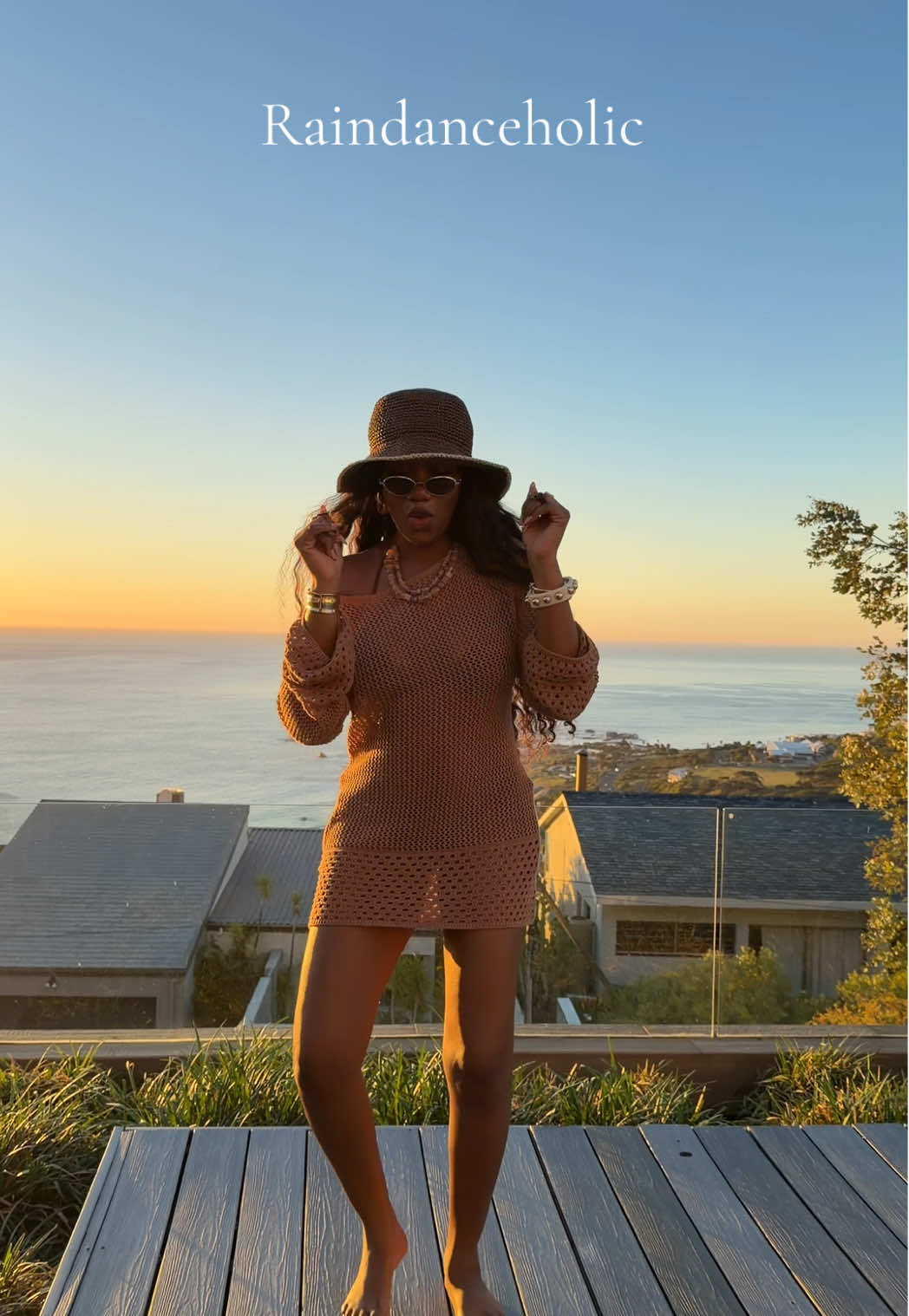
Cape Town is the pilgrimage. The mountain behind a wine farm lunch, the Camps Bay sunset, and the V&A Waterfront brunch are the visual signatures of a Nigerian celebrity announcing that they have crossed into a different tier. Cape Town is far enough to feel like an event, close enough to be reachable, and photogenic in a way that makes any phone camera look like a magazine spread.
Mauritius and the Maldives serve a different function. They are the over-water bungalow tier, the honeymoon and milestone setting. A Maldives carousel signals not just money but the time and willingness to be unreachable for a week. In a Lagos work culture that prizes constant availability, unreachability is itself a luxury good.
Detty December, the December festival season in Lagos, has been folded into the soft life calendar as its annual reset. Detty December was originally a party-forward export, all concerts and beach clubs and Afrobeats nights. The soft life generation kept the parties but added the recovery economy: morning-after spa visits, slow Sunday lunches at Nok by Alara, beach day trips to Lekki and Tarkwa Bay. The detty and the soft now coexist on the same timeline, alternating reels.
For the diaspora, the geography reroutes. Atlanta Sunday brunches are the American version, with their bottomless mimosa rituals and Nigerian wedding-circuit crowds. London weekends in Notting Hill, Toronto patio season, Houston pool parties, each diasporic hub has its soft life dialect. The unifying language is the photograph.
The Lekki Wellness Belt

The infrastructure for soft life inside Lagos itself has grown into a small economy. The Lekki-Epe corridor now hosts pilates studios with waiting lists, cold-pressed juice bars where a single bottle costs more than a plate of jollof at most restaurants, yoga retreats marketed in glossy carousels, and spas that have learned to photograph themselves for Instagram before they have finished the interior design.