How Nigerian Fashion Designers Are Partnering With Afrobeats Artists to Go Global
Miki Anderson··12 min read
Ad SpaceArticle Top - 728x90
Advertisement
The fastest route African fashion has ever had to a global audience is not a runway. It is a musician. An Afrobeats artist walking out under an arena spotlight in London, Paris or New York is wearing a design industry, and more often than not that industry is Nigerian. Designers working out of Lagos studios have figured out something the rest of the global fashion business is still catching up to, which is that a single credited look on a touring artist can reach further than a season on an international schedule.
This is how that partnership works, who built it, and why a designer credit on an Afrobeats star’s post can matter more to a small Lagos atelier than a showroom slot in Europe.
The Quiet Architecture Behind A Loud Movement
Most casual observers see a viral red carpet moment and assume luck. A Nigerian designer happened to be available. An artist happened to like the piece. The internet happened to notice. The reality described by designers who work this way is closer to a relationship economy built over a decade through trust, proximity and a kind of access that legacy luxury fashion cannot replicate.
A Lagos designer can often reach an internationally touring artist directly. They can deliver a finished garment to a hotel during rehearsal week. They can refit a sleeve the night before a video shoot. That intimacy is structurally difficult at a European house, where a celebrity request travels through a publicist, an ambassador agreement, a regional press office and an atelier abroad. Nigerian designers have compressed that supply chain into a phone call, and everything else, the international press coverage and the e-commerce spikes after a festival set, is built on top of it.
The Artist As Walking Billboard
There is a phrase that comes up in interviews with Lagos-based designers more often than any other when they talk about working with musicians. Walking billboard. It is sometimes said with affection and sometimes with a tired honesty about what the relationship actually is. An artist on stage, in a music video, or stepping out at an awards show is a billboard that moves through the world, gets photographed, and gets reposted by fan accounts with large followings, all without a media buy.
The designer’s job is to make sure that billboard is wearing something that photographs well, that translates the brand even at a distance, and that gets credited correctly when the picture circulates. The credit is the whole game. A piece without a credit is just a nice outfit. A piece with a tagged designer is a marketing campaign.
The Designers Who Built The Playbook
A handful of names come up in almost every conversation about how Nigerian fashion crossed over through music. Each runs a different kind of operation, but they share a thesis. Dress the artist, dress the moment, and let the distribution of the image carry the brand to places a traditional fashion show could not reach.
Kenneth Ize And Aso Oke Diplomacy
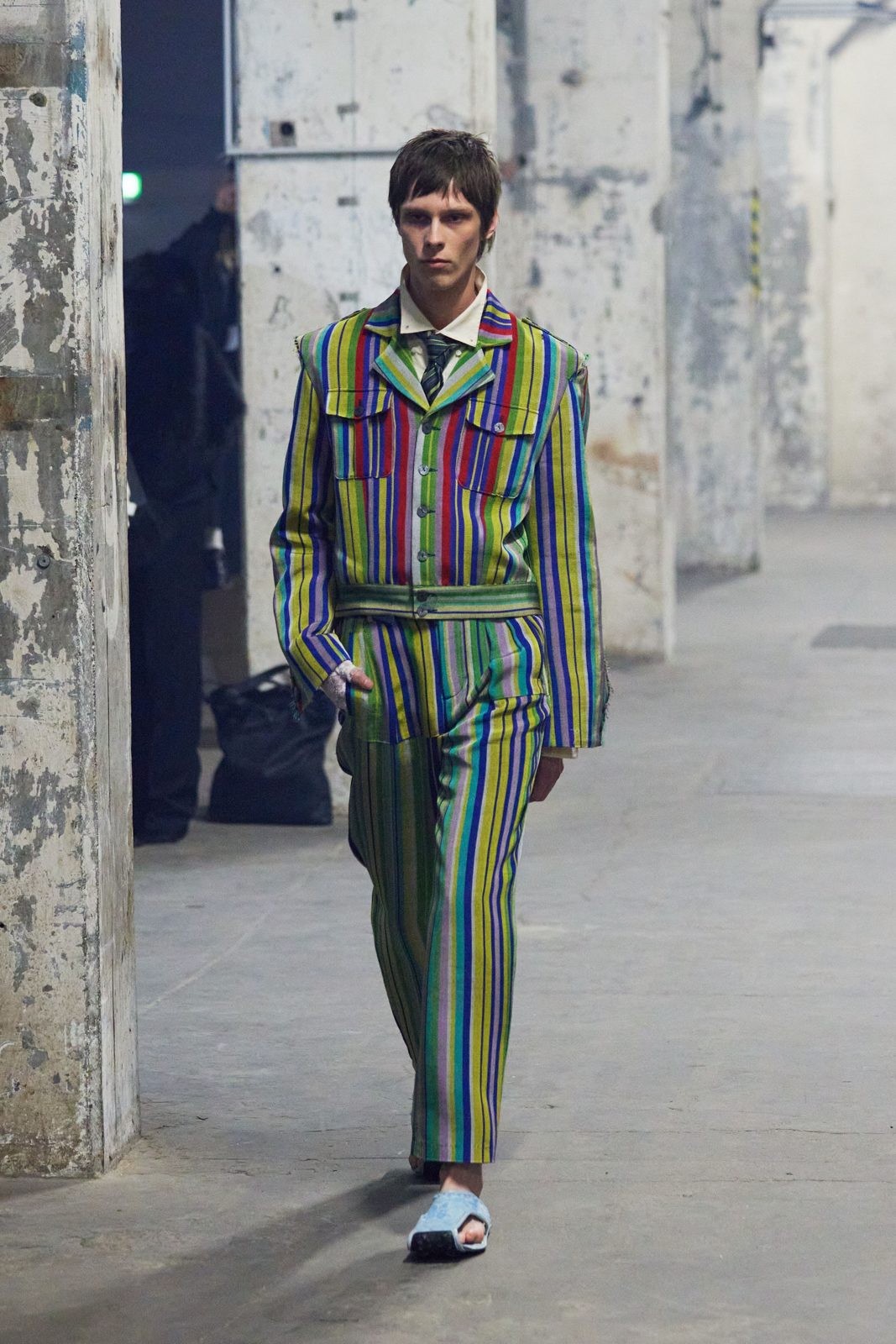
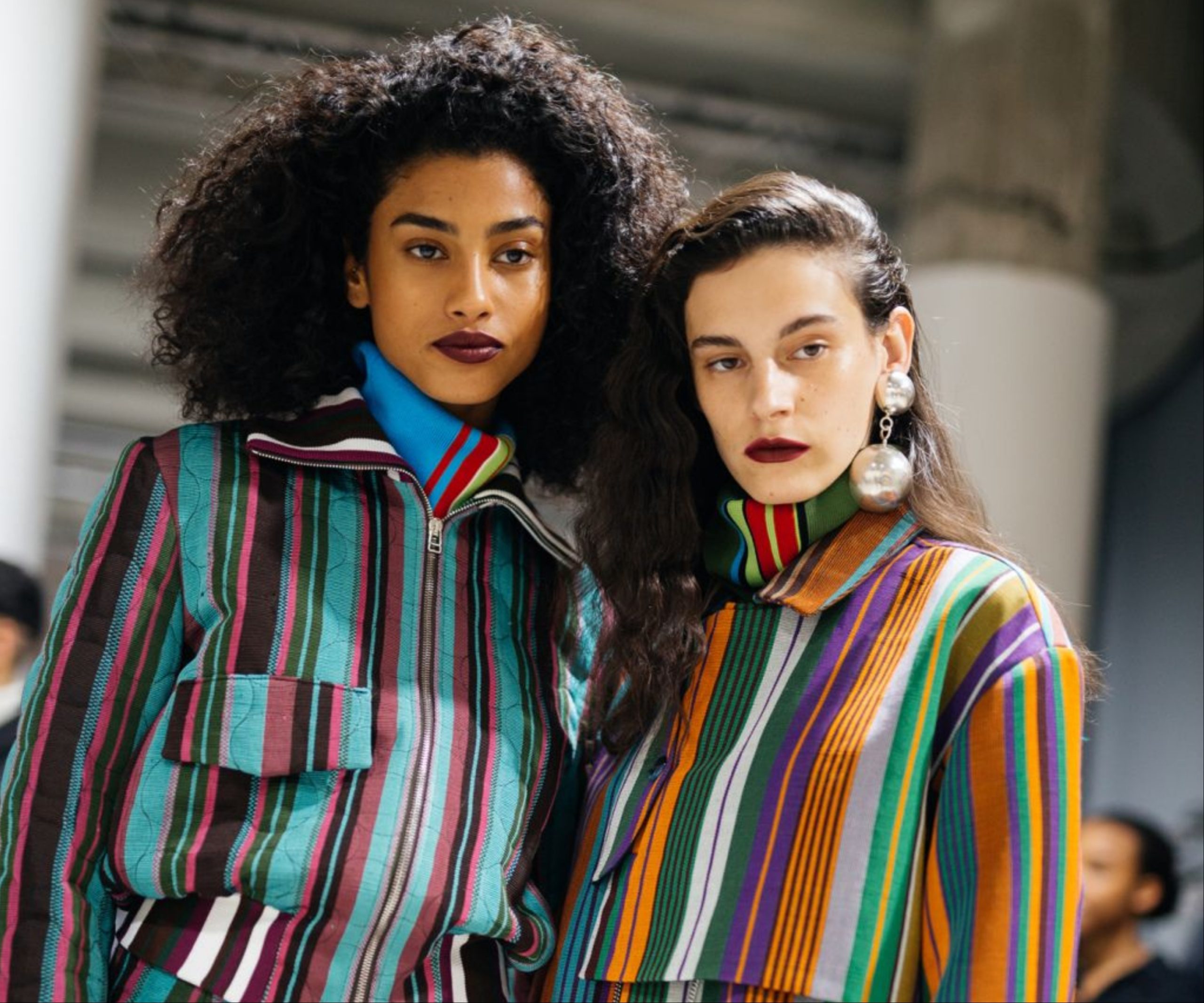
Kenneth Ize built his label around aso oke, the handwoven cloth historically associated with Yoruba ceremonial dress, and reframed the textile entirely. The clearest marker of that reframing is documented: Ize made his official Paris Fashion Week debut in February 2020, and Naomi Campbell closed the show in a striped belted trench, a moment WWD read at the time as a sign of African fashion’s growing weight on the international stage.
What makes the Ize model relevant to the music industry is that his pieces read as heritage without reading as costume, which is exactly what an artist needs when the brief is to look expensive and specifically Nigerian in the same frame. That quality is why his work keeps turning up in editorial styling of West African musicians. The deeper claim designers make about these relationships is that they work best when artist and designer already share a worldview, because a stylist can borrow a look but cannot borrow a point of view.
Lisa Folawiyo And The Ankara Reset
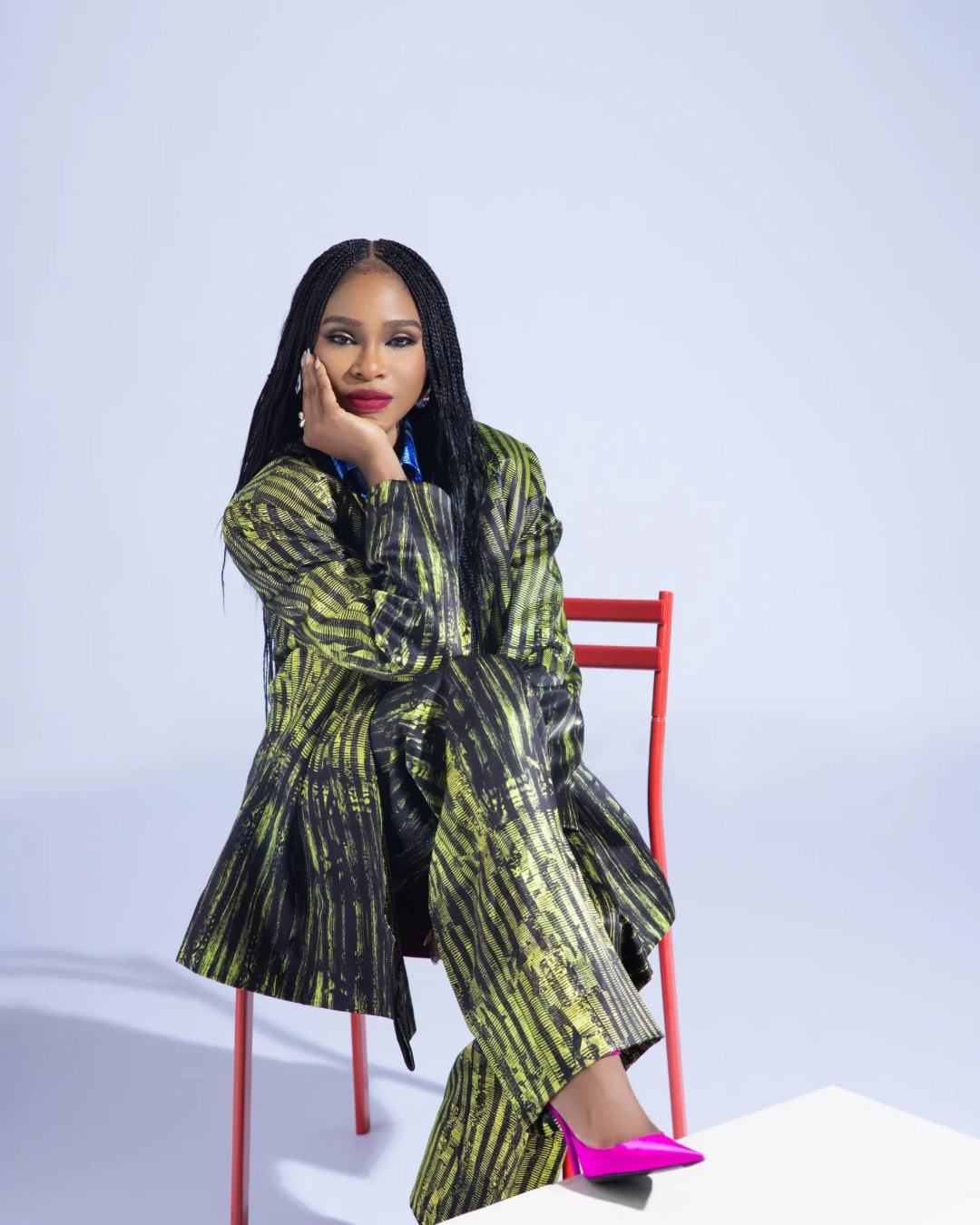
Lisa Folawiyo, who founded Jewel by Lisa in 2005 and later built out an eponymous label, did for Ankara something comparable to what Ize did for aso oke. She took a wax-print cotton that had been pigeonholed as either festive or folkloric, hand-beaded and restructured it, and moved it into a contemporary luxury category. Her pieces have been collected by museums as well as stocked internationally, which is an unusual dual track for a Lagos label.
Folawiyo’s particular contribution is in showing that an artist does not have to be in a full traditional look to communicate Nigerian-ness. A single tailored jacket in her signature embellished Ankara, paired with otherwise minimal styling, reads as both contemporary fashion and cultural signalling. That is a hard balance to strike, and she has struck it consistently for close to two decades.
Mai Atafo And The Formal End Of The Spectrum
Mai Atafo is the tailor’s tailor. His work sits at the formal end of the spectrum, classic Nigerian menswear and bridal executed with a level of precision that has made his studio a regular reference point for weddings, album rollouts and awards-night dressing. When the brief calls for sharp restraint rather than statement maximalism, his name is in the conversation.
His relationship with the Afrobeats world is less about viral red carpet moments and more about the slow accumulation of trust inside the industry. Bridal and groomswear generates word-of-mouth circulation that no campaign can buy, because the recommendation travels privately between artists, managers and families rather than through press. That is a slower marketing engine than a tagged Instagram carousel, and a more durable one.
Maki Oh And The International Clientele
Amaka Osakwe, the designer behind Maki Oh, is among the most internationally decorated of the Lagos-based wave, and a finalist in the first edition of the LVMH Prize. Her use of adire, the indigo resist-dyed textile traditional to southwestern Nigeria, has done as much for that fabric’s global visibility as any cultural campaign could. Her documented clients include Michelle Obama, who wore a Maki Oh blouse during a 2013 trip to South Africa, as well as Solange Knowles and Lupita Nyong’o.
What makes Maki Oh instructive for the music industry is the route. Osakwe did not relocate or build a corporate marketing operation. The clothes were made in Lagos and sent to stylists who understood that the credit read as taste rather than novelty. That artist-to-stylist-to-artist chain runs in both directions, and it is the same chain Afrobeats artists now sit inside.
Orange Culture And The Genderless Shift
Adebayo Oke-Lawal runs Orange Culture as a genderless brand, a positioning that was risky in Lagos when he started and is now one of the most commercially interesting things about the label. His pieces have shown up on artists who lean into expressive styling, including those who use their looks to push back against the more conservative end of Nigerian visual culture.
What Orange Culture brings to the partnership model is permission. When an artist wears the label, they are making a statement about how they want to be read, which is often a statement about masculinity, fluidity, and the right to be photographed in something that does not look like a uniform. Music videos in particular have become a key showcase, because the styling can push further there than awards-night dressing allows.
Tia Adeola And The Sheer Strategy
Tia Adeola, who launched her label as Slashed by Tia and now works under her own name, operates out of New York while keeping her Nigerian roots central to the brand’s story. Her ruffle-heavy, sheer-dominant aesthetic has been worn by SZA, Gigi Hadid and Kali Uchis, among others, and her New York Fashion Week debut was covered by Vogue.
Ad SpaceIn-Article - 300x250
Advertisement
Adeola’s significance in the partnership economy is the bridge she represents. She is geographically positioned to dress American artists who are not yet in the Afrobeats orbit, and that position keeps pulling those artists into adjacent collaborations with Nigerian musicians. Cross-pollination is her currency, and it runs in the opposite direction from the Lagos-outward model most of her peers use.
Andrea Iyamah And The Resort Lane
Andrea Iyamah carved out a category few of her peers were targeting: swimwear and resort wear, designed in Nigeria, sold globally, built around silhouettes that translate as easily to a Caribbean shoot as to a European beach club. For touring artists, that matters more than it sounds. Warm-weather tour stops and press shoots are a constant, and resort is one of the few categories where African pattern and cut need no explanation to an international customer.
The sustainability positioning she has built into the brand also tracks with a generational shift in what younger artists want to be associated with. It is one of the few Lagos-founded labels to have carried that conversation from the start rather than retrofitting it later.
Folake Folarin-Coker And The Tiffany Amber Legacy
Folake Folarin-Coker, the founder of Tiffany Amber, predates most of the names on this list and is widely credited by younger designers as a figure who proved a Nigerian label could compete on an international calendar without diluting what it was. Her showings abroad in the late 2000s established a precedent that the current wave inherited, which is the assumption that they belong in international showrooms.
Her dressing of Afrobeats artists, when it happens, tends to skew to the most polished end of the spectrum. Galas, weddings, press tours where the artist needs to look like serious business rather than a streetwear avatar.
The Mechanics Of The Credit
Watch how a successful designer-artist post unfolds and the structure underneath becomes clear. The artist posts a carousel, usually opening on a clean full-body frame. The caption tags the designer, the stylist, the photographer, sometimes hair and makeup. The designer reposts to their own grid and story. Fan accounts pick it up quickly. Style aggregators begin screen-grabbing. Within a day or two the look is on a best-dressed roundup, and the designer’s site sees a traffic bump that their analytics will attribute directly to the post.
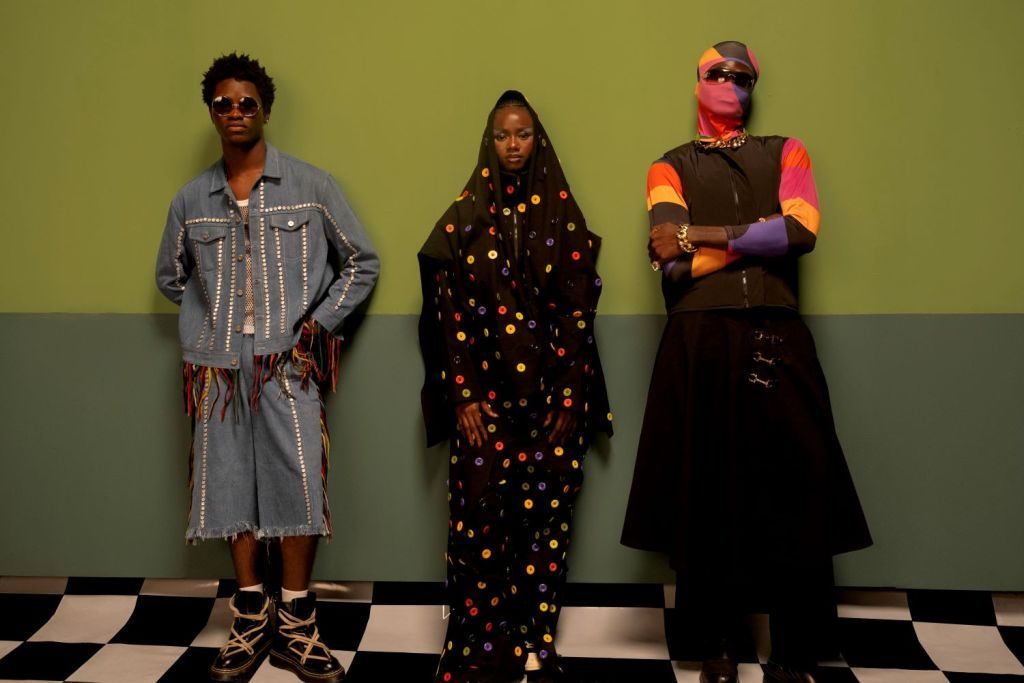
Image: Culture Custodian
That cycle is the actual product of the partnership. Not the dress. The cycle. It is also why designers who lend without securing a credit tend to describe the experience as a loss rather than marketing, because the garment left the studio and nothing came back with it.
The Lagos Fashion Week Launchpad
Lagos Fashion Week has evolved into something that does not look quite like its international peers. It is part runway schedule, part industry summit, part international press junket. Designers debut collections, but the week also functions as a meeting point between the music and fashion industries, where stylists, art directors and artists are in the same rooms as buyers and press for several days running. Conversations that would take months of email get handled face to face, which is the real compression the week provides.
Davido, Puma, And The Branded Apparel Question
Davido’s PUMA collaboration is one of the cleaner examples of an Afrobeats artist building a fashion product rather than just wearing one. Announced by PUMA in 2020, the Sportstyle collection was built around the phrase “We Rise By Lifting Others” and comprised a tracksuit, tees, shorts and caps in Nigerian green and white. Billboard covered the launch.
The structural point is that this is a different relationship from the walking-billboard model. A collection gives the artist a stake in the visual language being sold to his audience. Other Afrobeats artists have watched arrangements like it closely, and the lesson being absorbed is that the artist who only wears designer pieces is leaving money on the table compared with the artist who also produces and sells.
Wizkid, Puma, And The Global Sportswear Detour
Wizkid’s sportswear work sits in a different category from the Lagos designer partnerships. PUMA announced him as the face of its Suede Classics autumn campaign with JD Sports in 2020, and Starboy and PUMA branding appeared together around that partnership. Terms were never made public, and reporting since has suggested the relationship did not continue, so the useful thing here is the comparison it creates rather than the deal itself. Artists can weigh what a global sportswear campaign delivers against what a Lagos designer collaboration delivers, and many are choosing to split their visual time between the two.
Burna Boy, Versace, And The Informal Cosign
Burna Boy has been photographed in Versace repeatedly, and no brand-ambassador agreement between them has been publicly announced, which puts the relationship in a different category from Travis Scott with Jordan or Bad Bunny with Adidas. The Lagos design community pays attention to the gap that informality leaves open. A formal partnership typically carries exclusivity obligations for certain appearances. Without one, an artist can be photographed in a Nigerian label at a Lagos event the same week he is photographed in a European house abroad. That flexibility benefits Nigerian designers more than a tidy corporate deal would.
The International Press Multiplier
There is a specific arithmetic that happens when an Afrobeats artist wears a Nigerian designer on an American or European carpet. The same look worn in Lagos generates domestic press, Nigerian social coverage and a handful of African outlets. Worn on a major international carpet, it gets covered by global fashion titles and by the aggregator accounts that reach tens of millions of followers between them. The cost of producing the piece did not change. The audience did. That asymmetry is what makes the partnership model so unusually efficient for a Lagos-based label with a small team.
The DM Economy
Designers describe a large share of this pipeline running through direct messages. Stylists request samples. Designers send delivery details. Pieces ship quickly from Lagos to a hotel or a video set. The informality is the feature rather than the bug, because a request that would take weeks of email chains at a traditional house can be settled in a single thread.
The risk is real, and designers talk about it openly. Pieces get lost. Samples come back damaged. Some are never returned at all. Most have absorbed that as a cost of operating in a model that has, on net, moved them from Lagos showrooms onto international stockists’ rails.
Where The Money Actually Goes
The bluntest version of the question is whether dressing an Afrobeats artist actually pays. The honest answer from designers who do it is that it pays in the medium term, not the short term. A piece lent for a music video generates no immediate revenue. What it generates is awareness, which converts to e-commerce orders, which converts to wholesale interest from international retailers, which converts to seasonal collection orders that fund the next year of operations.
Designers who think transactionally about each lend tend to get bitter quickly. The ones who think in compounding terms, across multiple lends and multiple artists over multiple years, are the ones who end up with international wholesale accounts. That is the whole argument for the model, and it is why the most successful Lagos labels treat artist dressing as a budget line rather than a favour.
Why The Phone Call Beats The Press Release
Strip the partnership back and what remains is not a brand activation. It is a short supply chain, a direct relationship, a correctly tagged credit, and a garment that gets photographed in front of an audience the designer could never afford to buy. That combination has taken Nigerian labels further in a decade than two decades of trade-show diplomacy managed, and it is the reason the next generation of Lagos designers is building a music strategy before it builds a wholesale one.
Ad SpaceIn-Article - 300x250
Advertisement
Share
Get the recap
Loved this story? Get more like it.
Join readers who get our weekly entertainment recap - the stories worth your time, delivered every Friday.
No spam. Unsubscribe anytime. By signing up you agree to our Privacy Policy.