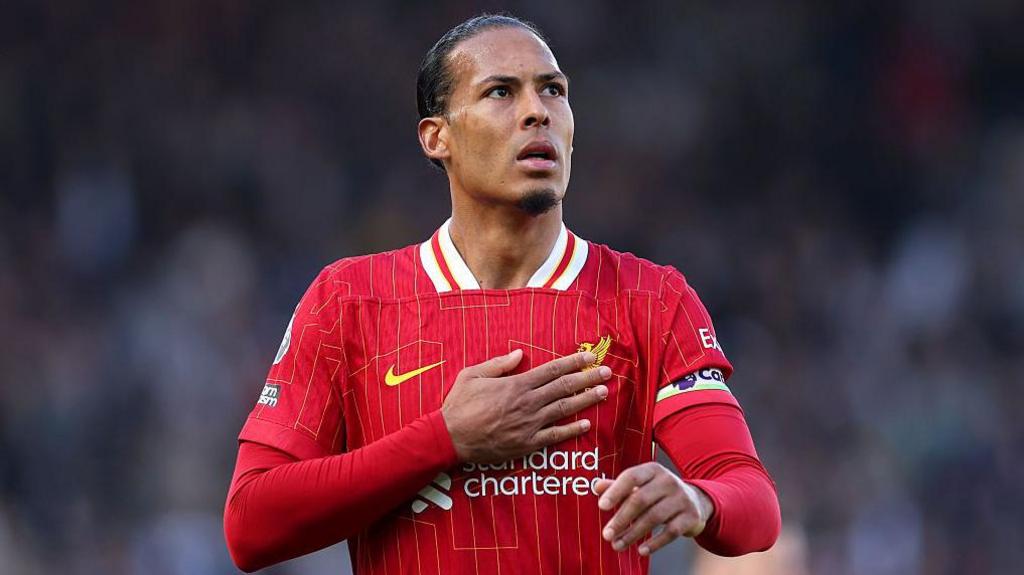

Few positions on a football pitch are asked to do more with less applause than centre-back. Strikers score, goalkeepers make highlight-reel saves, and midfielders dictate the tempo everyone talks about afterward. The defender, when he does his job perfectly, is often the man nobody notices, because nothing happened. That quiet contradiction is exactly why the Liverpool and Netherlands captain has come to occupy such a strange and elevated place in the modern game. Watching him defend rewired how a generation of coaches, players, and supporters think about what a great centre-back is supposed to look like, and the numbers behind his career, his trophies, and his estimated wealth all trace back to that single reality.
From Breda to a World-Record Fee
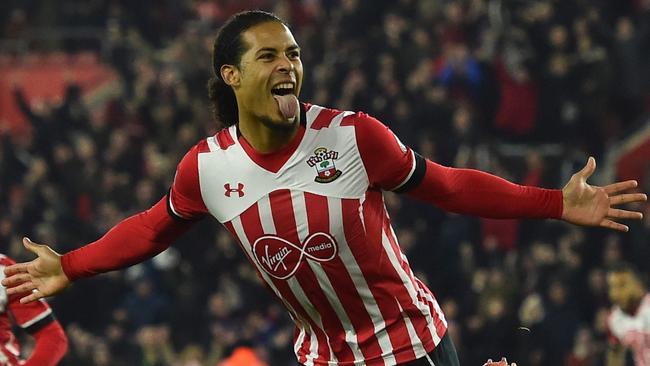
Born on 8 July 1991 in Breda, in the southern Netherlands, the boy who would become one of the most expensive defenders in history did not arrive as an obvious prodigy. His early professional years unfolded at Groningen in the Eredivisie, a place where he learned the craft without the glare of a major spotlight. The trajectory only began to bend sharply upward when he moved to Scotland.
His transfer to Celtic in 2013 turned out to be the accelerant. In Glasgow he won the Scottish Premiership and earned a place in the PFA Scotland Team of the Year across his two seasons, adding a Scottish League Cup along the way. More importantly, he began to look like a defender built for a bigger stage: composed on the ball, quick across the ground, and dominant in the air. That form earned him a move to Southampton in 2015, where the English top flight got its first extended look at a player who defended without panic.
Then came the moment that reset the market. On 27 December 2017 it was announced that he would join Liverpool when the winter window opened on 1 January 2018, for a reported fee of around £75 million. At the time that figure made him the most expensive defender in the world, a valuation that drew skepticism from people who still believed such money should be spent on goalscorers rather than the men paid to stop them. A footnote to that deal is worth remembering: Celtic reportedly banked roughly 10 percent of the fee thanks to a sell-on clause tucked into his Southampton contract, a reminder that his Glasgow chapter kept paying dividends long after he left.
Rewriting What a Centre-Back Could Be
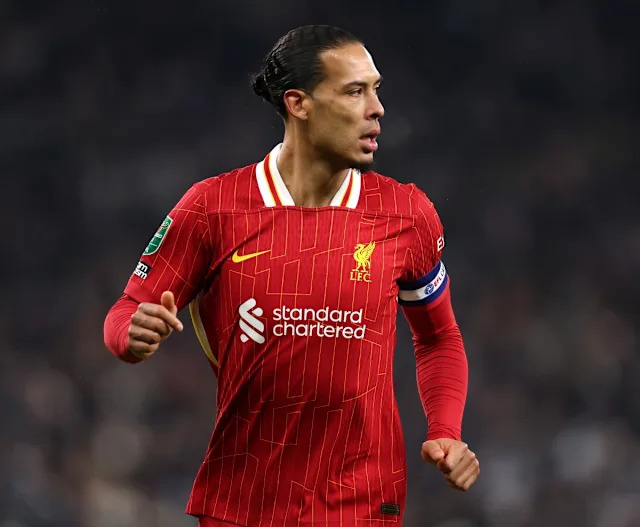
The scepticism did not last long. What Liverpool bought was not simply a big, strong defender, but a stabiliser for an entire team’s identity. Before his arrival, Jurgen Klopp’s side had electric attacking football and a defence that too often undercut it. After his arrival, the same attacking flair sat on top of a back line that suddenly looked calm, coordinated, and difficult to break down.
The transformation showed up in the trophies. Liverpool reached back-to-back UEFA Champions League finals in 2018 and 2019, losing the first and winning the second. The 2019 triumph ended a long wait for European club football’s biggest prize and confirmed that the record fee had been an investment rather than an indulgence. A year later came the moment supporters had craved for a generation: the 2019-20 Premier League title, the club’s first English league championship in 30 years.
Individually, his first full season in England produced a haul that defenders almost never assemble. He was named PFA Players’ Player of the Year and Premier League Player of the Season, awards that historically default to attacking players. Voters, in other words, could not pretend that the man breaking up attacks was any less decisive than the men finishing them. His defending was so complete that it forced the conversation to widen: leadership, positioning, reading of danger, and the ability to make teammates better were suddenly valued the way goals had always been.
What made his game feel new was the absence of desperation. He rarely lunges. He rarely needs to. He shepherds attackers into harmless positions, uses his stride to erase what look like clear breaks, and wins aerial duels with an ease that flattens opposition set-piece plans. For younger centre-backs, he became a template: defend with the ball at your feet as comfortably as without it, and treat calmness as a skill to be trained rather than a temperament you are born with. It also reframed how supporters read a match. A cleared cross that never became a chance, a striker nudged a half-yard wide of goal, a counter-attack snuffed out before it started - these are the moments that rarely make a highlight package, yet they are the moments that decide seasons. By making that invisible work visible, he taught a wider audience to notice defending as a craft with its own artistry, not merely as the absence of attacking.
The Weight of the Armband
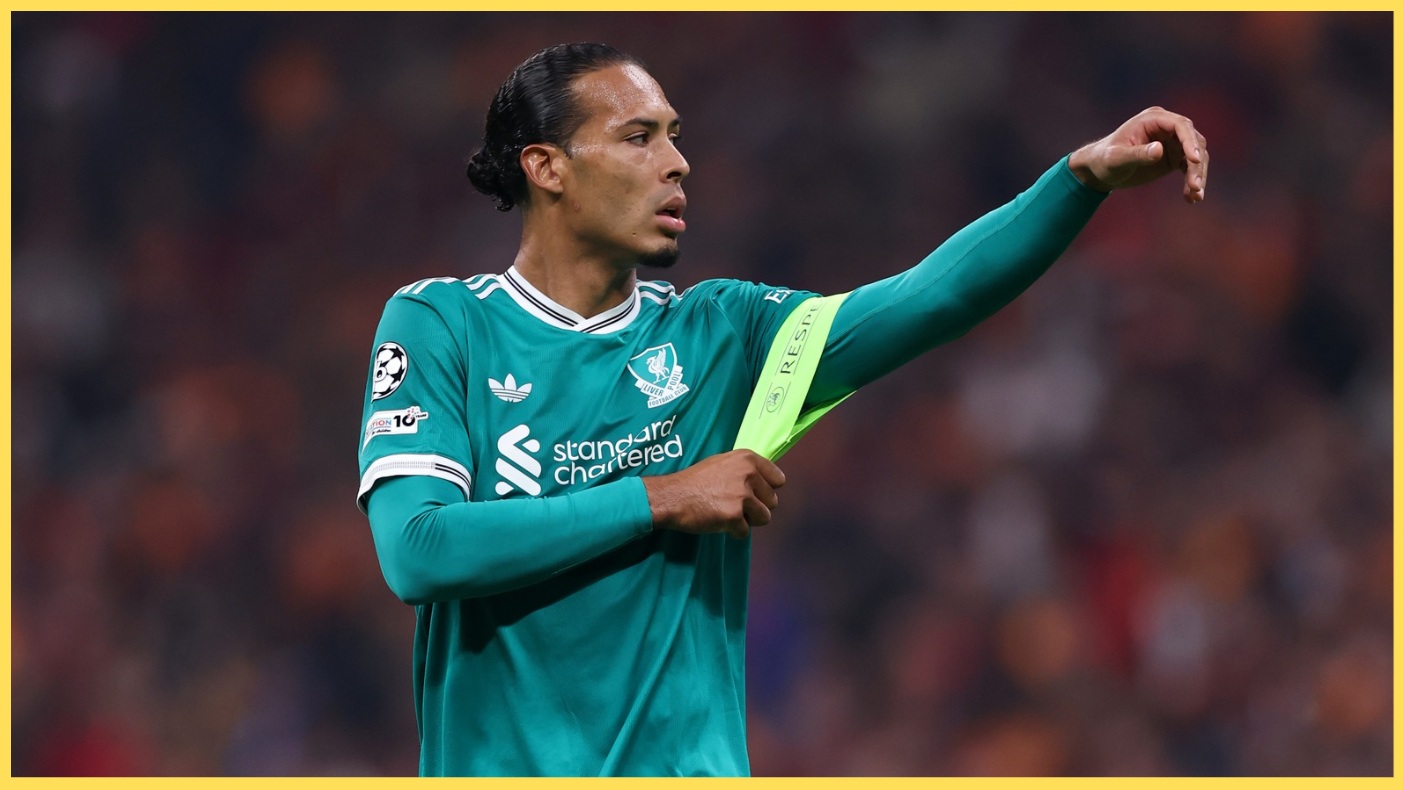
Talent explains part of his standing. The armband explains the rest. He assumed the Liverpool captaincy on a permanent basis in the summer of 2023, and he also captains the Netherlands national team, carrying leadership responsibility at both club and country simultaneously. That dual role is not a ceremonial detail. It is a statement about how teammates and coaches perceive him, because captaincy at this level is handed to the player others instinctively look toward when a match starts slipping away.
His leadership style leans on presence rather than theatrics. On the pitch he organises the line, communicates constantly, and sets a standard of composure that filters through a team under pressure. Off it, he has become the figure the club leans on during transitions, the sort of senior professional whose form and mood tend to set the emotional temperature of a dressing room. When a defence concedes, the captain is the one asked to explain it and to fix it, and he has generally answered that responsibility by tightening the collective rather than assigning blame.
Leadership also gets tested by adversity, and his career has not been an uninterrupted climb. A serious knee injury early in the 2020-21 season robbed Liverpool of their defensive anchor for most of a campaign and offered brutal proof of his value: the team’s results dipped noticeably in his absence. His return, and the way he rebuilt himself back to the standard that made him indispensable, arguably burnished his reputation more than any trophy could. Recovering from that kind of setback at the highest level requires the same qualities that make a good captain, which is to say patience, discipline, and an unwillingness to lower the bar. The comeback also reshaped how the club planned around him. Managers and sporting directors learned, in the hardest way possible, that a settled defensive spine is not a luxury but the foundation everything else is built on, and that the calm he provides is difficult to replace with money alone.