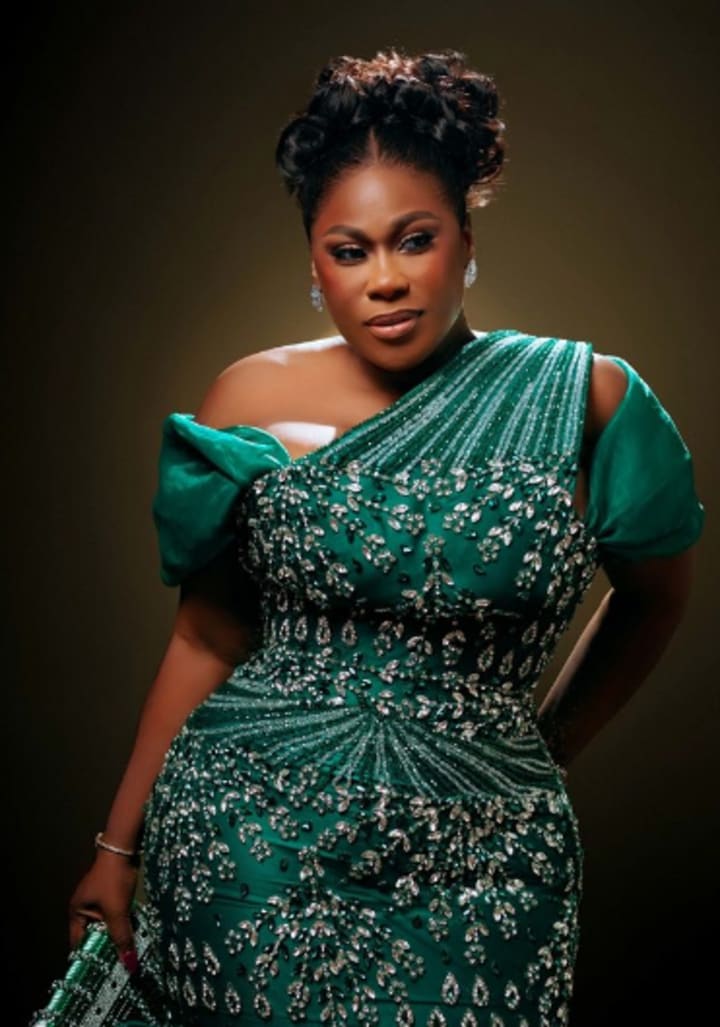
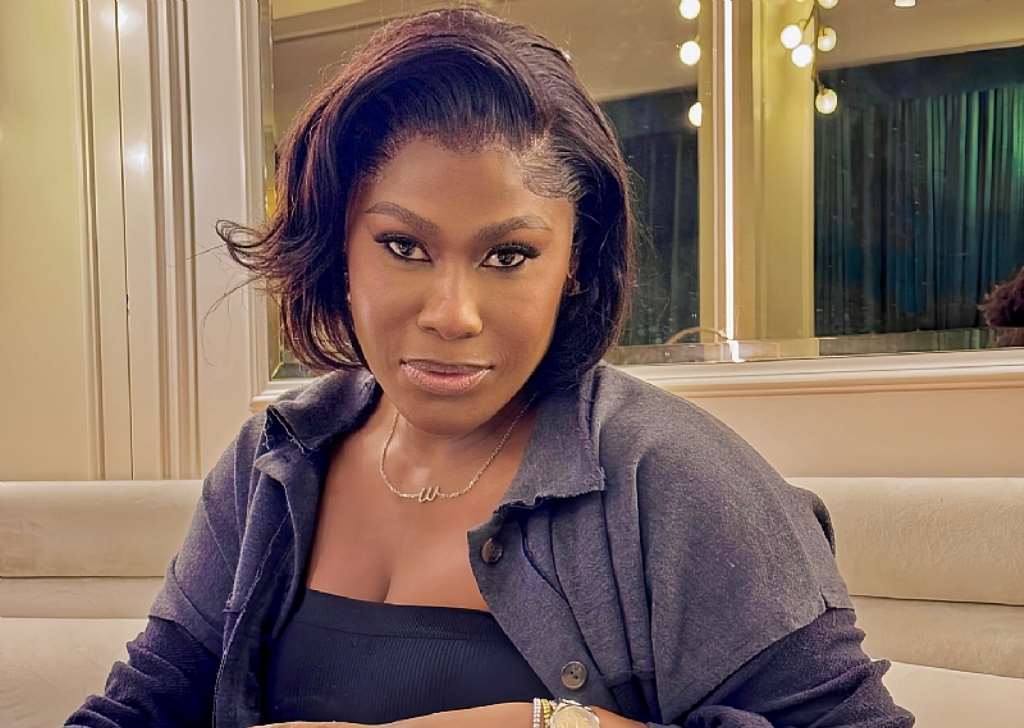
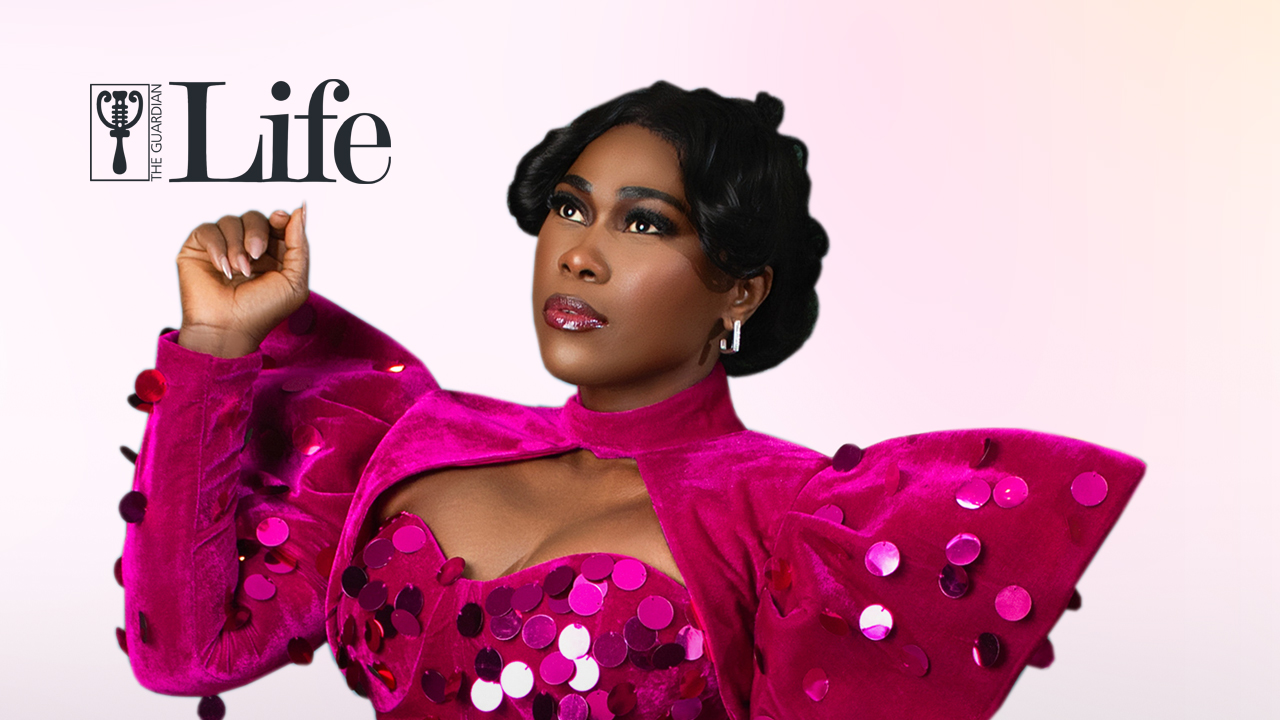
Uche Jombo at 25 Years in Nollywood: Career Highlights, Business Moves and Her Enduring Influence
Nova Patricks··9 min read
Ad SpaceArticle Top - 728x90
Advertisement
A young mathematics and statistics graduate walked onto a Nigerian film set in 1999, took her first credited role in a movie called Visa to Hell, and quietly began a career that would outlast trends, formats and entire eras of the industry she joined. That graduate was Uche Jombo, and the decades since have turned her from a hopeful newcomer into one of the most durable names in Nollywood, a woman whose presence on a poster still signals a certain reliability to audiences across Nigeria and the diaspora. More than a quarter of a century on from that debut, the story of her career reads less like a string of lucky breaks and more like a deliberate climb, one rung built carefully on top of the last.
What makes the Jombo story worth telling now is not nostalgia. It is the way she refused to stay in a single lane. She acted, then she wrote, then she produced, then she directed, and at each stage she added a new layer of control over the work that carried her name. In an industry where many performers burn brightly for a few years and then fade, she has remained visible, bankable and creatively restless. The sections that follow trace how a self-described reluctant actress built a body of work, a production house and a public profile substantial enough to keep her in the conversation in 2026.
From Abiriba to the Nollywood Front Line
Uche Jombo was born on 28 December 1979 in Abiriba, in Abia State in Nigeria’s south east. Her early path pointed away from entertainment rather than toward it. She studied mathematics and statistics at the University of Calabar in Cross River State, and her academic background sat at some distance from the camera lights she would later command. That detail matters, because it frames much of what came after. Jombo did not arrive in Nollywood as a stage child or a beauty-pageant graduate looking for a soft landing. She arrived as someone with the analytical training to read an industry, count its costs and understand where the money and the leverage actually sat.
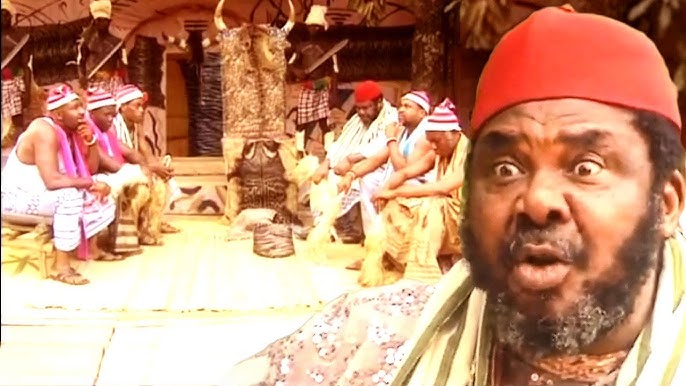
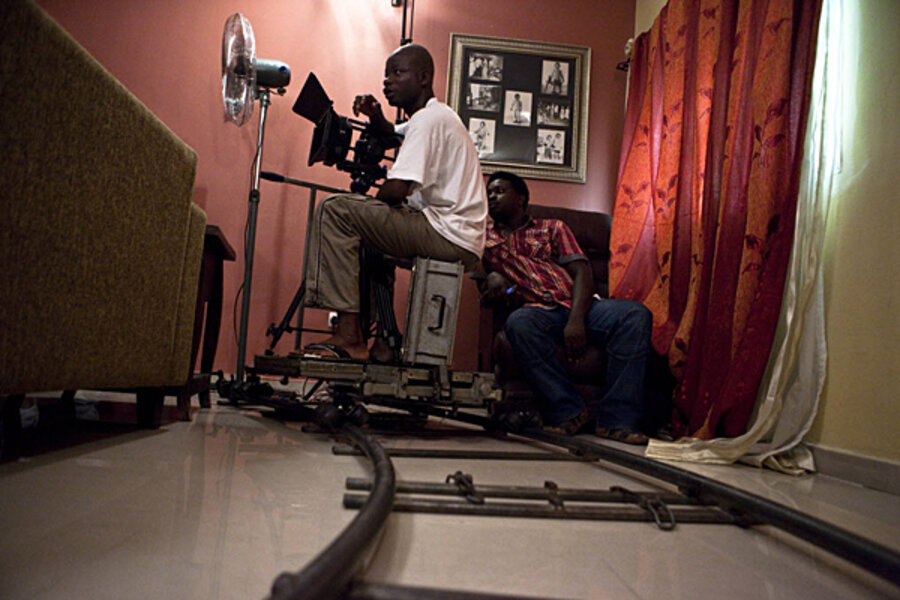
Her entry into the movie industry came in 1999 with Visa to Hell, the title that marks the start of her professional filmography. The Nollywood of that period was a very different machine from the one audiences know today. It was driven by direct-to-video releases, fast shooting schedules and a market that ran on physical cassettes and discs sold in markets and roadside stalls. Actors were expected to be prolific, to move from one production to the next with little rest, and to build their reputations through sheer volume of appearances. Jombo came up inside that system, and the work ethic it demanded became part of her professional DNA.
By the early 2000s she was a steady working actress, appearing in films such as Girls Hostel, Fire Love and Endless Lies alongside the faces who were defining the era. Her collaborators in those years included names like Desmond Elliot, with whom she would share the screen repeatedly, and she found herself in ensemble pictures with the likes of Genevieve Nnaji, Rita Dominic, Omotola Jalade Ekeinde and Ini Edo. To be cast in those rooms was to be counted among the industry’s working core, and Jombo earned that standing the slow way, one production at a time.
Building a Filmography That Refused to Stand Still
Across her acting career, Jombo has appeared in well over two hundred Nollywood productions, a figure that speaks to both her longevity and the relentless pace of the industry she helped sustain. Volume alone, though, is not what kept her relevant. The more telling thread is the range of roles she took on and the way she shifted register as Nollywood itself matured. Films like Girls Cot, Keep My Will and Price of Peace placed her in the dramatic ensemble pieces that dominated the mid-2000s, while later work pulled her toward broader and more commercial territory.
Two films stand out as markers of her dramatic weight. The first is Damage, a 2011 picture that tackled domestic violence head on and gave Jombo one of her most acclaimed leading performances. The second is the body of romantic and relationship dramas she anchored, including Kiss and Tell, where she worked opposite Desmond Elliot and Nse Ikpe-Etim. These were not throwaway roles. They were the kind of parts that let a serious actress show range, carry a story and earn awards-circuit attention, and they helped cement the idea that Jombo could lead a film rather than simply decorate one.
As Nollywood entered its cinema and streaming age, Jombo moved with it rather than against it. She took comedic turns in pictures such as Wives on Strike and Banana Island Ghost, the latter giving her a memorable, larger-than-life part. She appeared in the youth-focused Lara and the Beat, and she stepped into the streaming era through the Africa Magic and Netflix ecosystem, including the high-profile crime thriller Blood Sisters and the series Shanty Town. The point is consistency of presence. Whether the format was a market-stall video, a cinema release or a global streaming title, Jombo found a way to remain part of the picture.
The Pivot to Producing and the Birth of a Studio
The decisive move in Jombo’s career, the one that separates her from many of her peers, came in 2008 when she stepped behind the business of filmmaking and began executive-producing her own projects through her own production company. For an actress to take that step was, at the time, a meaningful act of ambition. It meant putting her own capital, reputation and decision-making on the line rather than waiting to be cast in someone else’s vision. Her mathematics-and-statistics background suddenly looked less like a detour and more like quiet preparation for exactly this kind of move.
As a producer she backed films including Nollywood Hustlers, Holding Hope and the aforementioned Damage, the domestic-violence drama that doubled as both a commercial vehicle and a piece of social commentary. Producing gave her a say over which stories got told and how they were framed, and it allowed her to build films around the themes she cared about. That ability to choose her own material is a form of power that pure acting never grants, and Jombo reached for it relatively early in her career.
Ad SpaceIn-Article - 300x250
Advertisement
Her screenwriting credits reinforce the same instinct toward authorship. She has written or co-written a string of films, among them Games Men Play, Lies Men Tell, Holding Hope, A Time to Love, Be My Wife and The Celebrity. Writing put her at the origin point of the story rather than the end of the assembly line, and it deepened her reputation as a multi-hyphenate who understood the craft from script to screen. By the time the industry began taking female creators seriously as a category, Jombo had already spent years quietly doing the work that earned that recognition.
Directing, Reinvention and a Career That Compounds
The next frontier was directing, and Jombo crossed it in 2015. Her move into the director’s chair followed a period of personal change, including her marriage to Kenny Rodriguez in 2012 and the birth of her son Matthew, and it added the final major discipline to her résumé. Her directing projects have included Lost in Us, How I Saved My Marriage and the true-life drama Heaven on My Mind, a film that drew significant attention and kept her name in conversation as a filmmaker rather than only a performer. With that step, she completed an unusual full-stack journey: actress, screenwriter, producer and director, each role feeding the others.
That compounding effect is the throughline of her whole career. Acting taught her how a scene works from the inside. Writing taught her how a story is built. Producing taught her how a film gets financed and shipped. Directing pulled all of it together into a single point of authorship. Few people in Nollywood have genuinely held all four positions with credibility, and the fact that Jombo has done so over more than twenty-five years gives her a perspective on the industry that very few of her contemporaries can match.
Her recent activity shows no sign of a wind-down. She has continued to take on film and series work into the 2020s, with credits spanning streaming dramas, comedies and ensemble pieces, and she remains a recognisable presence in the new wave of Nigerian cinema. Among her current screen commitments is the ensemble cinema release On Different Grounds, directed by Mildred Okwo and scheduled for Nigerian cinemas in 2026, in which Jombo features alongside a deep cast of veteran and rising Nollywood names. A career that began on a market-video set in 1999 is, decades later, still landing roles in marquee theatrical productions.
The Businesswoman Behind the Brand
Jombo’s commercial footprint extends past the films themselves. She has long served as a brand ambassador for the telecommunications giant Globacom, a role that placed her among the faces the company chose to represent it to millions of Nigerian subscribers. Endorsement work of that scale is its own kind of business, one that depends on public trust and a clean, consistent personal brand, and the fact that she has held that kind of partnership reflects the equity she built through years of steady, scandal-light visibility. In Nollywood, where reputations can turn quickly, that durability has real market value.
She has also used her platform for causes beyond commerce. Jombo runs a non-governmental initiative, Uche Jombo and You, aimed at supporting and uplifting Nigerian youth, and she has lent her name to humanitarian and social-impact efforts focused on areas such as education and support for vulnerable groups. This blend of entertainment, endorsement and advocacy is increasingly the template for the modern celebrity-entrepreneur, and Jombo arrived at it through experience rather than calculation, building each piece as the opportunity presented itself.
On the question of wealth, the figures that circulate should be treated with caution. Various industry and media listings have placed her among Nigeria’s better-paid actresses, with one widely cited 2024 ranking reporting an estimated net worth in the region of several million dollars. Those numbers are estimates assembled by outlets rather than audited disclosures, and they are best read as rough signals of standing rather than precise accounting. What is not in dispute is that Jombo turned a performing career into a diversified set of income streams across acting fees, production, endorsements and creative ownership, which is exactly the kind of structure that builds lasting financial resilience in a volatile industry.
Why Her Name Still Carries Weight in 2026
The clearest measure of Uche Jombo’s influence is not any single award or any single film. It is the simple fact that, decades after her debut, a new generation of Nigerian filmmakers and audiences still treats her as a fixture rather than a relic. She bridges the gap between the cassette-era Nollywood that built the industry and the streaming-era Nollywood that is carrying it onto global platforms, and very few performers can credibly claim a presence in both worlds. That continuity gives her a kind of institutional memory, a lived understanding of how the business changed and what it took to survive each shift.
Her example also reshaped expectations for what a Nigerian actress could become. By moving early into producing, writing and directing, she helped normalise the idea that a woman in Nollywood did not have to remain only the face on the poster. She could own the company, hold the pen and call the shots, and several of the female creators who followed walked through doors that performers of Jombo’s generation helped push open. That structural influence, the widening of what is considered possible, may ultimately outlast any individual performance on her filmography.
There is a quiet lesson in the arc of her story for anyone watching the entertainment business closely. Talent opened the first door, but it was strategy that kept her in the building: the decision to learn the craft from every angle, to take on ownership rather than wait for permission, and to keep adapting as the industry rebuilt itself around her. A mathematics graduate who once found acting boring turned that early ambivalence into one of the most complete careers in Nollywood. More than a quarter of a century in, Uche Jombo remains less a survivor of the industry than one of its architects, and the work, by every sign available, is not finished.
Ad SpaceIn-Article - 300x250
Advertisement
Share
Get the recap
Loved this story? Get more like it.
Join readers who get our weekly entertainment recap - the stories worth your time, delivered every Friday.
No spam. Unsubscribe anytime. By signing up you agree to our Privacy Policy.