Sydney Sweeney's Rise: From Small-Town Beginnings to Hollywood's Most In-Demand Actress
Nova Patricks··10 min read
Ad SpaceArticle Top - 728x90
Advertisement
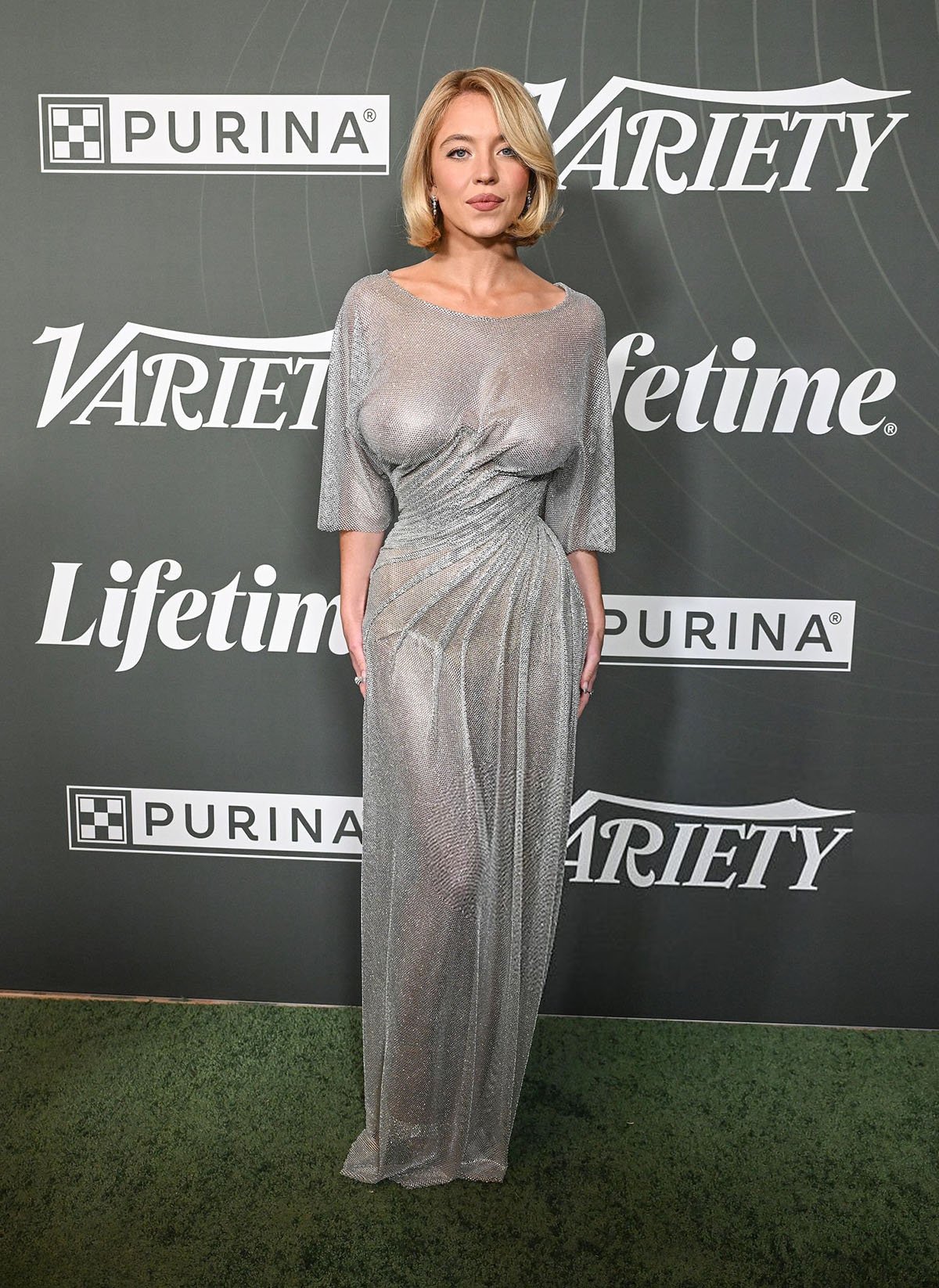
The cameras at the San Antonio arena were supposed to be trained on the basketball, on the players chasing an NBA Finals trophy in front of a roaring crowd. Then they swung to a courtside seat, where a blonde woman in a cropped Knicks tee leaned forward over the action, and the broadcast booth lost the thread entirely. “Sydney Sweeney is here?” one commentator asked, half-amused, half-bewildered, before adding that suddenly everyone in the building seemed to be a New York fan. The clip raced across social platforms within the hour. It was a small thing, a few seconds of a face the camera could not resist, and it captured something larger about where this actress now sits in the culture. She does not have to do much to become the story. She simply has to show up.
That gravitational pull did not arrive by accident. It is the product of a decade of deliberate moves, a working-class kid’s outsized ambition, and a willingness to treat a career like a business plan rather than a series of lucky breaks. To understand how Sweeney became one of Hollywood’s most bankable and most discussed performers, you have to go back to a lakeside home far from any film set, and to a child who decided early that she was going to do this no matter what it cost.
Spokane, a five-generation home, and a child’s business plan
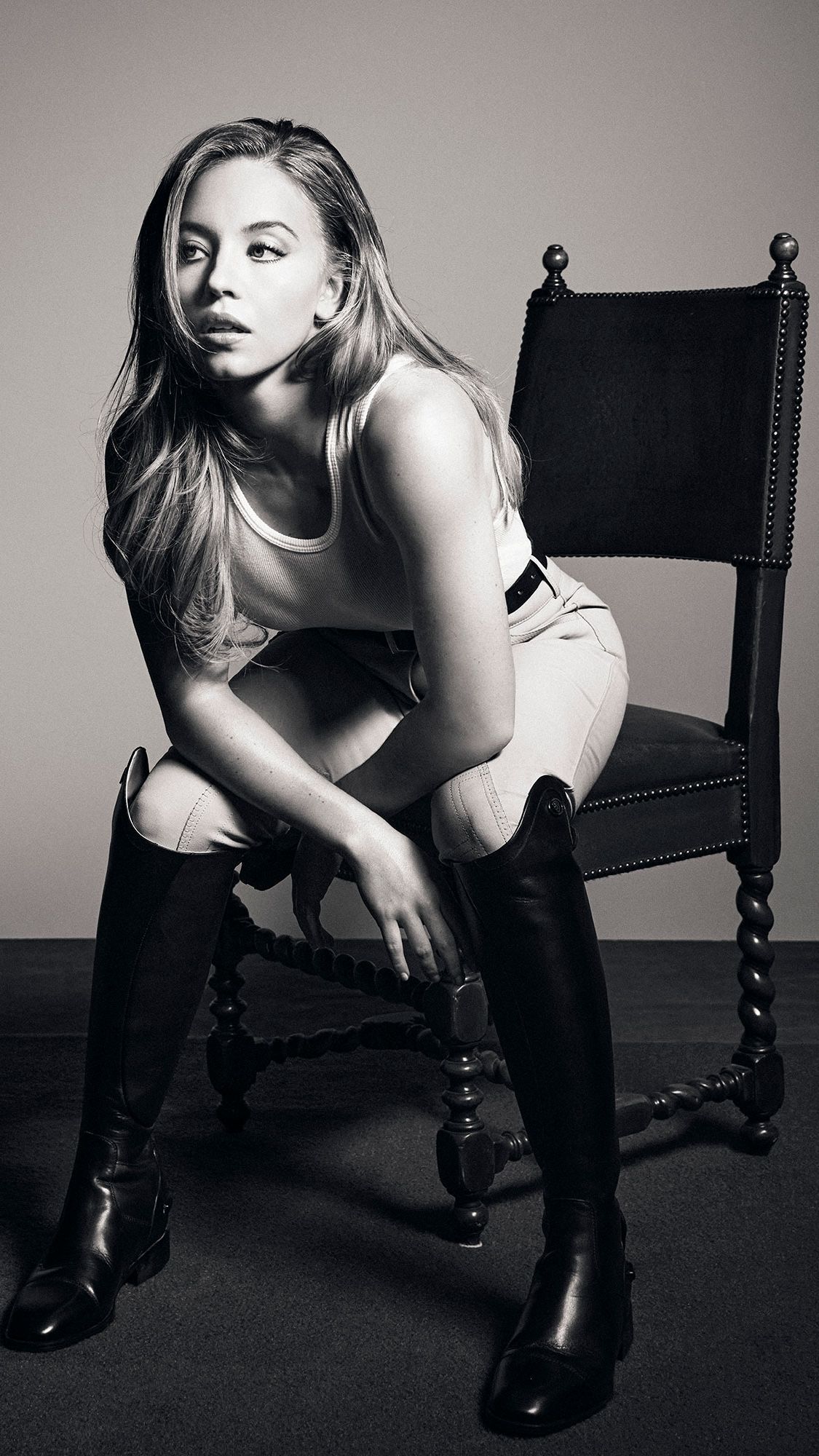
Sydney Bernice Sweeney was born on September 12, 1997, in Spokane, Washington, and raised partly in the Idaho panhandle, in a rural lakeside house her family had occupied for five generations. By her own telling, the acting bug found her almost by chance. An independent film held an audition in her hometown, and she begged her parents to let her attend. The audition itself went nowhere, but something had switched on.
What she did next has become part of her origin story, and she tells it herself. At eleven years old, before she had a single professional credit to her name, she compiled a five-year business plan and presented it to her parents to convince them she was serious. It was not a child’s daydream scribbled on a notebook page. It was a pitch, complete with the case for why the family should uproot its life. They eventually did. Sweeney has said she moved toward Los Angeles as a young teenager to chase the work, commuting and relocating in pursuit of auditions.
The family bet came at real cost. While Sweeney was building toward her first significant roles, her parents went through a divorce and, by her account, filed for bankruptcy. That financial strain became a defining thread in how she talks about her ambition. Years later, she revealed she had paid off her mother’s mortgage, framing it as the realization of a childhood promise. “As a kid, I always dreamt of being able to take care of my parents,” she has said, “so that was a really big thing for me to be able to do.” The detail matters because it explains the relentlessness. For Sweeney, the work was never only about fame. It was about a debt she felt she owed the people who gambled on her.
The grind before the break
Stardom did not arrive overnight, whatever the later headlines suggested. Sweeney spent years as a working actress collecting small parts and supporting roles, the kind that build a reel without building a name. She turned up in episodes of network procedurals and genre series, the connective tissue of a young performer’s resume.
Her first real flashes of recognition came through prestige television. She appeared in Hulu’s adaptation of “The Handmaid’s Tale,” then in HBO’s “Sharp Objects,” the dark Gillian Flynn adaptation anchored by Amy Adams. Neither role made her a household name, but both placed her inside the orbit of serious, critically watched projects. She was learning, in effect, on premium real estate. Casting directors and showrunners were noticing a young actress who could hold a frame and disappear into damaged, complicated young women without asking the audience to like her.
That apprenticeship set up the role that changed everything.
Euphoria and overnight ubiquity
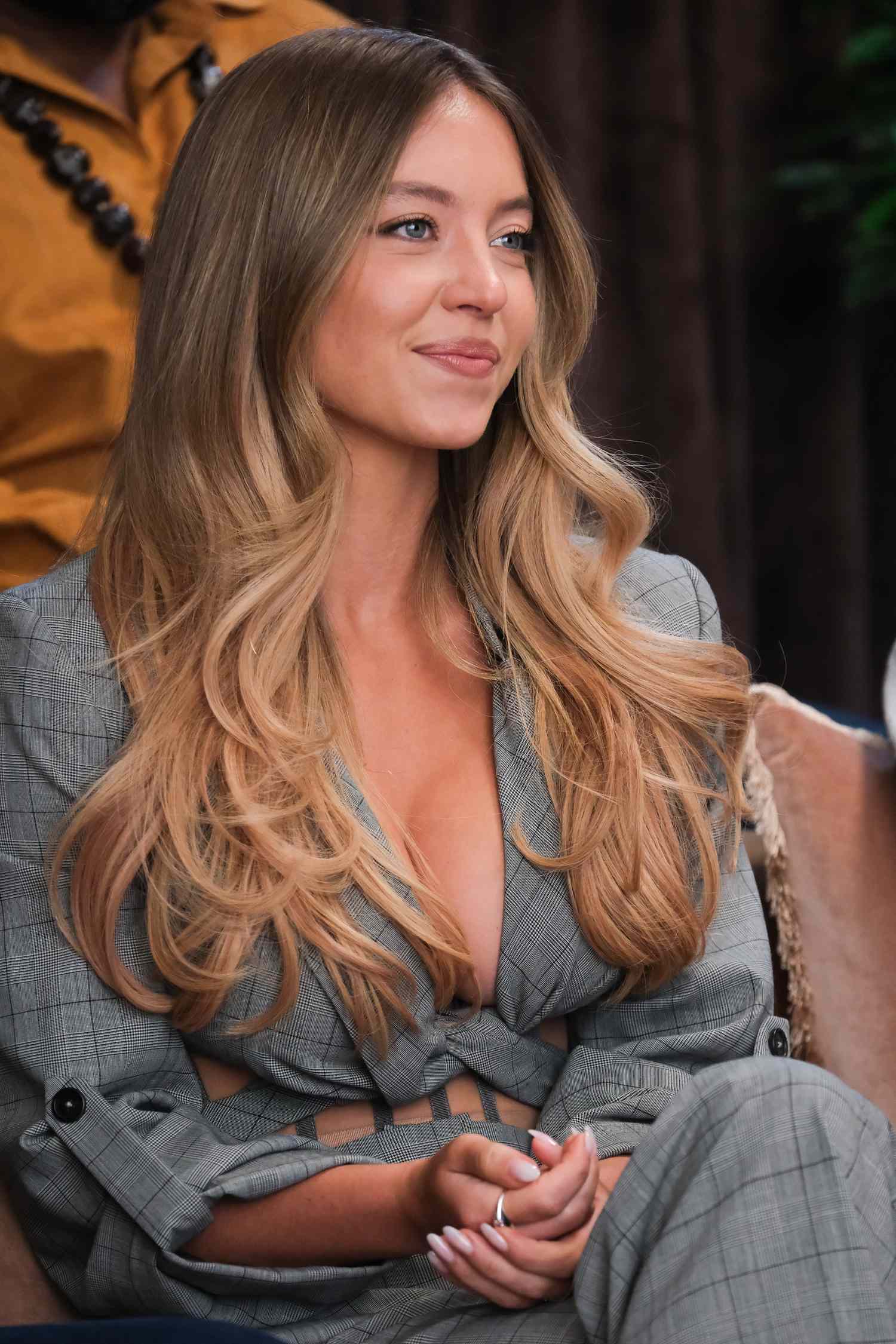
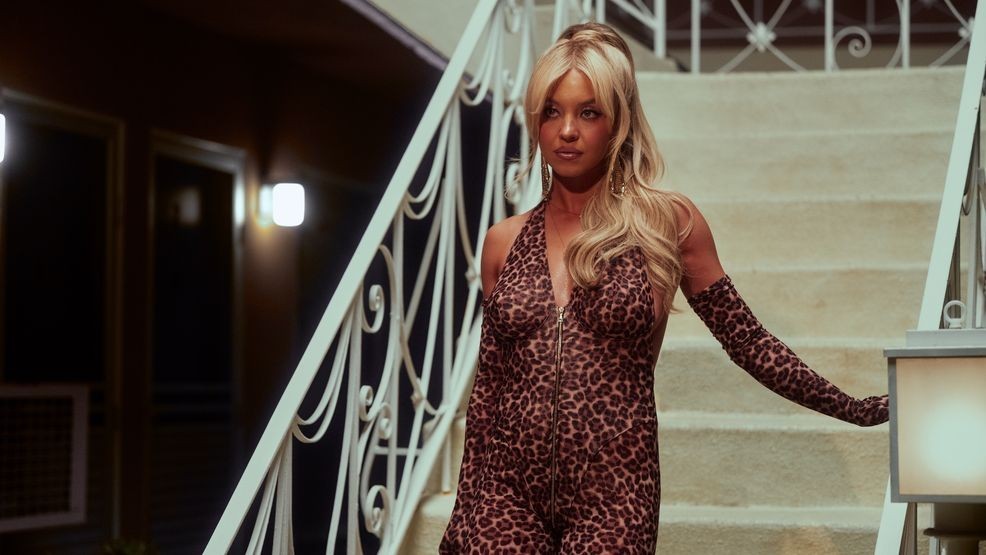
When HBO’s “Euphoria” premiered, Sweeney was cast as Cassie Howard, a teenager whose vulnerability and longing curdled into some of the show’s most wrenching storylines. The performance was raw in a way that demanded attention, and the series itself became a generational lightning rod, dissected endlessly online. Cassie became one of its most meme-generating, most argued-over characters, and Sweeney’s name began appearing everywhere.
The timing compounded the effect. Around the same window, she turned up in the first season of “The White Lotus,” Mike White’s acid social satire, holding her own in an ensemble of scene-stealers. Two buzzy, water-cooler shows at once is the kind of one-two punch that turns a recognizable face into a fixture. Suddenly she was not a promising young actress. She was a name that opened a project’s press cycle, a draw in her own right.
What separated her from other performers who catch a wave was what she did with the attention. Rather than ride the momentum passively, she started thinking about leverage, about ownership, about the difference between being cast and being in control.
The rom-com pivot that proved her box-office pull
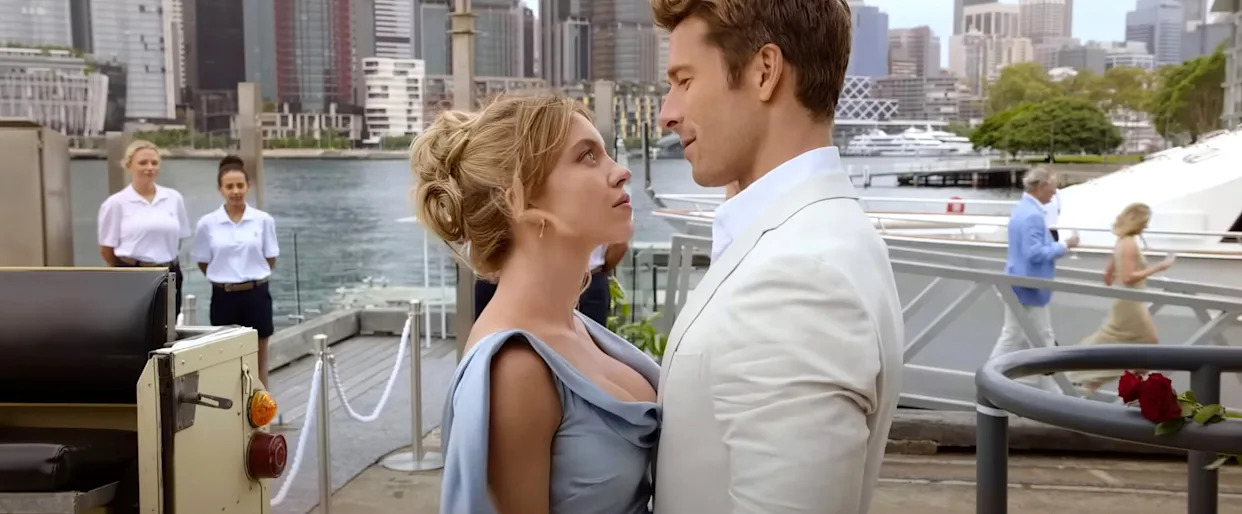
For a stretch, the conventional wisdom held that the theatrical romantic comedy was dead, killed off by streaming and shifting habits. Then came “Anyone But You” in 2023, an enemies-to-lovers comedy pairing Sweeney with Glen Powell. It opened modestly and then did something rare for the genre in that era. It kept selling tickets, week after week, riding word of mouth and a relentless social media presence into a genuine global hit that grossed far beyond its modest budget.
The film mattered for Sweeney’s trajectory beyond the box office numbers. It demonstrated that she could carry a mainstream studio movie as a leading lady, not just a prestige-TV scene-stealer, and that audiences would pay to watch her. In an industry obsessed with the question of who can still open a film, she had supplied an answer. And crucially, she had a producing credit on it, which meant her stake in the success ran deeper than a paycheck.
Ad SpaceIn-Article - 300x250
Advertisement
Becoming a producer
The producing instinct was not a vanity title. Sweeney had founded a production company, originally launched in 2019 in partnership with businessman Jonathan Davino, built around the idea of finding and championing projects she actually wanted to make rather than waiting for the right script to land in her lap. The banner produced “Anyone But You,” and it produced “Immaculate,” the 2024 religious horror film in which she starred as a young American nun who discovers something sinister inside her Italian convent.
“Immaculate” was the clearest early statement of the producer-star she intended to be. She had reportedly been attached to a version of the material years earlier, had held onto it, and finally willed it into existence under her own banner. The film was not a blockbuster, but it was a calling card. It showed she would take swings, court discomfort, and back darker material that a more cautious star might avoid.
Not every bet paid off. Also in 2024 came “Madame Web,” the Sony superhero project widely panned by critics and audiences, a rare misfire in an otherwise upward arc. Sweeney handled it the way she has learned to handle most turbulence, by absorbing it without letting it define the larger story. One stumble in a comic-book ensemble did little to slow what was building elsewhere.
The transformation role and the business empire
If “Immaculate” announced her as a producer with a taste for risk, “Christy” announced her as an actress chasing weight. In the boxing biopic, directed by David Michôd, Sweeney played Christy Martin, the fighter who became America’s best-known female boxer in the 1990s. The physical transformation was dramatic, and the film arrived in late 2025 carrying awards-season expectations after a warm festival reception. The theatrical run disappointed, opening to roughly $1.3 million and failing to crack the box-office top ten on a reported budget of around $15 million.
The reception split sharply. Critics landed mixed, somewhere in the middle, while audiences responded far more warmly. Sweeney, who also produced, stayed publicly proud of the work, framing the box-office numbers as separate from the value of the story she had helped tell. The film found a second life on streaming, becoming a steady hit there and reaching far more viewers than its cinema run ever did. As a dated fact, by mid-2026 “Christy” had become one of the films keeping her name in steady circulation.
Around the acting sits a business machine that has drawn as much attention as the performances. The most discussed example came in 2025, when a viral Dr. Squatch advertisement featuring Sweeney in a bath spawned an internet obsession with her bathwater. Rather than ignore the meme, her camp leaned in, launching a limited run of 5,000 bars of a pine-scented soap marketed as containing water from an actual bath she took for the shoot. Reports indicated nearly a million people entered to get hold of it, and the stunt sold out almost instantly. It was crude, knowing, and ruthlessly effective, a case study in converting online noise into a sold-out product.
Not every commercial venture landed cleanly. A 2025 American Eagle denim campaign built around the tagline that she had “great jeans” drew a wave of criticism online, with some critics reading an unintended double meaning into the wordplay around “jeans” and “genes.” The debate grew loud enough to draw comment from public figures. Sweeney addressed it months later, saying she had taken the work because she loved the brand and the product, that she did not support the readings some had attached to it, and that she would not let others assign her motives she did not hold. The episode underlined a recurring tension in her career. The same visibility that powers her commercial machine also makes her a target, and she has had to learn to stand inside the storm without being moved by it.
By 2026, estimates commonly placed her net worth around $40 million, a figure built from acting fees, producing stakes, and a stack of endorsements. One of the larger paydays reportedly came from “The Housemaid,” the thriller released in late 2025 that became a major commercial success and, in 2026, a streaming hit that topped its platform’s charts.
Navigating the spotlight
The tabloid attention is relentless, and Sweeney has not been spared its more personal turns. Her engagement to Jonathan Davino, her longtime partner and production-company co-founder, was called off, with reports placing the split in early 2025. In the aftermath, she moved to disentangle the business ties as well. By June 2026 she had launched a new production company, Honey Trap, under a first-look deal with Sony Pictures, a fresh banner that gave her a clean structure for the next phase of her producing ambitions, separate from the partnership that had launched her behind the camera.
She has also spent considerable energy swatting down a narrative the internet refuses to retire, the supposed feud with her “Euphoria” co-star Zendaya. Sweeney has repeatedly denied any tension between them, and the rumor persists anyway, a reminder that at her level of fame, the public conversation often runs on its own engine regardless of what the people involved say. Her general posture toward all of it has hardened into something like equanimity. She acknowledges the noise, declines to be defined by it, and keeps the focus on the work and the slate.
The slate and what comes next
What makes Sweeney’s position unusual is not any single role but the breadth of the operation she now runs. She is a leading lady who can open a studio comedy, a character actress willing to vanish into a boxer’s body, a producer with her own first-look deal, and a marketing phenomenon who can sell out a product in minutes. Few performers her age control that many levers at once.
The pieces in motion as of mid-2026 suggest she intends to keep widening rather than narrowing. The Honey Trap deal with Sony positions her to develop and own more of what she makes. The streaming success of “Christy” and “The Housemaid” keeps her commercially viable across formats. And the courtside cameras, the soap stunts, the campaigns that spark days of argument all keep her name in the cultural bloodstream between projects, which is its own kind of asset in an attention economy.
There is a through-line connecting the eleven-year-old with the five-year plan to the woman the broadcast booth could not stop talking about. Both understood that talent alone is rarely enough, that a career has to be built deliberately, role by role and deal by deal, by someone paying close attention to leverage. The small-town kid who pitched her parents on a future has spent more than a decade proving the pitch was sound. The more interesting question now is not whether she can stay in demand. It is how much of Hollywood she decides to own on the way through.
Ad SpaceIn-Article - 300x250
Advertisement
Share
Get the recap
Loved this story? Get more like it.
Join readers who get our weekly entertainment recap - the stories worth your time, delivered every Friday.
No spam. Unsubscribe anytime. By signing up you agree to our Privacy Policy.