
Three days after Eid al-Adha, the small Yoruba town of Ijebu-Ode swells past the seams of its ordinary population. Hotel rooms in Lagos triple in price. Tailors in Ikoyi pull all-nighters finishing asooke ensembles that cost more than some cars. In a custom-built pavilion at the heart of Ogun State, families that trace their lineage back to nineteenth century warriors mount adorned horses, dancers in coordinated regalia spin past a throne older than most modern republics, and a paramount king receives the homage of his people. This is Ojude Oba, and on its best day it might be the most photographed cultural event on the African continent.
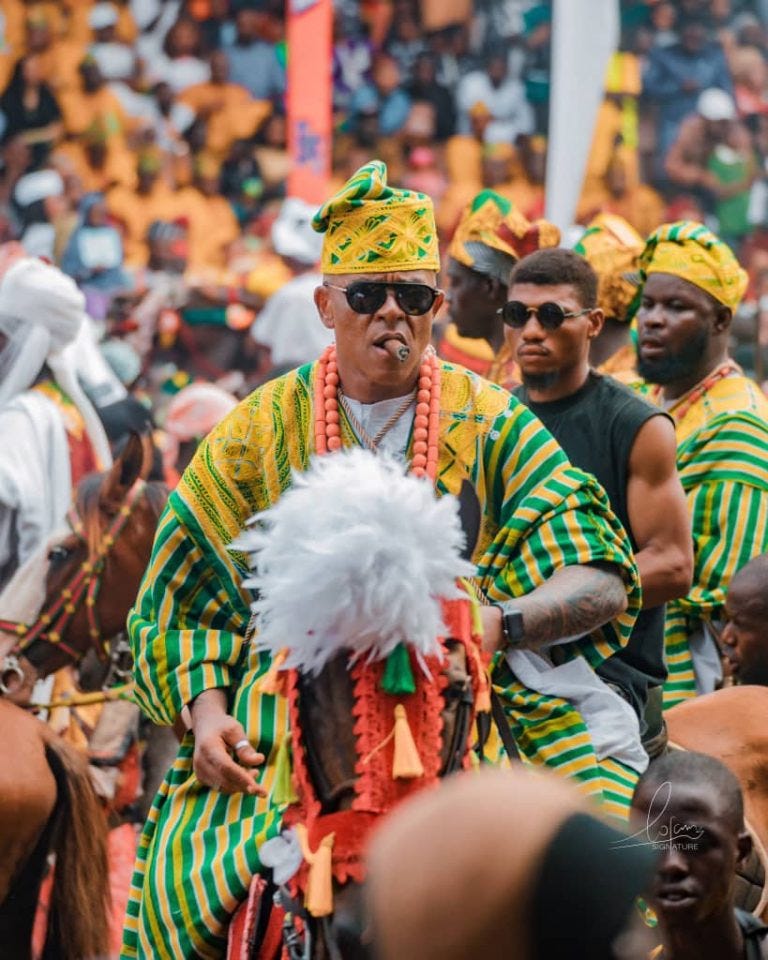
For a long time the festival was a regional affair, understood mainly by the Ijebu and the Yoruba diaspora orbiting Lagos. That changed in 2024 when one image - Farooq Oreagba on horseback in cream and gold, cigar between his fingers, expression somewhere between serene and unbothered - rocketed across Vogue, the BBC, CNN, and millions of timelines. Here is what the world had been looking at.
What Ojude Oba Actually Means
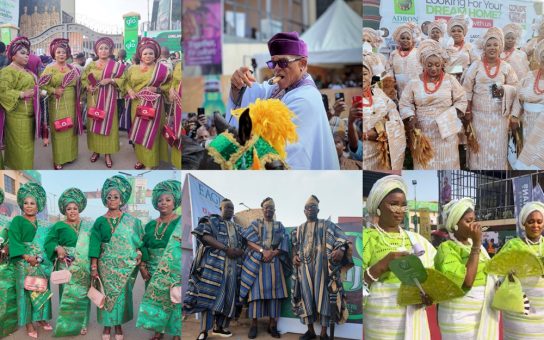
The name is plain Yoruba. “Ojude” means forecourt or frontage. “Oba” is king. Together, Ojude Oba is the king’s forecourt, the open ground in front of the palace where subjects gather to pay homage. The festival is named for the act, not the person. Every part of the celebration is oriented toward a single gesture: walking, riding, or dancing into the presence of the Awujale of Ijebuland to acknowledge his authority and, by extension, to renew one’s place inside a community that predates Nigeria itself.
In a Yoruba worldview where the king is the living link between the ancestors and the present, this is heavy work. The forecourt becomes a stage on which the entire society performs itself. Lineages, age cohorts, religious affiliations, and trades are all rendered visible in a single afternoon.
The Origin Story: A Thank You from 1878
The festival is roughly a century and a half old, though the practice of paying homage to the Awujale stretches back further. The version known today crystallized around 1878. Islam had been spreading through Ijebuland, and the Muslim community, known locally as the Imale, sought a way to express formal gratitude to the reigning Awujale for granting them religious freedom and protecting their right to worship without harassment. The newly built mosque and the safety of practicing the faith openly were not small gifts in nineteenth century West Africa.
After the Eid al-Adha prayers, known in Yoruba as Ileya, the Muslim community processed to the palace forecourt to honor the king. What began as a denominational thank-you broadened almost immediately. Christians joined. Traditional worshippers joined. The Regberegbe age-grade societies, already central to Ijebu civic life, folded themselves into the format. Within a generation, Ojude Oba was no longer simply a Muslim festival. It was the festival, the day on which Ijebu identity announced itself to itself.
The Awujale of Ijebuland
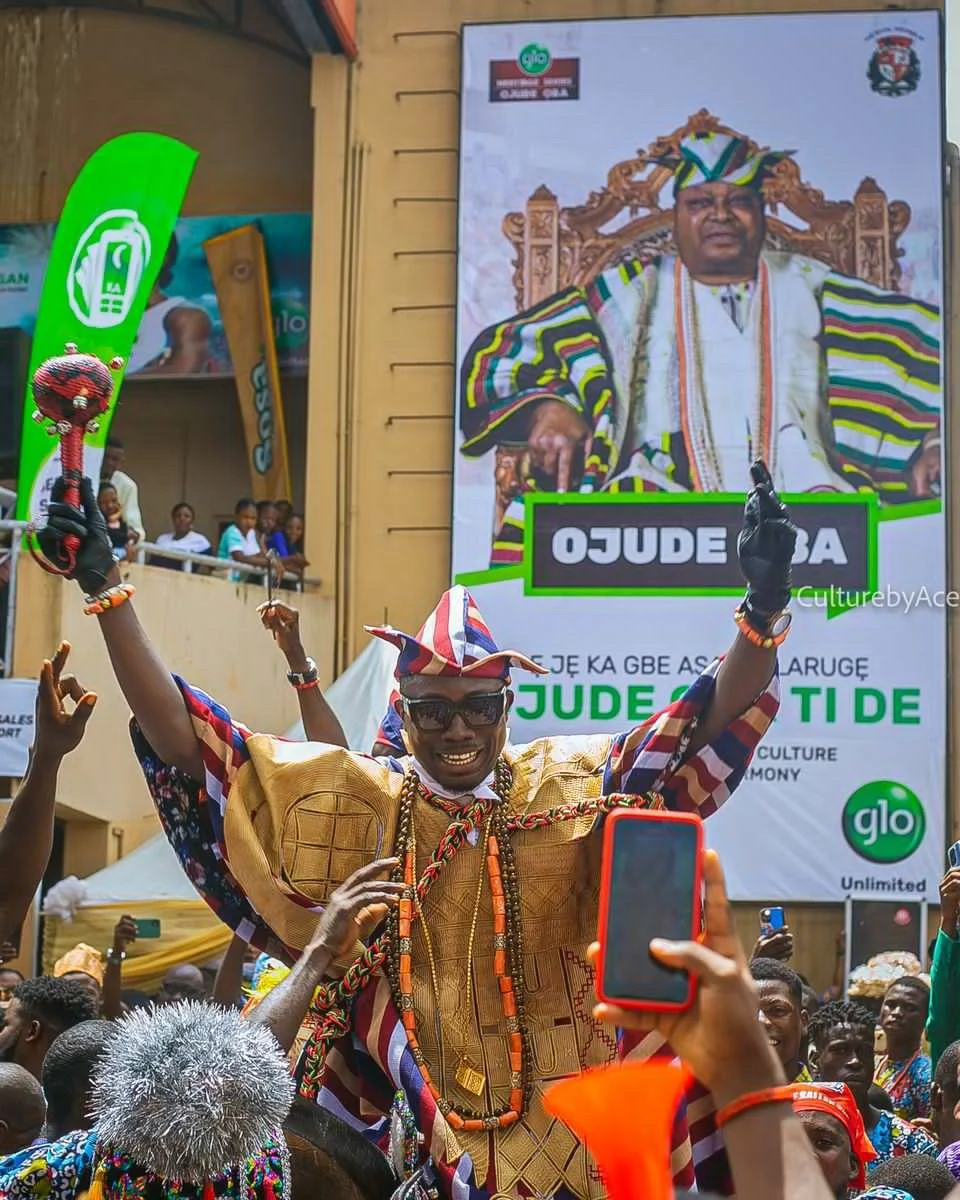
To understand Ojude Oba you have to understand the throne it orbits. The Awujale is the paramount traditional ruler of Ijebuland, a polity that historically encompassed several hundred thousand people across what is now Ogun State and parts of Lagos. The title carries spiritual authority, ceremonial weight, and cultural gravity that money cannot manufacture.
The current Awujale is Oba Sikiru Kayode Adetona, who ascended the throne in 1960, the same year Nigeria gained independence. That makes him one of the longest-reigning monarchs on the African continent. He has watched fourteen Nigerian heads of state come and go. When the Awujale takes his seat at the pavilion during Ojude Oba, the crowd is acknowledging not just an office but a continuity that has held for more than six decades under one man.
When and Where
Ojude Oba is anchored to the Islamic calendar. It takes place on the third day after Eid al-Adha, which itself shifts roughly ten days earlier each Gregorian year because the Islamic lunar calendar is shorter than the solar one. In 2026, Eid al-Adha is expected to fall in late May, which puts Ojude Oba in the final days of May or the first days of June 2026. By 2027 the festival is projected to shift into mid-May. Anyone planning to attend should track the Saudi moon-sighting announcements in the weeks leading up to Dhul Hijjah.
The location does not move. The festival is held in Ijebu-Ode, the historic seat of Ijebuland, in Ogun State, southwest Nigeria. The Awujale’s Pavilion, a custom-built venue capable of hosting tens of thousands, is the focal point. Ijebu-Ode sits roughly 100 kilometers northeast of Lagos along the Lagos-Ibadan expressway, a doable day trip from the commercial capital but a more sensible overnight stay during festival season when the roads fill and the local hotels run hot.
The Regberegbe: The Beating Heart of the Festival
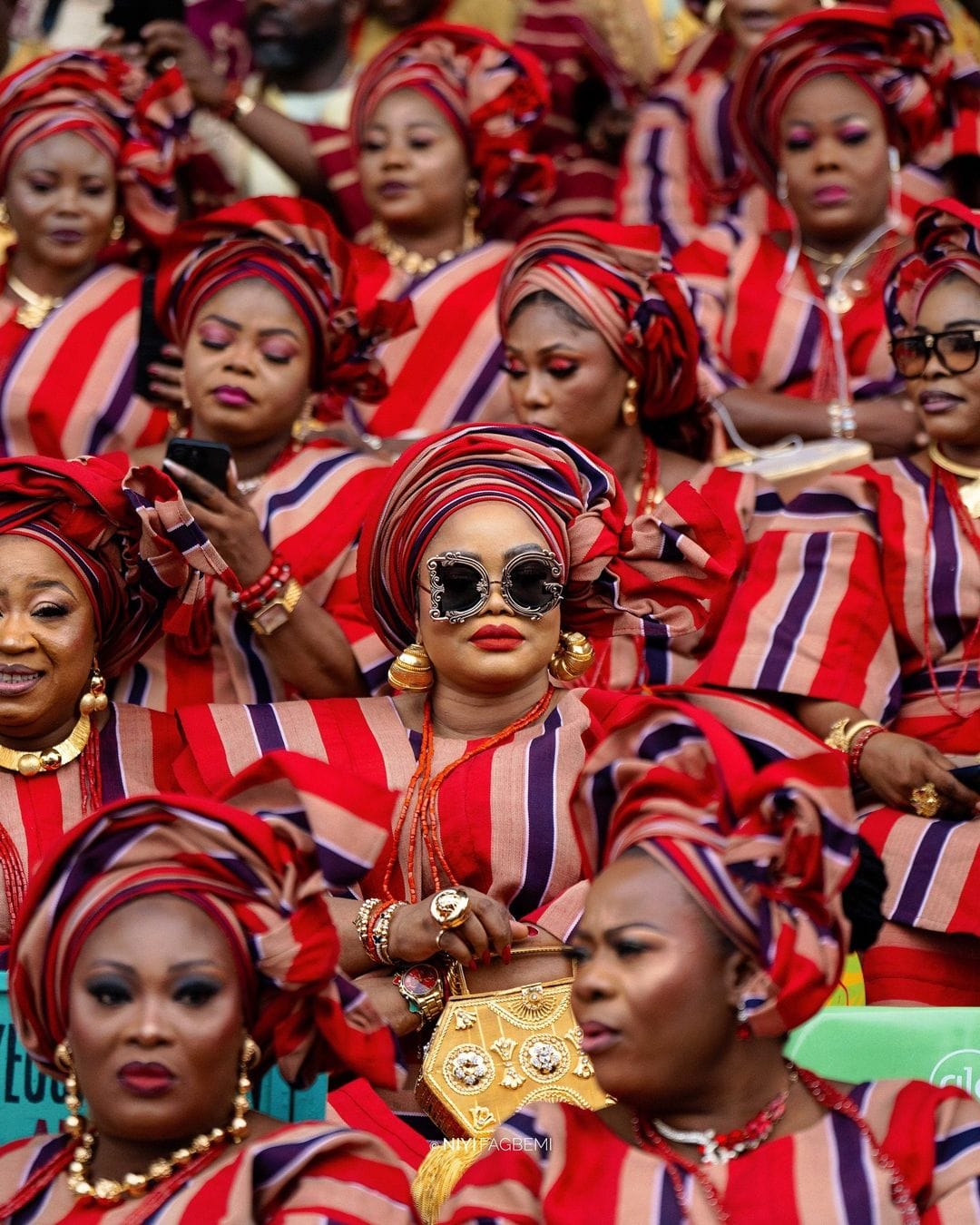
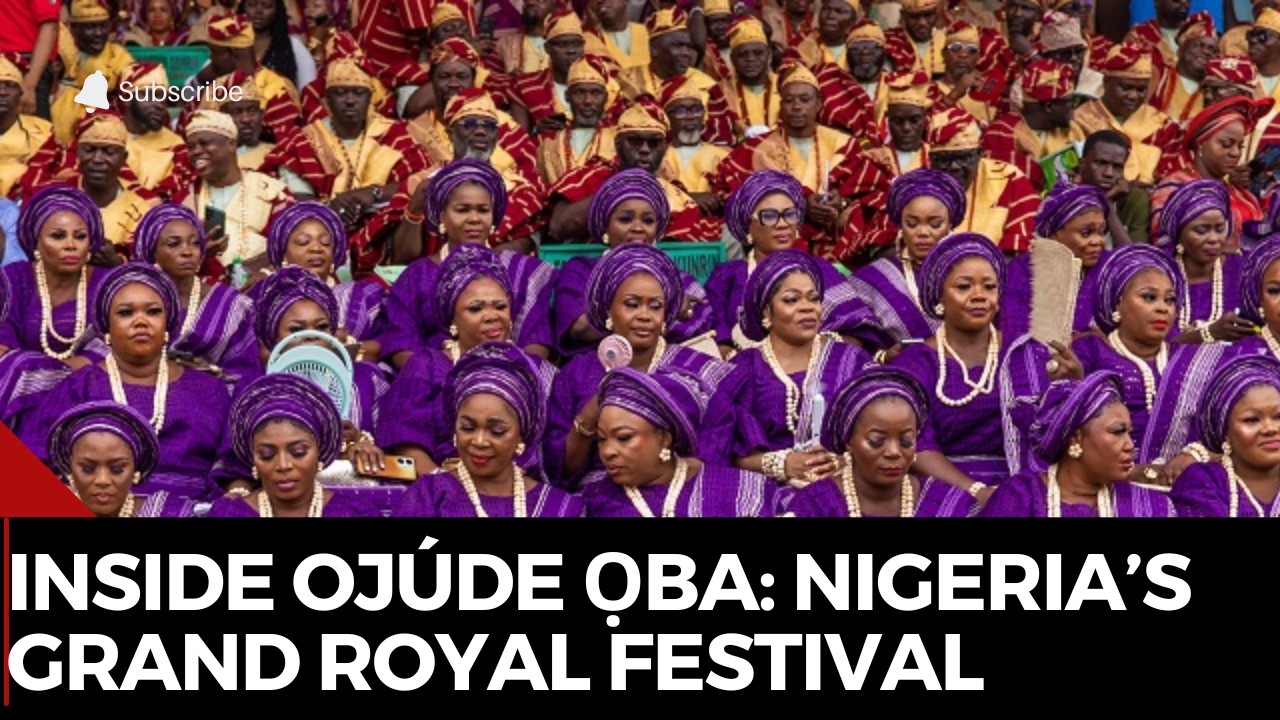
If the Awujale is the still point of Ojude Oba, the Regberegbe are its motion. Regberegbe are age-grade societies, social cohorts grouped by the years in which their members were born. Each cohort, spanning a three to five year window, takes a name when it is formed: Bobagbimo, Bobakeye, Bobamayegun, Gbobaniyi, Gbobalaye, and many others, each carrying meaning and lineage of its own.
A Regberegbe is not a club you join. You are born into the window. The cohort becomes a lifelong social institution that meets, contributes to community projects, supports its members through births and bereavements, and arrives at Ojude Oba each year in coordinated outfits with choreographed dances. Watching seventy-year-old men in matching aso oke move in unison past the pavilion, performing the same steps they performed at twenty, is to watch time itself made tangible. The youngest cohorts are teenagers still finding their style. The oldest are dressed like emperors and move with the deliberate dignity the day demands. Where other societies have lost their age-cohort traditions to urbanization, the Ijebu have kept theirs alive and made them spectacular.
The Balogun Warrior Families and Their Horses
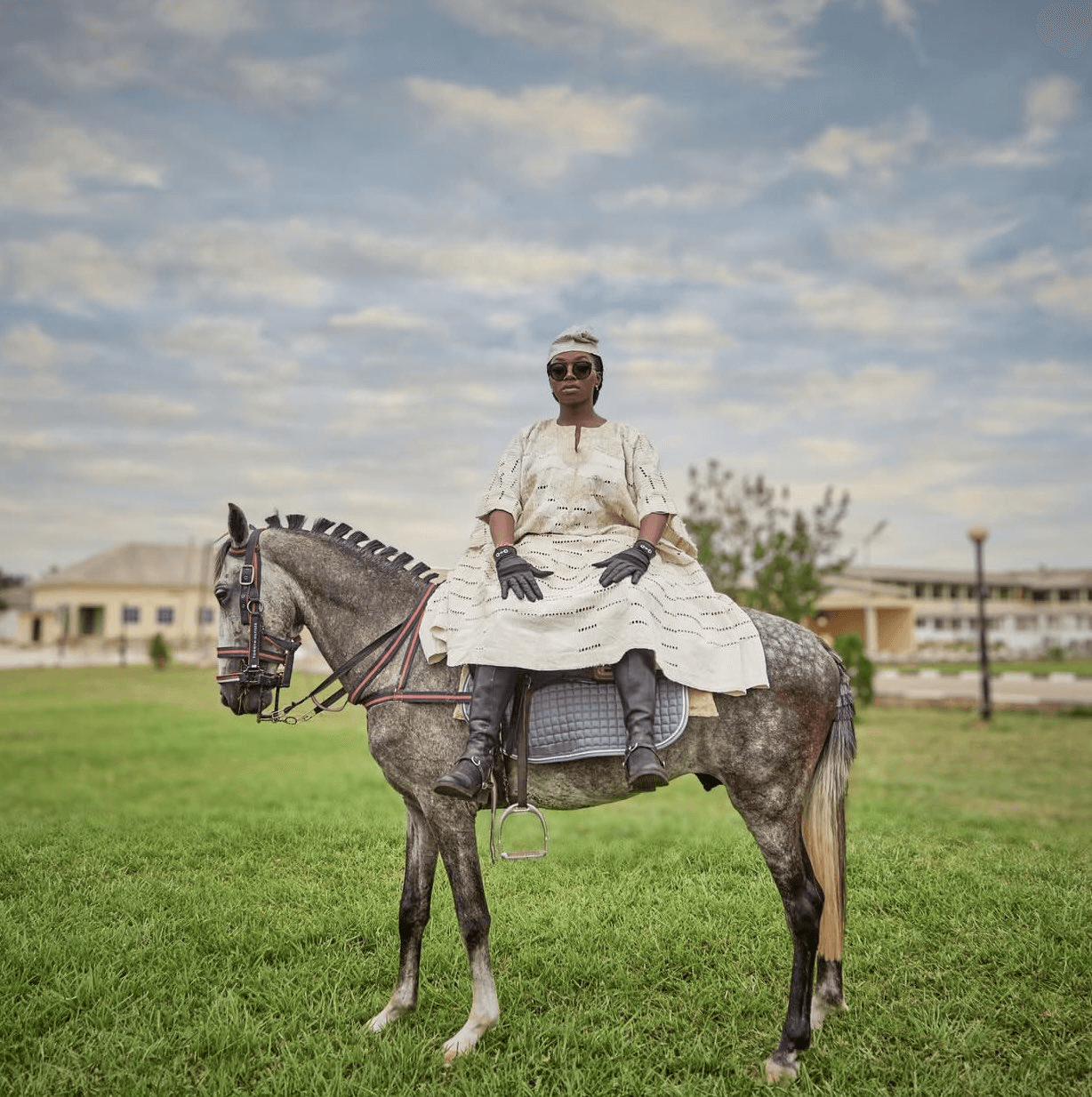
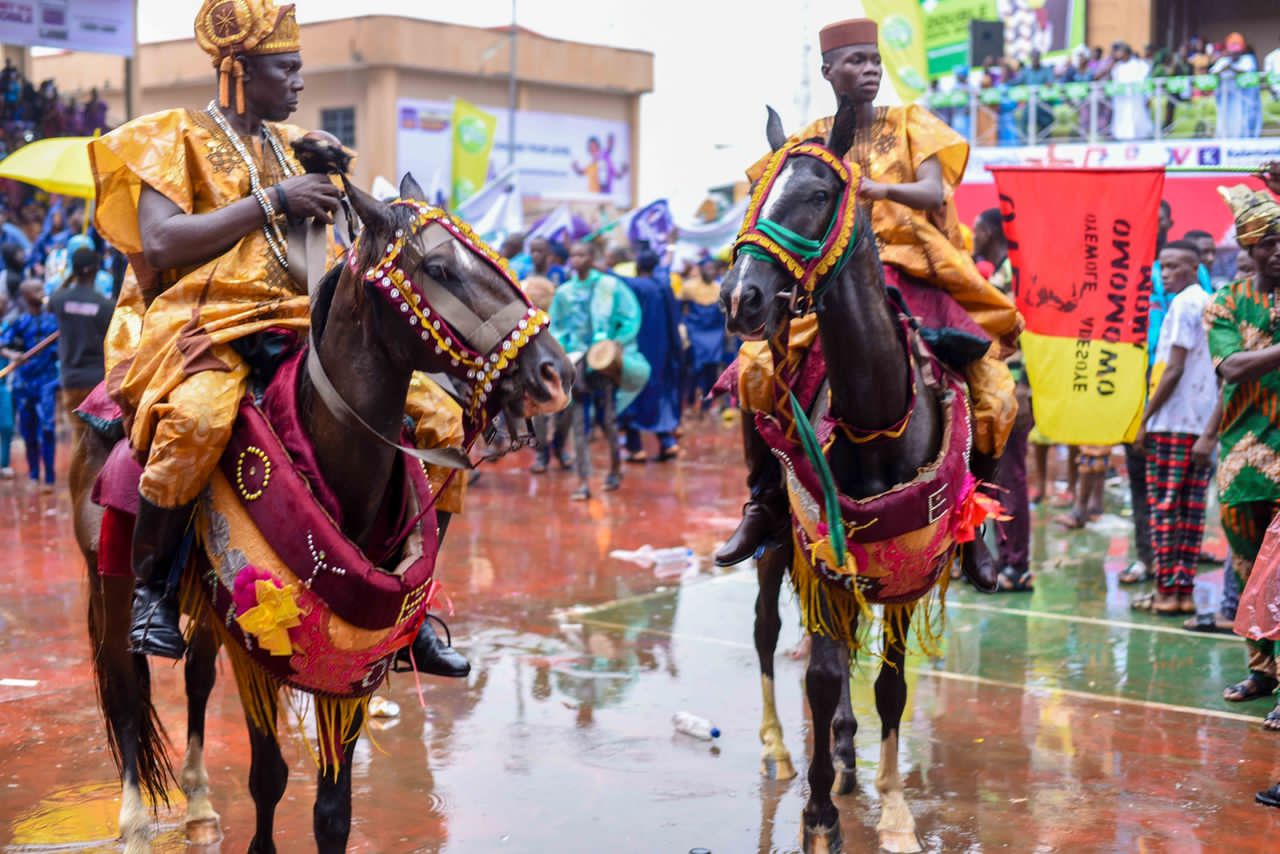
The other great procession at Ojude Oba belongs to the Balogun families, descendants of the warrior chiefs who defended Ijebuland in the precolonial era. The Balogun Kuku, Balogun Odunuga, and Balogun Idewu lineages are the most prominent, alongside several others, and on festival day each family enters the forecourt on horseback in full traditional war regalia.
The horses are central to the visual drama. Many are imported, carefully maintained for the occasion, and adorned with embroidered saddle cloths, beaded headpieces, and ceremonial trim that can take artisans months to prepare. The riders themselves wear layered agbada, embroidered caps, and in some cases ceremonial swords. Each family enters with its own colors and choreography, and rivalries over who arrived most splendidly are part of the fun. For photographers this is the money moment, where horseflesh, embroidery, sun, dust, and family pride produce images that look engineered for the cover of a magazine even when no magazine commissioned them.
The Fashion
Ojude Oba is, among many other things, the most important Yoruba fashion event of the year. Aso oke, the hand-woven cloth that anchors traditional Yoruba dress, appears in volumes and variations seen nowhere else. Agbada flow in cream, indigo, oxblood, gold, and combinations that take experienced eyes to read correctly. Gele, the elaborately folded headwrap worn by women, reach architectural heights that working tailors will study and replicate for the rest of the year.
The Lagos fashion industry has noticed. Designers including Ade Bakare have drawn on Ojude Oba aesthetics for decades, and contemporary names like Lisa Folawiyo, whose adire work helped move Yoruba textile heritage onto international runways, treat the festival as a living archive of pattern and silhouette. Younger designers come to Ijebu-Ode the way fashion students go to Paris in September, with cameras and sketchbooks, watching what their grandmothers’ generation is wearing this year so they can interpret it for the next collection.