
Walk into any Lagos market that sells skincare and the shelves tell a story the industry has spent decades dancing around. Tubes of “carrot glow,” sachets of hydroquinone cream, glutathione tablets pitched as wellness supplements, and lotions promising “fairness in two weeks” sit beside legitimate moisturizers like they belong there. The World Health Organization has estimated that around 77 percent of Nigerian women use skin-lightening products regularly, the highest rate on the African continent. That number does not exist in a vacuum. It exists alongside a film and music industry that, for most of its modern history, treated lighter skin as shorthand for beauty, romance, and aspiration.
The good news is that the conversation has cracked open. The screen looks different than it did in 2005. The lyrics sound different than they did in 2010. The faces on award stages from the AMVCAs to the Grammys are doing work that no domestic campaign managed in twenty years. The bad news is that the bleaching cream economy keeps growing, and the entertainment industry’s reckoning with colorism is still uneven, half-spoken, and easy to undo.
The Yellow Paw Paw Era and Nollywood’s Original Sin

Anyone who watched Nollywood in the late 1990s and early 2000s remembers the visual grammar. The wealthy heroine was almost always light-skinned. The “village girl” who eventually transformed into a city sophisticate often did so by, among other things, appearing lighter under softer lighting and lace fronts. Casting directors used the phrase “yellow paw paw” without irony to describe the preferred shade for a leading lady, a reference to the pale flesh of unripe pawpaw fruit. Producers said the quiet part loud. Light-skinned women, the logic went, sold VHS tapes faster.
Genevieve Nnaji’s career sits inside this period in a complicated way. She was the It Girl of that era and a genuinely gifted actor, and she also happened to land inside the casting template producers already favored. The point is not about her. It is that the template existed at all, and that nobody in the industry ever had to say it out loud for every agent in Lagos to know it. Darker-skinned contemporaries such as Dakore Egbuson-Akande built careers in the same window against a casting culture that treated a chocolate complexion as a limitation rather than a feature. Joke Silva, a generation older and proudly dark-skinned, built her career largely on stage and prestige drama where complexion politics played out differently than on the home-video market.
The pattern repeated across love-interest roles, telenovela-style serials, and music video B-rolls. If a script called for “the beautiful one,” the brief that went out to talent agents specified shade as routinely as it specified age. Lighting crews used aggressive fill on darker actors when they bothered to cast them, which often produced washed-out, ghostly footage that reinforced the bias they were nominally trying to correct.
The Lagos High Society Layer

The on-screen preference did not appear from nowhere. It mirrored a Lagos social scene where lighter complexions were treated as an asset across owambe circuits, society magazines, and aspirational lifestyle media. Glossy magazines of that era almost never put a dark-skinned cover model on the front unless the cover was specifically about advocacy or African pride. Beauty pageants leaned the same way. The pipeline from pageant winner to film lead to brand ambassador was real, and at each stage, complexion narrowed the field further.
The Bleaching Industry the Cameras Pretend Not to See

While film and music sold the image, an entire commercial sector sold the chemistry to achieve it. Hydroquinone, mercury salts, kojic acid in unregulated concentrations, and steroid-laced creams move through Nigerian markets despite being officially restricted. The National Agency for Food and Drug Administration and Control has run periodic crackdowns. The agency has also publicly admitted it cannot keep up with the volume of imported and locally repackaged products flooding open markets in Lagos, Aba, Onitsha, and Kano.
Investigations by Premium Times and Daily Trust have documented how easily a buyer can walk into Balogun Market or Idumota and assemble a complete bleaching regimen for less than the cost of a decent meal. Vendors openly recommend mixtures. Some of those mixtures cause the exact damage that pulls users into long-term dependence. Steroid creams thin the skin. Mercury accumulates in the kidneys. Hydroquinone overuse produces ochronosis, the blue-black patches that become permanent. Dermatology clinics in Lagos and Abuja see a steady caseload of women in their thirties and forties trying to reverse damage they began doing in their late teens.
A small band of Nigerian-owned skincare brands has positioned itself around healthy skin rather than lightening, marketing sunscreen, barrier repair, and shade-inclusive foundation to a customer the lightening industry had spent decades training to want something else entirely. Their existence matters. Their market share, measured against the lightening category, tells you how much work remains.
Who Profits, Who Pays
The economics are unglamorous. Importers and repackagers make most of the margin. Influencers paid to push “glow” products often have no idea what is actually in the tubs they post. The women who use these products carry the entire downstream cost in skin damage, hormonal disruption, and, in too many cases, the social pressure that pushed them toward the shelf in the first place. Entertainment industry silence on the supply chain has been one of the loudest silences in Nigerian popular culture.
Tems and the Visibility Shift That Did Not Need a Press Release
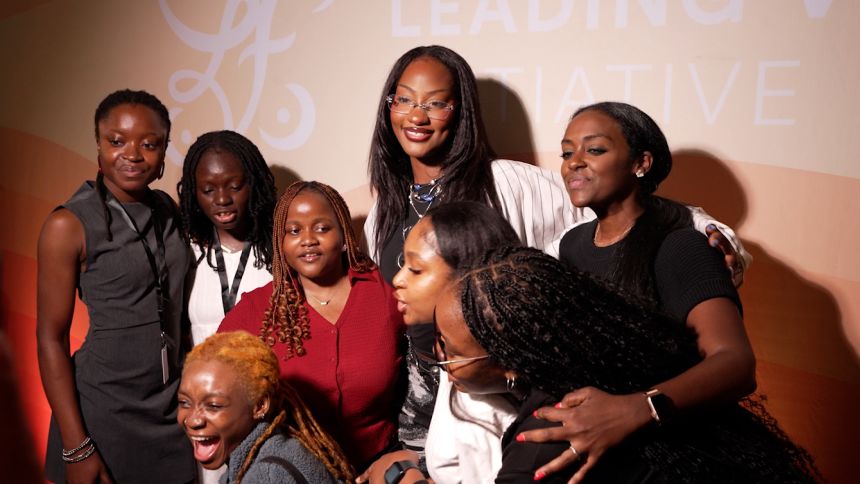
For all the conferences, op-eds, and well-intentioned anti-bleaching panels, the most consequential thing that happened to colorism in Nigerian entertainment was a singer from Lagos showing up on global stages without changing her skin to get there. Tems is dark-skinned. She does not light herself the way music videos used to light darker artists. She performs in lighting that respects her complexion rather than fighting it. She has collected a Grammy, an Academy Award nomination for co-writing “Lift Me Up” for the “Wakanda Forever” soundtrack, and front-page coverage that simply did not exist for dark-skinned Nigerian women in popular music a decade ago.
What that visibility does inside Nigeria is hard to overstate. A teenage girl in Surulere watching Tems accept a Grammy is watching a complexion that her local market has been telling her to disguise. The lesson lands without anyone needing to give a TED talk about it.
Burna Boy has done some of this work in his own register. In interviews, he has talked about complexion representation in African music with more directness than most of his peers. His “Last Last” video centered dark-skinned women in romantic, glamorous, slow-motion shots that the industry once reserved exclusively for lighter casting. The choice was deliberate. He has said as much.
Adekunle Gold and the Visual Reclamation

Adekunle Gold’s recent visual era, particularly across the Catch Me If You Can and Tequila Ever After campaigns, has leaned into rich earth tones, deep browns, and lighting that treats melanin as the point rather than the obstacle. The “kiss and curl” aesthetic, the textured hair, the matte finishes, the celebration of brown-on-brown color palettes in his styling, all of it pushes back against the high-gloss, light-skin-default look that dominated Afropop visuals for years. Simi, his wife and a darker-complected vocalist in her own right, has worked the same visual vocabulary across her solo releases.