Lamine Yamal: The Teenage Prodigy Rewriting Football and Celebrity Culture
Miki Anderson··10 min read
Ad SpaceArticle Top - 728x90
Advertisement
Munich, the night of 9 July 2024. Spain were level with France in a European Championship semi-final, and the player who broke the deadlock had not yet finished secondary school. A sixteen-year-old drifted in from the right flank, shaped his body, and curled a left-footed strike off the inside of the post from twenty yards. The goal won the tournament’s prize for the best strike of the competition. It also made the scorer the youngest player ever to find the net at a European Championship, a record that no longer belongs to a man in his twenties but to a teenager who still had to ask permission to skip class. That single swing of the boot is the cleanest way to understand why Lamine Yamal has become one of the most discussed figures in global sport, and why his story reaches far beyond the touchline.
The numbers around him invite disbelief, but the more interesting thing is what he represents. Football has produced wonderkids before, players hyped at fifteen and forgotten by twenty. What separates this case is the speed at which the on-pitch talent fused with an off-pitch persona that brands, broadcasters, and millions of teenagers have latched onto. He is simultaneously a generational footballer and a generational celebrity, and the two roles feed each other. For a Nigerian or African reader watching a young talent emerge from a tough neighbourhood and carry a continent’s worth of expectation, the shape of his rise will feel familiar even if the scale is unusual.
From Rocafonda to the First Team
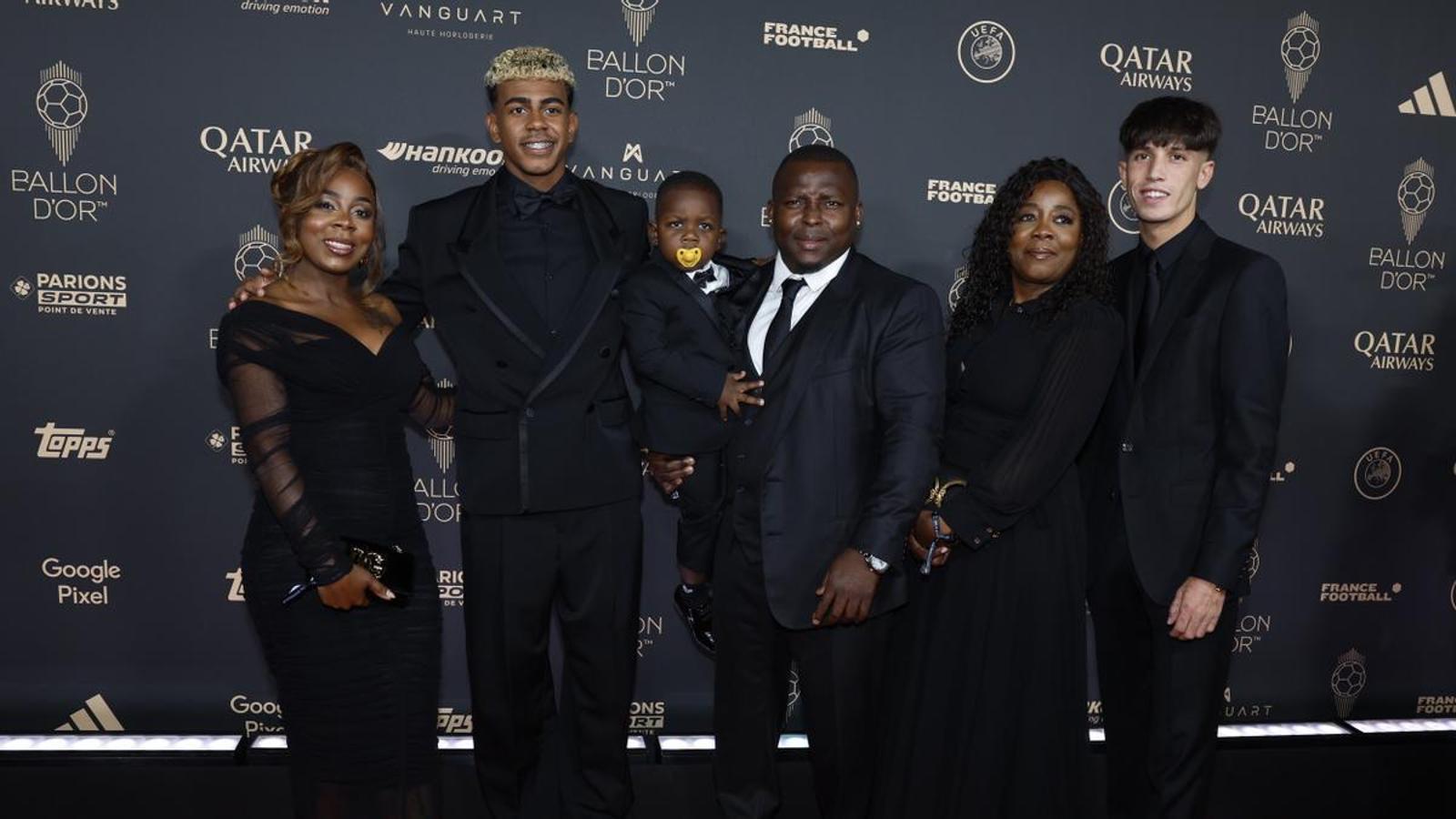
Lamine Yamal Nasraoui Ebana was born on 13 July 2007 in Esplugues de Llobregat, on the edge of the Barcelona metropolitan area in Catalonia. His heritage tells a migration story that runs through much of modern Europe. His father, Mounir Nasraoui, comes from Larache in Morocco. His mother, Sheila Ebana, is from Bata in Equatorial Guinea. He grew up largely in Rocafonda, a neighbourhood of the coastal town Mataro that the Spanish press has described as forgotten and stigmatised. He celebrates goals by tracing the number 304 with his fingers, a nod to the final digits of the local postcode, a quiet reminder of where he started every time the cameras find him.
The journey from that postcode to the Camp Nou pitch ran through La Masia, Barcelona’s famous youth academy and the same production line that shaped Lionel Messi, Xavi, and Andres Iniesta. He started kicking a ball at a local club around the age of four. By his teens he was being talked about inside the club as something rare. On 29 April 2023, at fifteen years, nine months and sixteen days, he came off the bench against Real Betis and became the youngest player to appear for the Barcelona first team in more than a century, breaking a record that had stood since the 1920s. A few months later he became the youngest scorer in the history of the Spanish top flight. The records did not arrive one at a time so much as in a flood, each one nudging the previous generation of prodigies down the list.
What makes the upbringing relevant rather than incidental is the way it mirrors so many African football origin stories. Talent emerging from a neighbourhood with limited resources, a family stretched across borders and shifts, and a club academy acting as the ladder out. Nigerian fans who followed the early paths of players like Victor Osimhen, who hawked goods on Lagos streets before football carried him to Europe, will recognise the arc. The details differ. The pattern, of a gifted child from an overlooked corner of a city being spotted and funnelled into an elite system, is one that the global game keeps repeating.
The Playing Style That Forced the World to Watch
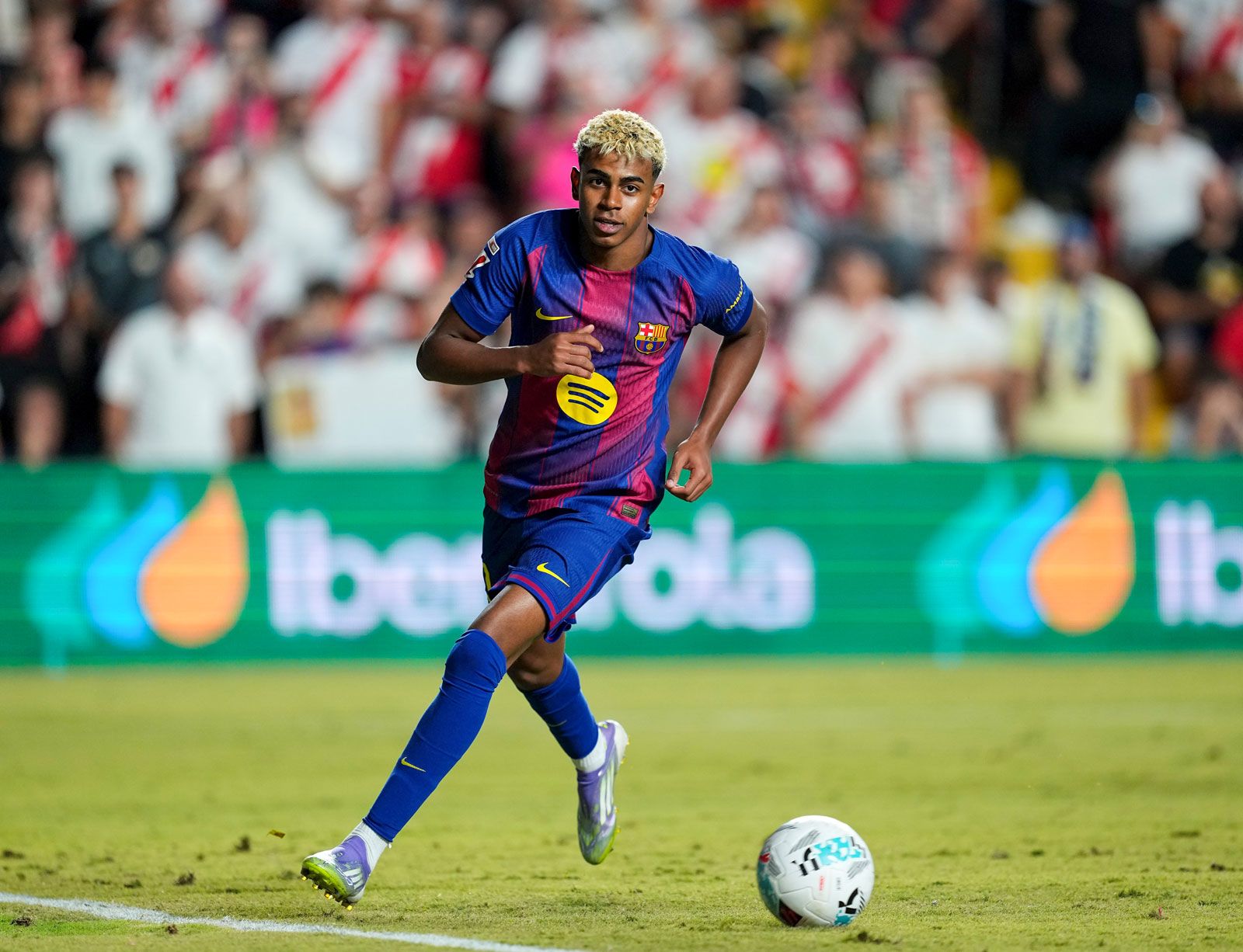
On the pitch, the simplest description is right winger, though that undersells what he actually does. He is left-footed and operates from the right flank, which means his instinct is to cut inside onto his stronger foot and either shoot or thread a pass through a defence. It is the same geometry that made Arjen Robben and a young Messi so difficult to contain, the inverted winger who pulls full-backs into impossible decisions. Defenders know what is coming and still cannot stop it, because the execution is so quick and the close control so tight that committing to the tackle usually means being beaten.
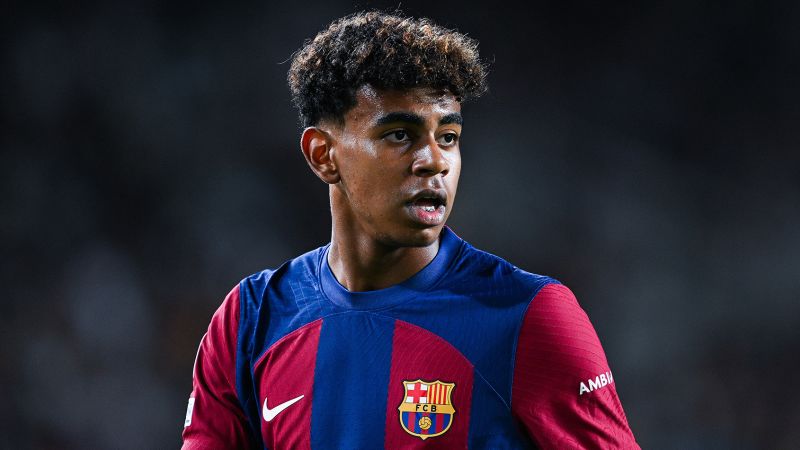
His end product is what lifts him above flashy dribblers who never quite deliver. In the 2024-25 season, playing under coach Hansi Flick, he recorded eighteen goals and twenty-one assists across the campaign, a return that would flatter a seasoned forward, let alone a seventeen-year-old. That season he also became the youngest player to reach one hundred appearances for Barcelona, and the team won a domestic treble of the La Liga title, the Copa del Rey, and the Supercopa de Espana. The assist count matters as much as the goals. It signals a player who makes those around him better, who is a creator and not merely a finisher, and creators tend to have longer, more central careers than pure goalscorers.
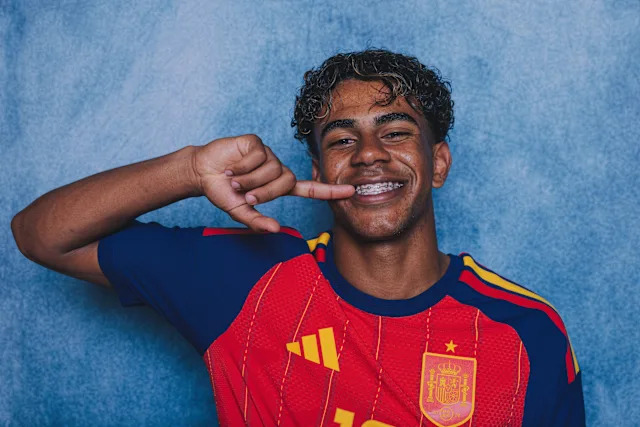
There is also a temperament that belies his age. In the Euro 2024 run, alongside that semi-final goal against France, he provided a crucial assist in the quarter-final win over Germany and matched a Spanish record for assists in a single edition of the tournament. Spain went on to lift the trophy, their fourth European title, and he was named the competition’s best young player. Big stages have tended to bring out his best rather than freeze him, which is the quality scouts struggle to predict and value most highly when they see it.
The Number Ten and the Weight It Carries
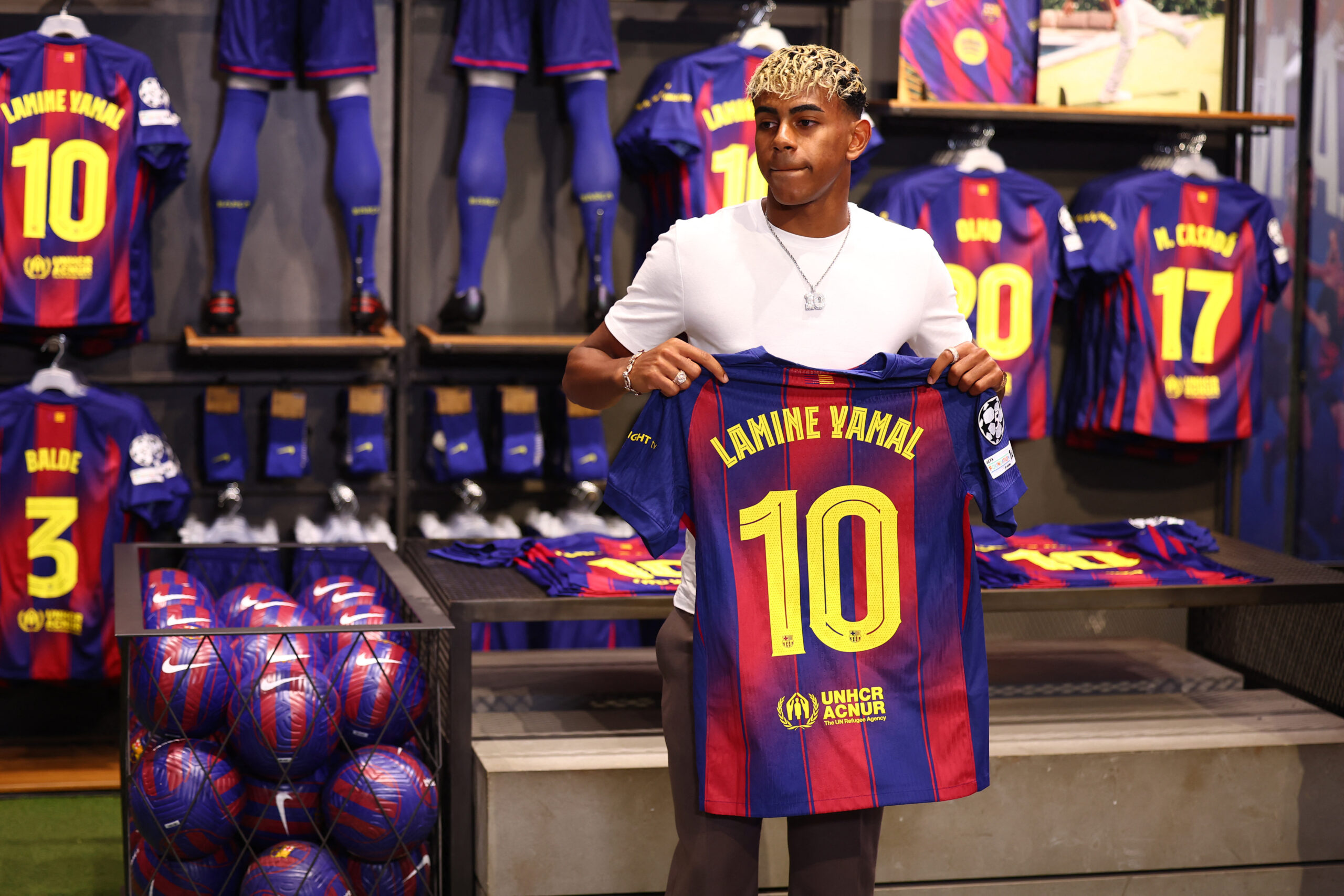
When Barcelona handed him the number 10 shirt, the gesture was loaded with meaning. At a club where that number was worn by Messi, Ronaldinho, Maradona, and Rivaldo, it is less a squad number than an inheritance. Clubs do not assign it casually, and putting it on the back of a teenager is a public statement that the institution sees him as the face of its next era. It is the football equivalent of being named heir, with all the expectation and scrutiny that comes with such a title.
That decision reframes everything around him. Wearing the 10 at Barcelona means every quiet game is a story, every brilliant one a confirmation, and every misstep a referendum on whether the gamble was wise. For a player still in his teens, the psychological load is enormous, and it is worth noting how few young footballers have absorbed that kind of pressure without their form dipping. So far the response has been to keep producing, which is why the conversation around him moved quickly from promise to delivery.
Ad SpaceIn-Article - 300x250
Advertisement
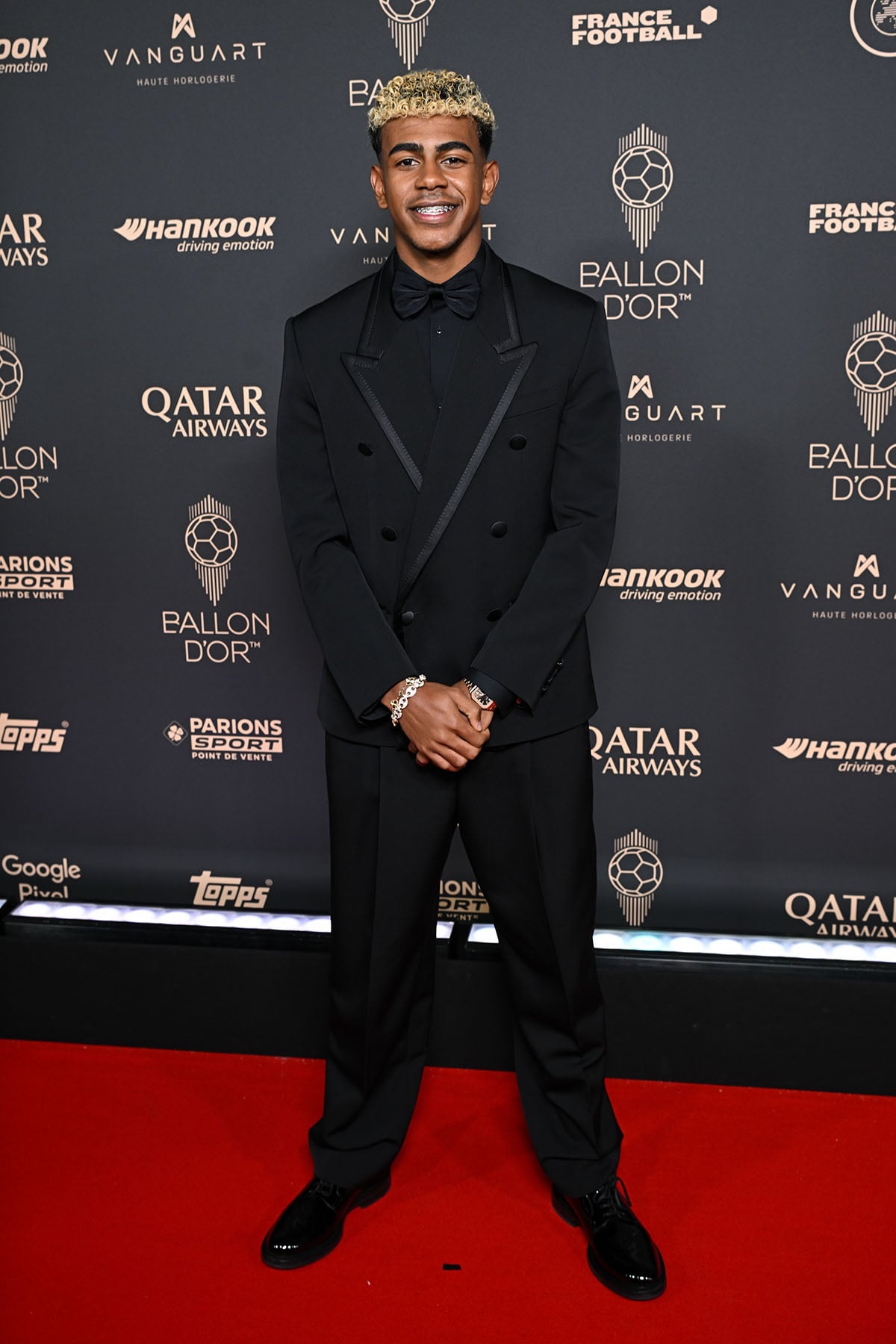
The individual recognition has tracked the team success. He won the Kopa Trophy, awarded to the best young player in world football, in both 2024 and 2025, becoming the first player to claim it twice. In the 2025 Ballon d’Or, the sport’s most prestigious individual prize, he finished as runner-up, behind his compatriot Ousmane Dembele. Finishing second in the world rankings as a teenager, in a vote that weighs the entire planet’s footballers, is the kind of placing that signals a player is not merely a prospect but already among the elite.
The Brand Built Alongside the Footballer
Here is where the story leaves the pitch and enters the territory that makes him a celebrity rather than only an athlete. In February 2024, before he had even turned seventeen, he signed with adidas, choosing the brand over rivals and following the path of his idol Messi. That was not a routine boot deal. Adidas built a signature line around him, releasing his own coloured editions of the F50 boot and a personal clothing range complete with its own logo. By March 2026 a second signature boot model had arrived, themed around the Catalan holiday of Sant Jordi. Signature product lines are reserved for the few athletes a brand believes can sell on their name alone, and handing one to a teenager is a bet on decades of relevance, not seasons.
The portfolio widened from there. He became a brand ambassador for Beats by Dre in 2024. He signed with Coca-Cola’s Powerade and joined the technology company OPPO as a global ambassador in early 2025. He has partnered with the Japanese gaming company Konami, whose football titles put his image in front of millions of players, and he has worked with UNICEF, the United Nations children’s agency, which lends a humanitarian dimension to the commercial machine. Each partnership reaches a different slice of his audience, music fans, gamers, sports drinkers, and the result is a brand that exists across far more screens than a football broadcast ever could.
This is the genuinely new part. Earlier generations of football superstars built their off-pitch image gradually, often peaking commercially in their late twenties once trophies had accumulated. The current model compresses that timeline. Social media means a teenager can have a global audience before he has a full trophy cabinet, and brands have learned to move early to attach themselves to the next face rather than the current one. He is the clearest example of a footballer whose celebrity scaled at the same pace as his sporting reputation, sometimes faster, blurring the line between an athlete and an entertainer in a way that earlier eras kept more separate.
What the Money Says, and What It Does Not
The financial figures around him should be read as estimates rather than gospel, because clubs and agents rarely confirm exact terms and public reporting varies. With that caveat firmly in place, the broad picture is striking. He agreed a long-term contract with Barcelona reported to run until 2031, and the deal is widely said to carry a release clause in the region of a billion euros, a figure designed less as a realistic price than as a wall to keep suitors away. His base salary has been reported at roughly sixteen million euros gross per year, with bonuses and commercial income lifting his total annual earnings well beyond that.
His market value, the estimated transfer price the data platforms assign, sits around two hundred million euros on Transfermarkt, with FotMob placing it slightly lower. Those numbers make him one of the most valuable footballers on the planet, and the most valuable for his age by a distance. It is worth stressing again that these are modelled estimates, the football world’s best guesses rather than agreed prices, and they shift with form, age, and contract length.
The more useful way to read the money is as a signal of belief. Markets price in expectation, and the valuations attached to him reflect a collective bet that he will be at or near the top of the game for years to come. That bet could yet be wrong. Football history is littered with teenagers who carried enormous hype and never quite became the players the projections demanded, undone by injuries, pressure, or simply the gap between potential and the relentless consistency that greatness requires. The figures tell you what the industry hopes will happen, not what is guaranteed.
A Mirror for the Next Generation of African Talent
Strip away the records and the sponsorship logos, and what remains is a template that resonates well beyond Spain. A child of immigrants from Morocco and Equatorial Guinea, raised in a neighbourhood that the system tends to overlook, becomes the most famous teenager in world sport through a mix of rare talent and a culture newly able to broadcast that talent everywhere at once. For African football, and for Nigerian fans in particular, that combination is instantly legible, because it describes the journey so many of the continent’s own stars have travelled.
The structural lessons are real ones. His rise leaned heavily on an academy that identified him early and gave him a stage, the kind of pathway that African football has historically lacked at home, which is why so much of the continent’s talent develops only after a move to Europe. It leaned on a national setup willing to trust a teenager on the biggest stage, a trust that pays off when the talent is there. And it leaned on the modern reality that a player no longer needs decades to build a global profile, a shift that benefits any young footballer with the ability to match the attention, whether they come from Mataro, Lagos, or Accra. The names that African football already celebrates, from the Osimhens to the rising teenagers in academies across the continent, are operating in the same new world, where the distance between local obscurity and global stardom has never been shorter.
That is perhaps the most lasting thing his emergence tells us. He is an exceptional footballer, possibly a once-in-a-generation one, but he is also a case study in how the modern game manufactures and markets its stars. The teenage prodigy from Rocafonda did not simply break scoring records. He demonstrated, in real time and on the largest stages, that the path from an overlooked neighbourhood to the centre of global culture now runs straight through a football pitch, and that the next name to make that journey could come from anywhere a child is given a ball and a chance to be seen.
Ad SpaceIn-Article - 300x250
Advertisement
Share
Get the recap
Loved this story? Get more like it.
Join readers who get our weekly entertainment recap - the stories worth your time, delivered every Friday.
No spam. Unsubscribe anytime. By signing up you agree to our Privacy Policy.