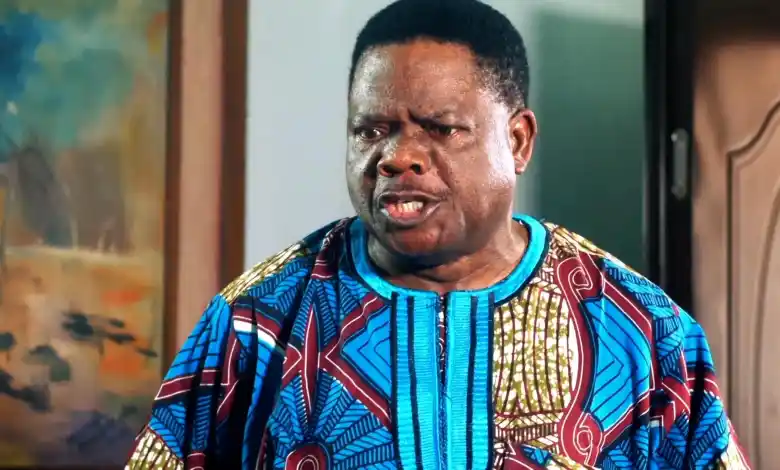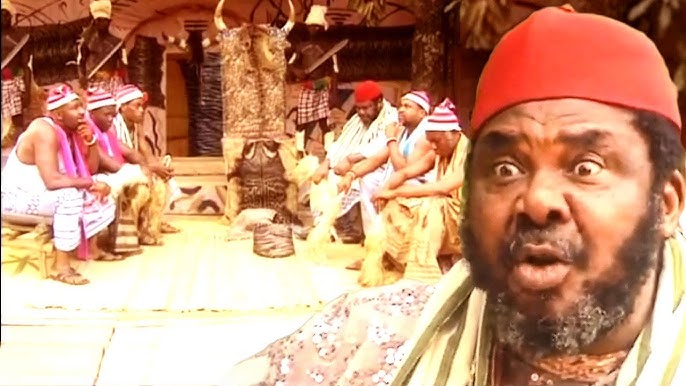


The crown sat heavy on Oba Lapite’s head, and he wore it like a man who knew exactly how to make a kingdom kneel. In Tunde Kelani’s 1999 classic Saworoide, the ruler of the fictional town of Jogbo was greedy, cunning, brutal and utterly without scruple, the kind of villain a story is supposed to teach you to hate. Yet audiences across Nigeria found themselves doing the strangest thing as they watched him scheme and swagger through the saga of the brass-bell drum that could hold a king accountable. They loved him. The performance was so commanding, so layered with menace and charm at once, that the wickedness became a kind of art. The actor inside that role was Kola Oyewo, and the magic he worked in Jogbo is the reason a nation paused in June 2026 to mourn one of its greatest stage and screen craftsmen.
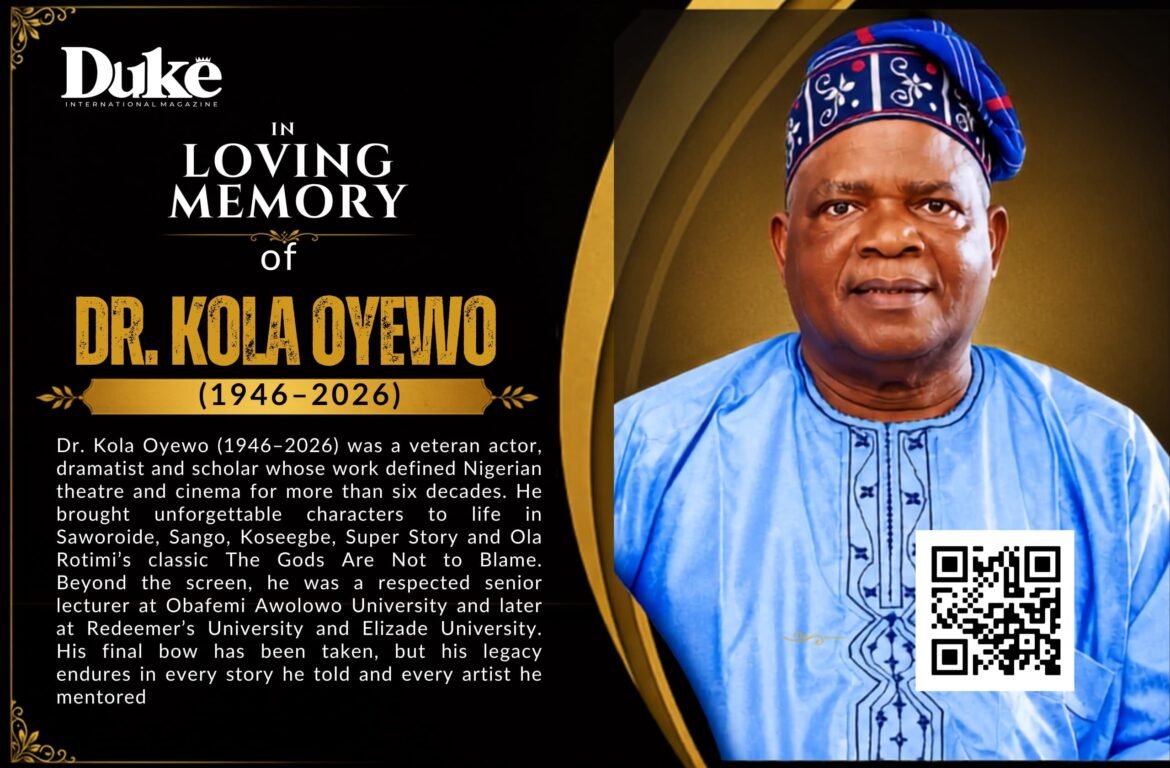
Oyewo, a foundational figure of Yoruba theatre and one of the last living bridges to its travelling-troupe roots, died on 12 June 2026 at the age of 80. His passing was first announced on Instagram by the younger actor Kunle Afod, who wrote that “Kola Oyewo has taken his final bow,” and was confirmed by major Nigerian outlets including Punch, Premium Times, Vanguard, Guardian Nigeria and Tribune. “His remarkable talent, timeless performances, and immense contributions to the Nigerian theatre and film industry will never be forgotten,” Afod wrote. “Rest well, sir. Your work lives on.”
A son of Oba-Ile who chose the stage

Kola Oyewo was born on 27 March 1946 in Oba-Ile, a town in present-day Osun State, in the southwest of Nigeria. He came of age in Osogbo, a city already steeped in art and ritual, and after finishing modern school there he made a decision that would define the next six decades of his life. In 1964, he joined the Oyin Adejobi Theatre Group, one of the celebrated travelling companies of the Yoruba popular theatre tradition.
That apprenticeship mattered enormously, and understanding it is the key to understanding everything Oyewo later became. The travelling theatre of his youth, rooted in the older Alarinjo masquerade tradition, was not a school you attended for a term. It was a total immersion in performance. A young actor was, as Premium Times put it in its tribute, “baptised into the entire gamut of performing arts,” learning to sing, to dance, to act, to drum and to hold a live audience in the palm of his hand. His first role was Adejare in Orogun Adedigba, drawn from the life story of the troupe’s founder, Oyin Adejobi. He studied under Adejobi himself and the veteran Lere Paimo, names that carry weight among anyone who knows where Nigerian acting came from.
He spent close to a decade with the company. By the time he left, he was no longer a promising newcomer but a seasoned performer who had earned his craft the hard way, night after night, town after town, in front of crowds who would not pretend to be entertained if they were not.
That upbringing also shaped a worldview. The Yoruba travelling theatre was never mere entertainment. In his 1984 study The Yoruba Popular Travelling Theatre of Nigeria, the scholar Biodun Jeyifo argued that the form, far from the unpolished folk art that earlier critics dismissed, was a philosophical and sophisticated tradition that offered an intellectual basis for understanding African societies. Oyewo was a thoroughbred product of exactly that lineage. The morality plays, the historical epics and the satires he cut his teeth on were vehicles for ideas about power, justice, community and consequence. It is no accident that the roles he is most remembered for carry that same moral charge.
From the troupe to the gown
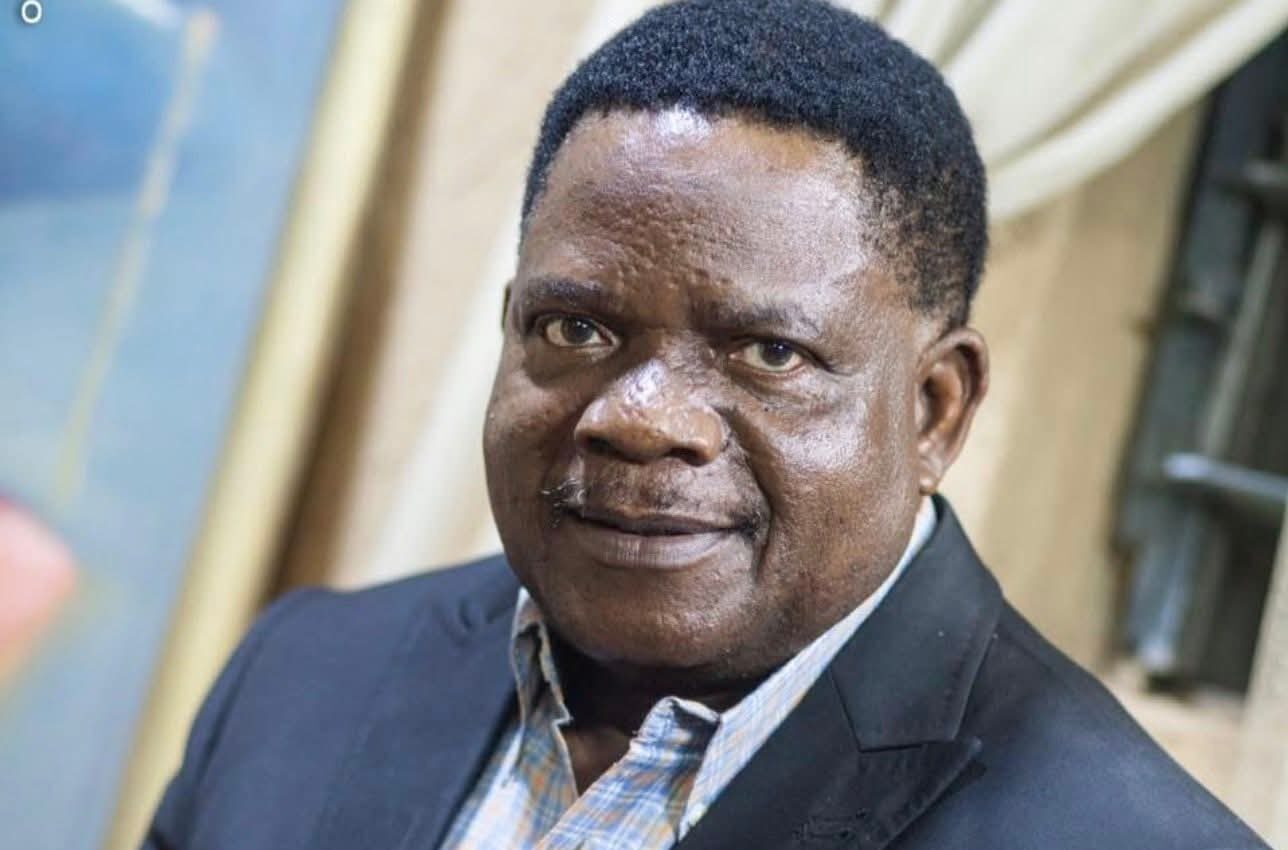
In 1973, Oyewo moved to the Ori Olokun Cultural Centre and joined the University of Ife Theatre, where he came under the direction of the late dramatist and scholar Ola Rotimi. The partnership produced one of the defining performances of his stage career. In Rotimi’s acclaimed play The Gods Are Not to Blame, an African retelling of the Oedipus story, Oyewo played the tragic king Odewale. The role brought him recognition across the continental theatre scene and announced him as a performer of unusual depth, able to carry the full weight of classical tragedy in a distinctly African idiom.
What set Oyewo apart from many of his contemporaries was that he refused to choose between practice and study. He carried the discipline of the travelling troupe straight into the lecture hall. He attended Obafemi Awolowo University, where he earned a certificate in dramatic arts and a certificate in Yoruba oral literature before completing a Bachelor of Arts in theatre arts there in 1995. He went on to the University of Ibadan, where he took a Master of Arts and then a doctorate in drama. There is a much-loved detail in his story, recounted over the years in the Nigerian press, that he pursued his education so doggedly he ended up taking classes alongside his own son. It was, by every account, a portrait of the man himself: principled, focused and unwilling to be slowed by anything.
That determination led him into a long second career as a teacher. In 1996 he joined the staff of Obafemi Awolowo University, rising to the rank of senior lecturer before retiring in September 2011. He then served as head of the department of dramatic arts at Redeemer’s University and later joined Elizade University in Ilara-Mokin, Ondo State, as a performing arts lecturer. He brought, in Premium Times’ memorable phrase, “the town to the gown,” giving theoretical shape and language to an art he had already mastered in the field for decades.
The films that made him a household name

If the stage and the classroom built Oyewo’s reputation among scholars and theatre lovers, the screen made him a household name. His filmography reads like a roll call of Yoruba and Nigerian cinema’s most respected titles.
The performance that endures most powerfully is Oba Lapite in Saworoide, the 1999 political satire produced and directed by Tunde Kelani under his Mainframe Film and Television Productions banner. Set in the fictional Yoruba town of Jogbo, the film uses a sacred brass-bell drum as a symbol of the traditional checks that are supposed to keep a ruler honest. Oyewo’s Lapite is the king who tramples those checks, enriching himself and crushing dissent until his kingdom buckles. Years later, Kelani paid tribute to the late actor by calling the portrayal one of the most memorable performances in Nigerian cinema, and few who watched it would argue. Oyewo also appeared in the 2002 sequel, Agogo Eewo, which continued the Jogbo story.